Connect with us
Anglostratits

Business

Egypt’s Customs Automation Shows Growth Lies in the Speed of Exports and Imports (By Mazen Abualghanam)

Published

on

Customs Automation

Some experts put the economic growth driven by digital transformation in Africa at US$180 billion, and if trends continue it could rise to US$712 billion by 2025

DUBAI, United Arab Emirates, October 5, 2022/APO Group/ — 

By Mazen Abualghanam, Projects Manager at Webb Fontaine (www.WebbFontaine.com)

In any business, speed is a factor. Whether a business is a large corporation or a small to medium enterprise (SME), its profits, consumer satisfaction and its ability to grow are tied to how quickly its operations can be carried out. Enterprise growth rates, in turn, feed into the GDP of the nations they operate in and, on a wider scale, the continent. If speed is negatively affected, growth is stymied, and economic growth is stunted. Nowhere is this clearer than in the import/export industry, with its global supply chains being impacted over the past few years by multiple factors. 

Technology and free trade key to Africa’s  growth  

The ease of goods movement is integral to economic growth, and Africa is well placed to reap the benefits of this, thanks to two important factors. Technological advancements, connectivity growth and automation have already uplifted many industries around Africa (https://bit.ly/3rxHAtA), and through private-public partnerships, they are  also helping speed up the flow of goods into and out of the continent.  If the ease of regional and international trade improves, the intra-Africa trade figure could be significantly higher than the current 15.4%.  

The ease of goods movement is integral to economic growth, and Africa is well placed to reap the benefits of this, thanks to two important factors

Some experts put the economic growth driven by digital transformation in Africa at US$180 billion, and if trends continue it could rise to US$712 billion by 2025.   

The Egypt example 

An example of this can be seen in the partnership involving Misr Technology Services, Webb Fontaine and the government in Egypt (https://prn.to/3SFCCH6). In a deal signed in 2021, Webb Fontaine was chosen to spearhead a project to deliver a newly upgraded nationwide Integrated Risk Management (IRM) service at Egypt’s ports and borders. The project is set to support the rapidly growing Egyptian Trade and Customs sector, which has ambitions to expand and develop into one of the region’s most advanced cargo handling and forwarding destinations. 

The IRM, which uses advanced technology including machine learning and artificial intelligence (AI) provides cover not only the Customs Authority in Egypt, but also the other government agencies involved in regulating trade across the border. The IRM works on a ‘trigger system’, to advise and implement inspection, reviewing and processing of export and import goods by a specific agency or customs. It draws on a steadily growing database of importers and exporters, as well as their goods and services, to speed up customs processes, tagging certain goods for ‘green lanes’ (which move swiftly) and ‘red lanes’ (which require inspection), based on each stakeholder’s compliance history and other indicators.  

Customs officials have all the necessary data and documentation pertaining to cargo and suppliers on one platform that is constantly evolving and upgrading thanks to user feedback. The platform’s developers are cognisant that as new requirements or challenges in the supply chains are encountered, stakeholder feedback is listened to, considered, and applied.  

The speed with which goods can now move across the border into Egypt has been vastly improved thanks to this automation of customs processes. In fact, the project has proven so successful that it has been rolled out in August 2022 to cover all ports and borders in Egypt. There will be a tangibleimpact as legitimate and compliant goods are no longer being held up for hours – even days – which can have knock-on detrimental effects all the way down the supply chain. For example, trucks containing goods which incur extra fuel, time, warehousing and possibly parking costs due to delays, will cause the products it is carrying to be more expensive by the time they arrive at their destinations. Due to this project’s success, many of these logistical problems will be mitigated.  

Egypt’s partnership with Webb Fontaine and Misr Technology Services has paid dividends for the import/export industry and it is an example that clearly shows collaborations of this kind are good, not only for businesses and customs, but are vital in growing the economies of African nations.

Distributed by APO Group on behalf of Webb Fontaine.

Business

SLB commissions new fluids systems plant in Pemba to support Mozambique’s offshore energy development

Published

on

Mozambique

New facility expands in-country drilling and completion fluids capability, advancing the next phase of SLB’s growth in Mozambique

PEMBA, Mozambique, October 9, 2026/APO Group/ –SLB (NYSE: SLB) (www.SLB.com) announced the opening of a new fluids systems plant in Pemba, Mozambique. The new facility strengthens in-country capacity to prepare, store and deliver drilling and completion fluids for offshore operations, reinforcing the infrastructure needed as Mozambique’s offshore activity grows and its role as a strategic energy hub for East Africa continues to expand.

The commissioning of the plant, also known as a liquid mud plant, coincides with SLB marking 70 years of operations in Mozambique. It reflects the company’s long-term commitment to investing in people, infrastructure and capability that support the country’s long-term offshore energy development plans.


With an initial storage capacity of 21,000 barrels, the liquid mud plant provides a scalable platform for future growth, supporting multiple customers and rising offshore activity while improving logistics and enhancing operational flexibility.

As SLB marks 70 years in Mozambique, this investment reflects our confidence in the country’s future and our commitment to supporting its energy ambitions

“As SLB marks 70 years in Mozambique, this investment reflects our confidence in the country’s future and our commitment to supporting its energy ambitions,” said Miguel Baptista, Central, East and Southern Africa, Managing Director, SLB. The new liquid mud plant strengthens local energy infrastructure, expands opportunities for local content development, and enhances our ability to support customers as they deliver some of Africa’s most significant offshore energy resources.”

The liquid mud plant project was delivered with strong local participation and that momentum is expected to continue into operations. During project delivery, more than 100 jobs were created in Pemba with nationals representing 80% of the workforce, reflecting a focus on building local capability.

The project was delivered with a strong focus on safety, operational integrity, and quality, achieving more than 67,000 hours worked without a recordable safety incident.

This key infrastructure strengthens SLB’s ability to support consistent service quality and enhance supply chain readiness for increasing offshore activity across Mozambique, supporting customers execute safely and efficiently while developing local skills and expertise.

Key Points:

  • SLB has commissioned a new fluids system plant in Pemba, expanding in-country drilling and completion fluids capability for offshore operations.
  • With an initial storage capacity of 21,000 barrels, the facility provides a scalable platform to support growing offshore activity in Mozambique.
  • The investment marks the next phase of SLB’s growth in Mozambique, strengthening local capability and supporting long-term offshore energy development.

Distributed by APO Group on behalf of SLB.


Continue Reading

Business

South African Energy Storage Association (SAESA) welcomes 4,600 MW battery storage prioritisation and calls for integrated energy planning

Published

on

Battery energy storage systems (BESS) are becoming critical system infrastructure, supporting flexibility, reducing avoidable curtailment, shifting energy into periods of demand and strengthening security of supply

JOHANNESBURG, South Africa, October 9, 2026/APO Group/ –The South African Energy Storage Association (SAESA) (www.SAESA.org.za) welcomes the prioritisation of 4,600 MW of battery energy storage under the first Integrated Resource Plan (IRP) 2025 Section 34 determination.


The timing is significant. Recent Integrated Energy Plan (IEP) modelling and assumptions discussions highlighted a fundamental shift that South Africa’s energy planning now needs to capture: we cannot plan the future power system by counting megawatts of generation alone.

We must plan for when energy is available, where it is available, how it moves through a constrained grid and how it is stored and dispatched when the system needs it most.

The announcement reinforces that shift. Battery energy storage systems (BESS) are becoming critical system infrastructure, supporting flexibility, reducing avoidable curtailment, shifting energy into periods of demand and strengthening security of supply.

For SAESA, the message for the IEP is clear: storage, flexibility and system services must be modelled as integral components of South Africa’s future electricity architecture, with their contribution considered from the outset of generation planning.

“The IEP must plan the power system we are becoming, not simply model the power system we have inherited,” says SAESA.

The IEP must plan the power system we are becoming, not simply model the power system we have inherited

Partnership with C&I Energy + Storage Summit

SAESA is an association partner of the C&I Energy + Storage Summit, created by VUKA Group, taking place on 28–29 October 2026 at The Maslow Hotel, Sandton, Johannesburg.

The summit brings together commercial and industrial energy users, project developers, financiers, regulators and solution providers to explore practical approaches to energy security, procurement and storage deployment.

For businesses assessing how storage can support their operations, the event offers an opportunity to meet SAESA and engage with the wider energy community on the decisions shaping South Africa’s evolving electricity system.

Commercial and industrial energy decision-makers are invited to apply to attend as hosted buyers. Qualifying buyers receive complimentary summit access and curated opportunities to engage with industry partners.


Meet SAESA at C&I Energy + Storage Summit: Join the Hosted Buyer Programme

The Hosted Buyer Programme connects commercial and industrial energy decision-makers with solution providers shaping South Africa’s evolving private energy market.

Qualified energy buyers receive complimentary access to the summit and curated engagement with industry partners exploring energy procurement, storage deployment and project development.

Apply for the Hosted Buyer Programme (https://apo-opa.co/4ehLijJ)

Distributed by APO Group on behalf of VUKA Group.


Continue Reading

Business

Afreximbank welcomes launch of Africa Credit Rating Agency as an important step in strengthening Africa’s financial architecture

Published

on

Expanding credible rating coverage can improve the information available to investors and support the development of deeper domestic and regional capital markets

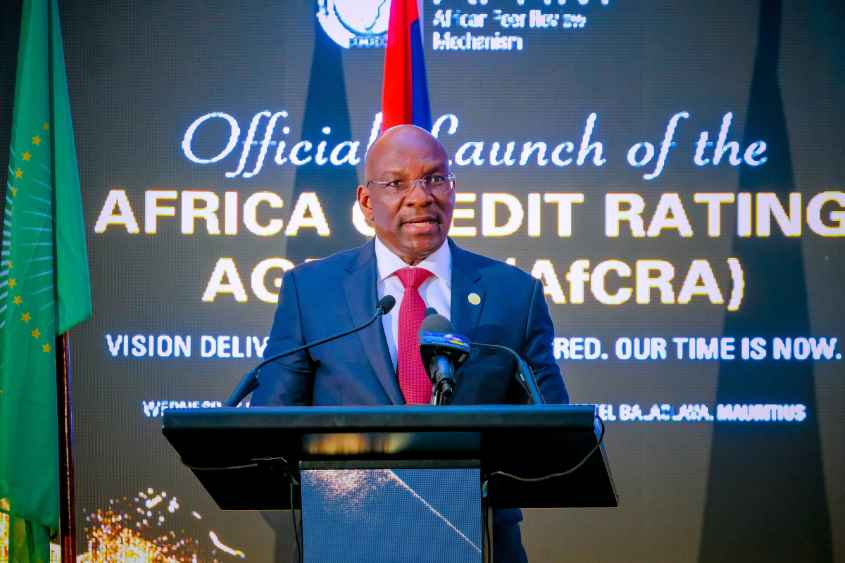
PORT LOUIS, Mauritius, October 8, 2026/APO Group/ –African Export-Import Bank (Afreximbank) (www.Afreximbank.com) welcomes today’s launch of the Africa Credit Rating Agency (AfCRA), an important milestone in strengthening Africa’s financial architecture and expanding the continent’s capacity to generate credible, independent analysis of African credit risk.


Credit ratings play an important role in determining access to capital, influencing investor perceptions and shaping the cost at which governments, institutions and businesses can finance development. It is therefore essential that assessments of African credit risk are independent, rigorous and evidence-based, while reflecting a complete understanding of the structures, institutions and economic realities being assessed.

The establishment of AfCRA adds an important African-led source of credit opinion to the market. Its value will not be measured by whether it produces more favourable ratings, but by the credibility of its analysis, the quality of its data and transparency of its methodology, and its ability to deepen understanding of African sovereigns, sub-sovereigns and corporate credit.

This is particularly important given that many African issuers remain unrated, while local-currency and sub-sovereign markets continue to have limited rating coverage. Expanding credible rating coverage can improve the information available to investors and support the development of deeper domestic and regional capital markets.

AfCRA must set a new benchmark for the continent, maintain its independence, and remain wholly owned and controlled by Africans

Alongside fellow members of the Alliance of African Multilateral Financial Institutions (AAMFI), Afreximbank has consistently maintained that African Multilateral Financial Institutions should be assessed on the basis of their fundamentals, performance, legal frameworks, mandates and operating models. Ensuring that these institutional characteristics are properly understood is essential to achieving informed, balanced and credible assessments of African risk.

Commenting on the uniqueness of the African market, and need for AfCRA’s rating methodology to reflect this, Mr Denys Denya, Senior Executive Vice President, Afreximbank, said: “The rating methodology AfCRA develops must recognise the uniqueness of our environment and its institutional structures. The Agency must set its own standards and not follow those set elsewhere — it must build a unique identity that conforms to an ‘African best practice.”

Highlighting the need for the autonomy of the Africa Credit Rating agency as it takes off, Mr Denya added: “Most importantly, AfCRA must set a new benchmark for the continent, maintain its independence, and remain wholly owned and controlled by Africans. We must all use it, and in return expect a complete assessment of where we (Africa) stand: the strengths the market has ignored, and the weaknesses we still need to fix.”

AfCRA should therefore be seen as complementary to existing international and regional rating agencies, broadening the range of credible analysis available to investors and issuers while strengthening competition, transparency and analytical capacity within Africa’s credit markets.

As Africa seeks to mobilise the scale of capital required for industrialisation, trade, infrastructure and economic transformation, credible African institutions that improve information, strengthen market confidence and deepen the continent’s financial markets will become increasingly important.

Afreximbank congratulates the African Union, the African Peer Review Mechanism (APRM) and all those involved in bringing AfCRA from concept to launch, and looks forward to the contribution the Agency will make to deeper, more transparent and more efficient African capital markets.

Distributed by APO Group on behalf of Afreximbank.


Continue Reading

Trending