

Business
Digital life deserves complete protection: Kaspersky announces new and reimagined consumer product portfolio
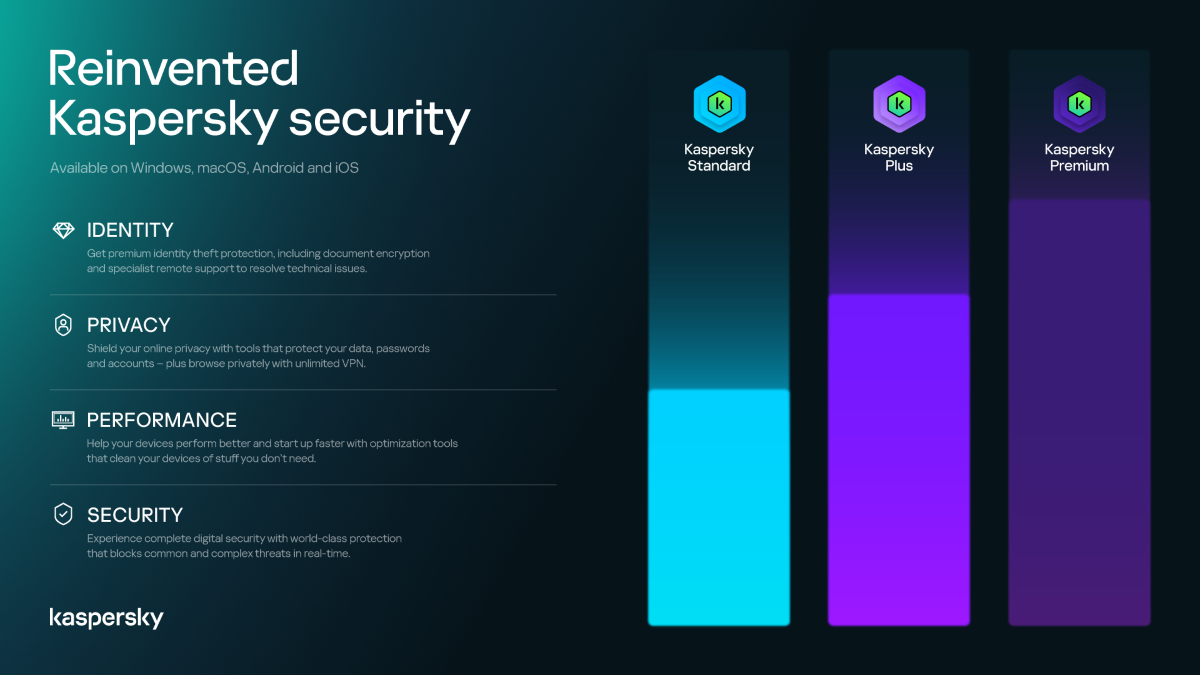
Kaspersky has reimagined its consumer protection “beyond AV” and laid out its new approach and evolutionary vision for the upcoming years
LAGOS, Nigeria, October 18, 2022/APO Group/ —
Kaspersky (www.Kaspersky.co.za) has announced availability of its new, simplified consumer solutions portfolio, available on a subscription basis. Along with a new range of brand names, the reinvented product line brings an enhanced user interface and experience across multiple platforms. It also introduces a variety of features covering each category of contemporary consumer protection: security, privacy, performance and identity.
Kaspersky detection systems discovered (https://bit.ly/3S4h1Y1) an average of 380,000 new malicious files per day in 2021, reflecting a growth of 20,000 files per day compared to 2020. There are also new types of threats continuing to emerge: from advanced stealers (https://bit.ly/3MEPkUs) targeting the accounts of popular online gaming platforms or cryptowallets, to stalkerware (https://bit.ly/3TbMJUi) that enables a perpetrator to secretly spy on another person’s private life via a mobile device. It is therefore important for users to have the answers to all possible scenarios, so they can carry on living their digital lives with confidence – whether it’s ‘farming gold’ in their favourite MMORPG, introducing kids to their first tablet, arranging a video call for senior members of the family or simply looking to explore and try the next big thing like building a smart home or taking a tour of the ‘metaverse’ (https://bit.ly/3eF6QLK).
In order to respond to these developing challenges and needs, Kaspersky has reimagined its consumer protection “beyond AV” and laid out its new approach and evolutionary vision for the upcoming years.
Introducing new Kaspersky offerings: from standard to premium
The new simplified product line has been divided into several plans – Kaspersky Standard, Kaspersky Plus and Kaspersky Premium. The updated range of plans is now platform agnostic, and each one provides protection for different types of devices on Windows, Mac, iOS and Android. These are all designed to reflect the level of functionality available to users across the entire ecosystem of the company’s consumer services.
Consumers who choose Kaspersky Standard will receive security functionality, including real-time protection against the latest digital threats and Safe Browsing & Anti-Phishing to provide defense from dangerous websites, downloads and extensions. The Standard plan also offers users a Pre-Kaspersky virus removal tool that can find and remove viruses that may have found their way into users’ PCs before they installed Kaspersky. On top of this, the plan includes a Firewall and Network Monitor which shows which apps are connected to the Internet.
There is also a whole set of performance tools, including Quick Startup, PC Speed-up and Disk Space Cleanup tools. Game and Do Not Disturb modes, which switch on automatically during gaming, working or while streaming movies on a PC, ensure undisrupted experiences and minimise the usage of system resources, allowing reallocation to priority tasks. Stalkerware detection plus webcam and mic protection are some of the privacy features available to subscribers of this plan.
It’s a comprehensive ecosystem of security services for any platform and device, serving any user need

Privacy capabilities are more prominent in Kaspersky Plus. Users subscribed to this plan get access to everything available in Kaspersky Standard plus unlimited VPN and Premium Password Manager. They also get Data Leak Checker, which monitors the Internet and dark web, warning users if their private data has been compromised and providing recommendations on what to do next. In addition, the plan includes Password Safety Status, which can enhance password protection by checking the safety status of passwords and their susceptibility to leaks. Under the Kaspersky Plus plan, users can also see which devices are connected to the home network, a particularly helpful feature for the owners of smart home tech.
The most feature-rich subscription plan, Kaspersky Premium, adds to all the previous capabilities by including digital identity protection and premium technical support – with priority access to phone calls or chat services, remote expert installation help and personal PC health checks. In order to provide comprehensive identity defense, users have access to Identity Protection Wallet, which stores copies of sensitive data (such as your passport or driver’s license) in an encrypted format to prevent identity theft and lets you securely access your data across all of your devices. In addition, all customers of Kaspersky Premium will get a free one-year subscription of Kaspersky Safe Kids as a bonus, bringing additional value for parents.
In the future, Kaspersky is planning on further developing its ecosystem and expanding its list of partnerships and integrations, thus, delivering more value and services to its users.
UX improvements and subscriptions
A clearer, more user-friendly interface and experience enhance the new portfolio. Kaspersky has completely redesigned its solutions with the aim of improving customer interaction within the app and making it simpler and easier across the key areas – prevention (all dangerous threats are blocked automatically and users are notified), monitoring (users are notified about potential threats or actions that may lead to damage and have the opportunity to choose settings or actions in order to not interrupt their digital experience) and education (users can read about the functions and threats in special blocks if they want to learn more).
The new portfolio is designed to provide a clearer demonstration of the plan’s key capabilities, with guidance from the first moments of using the service thanks to an engaging onboarding process that simulates a trusted and friendly conversation. Quick action buttons provide immediate access to the most popular features. Security news and notifications can be found under the “Home” tab, while all the main information about the user’s subscription (status, renewal date, number of devices, etc.) is available in the “Profile” section.
“We want our customers to see our offering for what it really is. It isn’t just a PC antivirus solution, it’s a comprehensive ecosystem of security services for any platform and device, serving any user need. We have revamped the entire structure of the product interface as well as the overall experience for our users to help them understand and appreciate the scope and level of protection we’re offering across security, performance, privacy and identity. And this is just the beginning: we plan to integrate more of our products and third-party products and services in order to expand the value we’re giving our clients,’ comments Mikhail Gerber, Executive Vice President, Consumer Business at Kaspersky.
To learn more about the new Kaspersky product line and approach to consumer protection, check the link (https://bit.ly/3s9To5v).
Distributed by APO Group on behalf of Kaspersky.









Business
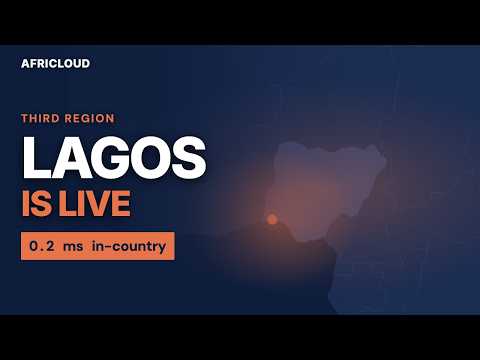
AFRICLOUD Opens Lagos Region and Local-Currency Payments in African Markets
The company’s third African region keeps Nigerian workloads in Nigeria, and customers from Abidjan to Nairobi can now pay in the currency they earn, without an international card
Download document (1): https://apo-opa.co/4Ardfz9
Download document (2): https://apo-opa.co/46FWH8Y
Buying cloud infrastructure in Africa has meant living with three compromises: traffic that leaves the continent and comes back, payment in dollars behind a card many businesses do not hold, and data sitting under somebody else’s law.
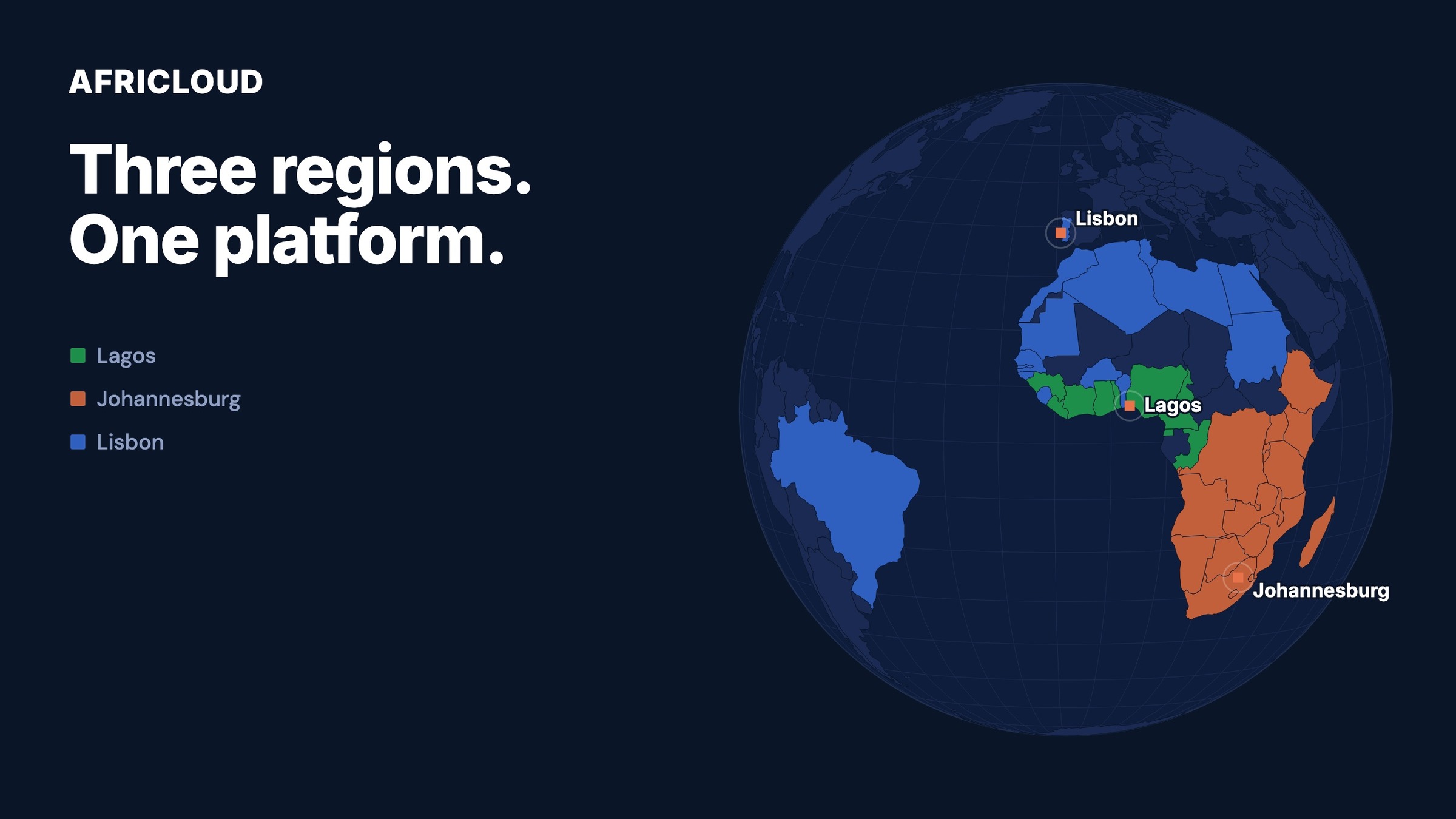
Lagos answers the first. Compute and storage for Nigerian customers stay in Nigeria, and the region also serves Accra, Abidjan, Lome, Douala and Ouagadougou. Traffic from landlocked West Africa that once reached comparable infrastructure by way of Europe now stays on terrestrial West African fibre. Johannesburg serves Southern and East Africa. Lisbon serves North Africa and Europe, and reaches Brazil over a direct subsea route. Across the three regions, AFRICLOUD’s own continent-wide measurements place 42 of the 53 African countries measured within a best-case round trip of 70 milliseconds, countries home to about 1.28 billion people.
A company in Accra or Abidjan now reaches West African infrastructure without leaving the region, and pays for it in the currency it earns
Payment answers the second. Customers across West, Central, East and Southern Africa pay in their own currency, including the naira, the cedi, the shilling and the CFA francs, by local card, bank transfer, USSD or mobile money, with no international card needed. Mobile money is live in twelve African countries, and cards, PayPal and more than 300 cryptocurrencies are accepted everywhere. The GSMA reports that 74 per cent of the world’s mobile money activity by transaction count took place in Africa in 2024.
Residency answers the third. Nigerian data runs under the Nigeria Data Protection Act, South African data under POPIA and European workloads under EU law, chosen server by server from the same dashboard.
“African businesses have been asked to choose between infrastructure that is close, infrastructure they can actually pay for, and infrastructure that keeps their data under their own law,” said Oluniyi Ajao, Founder of AFRICLOUD. “Removing that choice is the reason we built this.”
“Lagos is the piece that completes the map,” he said. “A company in Accra or Abidjan now reaches West African infrastructure without leaving the region, and pays for it in the currency it earns.”
All three regions run the same platform: AMD EPYC processors with all-NVMe storage, IPv4 and IPv6 on every server, and a new server online in about two minutes. Dedicated Servers are built to order in all three regions. Support is available around the clock by chat and email.
Cloud Servers are available now at https://AFRICLOUD.com.
Distributed by APO Group on behalf of AFRICLOUD LLC.
Business
Hong Kong outlines strategies for deepening development of the Guangdong-Hong Kong-Macao Greater Bay Area and enhancing green transformation

Business
Alamein Africa Forum to bring together key political and business leaders

-

 Business5 days ago
Emirates and the Kenya Tourism Board sign partnership agreement to drive inbound tourism
-

 Business2 days ago
Afreximbank, Ghana Infrastructure Investment Fund (GIIF) and Ghana’s 24-Hour Economy Authority launch project preparation partnership to accelerate 24H+ projects
-

 Events2 days ago
Huawei Cloud Rolls Out Enterprise AI Products Across the Board, Building an Open Agentic Cloud
-

 Business2 days ago
Hong Kong sets out strategies to enhance the appeal and add value to the city’s tourism industry
-

 Energy2 days ago
Deals, Drilling and New Entrants Define Angola Oil & Gas 2026
-

 Business2 days ago
Hong Kong sets out initiatives to secure long-term development of pillar industries
-

 Business2 days ago
Former DAMAC Senior Vice President Paulo J. Cruz Appointed Founding CEO of African Collaboration Group (ACG) to Spearhead Sports and Entertainment District Development Across Africa
-
 Business2 days ago
South Africa’s water challenges are reshaping how businesses plan for resilience