Connect with us
Anglostratits

Business

Digital Inclusion Through Low-cost Rural Connectivity in North Africa (By Danial Mausoof)
Published

on

Digital Inclusion

The technology that is required from a rural connectivity perspective is largely focused around 2G, 3G and 4G that can be evolved smoothly to 5G

SALÉ, Morocco, August 17, 2022/APO Group/ — 

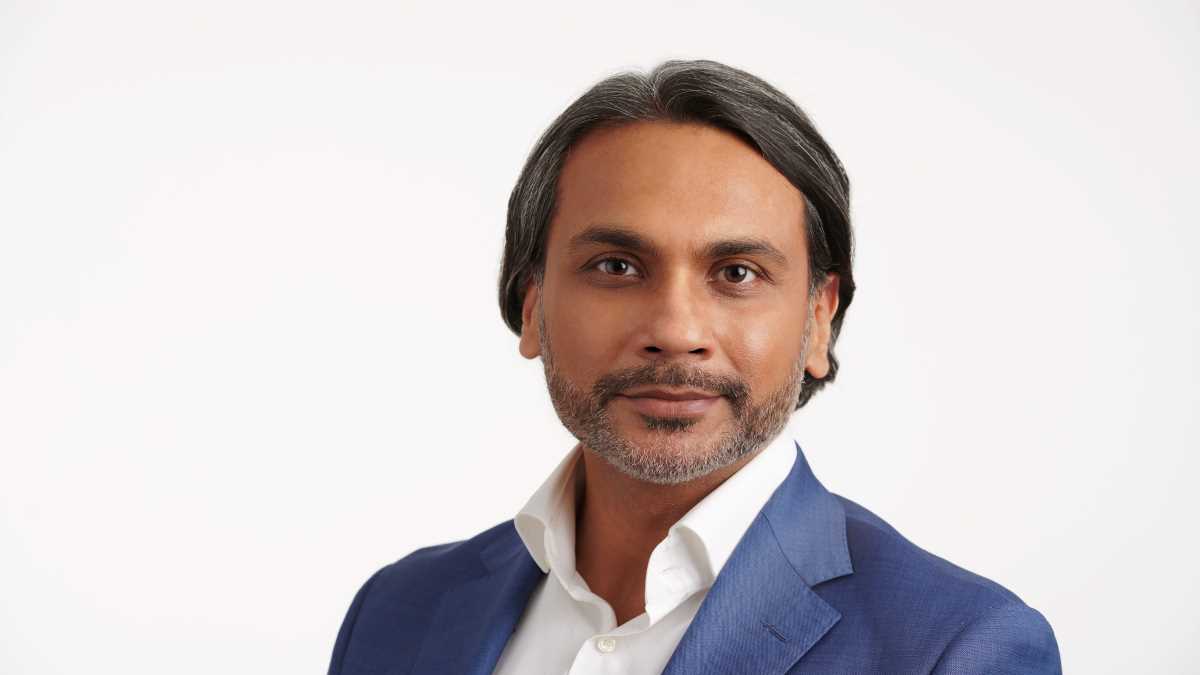
By Danial Mausoof, Head of Mobile Networks Sales and Solutioning for Middle East and Africa at Nokia (www.Nokia.com).

With 60% of the African population residing in rural areas, there is an enormous opportunity to connect people in rural communities and villages. In Morocco, a third of the population lives in rural areas, and there is still a need to connect more communities to move the country onto the cutting edge of digital technology and in support of the National Broadband Plan, which aims to provide the entire population with fixed or mobile broadband by the end of 2022.

Reducing the cost of rural connectivity

When it comes to rural connectivity, one of the biggest obstacles is the associated cost. At Nokia we create the technology for the world to act together and that is why we have developed these solutions that lower operators’ total cost of ownership, so that they can get a better return on investment (ROI) around rural connectivity. As more operators take advantage of these solutions to connect rural communities, they will also benefit from driving down their costs.

There are several layers of technology involved in connectivity. The technology that is required from a rural connectivity perspective is largely focused around 2G, 3G and 4G that can be evolved smoothly to 5G, thanks to the introduction of lean and compact Baseband and RF in Nokia portfolio. The solution  can work across those technologies at the lowest power consumption level. That is one element of the cost of connectivity that we are addressing through our new technologies. Another challenge lies in how you build the power system around the solution to improve the overall TCO.

At Nokia we create the technology for the world to act together and that is why we have developed these solutions that lower operators’ total cost of ownership

The Nokia rural solution relies on unique innovative breakthroughs such as 3 sectors RF modules and native compact outdoor baseband that deliver the leanest solution (2G to 5G) in the market in term of weight and footprint. Moreover, Nokia solution is enabled with robust security measures to ensure service continuity and protecting the assets of service providers.

Off grid power solutions for rural connectivity

We have developed off grid power solutions that reduce the total consumption through using the latest batteries and solar technologies to drive down the cost for the operator and improve their ROI. Off grid power solutions for rural connectivity in Africa will become a game changer by lowering the cost of building rural infrastructure and ensuring that operators can maximise their return on investment, as well as overcoming challenges around electrification. Aside from the radio aspect, the solution includes non-line-of-sight wireless backhaul technology rather than satellite and then we look at how we’re going to use efficiency, across managing the OPEX better through using batteries, solar and off grid solutions, and then ultimately allowing the operator to manage the radio part as well as the off grid part through a remote management system, allowing us to provide one comprehensive solution to operators looking at investing in rural connectivity.

Universal Services Fund (USF) agreements will also continue to play a fundamental role across the content as countries race to connect the unconnected and ensure that no-one gets left behind, while continuing to digitalise and embrace the Fourth Industrial Revolution (4IR) and beyond.

Beyond rural connectivity

The rural solutions a part of an extensive portfolio Nokia offers, and we collaborate closely with all major operators and government initiatives in Africa that bridge the digital divide. The reason why we are focusing on rural in Africa is because we believe this gives the first right of connectivity to people. There is also a massive shift to urbanisation on the continent, therefore alongside the rural solutions we also focus on building more extensive 4G coverage and evolving that to 5G as well.  Nokia has been a collaborator with operators across Africa for special events where we are able to optimise networks to be high performing and resilient towards the demand; a recent example would be the Africa cup in Cameroun.

Collaboration between industry, regulators and other players will, however, be key in ensuring that the African continent accelerates transformation and drives digital inclusion for all.

Distributed by APO Group on behalf of Nokia.

Energy

SBM Offshore Confirmed as Silver Sponsor for African Energy Week (AEW) 2026 Amid Africa FPSO Expansion Push

Published

on

African Energy Chamber

SBM Offshore will participate as Silver Sponsor at African Energy Week 2026, where they are set to showcase FPSO expansion in Angola, Namibia and Guyana amid strong financials and a deepwater innovation strategy

CAPE TOWN, South Africa, June 9, 2026/APO Group/ –Multinational oil and gas services company SBM Offshore will participate at this year’s African Energy Week (AEW) 2026 Conference and Exhibition as a Silver Sponsor, reinforcing the company’s long-term commitment to Africa’s expanding deepwater oil and gas industry. Their participation comes as SBM Offshore accelerates brownfield optimization projects in Angola while aggressively positioning itself for new frontier developments in Namibia’s Orange Basin.


SBM Offshore’s return to AEW, which takes place from October 12–16 in Cape Town, is expected to draw significant industry attention as operators, financiers and EPC contractors evaluate the next wave of floating production infrastructure across the Atlantic Basin. With more than 20 years of experience in Africa and over $31 billion in contract backlog globally, the company remains one of the world’s most influential FPSO suppliers.

The Sponsorship follows several major milestones announced during 2025 and 2026. On May 26, the American Bureau of Shipping approved SBM Offshore’s seawater intake riser technology developed alongside Shell. The system pumps cold seawater from depths of 700m to FPSO topsides, reducing onboard cooling energy demand and improving emissions performance for future African and South American projects.

The company’s financial position strengthened considerably following the $2.32 billion sale of FPSO One Guyana to ExxonMobil in February 2026. The transaction helped drive a 216% year-on-year increase in Q1 2026 directional revenue to $3.5 billion while reducing SBM Offshore’s net debt from $5.7 billion to $3.2 billion by March 21, 2026.

SBM Offshore continues to demonstrate the technical expertise, operational scale and long-term investment approach needed to advance Africa’s next generation of energy projects

In March 2026, ExxonMobil awarded SBM Offshore front-end engineering and design contracts for the Longtail development in Guyana. The proposed FPSO is expected to feature the world’s highest gas-handling capacity ever deployed on a floating production vessel, processing 1.2 billion cubic feet of gas and 250,000 barrels of condensate daily.

Across Africa, SBM Offshore continues expanding its offshore footprint. In Angola, the company signed multi-year extensions in December 2025 with Esso Exploration Angola for FPSO Mondo and FPSO Saxi Batuque in Block 15, extending operations through 2032. Brownfield upgrades and life-extension works commenced in early 2026 to support declining reservoir pressure management and maintain environmental compliance standards.

The company also finalized a share purchase agreement with Equatorial Guinea’s national oil company GEPetrol in December 2025, restructuring regional asset ownership and supporting localized operational transitions. The FPSO Aseng formally exited SBM Offshore’s lease-and-operate fleet during the same period as management responsibilities shifted toward Equatoguinean entities.

Namibia retains a central focus of SBM Offshore’s African growth strategy. The company is actively competing for TotalEnergies’ Venus FPSO contract in the Orange Basin, one of Africa’s largest recent offshore discoveries with estimated resources of roughly 2 billion barrels. SBM Offshore has expanded its Cape Town commercial engineering workforce while positioning its standardized technologies for upcoming South Atlantic developments.

“SBM Offshore’s participation at this year’s event reflects the growing momentum behind Africa’s deepwater industry and the critical role FPSO technology will play in unlocking new production. From Angola’s mature offshore hubs to Namibia’s frontier discoveries, SBM Offshore continues to demonstrate the technical expertise, operational scale and long-term investment approach needed to advance Africa’s next generation of energy projects,” says NJ Ayuk, Executive Chairman, African Energy Chamber.

Looking ahead, SBM Offshore aims to combine frontier expansion with lower-emission offshore production systems. Through partnerships with SLB and Cognite, the company is integrating industrial AI platforms to its global fleet while scaling standardized hull construction to accelerate project delivery timelines across Africa and Latin America.

Distributed by APO Group on behalf of African Energy Chamber.

Continue Reading

Business

Minister Kgosientsho Ramokgopa Joins African Energy Week (AEW) 2026 as South Africa Opens R400B Grid Expansion to Private Investment

Published

on

Kgosientsho Ramokgopa

South Africa has moved from rolling blackouts to a year of stable supply, and Minister Kgosientsho Ramokgopa now turns to the grid expansion and market reforms needed to keep the lights on and draw private capital

CAPE TOWN, South Africa, June 9, 2026/APO Group/ –Kgosientsho Ramokgopa, Minister of Electricity and Energy of the Republic of South Africa, has been confirmed as a featured speaker at African Energy Week (AEW) 2026, where he is expected to outline the next phase of the country’s power-sector recovery and the investment drive needed to expand the electricity grid.


Taking place October 12-16, AEW 2026 represents the largest energy gathering on the African continent, offering a strategic platform for dealmaking and partnerships. Minister Ramokgopa’s participation reflects the country’s ambitions to strengthen investment flows across the power and energy markets, supporting long-term generation resilience and improved transmission networks.

South Africa has moved from one of the worst phases of its electricity crisis to its most stable supply in years. The country recently passed a full year without load-shedding, and the grid is at its strongest in half a decade, with roughly 4,400 MW more generation on hand than a year earlier. The return of Kusile Power Station to its full output of about 4,800 MW helped anchor the turnaround.

South Africa’s recovery shows what disciplined execution can achieve, and opening the grid to private capital is the logical next step

With supply stabilized, Ramokgopa has reframed the current market challenge as being less about generation and more to do with transmission, offtakers and bottlenecks, pointing to more than 130 GW of generation projects that have yet to secure firm offtake agreements. That bottleneck sits at the center of the country’s largest infrastructure push. The Transmission Development Plan calls for 14,000 km of new power lines and 105 substations by 2030, at a cost of roughly R400 billion, to unlock an additional 22.5 GW of capacity.

Because neither Eskom nor the state can fund that build alone, the government has opened transmission to private investment for the first time through the Independent Transmission Projects (ITP) program. In December 2025, Ramokgopa named seven prequalified bidders for the first phase, all of them international-led consortia. The phase covers 1,164 km of high-voltage lines across seven corridors, with a combined value of about $1 billion. A request for proposals is expected in the second half of 2026.

“South Africa’s recovery shows what disciplined execution can achieve, and opening the grid to private capital is the logical next step,” says NJ Ayuk, Executive Chairman of the African Energy Chamber. “The real opportunity now is in transmission, and the investors who help build that network will open up generation that will change South Africa’s future for the better.”

Private appetite is already evident on the generation side. The latest round of the Renewable Energy Independent Power Producer Procurement Program drew 10.2 GW of bids against the 5 GW on offer. In the 2025/26 financial year, eight new independent power projects came online with a combined 800 MW, and another 1,610 MW is under construction.

Minister Ramokgopa is also expected to address the Integrated Resource Plan 2025, the government’s blueprint guiding new generation capacity, and the rollout of a competitive wholesale electricity market intended to open the sector beyond Eskom.

As AEW 2026 prepares to convene policymakers, investors and operators at the Cape Town International Convention Center this October, Minister Ramokgopa’s participation is the host nation’s signal that its power sector is open for investment.

Distributed by APO Group on behalf of African Energy Chamber.

Continue Reading

Energy

Carbon Markets Africa Summit (CMAS) 2026 programme launched as Africa’s carbon markets move from readiness to delivery

Published

on

CMAS

Positioned as a pan-African marketplace, CMAS connects policy, project pipelines, capital and buyers in a structured environment focused on enabling real deal flow

CAPE TOWN, South Africa, June 9, 2026/APO Group/ –Africa is emerging as an exciting destination to develop carbon market projects with improved policy certainty and more and more projects becoming investment-ready. As global carbon markets transition from rule-setting to real transactions, with Article 6 mechanisms moving into implementation and compliance-driven demand such as CORSIA accelerating, attention is shifting towards where credible supply, policy certainty and investment-ready projects can be delivered at scale.


Against this backdrop, the Carbon Markets Africa Summit (CMAS) that is organised by VUKA Group has released its official 2026 programme, outlining how Africa’s carbon markets can move beyond frameworks into execution, investment and transactions. The summit will take place from 13–15 October 2026 in Kigali, Rwanda, hosted by the Ministry of Environment of Rwanda, with UNDP and the African Development Bank (AfDB) as host organisations, the Development Bank of Southern Africa (DBSA) as host partner, and AUDA-NEPAD as the strategic institutional partner.

Positioned as a pan-African marketplace, CMAS connects policy, project pipelines, capital and buyers in a structured environment focused on enabling real deal flow.

This year’s programme reflects a changing market dynamic, one where integrity, quality and transaction readiness are becoming decisive.

Carbon markets are entering a more selective and operational phase. The question is no longer whether Africa has a role to play, but whether the continent can bring forward credible projects, enabling frameworks and market infrastructure to transact at scale,” said Emmanuelle Nicholls, Project Lead. “CMAS 2026 is designed as a response to that moment – connecting the actors, pipelines and capital needed to move from ambition to execution.”

Africa’s carbon markets must be built on integrity, equity, and continental coordination so that carbon finance delivers real value

Within this evolving context, the summit places strong emphasis on the foundations required to scale markets responsibly. As Estherine Fotabong, Director at AUDA-NEPAD, notes, “Africa’s carbon markets must be built on integrity, equity, and continental coordination so that carbon finance delivers real value for communities, ecosystems, and sustainable development across the continent.”

A programme built for execution

The CMAS 2026 programme spans the full carbon market value chain from policy and Article 6 implementation to project development, finance and transactions. Key highlights include the keynote opening session on delivering projects, capital and transactions at scale, a high-level dialogue on trust and market readiness, ministerial and technical roundtables, and sessions focused on buyer demand, investor priorities and deal structuring.


A central feature is a curated pipeline of African carbon projects across nature-based solutions, regenerative agriculture, carbon removals, waste-to-value and blue carbon, presented through project showcases, case studies and investment-ready deal rooms.

The programme also includes solution labs and technical workshops addressing critical bottlenecks—including Article 6 and CORSIA implementation, early-stage finance, MRV systems and project bankability, alongside live demonstrations of digital carbon infrastructure, ensuring focus on practical market development and delivery.

CMAS 2026 is hosted in Rwanda, a country advancing carbon market frameworks under Article 6, and takes place at a pivotal moment as global markets increasingly prioritise integrity, quality and real delivery at scale.

Distributed by APO Group on behalf of VUKA Group.

Continue Reading

Trending