Connect with us
Anglostratits

Energy

Congo Liquefied Natural Gas (LNG) Phase 2 Begins Exports as Hydrocarbons Minister Joins Paris Energy Forum

Published

on

Congo

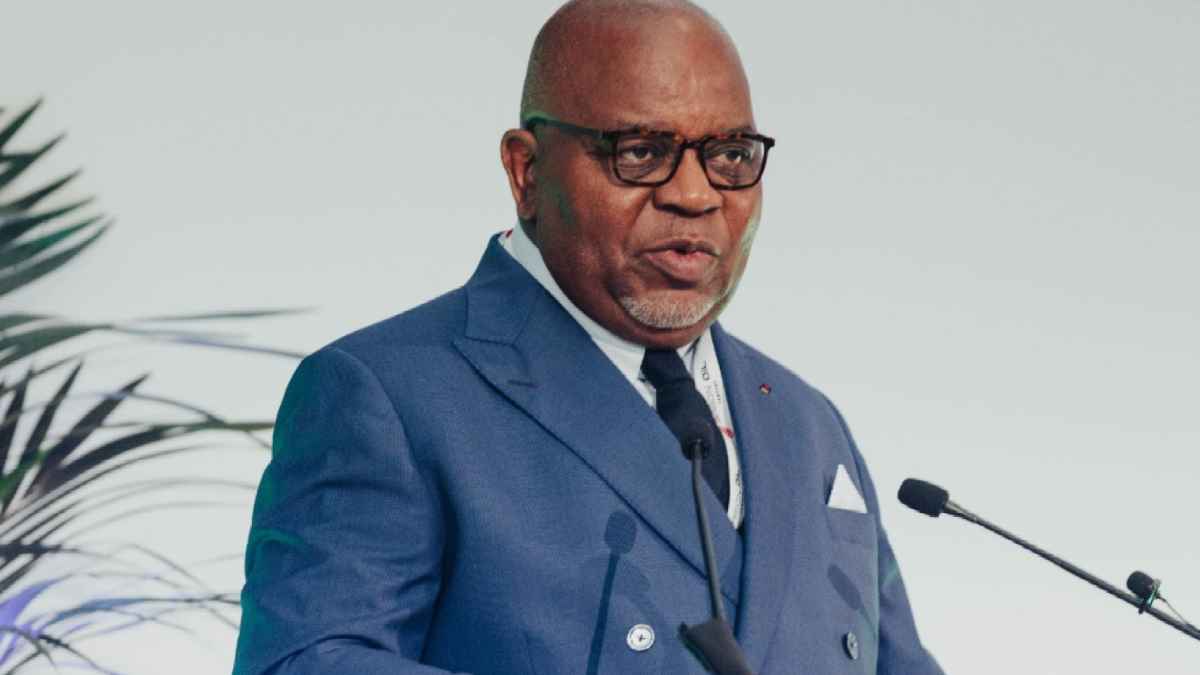
The Republic of Congo’s accelerated launch of Phase 2 of its LNG project underscores rapid execution and expanding export capacity, setting the stage for Hydrocarbons Minister Bruno Jean‑Richard Itoua’s participation at this year’s Invest in African Energy Forum in Paris

PARIS, France, February 13, 2026/APO Group/ –The Republic of Congo marked a major milestone earlier this week with first exports from Phase 2 of its Congo LNG project – amplifying investor interest just ahead of Hydrocarbons Minister Bruno Jean‑Richard Itoua’s engagement at the Invest in African Energy (IAE) Forum in Paris, scheduled for April 22–23, 2026. Operated by Eni, the second phase began exporting from the new Nguya FLNG facility, lifting the country’s liquefaction capacity to 3 million tons per annum and delivering its first cargo in early 2026 following commissioning ahead of schedule.

Phase 2’s start‑up, achieved roughly 35 months after construction began, adds capacity alongside the earlier Tango FLNG unit, reinforcing Congo’s emerging role as a competitive LNG exporter in Africa. The expanded infrastructure draws on gas from the offshore Nené and Litchendjili fields under the Marine XII license, giving the country a stronger foothold in global gas markets at a time when buyers – particularly in Europe – seek diversified supply sources amid a shifting energy landscape.

The timing of Phase 2’s export start-up dovetails with growing international interest in Congo’s broader energy agenda: TotalEnergies recently secured the Nzombo exploration permit with a one-well drilling program, while Perenco is redeveloping its mature Kombi‑Likalala‑Libondo II offshore field with a new platform to extend production and gas recovery.

Minister Itoua, who has been instrumental in advancing upstream, midstream and gas monetization policy in the country, is expected to outline investment opportunities across gas, LNG, marginal fields and exploration at the upcoming forum – providing investors with direct access to Congo’s evolving energy landscape.

Beyond LNG, the Ministry of Hydrocarbons has advanced regulatory reform – including a new gas code nearing adoption that streamlines fiscal terms and clarifies rules for investors – alongside international cooperation to stimulate investment. Past IAE Forum engagements have produced key agreements, such as the 2023 pact with Technip Energies to enhance onshore and offshore capacity and collaborate on decarbonization and energy transition, highlighting Congo’s proactive approach to industry partnerships.

At IAE 2026, investors and policymakers will have the opportunity to engage directly with Minister Itoua and other senior officials on these developments, gaining first‑hand insight into how Congo is balancing gas monetization with broader energy sector growth and unlocking investment opportunities.

Congo’s trajectory – from a mature oil producer to a rapidly evolving LNG exporter – reflects a broader shift in African energy markets toward integrated, export‑oriented gas strategies. By linking robust policy engagement with ambitious infrastructure execution, Congo exemplifies how resource-rich African states can compete for global investment while contributing meaningfully to energy security and economic growth. As Minister Itoua prepares to take the stage in Paris, the Phase 2 LNG milestone serves as concrete evidence of both progress and opportunity for investors prepared to engage with the continent’s expanding energy frontier.

Distributed by APO Group on behalf of Energy Capital & Power.

Energy

African Iron Ore: Driving Industrialization, Investment and Regional Growth

Published

on

Energy Capital

African Mining Week 2026 will showcase investment and lucrative prospects within Africa’s iron ore and steel manufacturing value chain

CAPE TOWN, South Africa, March 9, 2026/APO Group/ –Home to 30% of the world’s critical mineral reserves, Africa has emerged as a strategic player in global supply chains. The continent’s iron ore sector, in particular, offers substantial growth opportunities, with global demand and new exploration campaigns making a strong case for investment. As capital expenditure across the sector increases, Africa has a unique opportunity to turn its iron ore resources into catalysts for sustainable economic growth – and countries are already responding to this call.

Iron Ore Emerges as Strategic Priority

The global iron ore market is expected to grow from $313 billion in 2026 to $425 billion by 2034, driven by infrastructure expansion, industrialization and the continued need for steel in automotive and construction applications. In response, African countries and institutions are moving to position iron ore as a strategic priority. The Africa Finance Corporation (AFC) has designated iron ore as a strategic resource critical for advancing Africa’s mineral production, manufacturing capabilities and industrialization agenda. In its Compendium of Africa’s Strategic Minerals study released in mid-February, the AFC states that, of the continent’s estimated $8.6 trillion in untapped mineral wealth, iron ore presents a unique opportunity to drive domestic steel and construction sectors while insulating Africa from global demand volatility.

South Africa has also made iron ore a pillar of its critical minerals expansion strategy which targets R2 trillion in investment over the next five years. Speaking in his mid-February State of the Nation Address, President Cyril Ramaphosa said: “Our iron ore reserves are valued at more than R40 trillion, making mining a sunrise industry. After many years of declining investment in exploration, we are dedicating funds to geological mapping and exploration to harness our critical mineral reserves.”

Similarly, the Democratic Republic of Congo (DRC) is prioritizing iron ore exploitation as part of its strategy to unlock its $24 trillion in untapped mineral wealth. Speaking in Cape Town in mid-February, Minister of Mines Louis Watum Kabamba highlighted the country’s $28 billion special economic zone program spanning the North East to South West, aimed at mining and processing iron ore into steel.

After many years of declining investment in exploration, we are dedicating funds to geological mapping and exploration to harness our critical mineral reserves

Earlier on, during African Mining Week (AMW) 2025, Kabamba highlighted the DRC’s iron ore potential in an exclusive interview with Energy Capital & Power. “We have 20 billion tons of iron ore – enough to supply steel for Africa. The continent must identify what is critical and prioritize it to drive regional growth,” he said.

African Projects Eye Domestic Markets

As iron ore production rises in Africa, many countries are integrating mining with broader industrial agenda. Guinea, for example, is leveraging its $20 billion Simandou iron ore project – the world’s largest untapped iron ore deposit – as the cornerstone of its Simandou 2040 strategy, a mining-sector-led economic diversification plan. The country aims to attract global investment not only into mining but across strategic sectors, channeling capital into 122 priority projects spanning infrastructure, health, education and agriculture.

Meanwhile, Liberia is on track to triple its iron ore output this year, fueling the expansion of its industrial sector. This growth is being driven by ongoing projects and capacity expansions from ArcelorMittal Liberia, Cavalla Resources, Westcrest, Zodiac, and Bao Chico. The country’s Minister of Mines Matenokay Tingban previously shared that the country expects to reach between 25 million and 30 million tons once all producers come online.

AMW 2026: Unlocking Investment and Industrial Potential

Ongoing developments highlight the strategic potential of Africa’s iron ore sector to drive mining growth, attract investment and fuel industrialization. With global demand for steel and iron rising, African nations are combining resource wealth with infrastructure development, local beneficiation and strategic financing to maximize value across the continent.

Stepping into this picture, the upcoming African Mining Week 2026 – scheduled for October 14–16 in Cape Town – will provide a premier platform to showcase these opportunities. The event will facilitate partnerships, deal signings and high-level discussions across the iron ore value chain, uniting governments, investors and private sector stakeholders to accelerate production, industrial growth and economic transformation across Africa.

Distributed by APO Group on behalf of Energy Capital & Power.

Continue Reading

Energy

Staatsolie to Chart Suriname’s Offshore Future at Caribbean Energy Week 2026

Published

on

Energy Capital

The national oil company will showcase its role in shaping offshore investment opportunities, recent exploration milestones and initiatives to prepare Suriname’s private sector for the country’s emerging oil and gas boom

PARAMARIBO, Suriname, March 9, 2026/APO Group/ –Suriname’s national oil company Staatsolie is set to highlight the country’s expanding offshore opportunities at the inaugural Caribbean Energy Week (CEW) 2026, taking place March 30 to April 1 in Paramaribo. Offshore Exploration Manager Sharista Kalapnat-Kisoensingh is expected to speak on Staatsolie’s strategic offshore initiatives, alongside sessions on the company’s Enterprise Development Center (EDC), which aims to strengthen the local private sector and prepare Surinamese businesses for participation in the country’s growing oil and gas industry.

Staatsoilie has been at the center of Suriname’s offshore oil boom. The company’s declaration of the Sloanea field as commercial in November 2025 marked a major milestone, highlighting the basin’s growing hydrocarbon potential. Staatsolie’s seismic survey program with TGS and BGP Offshore, launched late last year, is generating critical geological insights across multiple offshore blocks, while new production sharing agreements for Blocks 9 and 10 are attracting further international investment. Together, these initiatives position Staatsolie not just as a producer, but as a strategic enabler – coordinating development, structuring investment opportunities, and shaping Suriname’s broader offshore growth agenda.

Further supporting the sector’s growth, Staatsolie launched an Open-Door Offering in late 2025, making roughly 60% of Suriname’s offshore acreage available under flexible exploration agreements. Alongside its 20% stake in the $10.5 billion GranMorgu development on Block 58 – which is set to generate over $1 billion in local content expenditure – Staatsolie is driving Suriname’s evolution from a modest onshore producer into a globally relevant offshore player with significant investment, production and local economic potential.

At CEW 2026, Staatsolie’s sessions will also highlight the EDC, a flagship initiative to prepare Suriname’s private sector for offshore participation. As GranMorgu and other developments advance toward production, the EDC will ensure that local companies are equipped to capture opportunities arising from exploration, construction, and supply chain activities.

Staatsolie’s upstream operations already account for roughly 9.5% of Suriname’s GDP and 32% of government revenues, figures expected to rise as offshore production ramps up. Kisoensingh’s participation is expected to outline how the company is managing Suriname’s offshore growth, supporting private sector engagement and positioning the country as an emerging hub in regional energy markets.

Join us in shaping the future of Caribbean energy. To participate in this landmark event, please contact sales@energycapitalpower.com.

Distributed by APO Group on behalf of Energy Capital & Power.


Continue Reading

Business

Venezuela’s Deputy Minister Arturo Gil Visits Cape Town to Advance Energy Ties

Published

on

African Energy Chamber

The visit builds on an MoU signed between Venezuelan petroleum authorities and the African Energy Chamber in February 2026, representing the next step in this collaborative initiative

CAPE TOWN, South Africa, March 6, 2026/APO Group/ –Following the historic visit by the African Energy Chamber (AEC) (https://EnergyChamber.org) to Venezuela in February 2026, Venezuela responded by sending its Deputy Minister of Artificial Intelligence and Productive Efficiency on Hydrocarbons Arturo Gil to South Africa to advance energy ties.


A high-level meeting was held in Cape Town, featuring Deputy Minister Gil and Carlos Feo Acevedo, the Venezuelan Ambassador to South Africa, alongside an AEC team led by Executive Chairman NJ Ayuk and a team from Energy Capital & Power, led by CEO James Chester. Discussions centered on strengthening investment flows, leveraging Venezuela’s expertise to support Africa’s energy resilience and identifying avenues for collaboration across the energy value chain.

The meeting follows a high-level visit by the AEC to Caracas in late February, which included meetings with Delcy Rodríguez, Interim President of Venezuela as well as the state-owned oil corporation Petróleos de Venezuela SA and the ministries of Hydrocarbon Geopolitics and Gas. The outcome of these meetings was a signed MoU, aimed at strengthening investment and collaboration across the oil, gas and broader energy sectors. The Cape Town discussion represents the next step in this collaboration, underscoring Venezuela’s commitment to establishing resilient ties with African nations.

Workforce Development and Technical Cooperation

A key outcome of the meeting was a commitment to strengthening workforce development across Africa’s energy sector. Under the initiative, the AEC will engage between 10 and 15 African stakeholders to participate in specialized technical training programs at Venezuela’s University of Hydrocarbons, supporting skills development and knowledge transfer between the two regions.

The Venezuelan delegation emphasized the importance of building long-term technical partnerships, noting that structured training programs would allow African professionals to gain hands-on expertise while fostering deeper institutional cooperation between Africa and Venezuela.

“We believe it would be valuable to organize a working visit to South Africa and bring a Venezuelan delegation to explore cooperation and investment opportunities,” stated Deputy Minister Gil.

Leveraging Venezuelan Oil and Gas Expertise

The meeting also examined how Africa can benefit from Venezuela’s more than 100 years of oil and gas production experience. Ayuk highlighted geological similarities between Venezuela and key African producing countries such as Namibia and Angola, suggesting that knowledge exchange on basin geology and data interpretation could accelerate exploration and production across both regions.

We believe it would be valuable to organize a working visit to South Africa and bring a Venezuelan delegation to explore cooperation and investment opportunities

“We need to strengthen collaboration between Africa and Venezuela. I hope to see more African stakeholders leveraging your cooperation, particularly in the area of data sharing and trade,” stated Ayuk.

He also underscored Venezuela’s unique role as a member of the African Petroleum Producers’ Organization, emphasizing the importance of increased participation in continental initiatives such as the African Energy Bank to address both the continent and the south American nation’s investment challenges.

Unlocking Investment and Market Opportunities

Investment opportunities within Venezuela’s hydrocarbon sector was also a central focus of the meeting. The Venezuelan delegation highlighted the country’s extensive geological database, built over more than a century of exploration and production activity, which provides investors with detailed insights into untapped resources and development opportunities.

With 1,000 wells planned for development and over 20,000 wells already drilled – including many yet to be optimized – the country presents substantial and highly lucrative investment opportunities across its upstream sector.

Gas Development and Energy Access

Venezuela’s vast natural gas resources were also discussed as a potential solution to Africa’s growing energy access challenges. With approximately 600 million people in Africa lacking access to electricity and nearly one billion living without access to clean cooking solutions, Ayuk highlighted the potential role of Venezuela’s flared gas in strengthening the continent’s energy supply while also supporting economic growth for the South American nation.

“Venezuela has significant onshore gas resources that can be further developed, but unlocking this potential will require greater investment to support both national development and the needs of our people,” stated Deputy Minister Gil. “LPG is not only an energy resource but also a social solution with strong economic and societal value. There is substantial potential for expansion in both our onshore and offshore gas sectors.”

Role of African Independents in Upstream Expansion

During the meeting, the parties emphasized the growing influence of African independent oil companies, noting their success in expanding production across the continent after decades of experience working alongside international majors. Drawing parallels with markets such as Nigeria, he suggested that independent operators could also play a role in supporting Venezuela’s efforts to increase oil output through brownfield redevelopment and mature asset optimization.

“Outside the U.S., Africa – especially Nigeria – has one of the largest populations of independent oil producers, with many operators producing from as little as 1,000 barrels per day,” stated Ayuk.

As both regions seek to expand production and address energy access challenges, deeper collaboration between African and Venezuelan stakeholders could unlock new opportunities across the global energy landscape.

Distributed by APO Group on behalf of African Energy Chamber.

Continue Reading

Trending