Published
3 weeks agoon
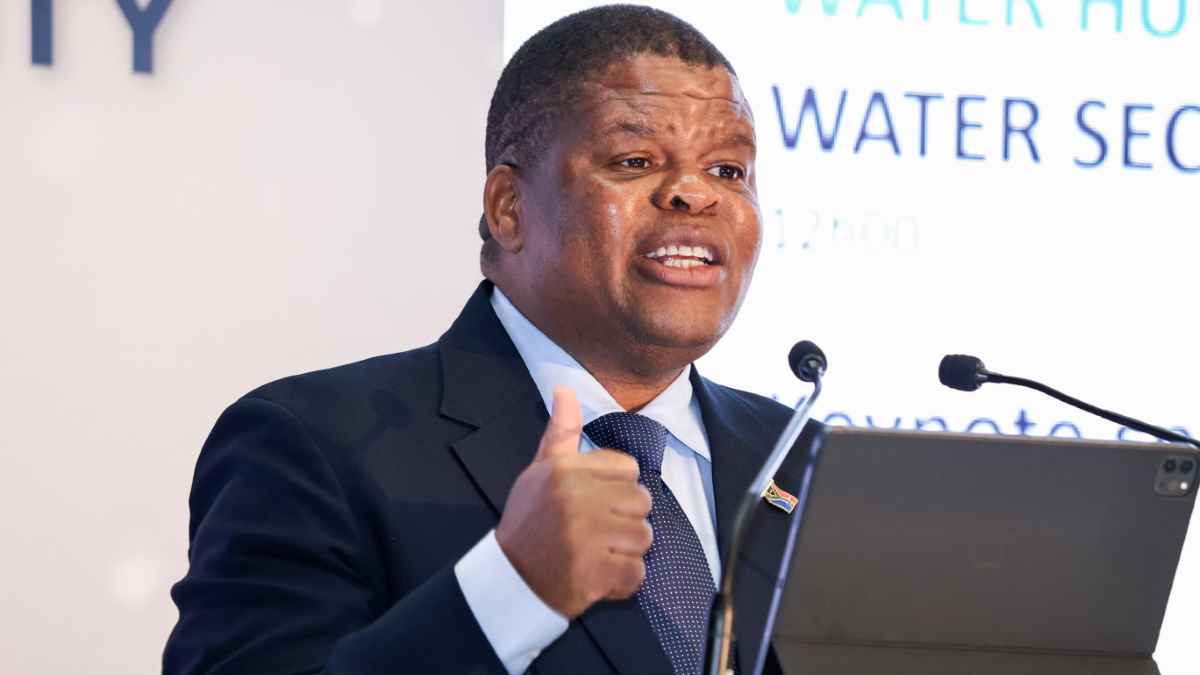
Industry accounts for up to 20% of global water withdrawals, and as municipal supply reliability and tariff pressure increase, more organisations are treating water security as a board-level risk
Industry accounts for up to 20% of global water withdrawals, and as municipal supply reliability and tariff pressure increase, more organisations are treating water security as a board-level risk.
The SAICE CPD-accredited programme will showcase practical approaches to reducing demand, improving water governance and building resilient water systems on-site and across supply chains.
Sector case studies and stewardship sessions include:
Mining: closed-loop tailings systems, high recycling rates and pathways towards zero-liquid-discharge approaches
Many organisations have already proven that major reductions in water demand are possible without compromising operations
Agro-processing: recovering water from production processes, condensate capture and fit-for-purpose reuse
Hospitality and healthcare: greywater recycling, rainwater systems and demand reduction programmes that can be adapted across portfolios
Property: on-site treatment and reuse solutions designed to reduce exposure to supply unreliability across commercial building portfolios
The programme also connects corporate water stewardship to municipal and catchment realities, including how loss reduction and better network performance improve supply stability and reduce system-wide costs.
“Many organisations have already proven that major reductions in water demand are possible without compromising operations,” said Claire Volkwyn, Head of Content, VUKA Group.. “At Water Security Africa, leaders will share the systems, governance and investment cases behind those results so others can replicate them.”
Confirmed speakers include Darshana Myronidis (Virgin Group UK), Petrus Swanepoel (Mediclinic), Molatelo Motau (Heineken), John van Wyk (Harmony Gold), Zomakahle Ndlovu (Inkomathi Usuthu Catchment Management Agency), Desiree Moima (Gauteng Department of Co-operative Governance and Traditional Affairs) and Martjie Cloete (Growthpoint Properties), alongside municipal and utility leaders addressing the broader system context.
Download the programme: https://apo-opa.co/4sIOBGc
Register: https://apo-opa.co/4dNJ10h
Distributed by APO Group on behalf of VUKA Group.
Nigeria and Senegal Must Follow Ghana and Mozambique Against Exclusionary Practices
Sheraton Nouakchott marks the entry of Marriott International in Mauritania
Securing the bridge between legacy and smart
Africa’s Lithium Pipeline Gains Momentum as Global Supply Deficits Loom
Afreximbank delivers strong FY2025 results; with a total assets and contingencies base of US$48.5 billion
Afreximbank supports Dangote Group as it targets US$100 billion annual revenue by 2030
Published
1 week agoon
April 10, 2026
African private sector leaders call for withdrawal from Frontier Energy events that marginalize local talent, championing inclusion, fair contracting and the Alliance model of partnership
Frontier’s approach, framed as a global platform for Africa, is in practice a system that extracts value from the continent while denying Africans the opportunities to lead, participate and benefit. Marginalizing the very people who build, operate and sustain energy projects is not partnership – it is structural exclusion masquerading as opportunity.
African businesses – particularly in Nigeria and Senegal, which drive regional growth – must reassess their participation in platforms that perpetuate these policies. African capital, sponsorship and attendance cannot continue to legitimize forums where local stakeholders are systematically sidelined. Market access must be earned and mutually respected.
Mozambique and Ghana have already set a precedent. In March 2026, Mozambique’s oil and gas industry withdrew from the Africa Energies Summit in London, citing repeated failures by the organizers to improve diversity, transparency and inclusion of Black professionals in leadership, contracting and deal-making roles. In early April 2026, the Ghana Energy Chamber followed suit, formally pulling out of the same summit over discriminatory hiring practices that sidelined African professionals, executives and service providers. These coordinated actions send a clear message: Africa will no longer support platforms that deny its talent the right to lead, contribute and benefit.
Africa will no longer sit quietly while its talent is excluded from opportunities on its own continent
The gold standard for companies to thrive in Africa is robust collaboration with international partners while building local capacity – exemplified by Senegal-based energy services company Alliance Energy. Alliance has advanced African expertise in the sector, notably supporting the launch of the National Institute for Petroleum and Gas in Senegal to train young professionals for leadership roles, while backing diverse energy initiatives across power, solar, gas and wind that strengthen Senegal’s position as a regional energy hub.
This success demonstrates that African companies flourish when local talent, leadership, contracting and workforce development are central to execution, alongside strategic partnerships with the US, UK and Europe. Any entity attempting to operate in Africa without a commitment to hiring or contracting local professionals threatens not only the ecosystem that nurtured companies like Alliance Energy but also the continent’s broader ambition to grow regional capability, ownership and sustainable energy development.
“The message is simple,” says Dr. Ndjuga Dieng, Managing Director of Alliance Energy. “Africa will no longer sit quietly while its talent is excluded from opportunities on its own continent. Nigeria, Senegal and all African nations must follow the lead of Ghana and Mozambique by standing against platforms that discriminate. Protect your people, your companies and your energy future. Inclusion is not optional – it is the foundation of growth.”
African energy markets have historically thrived on collaboration, both within the continent and with international partners. Events such as the Offshore Technology Conference (OTC) and the Invest in African Energy (IAE) Forum exemplify this model, integrating African executives, policymakers and service providers into core programming, deal-making and knowledge transfer.
African stakeholders must prioritize platforms that respect local content, equitable hiring and fair contracting. Strategic withdrawal from exclusionary events is not isolationism – it is a stand for principle, economic logic, and the future of Africa’s energy sector. The continent defines its own trajectory and will engage only with partners that recognize African talent as integral, not optional, to the industry’s future.
The position advanced by Alliance Energy aligns with broader advocacy across the continent, including that of the African Energy Chamber, which has consistently called for stronger local content policies, fair contracting practices and greater inclusion of African professionals across the energy value chain. This alignment underscores a growing consensus among African private sector leaders that sustainable industry growth depends on meaningful participation by local companies and talent, not their exclusion.
Distributed by APO Group on behalf of African Energy Chamber.
Published
1 week agoon
April 9, 2026
The upcoming African Mining Week 2026 – taking place from October 14-16 in Cape Town – will connect global investors with prospects within the lithium industry amidst an anticipated resource supply deficit by 2028
Against this backdrop, Africa’s growing pipeline of greenfield and development-stage lithium projects positions the continent as an increasingly important contributor to global supply security. In 2025, Africa ranked as the largest source of new lithium supply globally, with new output from the region exceeding that of the rest of the world combined. This milestone underscores the continent’s potential to scale production and strengthen its role in the global battery minerals market.
Emerging Lithium Producers Strengthen Africa’s Supply Pipeline
Even under a slower energy transition scenario, Wood Mackenzie projects that lithium markets will remain adequately supplied until 2037, before entering deficit. This outlook reinforces Africa’s strategic role as new projects across Mali, Zimbabwe, Ghana and Namibia advance toward production.
In the Democratic Republic of the Congo (DRC), Zijin Mining, AVZ Minerals and KoBold Metals are expected to begin operations at the Manono lithium project in mid-to-late 2026, marking the country’s first lithium output. Ranked among the world’s largest hard-rock lithium deposits, Manono is expected to begin exports shortly after commissioning, diversifying DRC’s mineral output while strengthening the continent`s contribution to the global electric vehicles and battery supply chain.
Mali Emerges as a Regional Lithium Hub
Mali is also rapidly positioning itself as a key lithium producer. The Bougouni Lithium Project, commissioned in 2025, currently produces approximately 125,000 tons per annum of concentrate, with Phase Two expansion plans underway that could nearly double production capacity.
Meanwhile, the Goulamina Lithium Project, one of the largest spodumene deposits globally, is producing around 506,000 tons of spodumene concentrate annually, with expansion plans targeting one million tons per year. Together, these projects are expected to significantly strengthen Mali and Africa’s position within the global lithium market.
Ghana and Zimbabwe Expand Lithium Production and Value Addition
In Ghana, the Ewoyaa Lithium Project, developed by Atlantic Lithium, is set to become the country’s first lithium-producing mine, with production targeted for late 2027. The project is expected to produce 3.58 million tons of spodumene concentrate grading 6% and 5.5%, alongside approximately 4.7 million tons of secondary product, further strengthening Africa’s contribution to global lithium supply.
Meanwhile, Zimbabwe – currently Africa’s largest lithium producer – is accelerating efforts to move up the value chain. Government policies restricting the export of raw lithium are encouraging investment in local processing and beneficiation facilities, supporting the production of higher-value lithium products and positioning the country as a key supplier to the global battery materials market.
Investment Momentum Builds Ahead of African Mining Week
With an estimated $276 billion in new investment required to avoid the forecast supply deficits beginning in 2028, Africa’s lithium-rich countries are well positioned to attract the capital needed to expand production and downstream processing.
In this context, African Mining Week 2026 – scheduled for October 14–16 in Cape Town – will serve as a key platform for global investors, project developers and policymakers to engage on opportunities within Africa’s lithium sector. As the continent’s premier mining investment event, the conference will feature high-level discussions, project showcases and strategic networking sessions aimed at accelerating partnerships across the lithium value chain.
Distributed by APO Group on behalf of Energy Capital & Power.
Published
1 week agoon
April 9, 2026
The 2026 edition of African Mining Week will highlight recent and upcoming FIDs, alongside key projects and investment opportunities
Such approvals signal growing capital inflows into Africa’s mining sector, as developers advance projects toward production to meet rising global mineral demand while the continent seeks investment partners to unlock its estimated $8.5 trillion in untapped mineral resources.
Rising FIDs Drive New Phase of Growth for African Mining
As more mining projects reach FID stage, Africa’s mining industry is entering a new phase of expansion, with the capital strengthening the continent’s role in global supply chains while driving infrastructure development, job creation and long-term economic growth.
With global demand for critical minerals expected to triple by 2030, FID announcements across Africa are set to accelerate, underpinned by the continent’s 30% share of energy transition metal reserves. The expanding pipeline of FIDs underscores the strong momentum building across the sector.
Rio Tinto approved a $473 million investment decision to extend the life of the Zulti South Project to 2050, strengthening South Africa’s position as a long-term supplier of mineral sands including zircon and ilmenite, which are essential inputs for construction, ceramics and advanced manufacturing industries. Meanwhile, Tharisa approved a $547 million FID for an underground expansion at its Bushveld Complex operations. The project is expected to deliver over 200,000 ounces of platinum group metals (PGMs) annually alongside more than two million tons of chrome concentrate, reinforcing the country’s position as the world’s leading supplier of PGMs.
Beyond these projects, a broader pipeline of developments is advancing toward investment decisions across the continent. Major projects including the Manono Lithium Project in the Democratic Republic of Congo, the Gorumbwa Platinum Project in Zimbabwe, the Diamba Sud Gold Project in Senegal and the Kabanga Nickel Project in Tanzania are progressing toward potential FIDs as investors position themselves to capture rising demand for battery minerals and critical metals.
Investment Momentum Ahead of African Mining Week
This growing pipeline of investment decisions and project developments will be a key focus of the upcoming African Mining Week 2026, taking place October 14–16 in Cape Town. The event will connect investors, project developers and government regulators to explore partnership opportunities and investment prospects across Africa’s mining value chain. Through high-level discussions and project showcases, the conference will examine how rising FIDs are driving production growth, strengthening infrastructure development and advancing Africa’s strategy to transform its mineral wealth into long-term economic value.
Distributed by APO Group on behalf of Energy Capital & Power.
| Cookie | Duration | Description |
|---|---|---|
| cookielawinfo-checkbox-analytics | 11 months | This cookie is set by GDPR Cookie Consent plugin. The cookie is used to store the user consent for the cookies in the category "Analytics". |
| cookielawinfo-checkbox-functional | 11 months | The cookie is set by GDPR cookie consent to record the user consent for the cookies in the category "Functional". |
| cookielawinfo-checkbox-necessary | 11 months | This cookie is set by GDPR Cookie Consent plugin. The cookies is used to store the user consent for the cookies in the category "Necessary". |
| cookielawinfo-checkbox-others | 11 months | This cookie is set by GDPR Cookie Consent plugin. The cookie is used to store the user consent for the cookies in the category "Other. |
| cookielawinfo-checkbox-performance | 11 months | This cookie is set by GDPR Cookie Consent plugin. The cookie is used to store the user consent for the cookies in the category "Performance". |
| viewed_cookie_policy | 11 months | The cookie is set by the GDPR Cookie Consent plugin and is used to store whether or not user has consented to the use of cookies. It does not store any personal data. |