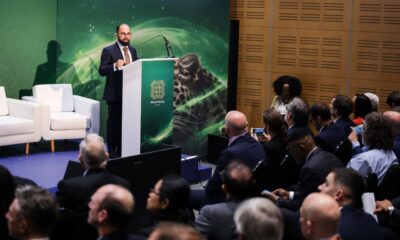
By Scott Coles, Coffee Business Executive Officer for Nestlé (www.Nestle.com) Central and West Africa
There is nothing quite like that first cup of coffee in the morning. For me, it’s a moment to gather my thoughts before the day really begins. However, this daily ritual isn’t something we can take for granted.
Climatologists have warned that without action, coffee farmers in Africa will lose their livelihoods. So, if we want to keep enjoying that precious cup, we need to ensure our coffee is sustainably sourced.
Coffee farming in Africa
The continent produces 12% of the world’s coffee, with over ten million farmers across 30 countries. Whilst demand for coffee is forecast to grow significantly, crops have been declining in Côte d’Ivoire, the largest coffee producer in West Africa.
Nestlé has been manufacturing coffee in Côte d’Ivoire for over 60 years, and we have seen first-hand the challenges farmers are facing.
Climate change creates rising temperatures, drought and flooding which makes coffee more difficult to grow. Under this pressure, farmers have turned to environmentally harmful practices such as deforestation and are substituting old coffee trees for crops that are easier to grow.
The case for sustainable coffee farming and transition to regenerative agriculture
Nescafé has committed to invest over 1 billion Swiss francs globally
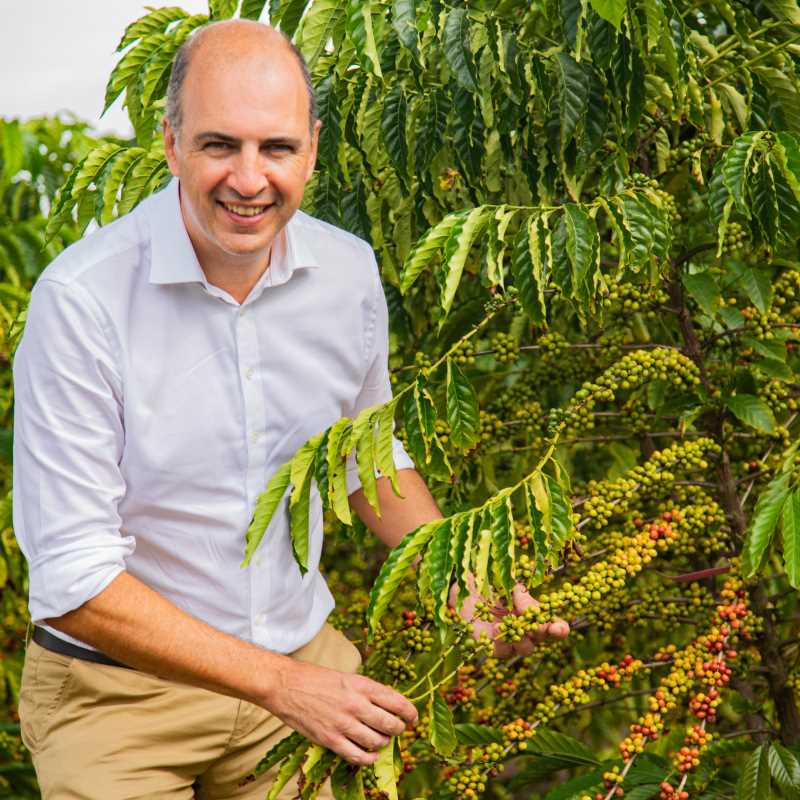
It’s not too late to reverse this decline. On a recent farm visit to the village of Yobouekro, I saw for myself the impact climate change is having. I met with Amani Ahou, a female coffee farmer who, until recently planned to abandon her plantation as the crop from her aged trees had fallen to depressingly low levels.
Over the last few years, Amani has received training from Nescafé agronomists. She has learned pruning techniques, composting and the importance of planting shade trees. She is now more upbeat about the prospect of reviving her coffee farm. ‘My plantation has rejuvenated, my old trees are starting to flower again, and are producing good coffee’, she said.
It was great to see for myself how improving technical knowledge, building stronger partnerships between farmers and industry can have a real and lasting impact on farmers like Amani.
Regenerative agricultural techniques like these play a critical role in the future of coffee farming. They will improve soil health, restore water cycles, increase biodiversity, and reduce greenhouse gas emissions. By planting more coffee trees and encouraging greater biodiversity, farmers can create an environment for bees, insects and birds to thrive on their farms. This will have a positive impact on the ecosystem and reduce the effects of climate change.
The responsibility and cost for transitioning to regenerative agriculture cannot lie solely with the farmers. It’s been 10 years since we launched the Nescafé plan, during this time we have worked closely with farmers to improve agricultural practices, sharing our knowledge and expertise from across the planet. The plan builds farming skills to help farmers produce higher quality beans and achieve higher premiums, so they can support their families and contribute meaningfully to their local communities.
However, we know there is much more to be done, which is why we are going further and last week announced the Nescafé Plan 2030 (https://bit.ly/3Vk8yCL) to accelerate regenerative agriculture, reduce greenhouse gas emissions, and improve coffee farmers’ livelihoods.
Nescafé has committed to invest over 1 billion Swiss francs globally. The aims of the plan are:
100% of our coffee to be sourced responsibly by 2025
20% of coffee sourced from regenerative agricultural methods by 2025 and 50% by 2030.
In Côte d’Ivoire, we are committed to support farmers that take on the risk and costs associated with transitioning to regenerative agriculture. We will be piloting a financial scheme which includes conditional cash incentives for adopting regenerative agriculture practices.
We have a long way to go, but if the whole coffee industry in Africa supports this transition to regenerative agriculture, we will ensure no farmer is left behind, so we can continue to uplift lives and livelihoods with every cup we drink.
The award recognizes decades of leadership by the SNPC Director General in shaping the company’s growth and investment strategy, while strengthening the Republic of Congo’s position in Africa’s energy landscape
CAPE TOWN, South Africa, July 2, 2026/APO Group/ –Maixent Raoul Ominga, Director General of Société Nationale des Pétroles du Congo (SNPC), has been named the recipient of the Lifetime Achievement Award at African Energy Week (AEW) 2026. The honor recognizes more than two decades of service to Congo’s national oil company and a leadership career that has helped transform SNPC into a stronger, more diversified and increasingly influential energy company.
The Lifetime Achievement Award is the highest distinction presented during the African Energy Awards, held annually as part of AEW. The non-voting category recognizes individuals whose careers have left a lasting mark on Africa’s energy industry through sustained leadership, institutional development, investment promotion and contributions to regional cooperation.
Few leaders know SNPC as intimately as Ominga. Joining the company in 2001 in the finance and accounting department, he steadily rose through the ranks before being appointed Director General in 2018. Reappointed in 2022 and again in 2025 following the adoption of SNPC’s revised corporate statutes, his continued tenure reflects sustained confidence in a leadership style centered on long-term institutional growth, operational discipline and continuity.
Maixent Raoul Ominga represents the kind of steady, visionary leadership that has helped transform SNPC into a more resilient and forward-looking national oil company
Under Ominga’s leadership, SNPC has evolved from a traditional national oil company into a broader energy player with an expanding upstream portfolio and growing regional profile. The company continues to hold interests in many of the Republic of Congo’s largest producing assets while participating in new discoveries that have reinforced the country’s long-term exploration potential.
A defining feature of Ominga’s tenure has been a strategic shift toward long-term value creation through gas monetization. Under his direction, SNPC has played a central role in supporting the Congo LNG project, helping position the Republic of Congo among Africa’s emerging LNG exporters and accelerating the country’s transition toward large-scale gas development.
Institutional transformation has been equally central to his leadership. Ominga has overseen organizational restructuring, strengthened corporate governance and placed greater emphasis on operational performance, while steering SNPC toward increased use of domestic capital markets to reduce reliance on international lenders and strengthen local financial capacity. He has also prioritized workforce development, greater gender inclusion in leadership and the development of internal capabilities supporting gas and new energy initiatives.
His influence has extended well beyond SNPC. A longstanding advocate for stronger collaboration among Africa’s national oil companies, Ominga has consistently promoted regional partnerships, African financing solutions and energy sovereignty as essential to unlocking the continent’s long-term investment potential. This vision has helped elevate both SNPC’s regional profile and the Republic of Congo’s role in Africa’s evolving energy landscape.
Ominga’s leadership has also been recognized beyond the energy sector. In 2026, he was awarded the Gold Medal of the Ligue universelle du bien public, recognizing his leadership, commitment to the public good and contributions to economic and social development. The distinction reflects a leadership philosophy that extends beyond commercial performance, emphasizing institution-building, human capital development and the role of energy in supporting national progress.
“Maixent Raoul Ominga represents the kind of steady, visionary leadership that has helped transform SNPC into a more resilient and forward-looking national oil company,” said NJ Ayuk, Executive Chairman of the African Energy Chamber. “His commitment to building local capacity, strengthening governance and positioning Congo’s energy sector for the future makes him a deserving recipient of this year’s Lifetime Achievement Award. We congratulate him on this well-earned recognition.”
Distributed by APO Group on behalf of African Energy Chamber.
Islamic Development Bank Institute (IsDBI) and Centre of Islamic Finance, Compliance and Advice (CIFCA) Forge Strategic Partnership to Advance Islamic Finance in Tanzania
The collaboration aligns with the strategic priorities of both institutions to support the development of robust, ethical, and inclusive financial systems grounded in the principles and values of Islamic finance
BAKU, Azerbaijan, July 2, 2026/APO Group/ –The Islamic Development Bank Institute (IsDBI) (www.IsDBInstitute.org) and the Tanzania-based Centre of Islamic Finance, Compliance and Advice (CIFCA) signed a Memorandum of Understanding (MoU) to strengthen cooperation in advancing Islamic finance, capacity development, professional certification, research, and knowledge dissemination.
The MoU was signed on the sidelines of the 2026 IsDB Group Annual Meetings, held from 16-19 June in Baku, Azerbaijan. The partnership seeks to leverage the complementary strengths of both organizations to promote excellence in Islamic finance education and professional development in Tanzania, while contributing to the broader objectives of sustainable and inclusive economic development beyond IsDB Member Countries.
As Tanzania is not an IsDB Member Country, the MoU allows the IsDBI and CIFCA to explore cooperation on a range of human capital programs that serve the Muslim community and contribute to the progress of the Tanzanian economy at large.
CIFCA plays an important role in accelerating financial inclusion and driving the development of Shariah-compliant financial systems across Tanzania. Endorsed by the Government of Tanzania as an Islamic finance advisory body, CIFCA collaborates with key entities like the Bank of Tanzania, and the Capital Markets and Securities Authority. It facilitated the launch of landmark projects, including checking and certifying major public Sukuk listings on the Dar es Salaam Stock Exchange. Furthermore, CIFCA also offers professional certifications and training programs to build local academic and professional capacity.
Human capital remains one of the most critical pillars for the sustainable growth of Islamic finance
Speaking on the occasion, Dr. Sami Al-Suwailem, Acting Director General of IsDB Institute, emphasized the importance of investing in talent and knowledge as key enablers of a vibrant Islamic finance ecosystem. He said, “Human capital remains one of the most critical pillars for the sustainable growth of Islamic finance. Through this partnership, we look forward to working closely with CIFCA to promote knowledge, professional excellence, and innovation that can enhance the developmental impact of Islamic finance.”
Mr. Aref Mbarak Nahdi, Chairman of CIFCA highlighted the significance of the collaboration in fostering globally recognized professional standards and competencies within the industry. “This partnership reflects our shared commitment to nurturing future leaders and practitioners who can contribute meaningfully to the continued advancement of Islamic finance and its role in addressing contemporary economic and social challenges,” he noted.
The collaboration aligns with the strategic priorities of both institutions to support the development of robust, ethical, and inclusive financial systems grounded in the principles and values of Islamic finance.
As Islamic finance continues to expand across diverse markets, the partnership is expected to contribute to the development of skilled professionals, enhanced institutional capacity, and greater knowledge exchange that will ultimately strengthen the industry’s ability to serve society and promote sustainable prosperity.
Distributed by APO Group on behalf of Islamic Development Bank Institute (IsDBI).
Africa Finance Corporation Returns to Global Capital Markets with US$500 Million Eurobond, Achieving Record-Tight Pricing and Central Bank Participation
The landmark outcome reflects AFC’s strong credit fundamentals, disciplined financial management, and growing recognition among global investors as a premier investment-grade issuer focused on Africa’s infrastructure and industrial development
LONDON, United Kingdom, July 2, 2026/APO Group/ –Africa Finance Corporation (AFC) (www.AfricaFC.org), the continent’s leading infrastructure solutions provider, has successfully raised US$500 million through a 5-year Reg S Only senior unsecured Eurobond, achieving the tightest pricing ever secured by the Corporation on a 5-year US dollar benchmark transaction. The issuance reached a new segment of institutional investors, with central banks, including an African one, participating in an AFC bond for the first time. This milestone speaks to AFC’s growing appeal among global reserve managers seeking high-quality investment-grade assets with strong developmental impact.
The notes were issued at a coupon of 5.375%, representing AFC’s narrowest spread over US Treasuries for a benchmark 5-year issuance and a significant improvement over the Corporation’s previous Eurobond transaction completed in 2024. The landmark outcome reflects AFC’s strong credit fundamentals, disciplined financial management, and growing recognition among global investors as a premier investment-grade issuer focused on Africa’s infrastructure and industrial development.
This transaction reflects the strong confidence global investors continue to place in AFC, our strategy, and our role in advancing Africa’s economic transformation
The issuance attracted strong demand from high-quality institutional investors across the United Kingdom, Europe, Asia, the United States and the Middle East. The order book closed approximately two times oversubscribed, underscoring sustained investor confidence in AFC’s investment-grade credit profile. The notes are rated A by S&P Global Ratings and A3 by Moody’s Ratings, in line with AFC’s long-term issuer ratings.
Samaila Zubairu, President & CEO of AFC said, “This transaction reflects the strong confidence global investors continue to place in AFC, our strategy, and our role in advancing Africa’s economic transformation. Achieving our tightest-ever pricing on a US dollar benchmark issuance demonstrates the strength of our credit profile, the consistency of our financial performance, and the trust we have built with investors over time. As we continue to scale our impact across the continent, access to efficient and diversified sources of capital remains critical to delivering the infrastructure and industrial assets that drive long-term growth and competitiveness.”
Banji Fehintola, Executive Board Member and Head of Financial Services at AFC, said, “The success of this transaction underscores AFC’s ability to consistently access international capital markets on increasingly competitive terms, even amid a dynamic global environment. The participation of an African central bank for the first time further diversifies our funding base and advances AFC’s strategy of mobilizing African institutional capital to finance the continent’s development. The exceptional quality and geographic diversity of investor participation, together with record-tight pricing, reflect strong market confidence in AFC’s disciplined funding strategy, prudent balance sheet management and proven track record of delivering transformative infrastructure across Africa.”
Issued under AFC’s US$5 billion Global Medium-Term Note Programme, the proceeds will support the Corporation’s general funding requirements and continue to strengthen its capacity to finance critical infrastructure and industrial projects across Africa. The transaction was led by Abu Dhabi Commercial Bank PJSC, First Abu Dhabi Bank PJSC, Goldman Sachs International, J.P. Morgan Securities plc, Mizuho International plc, MUFG Securities EMEA plc, Standard Chartered Bank and The Standard Bank of South Africa Limited as Joint Lead Managers.
Distributed by APO Group on behalf of Africa Finance Corporation (AFC).
We use cookies on our website to give you the most relevant experience by remembering your preferences and repeat visits. By clicking “Accept”, you consent to the use of ALL the cookies.
This website uses cookies to improve your experience while you navigate through the website. Out of these, the cookies that are categorized as necessary are stored on your browser as they are essential for the working of basic functionalities of the website. We also use third-party cookies that help us analyze and understand how you use this website. These cookies will be stored in your browser only with your consent. You also have the option to opt-out of these cookies. But opting out of some of these cookies may affect your browsing experience.
Necessary cookies are absolutely essential for the website to function properly. These cookies ensure basic functionalities and security features of the website, anonymously.
Cookie
Duration
Description
cookielawinfo-checkbox-analytics
11 months
This cookie is set by GDPR Cookie Consent plugin. The cookie is used to store the user consent for the cookies in the category "Analytics".
cookielawinfo-checkbox-functional
11 months
The cookie is set by GDPR cookie consent to record the user consent for the cookies in the category "Functional".
cookielawinfo-checkbox-necessary
11 months
This cookie is set by GDPR Cookie Consent plugin. The cookies is used to store the user consent for the cookies in the category "Necessary".
cookielawinfo-checkbox-others
11 months
This cookie is set by GDPR Cookie Consent plugin. The cookie is used to store the user consent for the cookies in the category "Other.
cookielawinfo-checkbox-performance
11 months
This cookie is set by GDPR Cookie Consent plugin. The cookie is used to store the user consent for the cookies in the category "Performance".
viewed_cookie_policy
11 months
The cookie is set by the GDPR Cookie Consent plugin and is used to store whether or not user has consented to the use of cookies. It does not store any personal data.
Functional cookies help to perform certain functionalities like sharing the content of the website on social media platforms, collect feedbacks, and other third-party features.
Performance cookies are used to understand and analyze the key performance indexes of the website which helps in delivering a better user experience for the visitors.
Analytical cookies are used to understand how visitors interact with the website. These cookies help provide information on metrics the number of visitors, bounce rate, traffic source, etc.
Advertisement cookies are used to provide visitors with relevant ads and marketing campaigns. These cookies track visitors across websites and collect information to provide customized ads.