Connect with us

Business

Canon Strengthens its Portfolio with the imageFORMULA RS40 Photo Scanner

Published

on

Canon

It is also one of the first of its kind to offer batch scanning of up to 40 photos and 60 documents in a single use either at-home or in-store

DUBAI, United Arab Emirates, June 7, 2022/APO Group/ — 

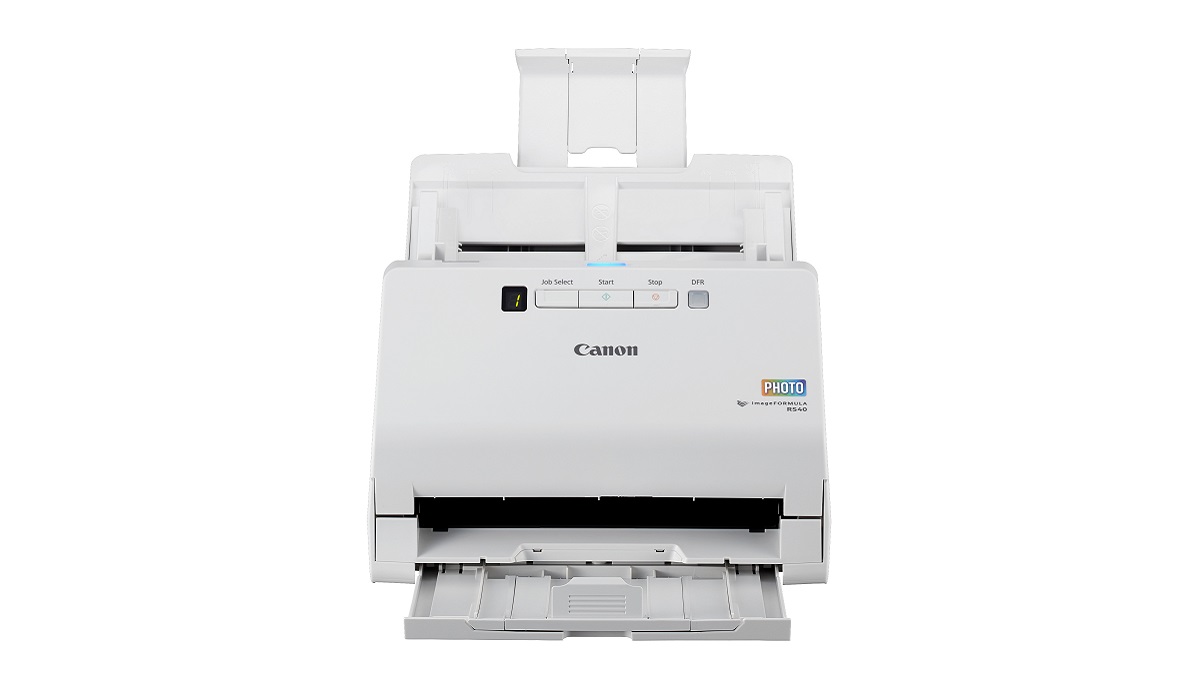
Canon Europe (Canon-Europe.com) today announces the launch of its imageFORMULA RS40 dedicated photo scanner, bolstering sales opportunities for channel partners across both specialist photo services and online retailers. The imageFORMULA RS40 photo scanner is ideal for restoring and digitising old photographs in just a few simple clicks. It is also one of the first of its kind to offer batch scanning of up to 40 photos and 60 documents in a single use either at-home or in-store.

A solution to meet new growth markets

The consumer market has recently seen the rise of a ‘shoeboxing’ trend, where families are looking to preserve printed photos taken before the era of digital photography (commonly stored in shoeboxes). By scanning and sharing these images, they are able to relive valued memories with friends and relations through social media and at special occasions. The imageFORMULA RS40 photo scanner provides the perfect opportunity for partners to tap into this movement and offer both photo shop and online retail customers a quick, robust solution with all the reliability and image quality features they would expect from a Canon device.

Hiro Imamura, Marketing & Innovation Vice President, Digital Printing & Solutions at Canon Europe, says: “Keeping on top of industry trends and utilising that information to help build growth is one of the keyways in which we support our partner community on an ongoing basis. The imageFORMULA RS40 photo scanner offers a new compelling solution for capturing and leveraging this business opportunity within the imaging and digitisation space.

Easy high speed batch scanning of photos

Developed with Canon’s leading scan technology, the imageFORMULA RS40 photo scanner offers truly productive batch scanning of photos, with speeds up to 30 photos a minute and a feeder that can stack up to 40 photos. Huge amounts of time can be saved compared to using a traditional flatbed scanner or even smart phones to capture your photos one by one.

The imageFORMULA RS40 photo scanner offers a new compelling solution for capturing and leveraging this business opportunity within the imaging and digitisation space

With no complicated software installation, the user can effortlessly set up and start scanning using the integrated installer and easy-to-follow step-by-step video, which makes it simpler than ever to get to know the device and ensures peace of mind for first time users.

High functionality for satisfied end users

While providing ease of use at a good price, the imageFORMULA RS40 photo scanner does not compromise on functionality or quality. The scanner supports various types of photo and document sizes, from panoramas to receipts, meeting a wide range of digitisation needs. The straight conveyor path minimises the risk of feeding errors, ensuring important photos or documents remain intact as they are fed through.

Numerous image processing functions deliver a premium result and bolster customer satisfaction. The auto fix functionality analyses the scene of a photograph then automatically applies corrections to brighten and enhance the image, perfecting it for appearing on screens. The device also comes with several face processing functions including face smoothing, face sharpening and red-eye correction. Plus, paper texture correction settings reduce matt patterns and fading corrections brighten work photographs.

For more information, please visit: Here (bit.ly/3tiYSfu)!

Key Features – imageFORMULA RS40

  • Fast and efficient batch scanning – digitising old photos, drawings or images doesn’t have to be time-consuming. With the RS40 you can scan up to 40 photos in one batch with the Easy Scan feature, reaching speeds of 30 images per minute – the hassle-free way to revive old memories
  • Vivid colour and clarity – brighten up the digital copies of photographs with advanced image processing functions, including Auto Photo Fix, Red Eye Correction, Digital Face Smoothing and Fading Correction. You also have the option to save both enhanced and original files if you want to keep the original look and feel
  • Easy to use and jam-resistant – enjoy hassle-free scanning every time with an intuitive user interface, complete with three pre-set scanning options to help you achieve optimum detail in just a few clicks. Clever ultrasonic sensors detect overlapping pages and Double Feed Release (DFR) restarts your device quickly in the event of a jam
  • Share with family and friends – with the RS40 you can easily share old memories, images, and files in a few simple clicks. Choose the file type that fits your needs, from small JPEGs to large TIFFs for maximum image quality and share via email or cloud platforms with our intuitive CaptureOnTouch software
  • Simple installation and setup – effortlessly set up and start scanning – the integrated installer and easy-to-follow walk-through video make it easier than ever to get to know your device
  • Kind to the environment – be more eco-friendly with an energy-efficient device that uses just 19W while scanning and 0.1W in sleep mode, helping you minimise carbon footprint

Distributed by APO Group on behalf of Canon Central and North Africa (CCNA).

Business

From Megawatt (MW) to Gigawatt (GW): Why Africa Must Think in Grid-Scale Power to Compete in the Artificial Intelligence (AI) Economy

Published

on

As AI infrastructure drives power demand into the gigawatt range, Africa must move beyond incremental energy planning – placing grid-scale generation at the center of discussions at African Energy Week 2026’s AI and Data Center Track

CAPE TOWN, South Africa, May 11, 2026/APO Group/ –The rapid expansion of artificial intelligence is fundamentally reshaping global energy demand, with implications that extend well beyond traditional power planning. Nowhere is this more apparent than in the growing energy footprint of data centers. Facilities that once required tens of megawatts are now being developed at 100–200 MW scale, with hyperscale campuses increasingly aggregating demand into the gigawatt range.


This shift presents a structural challenge for Africa. While the continent is rich in energy resources, its planning frameworks remain largely oriented around incremental, megawatt-scale additions – often tied to localized demand or short-term capacity gaps. In the context of AI-driven infrastructure, this approach is increasingly misaligned with the scale and concentration of future demand.

Africa’s data center sector, while growing, remains at an early stage. Operational capacity currently stands at approximately 300–400 MW, with projections reaching 1.5–2.2 GW by 2030. At the same time, demand is accelerating rapidly: electricity consumption from data centers is rising at 20–25% annually and is expected to reach around 8,000 GWh in the near term. This growth mirrors a broader global surge, with data center power demand projected to approach 945 TWh by 2030, driven largely by AI workloads.

This is ultimately about aligning Africa’s energy strategy with where global demand is heading

What distinguishes AI-related demand is not only its scale, but its concentration and consistency. Unlike many traditional industrial loads, data centers require uninterrupted, high-quality power, often with built-in redundancy. This places new demands on grid design, prioritizing stability, capacity and long-term scalability over incremental expansion.

Meeting these requirements will require a departure from conventional planning models. Rather than adding capacity in small increments, there is a growing case for developing gigawatt-scale generation aligned with emerging digital infrastructure hubs. This means integrating power generation, transmission and data center development into coordinated investment strategies, particularly in markets with strong resource bases and improving regulatory environments.

It also requires a shift in how excess capacity is viewed. In many African power systems, surplus generation has historically been treated as a financial inefficiency. In the context of AI and digital infrastructure, however, maintaining a margin of available capacity can enhance grid stability, reduce outages and provide the flexibility needed to support rapid load growth, while creating a foundation for broader industrial development.

A useful benchmark can be seen in Northern Virginia, the world’s largest data center market, where installed capacity has now exceeded 4 GW and more than 1 GW of new supply was added in a single year, reflecting the rapid pace at which hyperscale infrastructure is being deployed. Driven by major cloud and AI players, demand has tightened the market significantly, with vacancy rates approaching zero and most new capacity released well in advance. The scale and speed of development highlight how quickly data center demand is expanding – and underscore the level at which infrastructure must be planned.

These dynamics are increasingly shaping the policy conversation. At African Energy Week 2026, the AI and Data Center Track will focus on the infrastructure required to support this transition, with a particular emphasis on aligning energy planning with digital economy objectives. As AI infrastructure scales, reliable and abundant power is no longer a supporting factor, but a prerequisite.

“This is ultimately about aligning Africa’s energy strategy with where global demand is heading,” says NJ Ayuk, Executive Chairman of the African Energy Chamber. “If we continue to plan in megawatts, we will struggle to compete in an economy that is already moving at the gigawatt scale. Building larger, more resilient power systems is not just about meeting demand – it is about creating the conditions for investment, innovation and long-term growth.”

Distributed by APO Group on behalf of African Energy Chamber.

Continue Reading

Business

Telecoming Strengthens Its Presence in Africa with the Launch of DCB Software South Africa

Published

on

The company advances its regional strategy with a model built on AI, monetisation and direct connectivity with local operators

JOHANNESBURG, South Africa, May 11, 2026/APO Group/ –Telecoming (www.Telecoming.com), a global technology company specialising in the monetisation of digital services, announces the launch of DCB Software South Africa (www.DCBSoftwareZA.com), its new local subsidiary. The move reinforces the company’s growth strategy in Africa, one of the most promising markets in the mobile economy.

The new entity will be led by Javier de Corral, who will lead business development, establish partnerships with telecom operators and build a local team based in Johannesburg.

The South African launch builds on Telecoming’s existing footprint in the continent, where it already operates through its Algerian subsidiary, DCB Software Dzayer, further strengthening its regional position.

We are very excited about the opportunities in South Africa and committed to investing in its digital future

DCB Software South Africa will operate as a local hub focused on AI-driven digital services, supported by a team entirely based in the country. Its scope includes the development of digital products, mobile and web services, as well as solutions in digital entertainment and marketplaces, all built on scalable, multi-device platforms designed to ensure a seamless user experience.

The subsidiary combines in-depth knowledge of the South African and Sub-Saharan markets with direct access to telecom operators, digital platforms and local payment solutions. It will deploy multiple monetisation models, including Direct Carrier Billing (DCB), to optimise conversion rates and overall performance.

The launch of DCB Software South Africa marks a key milestone in our global expansion strategy”, said Cyrille Thivat, CEO of Telecoming. “We are very excited about the opportunities in South Africa and committed to investing in its digital future. With Javier de Corral at the helm, we are confident that this new subsidiary will not only drive our local growth but also contribute to the broader digital and AI ecosystem.”

Telecoming develops technology designed to enhance user acquisition, streamline payment processes and improve the performance of digital services. Its platforms integrate monetisation, advertising and user experience, leveraging artificial intelligence to deliver secure, scalable and efficient solutions.

This expansion reinforces Telecoming’s commitment to delivering innovative digital and AI services and strengthens its position as a key player in the African market. With this launch, the company takes another step in its international expansion, enhancing its ability to support the development of Africa’s digital ecosystem through advanced technology, local expertise and strategic partnerships.

Distributed by APO Group on behalf of Telecoming.

Continue Reading

Business

Enlit Africa 2026 makes 20 May the Commercial and Industrial (C&I) delivery day across power, water and clean energy hubs

Published

on

Taking place 19–21 May 2026 at the Cape Town International Convention Centre (CTICC), Enlit Africa, created by VUKA Group, convenes utilities, municipalities, large energy users, financiers, developers and technology providers to focus on what shifts outcomes in African infrastructure

CAPE TOWN, South Africa, May 11, 2026/APO Group/ –Enlit Africa 2026 will put commercial and industrial delivery front and center on Wednesday 20 May with a dedicated line-up across the Power HubWater Hub and Renewable Energy & Storage Hub. The day is built for decision-makers who must keep operations running, secure reliable supply, manage risk and move projects from concept to implementation.


Taking place 19–21 May 2026 at the Cape Town International Convention Centre (CTICC), Enlit Africa, created by VUKA Group, convenes utilities, municipalities, large energy users, financiers, developers and technology providers to focus on what shifts outcomes in African infrastructure.

On 20 May, the programme is anchored by the keynote, “How a coordinated energy/water plan could change African resilience” (09:30–11:45), positioning water and energy as interlinked operational risks that can no longer be managed in silos. From there, the day breaks into practical tracks tailored for large users and the solution partners that support them.

In the Renewable Energy & Storage Hub, sessions focus on the realities of C&I adoption and delivery at scale, including “Project implementation for multi-megawatt C&I projects” (11:45–13:00) and “Clean energy adoption in the C&I market” (14:30–15:45), before turning to fleet electrification and operations with “Mobility: Management of electric vehicle fleets for C&I” (16:00–17:30).

In the Water Hub, the agenda targets the technologies and operating models that matter most to industrial continuity and compliance. Sessions include “Next-generation water treatment technologies” (11:45–13:00), “Advanced water treatment & smart water systems” (14:30–15:45) and “Accelerating water technology deployment for C&I operations” (16:30–17:30).

Together, the three stages create a single day of high-signal, implementation-led content for C&I leaders, utilities, municipalities and suppliers focused on operational performance, investment readiness and delivery discipline.

Distributed by APO Group on behalf of VUKA Group.

Continue Reading

Trending

Exit mobile version