Connect with us
Anglostratits

Business

Canon Showcases Enhanced End-to-End Product Lineup at International Broadcasting Convention (IBC) 2024

Published

on

Canon

Canon showcased its very latest innovations in imaging technology designed to empower broadcasters and content creators to push creative boundaries and deliver exceptional visual experiences

DUBAI, United Arab Emirates, October 2, 2024/APO Group/ — 

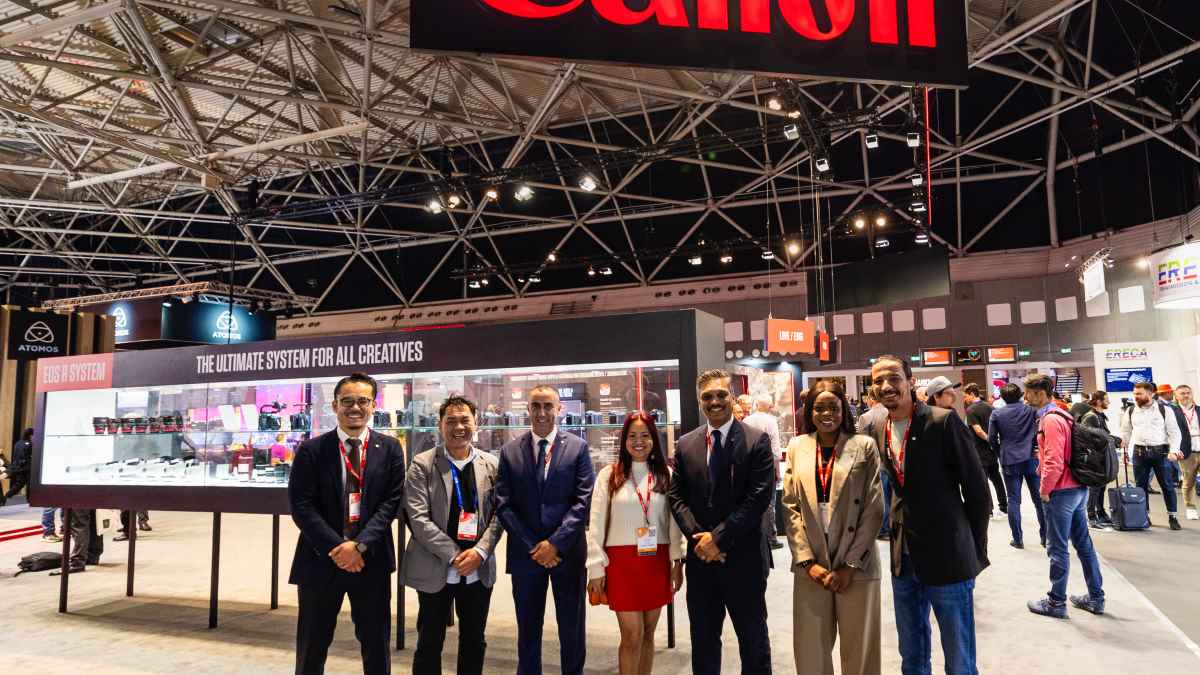
As part of our ‘Closer to Our Customers’ strategy, we showcased our latest advancements including the EOS R1, EOS R5 Mark II, EOS C400 & EOSC80 to 25 key customers from across Africa; We aimed to equip our customers with firsthand experience of the diverse products, including Canon’s Multicam Solutions (www.Canon-CNA.com), empowering them to tailor strategies, enhance workflows, and improve efficiency.

Canon Central & North Africa returned to the International Broadcasting Convention (IBC) took place at the RAI Amsterdam, 13 – 16 September 2024. At this year’s show, Canon showcased its very latest innovations in imaging technology designed to empower broadcasters and content creators to push creative boundaries and deliver exceptional visual experiences.

Following a summer of momentous launches including the Canon EOS R1, EOS R5 Mark II, and the EOS C400, and with more advancements in the pipeline, the convention offered attendees a first look at the latest products. From professional cinema and PTZ cameras to an extended VR range, the entire breadth of the Canon portfolio was showcased at IBC to explore and experience.

Rashad Ghani, B2C Business Unit Director at Canon Central & North Africa, said: Canon has had a groundbreaking year, setting a new standard for professional of all levels. As part of our ‘Closer to Our Customers’ strategy, we’re thrilled to have had the opportunity to showcase our latest advancements, including the EOS R1, EOS R5 Mark II, and EOS C400, to 25 key customers from various parts of Africa. From Kenya and Nigeria to Egypt, Morocco, Central African region and beyond, we welcomed customers representing diverse industries, including broadcast, cinema, rental houses, education, and government institutions.

Our goal was to equip our African customers with firsthand experience of our products and solutions, enabling them to tailor their strategies to meet the unique needs of the African market. By highlighting the breadth of our portfolio and the cutting-edge capabilities of our equipment, we aim to empower our customers to drive their businesses forward. Additionally, we also highlighted Canon’s Multicam Solutions, which enhance workflows by offering operational, management, and cost efficiencies, allowing users to optimize processes and improve overall efficiency.

Whether it’s virtual production, remote workflows, or other emerging trends, we remain dedicated to ensuring everyone, from individual creators to those part of large-scale productions, benefit from our advancements.

This year, we were particularly honoured to welcome the talented Nigerian cinematographer and filmmaker, Nora Awolowo, who experienced her first visit to IBC. As one of the few individuals to exclusively experience the EOS C80 prior to the event, Nora’s participation underscores our commitment to nurturing and empowering creative professionals from Africa. By providing opportunities for direct engagement with industry experts and networking with peers, we aim to foster a vibrant and innovative community within the region.”

Building on last year’s success, the stand was made up of multiple zones giving visitors the chance to get hands-on with a host of Canon products. This included a Multi-Cam zone, RF System zone, Virtual Production Workflow space and PTZ Wall. Canon’s team of experts were on hand to guide users through the experience, answer questions and showcase the full capability of the products on display. 

Empowering broadcasters to embrace the future of visual storytelling

By providing opportunities for direct engagement with industry experts and networking with peers, we aim to foster a vibrant and innovative community within the region

Canon focused on key areas where its technology is helping drive the industry forward, including the latest large format cameras and lenses built to capture breathtaking visuals with incredible detail and cinematic depth of field.

The EOS C400 launched earlier this year is the first high-end RF mount Cinema EOS camera, ushering in a groundbreaking new era. The EOS C400 enables operators to access the full suite of features typically associated with larger scale production cameras without the burden of size, weight or attaching additional modules.

The PTZ area included an extensive list of products that showcased the powerful image quality and operability of the full range of indoor and outdoor PTZ products and applications from Canon. The CR-N100, CR-N300, CR-N500 and CR-X300, controllers, as well as Canon Auto Loop and Auto Tracking, will all be exhibited for visitors.

Mirrorless cameras setting new standards for performance and creativity

Canon’s flag bearers for the EOS R System – the EOS R1 and EOS R5 Mark II – were showcased giving attendees the chance to try out features such as the new ‘Accelerated Capture’ imaging platform and new Dual Pixel Intelligent AF.

EOS R1 and EOS R5 Mark II offer video in 12-bit RAW recording internally to the memory card as well as using Cinema EOS Movie Recording formats alongside Canon Log 2 and 3 with proxy video recording that is now fully supported between two cards. This takes professional video production to new heights, delivering outstanding quality and creative flexibility no matter the scenario.

Virtual production workflows

The versatile Flex Zoom lens lineup including the CN-E20-50mm T2.4 L F / FP and CN-E14-35mm T1.7 L S / SP that are future-proofed for 8K productions as well as providing greater flexibility for 4K due to the additional detail and high resolution they provide. For VR, the new RF-S 3.9mm F3.5 STM DUAL FISHEYE lens makes it easier than ever to create 3D VR footage. The compact lens boasts a wide 144-degree field of view and large depth of field, simplifying set-up and keeping the subject in focus. Also on display were the RF 5.2mm F2.8L DUAL FISHEYE and RF-S 7.8mm F4 STM DUAL lenses, further showcasing the possibilities for immersive content creation.

Cover more from studios to stadiums with expanded range of lenses

Beyond VR, over the last few months, Canon has been expanding its lens offering. The Lens Showcase Zone demonstrates Canon’s commitment to innovation and empowering users to capture stunning footage whether that’s in the great outdoors or in studio. On display were familiar lenses alongside new releases such as the CJ27ex7.3B IASE T lens which features the widest coverage and telephoto reach currently on the market in its category, along with new hybrid products such as the RF 24-105mm F2.8L IS USM Z.

For Cine lenses, the recently unveiled CN7x17 KAS T cine servo lens were on display, showcasing an upgraded drive unit that revolutionises the future of Canon’s lens offering.

For more information about IBC, visit: https://apo-opa.co/3TSO5pk

Distributed by APO Group on behalf of Canon Central and North Africa (CCNA).

Business

World’s biggest brands increasingly spend less of their sales revenue on advertising – except consumer goods giants

Published

on

15 October 2026 – The world’s largest brand owners are, on average, spending a diminishing share of their sales revenue on advertising – with the notable exception of consumer goods companies, finds WARC Media.

In its latest “Global Ad Trends report: The cost of being seen”, WARC Media examines shifts in advertising intensity among 25 of the world’s largest advertisers, to better understand the extent to which big brand-owners are driving growth in the global market.


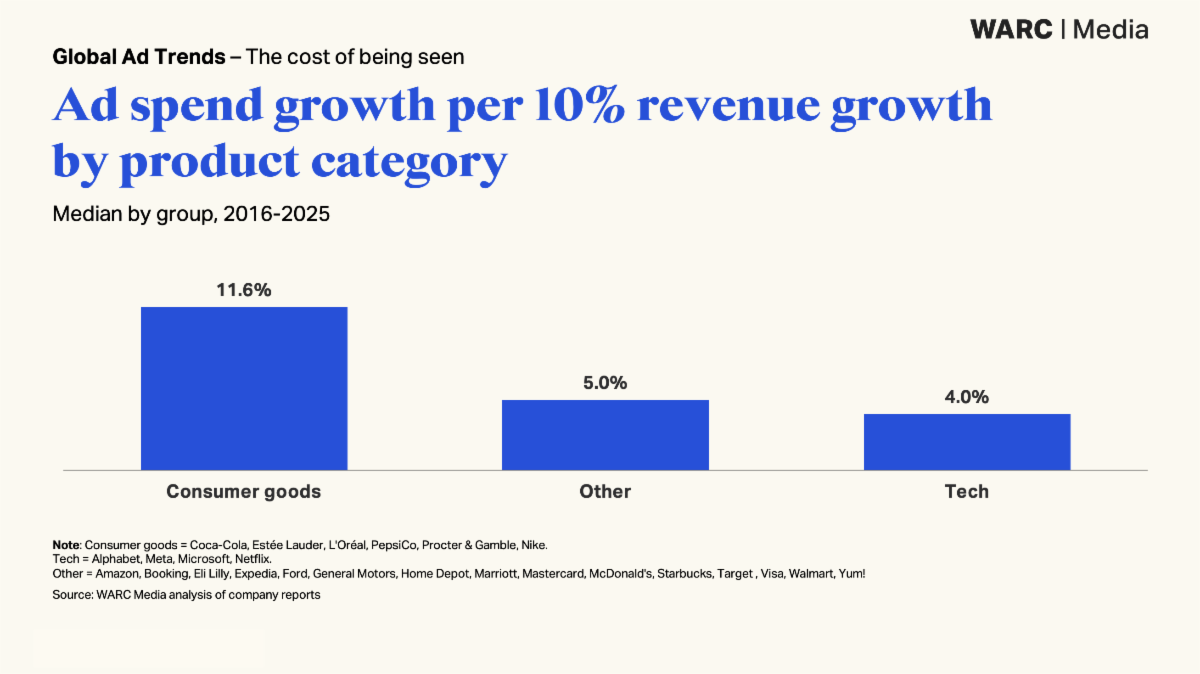
Alex Brownsell, Head of Content, WARC Media, says: “The global ad market is expanding rapidly, but companies from Meta to Mastercard and McDonald’s are allocating a diminishing share of revenue to advertising. Only consumer goods companies – buffeted by softening sales growth and with trade budgets moving into measured media – are increasing ad intensity.

“This underlines what we’ve previously reported – namely that we are operating in a two-speed marketplace. The expansion of digital platform spend by smaller businesses and cross-border e-commerce sellers is by far outpacing growth in ad investment by big brands. This has major implications for the ecosystem of agencies and vendors operating in the enterprise market.”

Key findings outlined in WARC’s “Global Ad Trends: The cost of being seen” are:

Advertising intensity is changing

WARC Media forecasts global ad spend to grow 11.9% this year to $1.34trn. Adjusted for inflation, this is an increase of 61.3% over the last 25 years, fuelled by new channels like retail media and platform advertising that didn’t exist a decade ago.

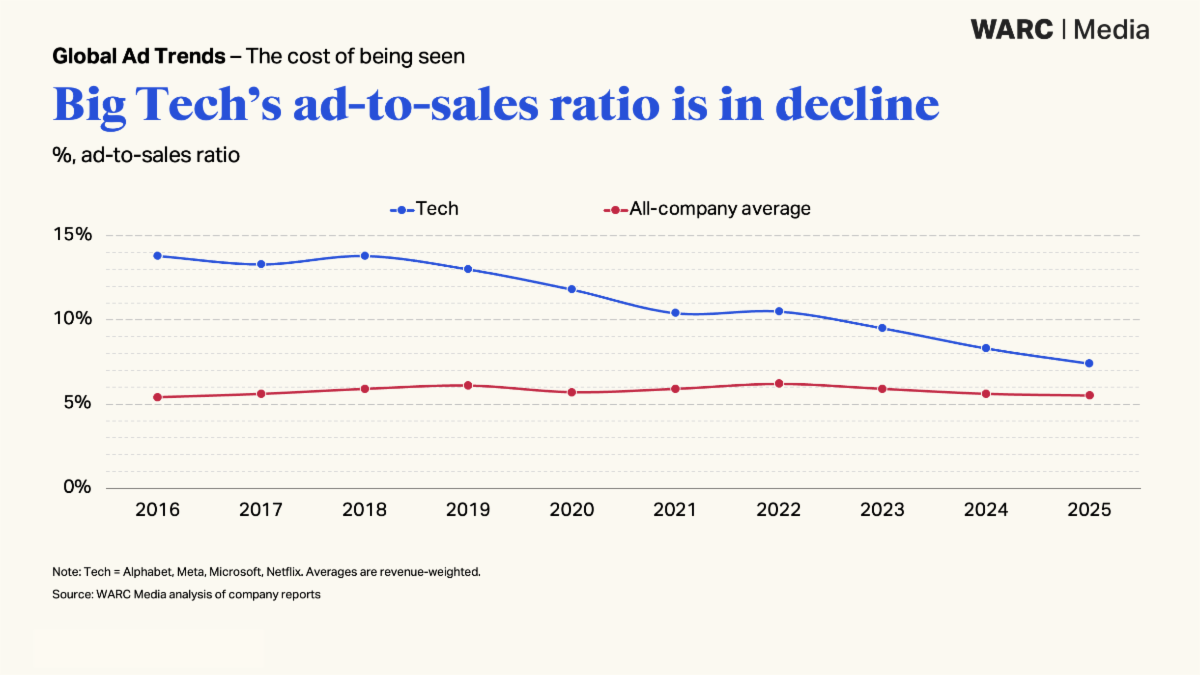
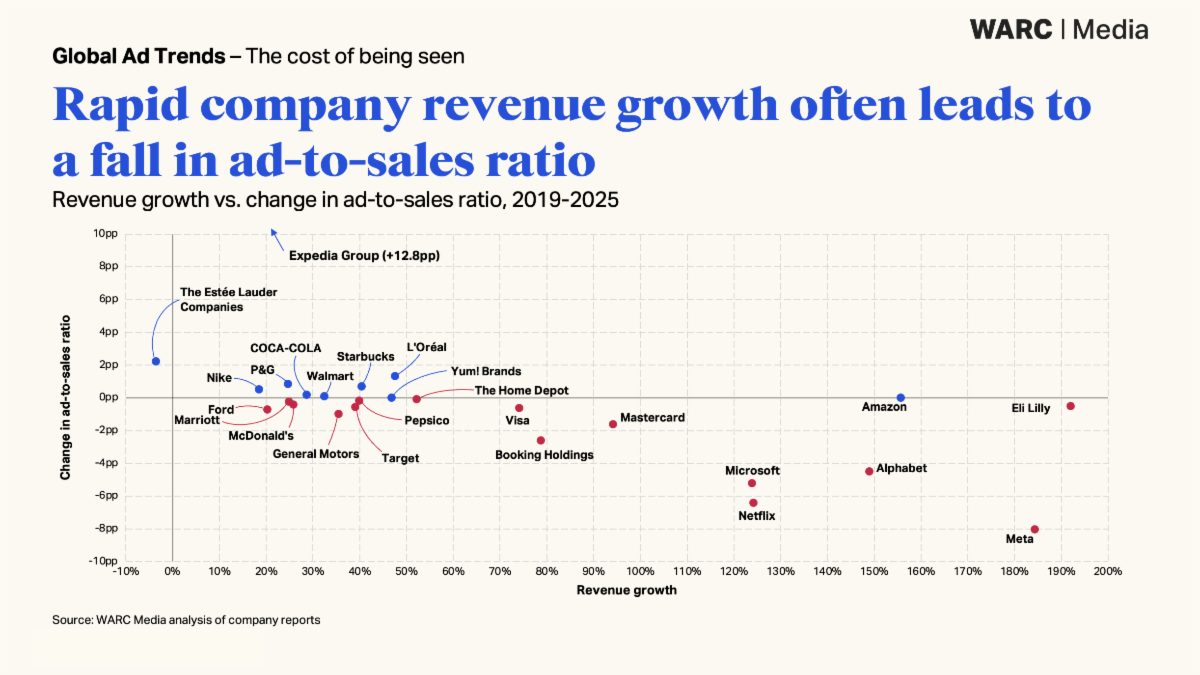
However, advertising intensity has declined in recent years. Across 25 large US-based advertisers, the combined ad-to-sales ratio, a measure of how much companies spend relative to their size, fell from 6.1% in 2019 to 5.5% in 2025. This does not represent a retreat from advertising: their combined ad spend rose 56%, but budgets have not kept pace with rising revenue, which rose by 73%.

Big Tech companies are driving the downward trend

Alphabet, Meta, Microsoft and Netflix’s combined ad-to-sales ratio fell from 13.0% to 7.4% between 2019 and 2025, while their combined revenue rose 146%, from $379bn to $931bn. Had they maintained their 2019 ratio, these brands would have spent $121bn in 2025 – $52bn more than they actually did.

Consumer goods brands are an outlier, with intensity rising

The six biggest consumer goods brands analysed by WARC Media – Coca-Cola, Estée Lauder, L’Oréal, Nike, PepsiCo and Procter & Gamble – moved the other way. Five raised their ad-to-sales ratios between 2019 and 2025; PepsiCo’s was broadly flat.

Softening sales growth pushed the combined consumer goods ad-to-sales ratio from 11.6% in 2023 to 12.5% in 2025, with budget shifts into areas like retail media further lifting ad intensity. From 2019 to 2025, their collective ad spend grew 36%, outpacing 29% revenue growth.

Non tech companies and consumer goods brands are less consistent

The remaining 15 advertisers – neither tech nor consumer goods – tell a less consistent story. Weighted by revenue, the group’s average ratio was flat to slightly up, yet 10 of the 15 individual companies cut their ratios between 2019 and 2025:


  • Automotive: Ford (2.3% to 1.6%) and General Motors (2.7% to 1.7%).
  • Payments: Visa (4.8% to 4.2%) and Mastercard (5.6% to 4.0%).
  • Restaurants and retail: McDonald’s (1.7% to 1.3%) and Target (2.0% to 1.4%).
  • Also falling: Marriott, Booking Holdings, Eli Lilly and The Home Depot.
  • Amazon and Yum! Brands were broadly flat.
  • Three companies saw their ad-to-sales ratios rise: Walmart, Starbucks and Expedia.

The three forces behind the ratio split

There are three main forces that cause changes to ad intensity:

  1. Weak sales. Brands maintaining ad spend in adverse market conditions, with sales going into reverse, may see ad intensity rise.
  2. Budgets changing lines. Money that used to sit with sales teams as trade and shopper spend is moving into retail media, and so into the advertising line.
  3. Owning versus renting attention. Companies that own an audience, like Alphabet and Meta, have an opportunity to grow without renting attention.

WARC Media subscribers can read the report in full. A WARC podcast on the findings outlined in the report will be available from 17 November.


Global Ad Trends, part of WARC Media, is a quarterly report which draws on WARC’s dataset of advertising and media intelligence to take a holistic view on current industry developments.


Continue Reading

Business

Senegal Opens 104 Blocks to Investors, Targets New Upstream Contracts

Published

on

Senegal

Senegal’s Minister of Energy and Petroleum, El Hadji Abdourahmane Diouf, told AEW delegates that the country is seeking partners for its remaining acreage, the Yakaar-Teranga gas project and downstream developments

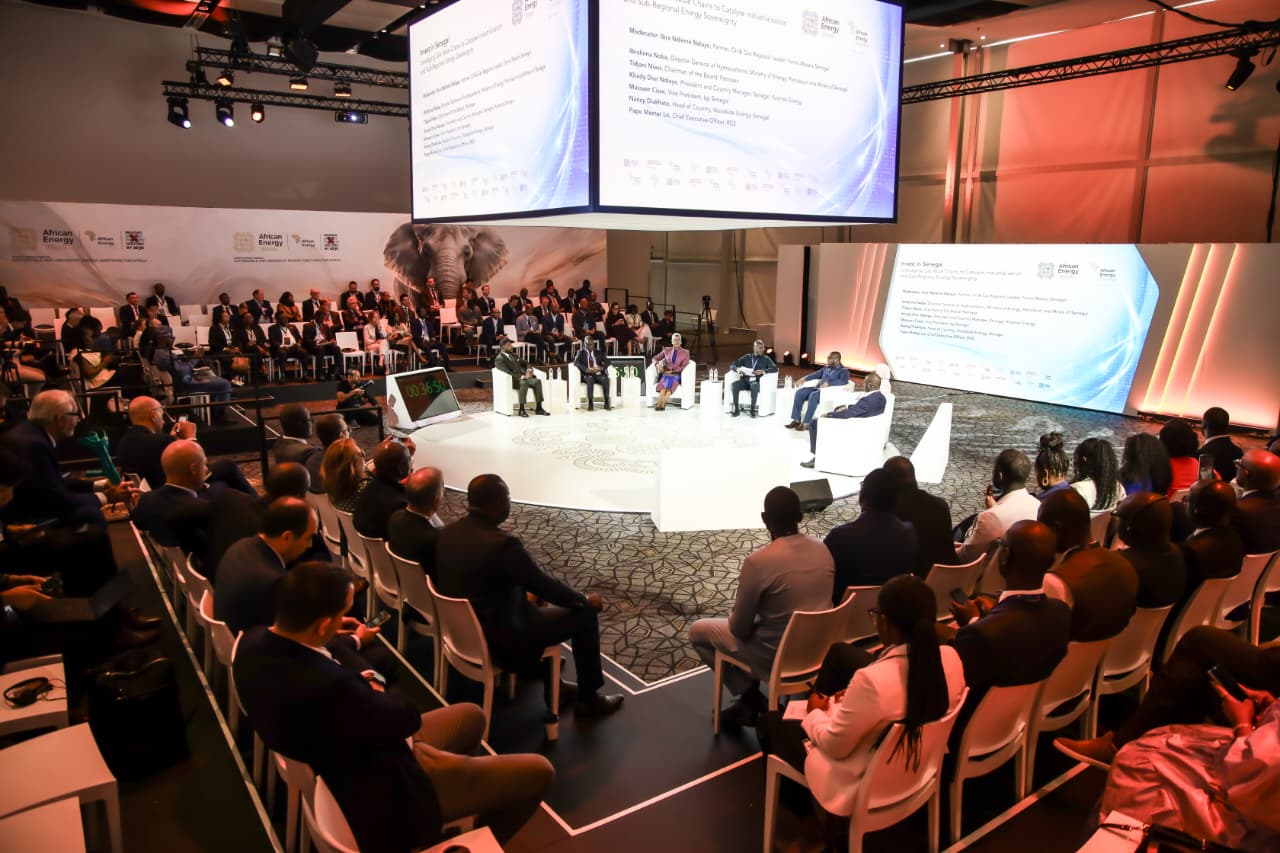
CAPE TOWN, South Africa, October 15, 2026/APO Group/ –Senegal has 104 oil and gas blocks available to investors and is seeking new upstream contracts to accelerate exploration and production, El Hadji Abdourahmane Diouf, Minister of Energy and Petroleum, said at African Energy Week 2026 in Cape Town. Of the 113 blocks in Senegal’s reorganized acreage, four are under contract and five have been allocated to Eni for studies, leaving substantial opportunities for international and regional operators.


“We hope to sign a number of contracts…” he said, adding that the country aims to “show investors that Senegal remains the country it has always been: open, hospitable and respectful of international procedures.”

Senegal reorganized its upstream acreage into 113 blocks in March 2026, comprising 65 onshore and 48 offshore blocks. The country also signed an agreement with Eni to assess the oil and gas potential of five offshore blocks.

Our strategy is to build the value chain from the well to the factory, with gas at the heart of our industrial ambition

Beyond new exploration acreage, Senegal is seeking partners to develop the Yakaar-Teranga gas project alongside national oil company Petrosen. Petrosen took full control of the project after Kosmos Energy withdrew in April 2026. Minister Diouf said Yakaar-Teranga will supply gas for power generation, industrial applications including fertilizer production, and exports. Advancing the project will require a coherent development structure, credible buyers and a clear investment program.

“Our strategy is to build the value chain from the well to the factory, with gas at the heart of our industrial ambition,” he said.

Downstream, Minister Diouf pointed to a planned second refinery that will process Sangomar crude, with investment estimated at $2 billion to $3 billion. The Société Africaine de Raffinage (SAR) and Turkey’s Yamata signed a Memorandum of Understanding for the four-million-ton-per-year refinery in New York on September 23, 2026. Minister Diouf said the project opens further opportunities in storage, logistics, distribution and petrochemicals.

Minister Diouf invited investors to examine Senegal’s data, work with its technical teams and bring proposals backed by the capacity to invest and execute. He also asked partners to involve Senegalese companies and skills from the outset, with support from the national local content monitoring committee.

“Capital must earn a return. Senegal must gain a stronger economy. The partnership we seek must serve both purposes,” he said.

According to Minister Diouf, Senegal hopes to expand the MSGBC alliance beyond its five host countries of Senegal, Mauritania, The Gambia, Guinea-Bissau and Guinea, but he did not specify which countries are being considered.

Distributed by APO Group on behalf of African Energy Chamber.


Continue Reading

Energy

Africa shifts from carbon market potential to delivery as Carbon Markets Africa Summit (CMAS) 2026 opens in Kigali

Published

on

Carbon Markets Africa Summit

African governments, development finance institutions and global climate leaders call for high-integrity markets, investment-ready projects and greater value for African communities

KIGALI, Rwanda, October 15, 2026/APO Group/ –Africa must move beyond carbon market potential towards delivery, building high-integrity, investable markets that attract long-term capital while protecting national climate priorities and ensuring greater value reaches African countries and communities.


That was the central message from the opening keynote sessions of the Carbon Markets Africa Summit (CMAS) 2026 in Kigali, Rwanda, where policymakers, investors, project developers, development finance institutions and international climate organisations gathered to accelerate Africa’s participation in global carbon markets.

Representatives from 45 countries, including 21 African nations, are participating in the summit, where discussions have shifted decisively from market readiness to implementation, investment and transactions.

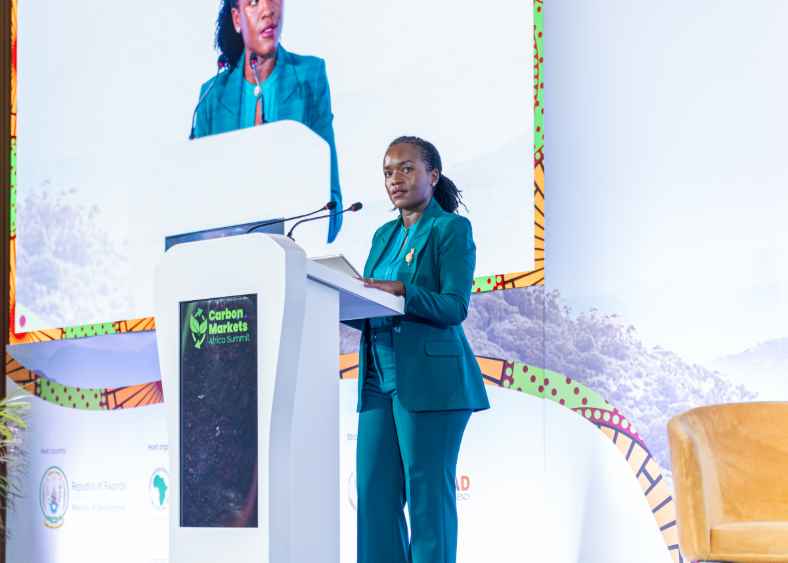
Officially opening the summit, Hon. Dr Bernadette Arakwiye, Rwanda’s Minister of Environment, said Africa’s carbon markets must be shaped by African priorities and deliver tangible benefits for the continent.

“The question before us is therefore no longer simply whether Africa is ready. It is whether we can deliver at scale, with integrity and with innovation.”

Minister Arakwiye said progress is already evident as African countries establish carbon market frameworks, grant authorisations, sign bilateral agreements and develop projects. However, she cautioned that carbon finance remains concentrated in a relatively narrow range of project types. She called for diversification into renewable energy, electric mobility, sustainable waste management, industrial decarbonisation, agriculture and landscape-scale nature-based solutions.

Minister Arakwiye identified three priorities for scaling Africa’s carbon markets: accessible methodologies suited to African contexts; project preparation and readiness finance; and long-term demand at fair value.

“Trust is the currency of this market,” she said. “To our buyers and investors, I say: look closely at these efforts. Reward them with long-term demand, fair prices and patient capital.”

From potential to execution

The call for delivery was echoed by Hon. Hamad Yusuf Masauni, Tanzania’s Minister of State in the Vice President’s Office responsible for Union Affairs and Environment, who said the continent now has an opportunity to reposition itself in global carbon markets.

“For too long, Africa has been spoken about as a continent of potential. At the Carbon Markets Africa Summit, we declare that the era of potential is giving way to the era of execution.”

Minister Masauni stressed the importance of moving high-quality, bankable projects through to issuance and offtake rather than focusing solely on the size of project pipelines.

“Credibility is built one verified tonne, one closed deal and one community that sees real benefit at a time.”

The importance of ensuring value reaches communities was also central to remarks from Maxwell Gomera, UNDP Resident Representative in South Africa and Director of the Africa Sustainable Finance Hub.

Gomera called for market infrastructure capable of carrying value “from the buyer all the way to the farmer”, backed by strong community rights, enforceable benefit-sharing, early-stage finance and partnerships focused on delivery.

Africa urged to compete on integrity, not price

For too long, Africa has been spoken about as a continent of potential

Speakers also stressed that Africa’s competitive advantage should be the quality and integrity of its carbon assets rather than simply offering the lowest-priced credits.

Perumal Arumugam, Manager of Markets and Non-Markets and Stakeholder Interaction at UN Climate Change (UNFCCC), said Africa should move beyond asking how it can participate in carbon markets and instead consider how carbon markets can advance African priorities.

“Africa should not compete simply by offering the cheapest tonnes. Africa should compete by offering credible and creditable tonnes, a sustainable tonne, and a tonne that the world can trust.”

He said success should ultimately be measured not only in credits issued, but in investment mobilised, mitigation unlocked, value reaching communities, stronger economies and African countries retaining control over their climate transitions.

Speaking on behalf of AUDA-NEPAD, Esterine Fotabong similarly called for African countries to scale carbon markets on their own terms, supported by predictable authorisations, functioning registries and credible monitoring, reporting and verification systems.

She also highlighted the need to build greater African capacity in validation and verification and expand access to carbon finance in sectors such as agriculture.

Global demand will reward quality

Representing the European Commission, Lukas Visek, Deputy Head of the Directorate-General for Climate Action Task Force for Carbon Pricing and Carbon Markets, signaled future European demand for international carbon credits while stressing that quality requirements would be stringent.

“Additionality and permanence are not negotiable,” he said. “Quality, however, will be rewarded.”

The message to developers was clear: projects being developed for future international demand will need robust data, genuine additionality, strong community participation and demonstrable alignment with national and global climate goals.

Turning carbon projects into investable assets

The summit’s opening programme then moved directly from policy to capital and deal flow, with leaders from the African Development Bank (AfDB), Development Bank of Southern Africa (DBSA) and Kigali International Financial Centre (KIFC) examining the practical barriers preventing more investment from reaching African projects.

Policy certainty, early-stage project preparation, bankable pipelines, robust governance and appropriate financial risk-sharing were identified as critical to accelerating capital flows.

Dr Anthony Nyong, Director of Climate Change and Green Growth at the African Development Bank, emphasised that carbon markets should ultimately be viewed through the lens of African development.

“We don’t have carbon projects. We have development projects.”

Greg Fyfe, Chief Investment Officer at DBSA, highlighted the catalytic role development finance institutions can play by supporting project preparation, providing patient capital and absorbing risks private investors are unable to take.

The opening sessions underscored a decisive shift in the African carbon market conversation: from readiness to delivery, from fragmented projects to investable pipelines, and from selling credits to building markets capable of delivering lasting economic, social and climate value.

As CMAS 2026 continues in Kigali, attention now turns to connecting credible African projects with buyers and capital, unlocking transactions and ensuring Africa plays a leading role in shaping the next generation of global carbon markets.

Distributed by APO Group on behalf of VUKA Group.


Continue Reading

Trending