Connect with us
Anglostratits

Business

Azule Energy Reiterates Commitment to Angola, Pioneers World’s First Green Floating Production Storage and Offloading (FPSO) Vessel

Published

on

Azule Energy

The African Energy Chamber commends Azule Energy for its sustainability efforts and operations in Angola as it supports the country’s E&P goals

JOHANNESBURG, South Africa, July 17, 2024/APO Group/ — 

In a bid to solidify its position as a key player in the global energy market, Angola has set its sights on ramping up oil and gas production to counter expected natural decline. The country plans to increase oil output to 1.1 million barrels per day (bpd), maintaining this output until 2027. Meanwhile, Angola is also working to increase natural gas’ share in its energy mix to 25% by 2025, a move that will strengthen feedstock for the Angola LNG facility. With substantial investments in upstream projects, Azule Energy is poised to play a crucial role in helping the country achieve its ambitious energy goals.

Upstream Investments to Bolster Angolan Energy Security 

Azule Energy represents one of the largest independent equity producers of oil and gas in Angola, with two billion barrels equivalent of net resources, stakes in 20 licenses – of which 11 are operated – and participation in the Angola LNG joint venture – the entity that operates the country’s inaugural LNG plant. The company has set a target of increasing oil production to 250,000 bpd within the 2023-2026 period, accelerating gas monetization through the New Gas Consortium (NGC) – operated by Azule Energy – while developing 500 MW of renewable energy by 2025. This diversified project portfolio aligns closely with the government’s efforts to bolster energy security in the country.

Major upcoming projects also include the Agogo Integrated West Hub development, which features the development of a new production hub at Block 15/06. The project will produce hydrocarbons from the already-producing Agogo field and the newly developed Ndungu field, utilizing the existing Ngoma FPSO and the under-construction Agogo FPSO. Utilizing existing infrastructure in Block 15/06, the Agogo FPSO will have a capacity of 120,000 bpd and a gas injection capacity of 230 million cubic feet per day. Achieving FID in 2023, the Agogo Integrated West Hub project will come online in 2026.

Notwithstanding new developments, Azule Energy is committed to going even further with its support for production growth in Angola by maximizing output in existing fields. In line with Angola’s recently established Incremental Production Program – which seeks to incentivize investment in already-producing assets – the company is assessing expansion opportunities at mature fields. Currently, Azule Energy’s portfolio of operated blocks include Cabinda Norte and Cabinda Centro (onshore), as well as Blocks 31, 15/06, 1/14, 18 and 28 (offshore). The company also has four FPSO vessels in operation, with a capacity of 1.75 million bpd each. Investments in incremental production at producing blocks would not only maximize field development but drive energy security across the nation.

Angola is and remains at the core of our corporate strategy even as we explore other interesting opportunities outside

In addition to oil, the company is also spearheading the development of the country’s first non-associated gas project through the NGC. The first phase of the project monetizes gas resources from the Quiluma and Maboqueiro fields – located in the shallow waters of the Northern Gas Complex – to produce four billion cubic meters of gas per year via two offshore platforms and an onshore gas processing plant. The project is strategically designed to supply gas for the Angola LNG plant and is on track for first production in 2026. The NGC has the potential to utilize gas from Blocks 2, 3 and 15/14 for the Angola LNG plant, thereby supporting diversification and boosting gas monetization in Angola.  

“Azule is fully committed to Angola. Angola is and remains at the core of our corporate strategy even as we explore other interesting opportunities outside. Our leadership is fully committed to investing and developing local content in Angola because we believe that is the right thing to do,” said Adalberto Fernandes, Government Affairs Director at Azule Energy.

Pioneering Sustainable Oil and Gas Solutions

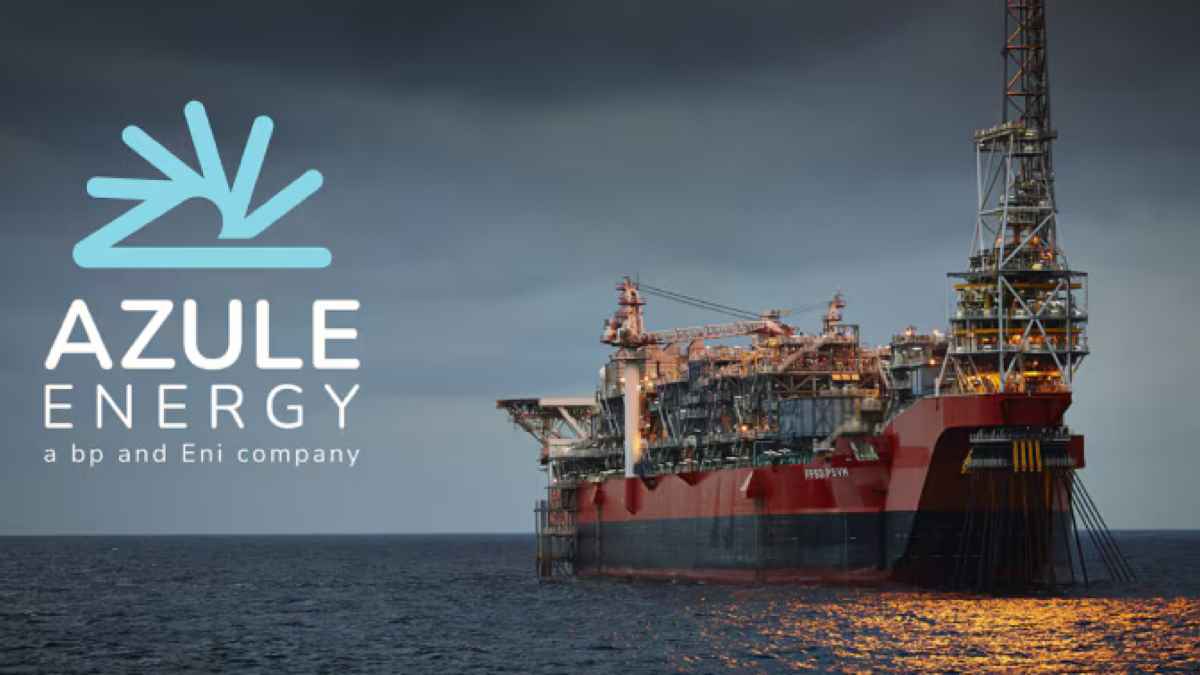
Azule Energy has placed sustainability at the heart of its operations in Angola. The company’s Agogo FPSO, for example, is a pioneering infrastructure that incorporates carbon capture and storage (CCS) capabilities. The vessel is designed in a way that redefines sustainability in the industry and is largely-considered the first-of-its-kind. Specifically, the FPSO features the world’s first post-combustion CO2 capture plants installed on an offshore facility, thereby significantly reducing the amount of CO2 emitted. The FPSO also integrates a number of electrification and automation technologies in line with the company’s vision to achieve net-zero in terms of Scope 1 emissions by 2030.

Meanwhile, the company is currently producing its first-ever sustainability report, which provides a comprehensive overview of Azule Energy’s performance regarding Environmental, Social and Governance (ESG) practices. The report will outline a plan to achieve net-zero and introduce stakeholders to measures and technologies being applied to drive sustainable oil and gas operations.

Additionally, Azule Energy is committed to strengthening local content in Angola. Through the company’s operations, Azule Energy supports job creation opportunities and has incorporated a skills development component to all projects. Block 15/06 alone is expected to become a hub for local industries, generating $5.6 billion and creating 1,400 jobs by 2044. Meanwhile, the company’s onshore gas processing plant in Soyo – representing part of the NGC – features specific local content components. The NGC estimates that $1 billion of the project’s costs will be allocated to the procurement of local goods, services and materials. In tandem with renewable energy investments, these endeavors aim to set a new standard for sustainable oil and gas operations in Angola.

Distributed by APO Group on behalf of African Energy Chamber.

Business

South Africa’s Multi-Billion-Dollar Energy Transition Pipeline Takes Shape Ahead of African Energy Week (AEW) 2026

Published

on

African Energy Chamber

From LNG terminals and renewable energy corridors to hydrogen hubs and storage solutions, African Energy Week’s “Invest in South Africa” session will highlight the opportunities driving the country’s transition toward a more diversified and resilient energy future

CAPE TOWN, South Africa, August 11, 2026/APO Group/ –South Africa is undergoing one of the most significant transformations in its energy sector, as the country works to diversify its power mix, reduce reliance on coal and develop a more integrated energy system capable of supporting long-term economic growth. Combining electricity, natural gas, liquid fuels, hydrogen and energy storage, this evolving model is creating new opportunities for infrastructure development, industrial investment and public-private partnerships.

These developments will be explored during the “Invest in South Africa: Developing Integrated Energy Systems for an Inclusive and Resilient Energy Future” session at African Energy Week (AEW) 2026, where policymakers, investors and industry leaders will assess the commercial strategies, policy frameworks and financing models required to build a more flexible and diversified energy system.

The discussion comes as South Africa continues implementing its Just Energy Transition Partnership, a landmark initiative launched in 2021 that has mobilized an initial $8.5 billion commitment from international partners to support the country’s transition through investments in renewable energy, grid infrastructure, electric vehicles and green hydrogen. The program has since expanded discussions around blended finance mechanisms and private sector participation to accelerate project deployment.

South Africa’s energy transition represents one of the continent’s most significant investment opportunities

While renewable energy remains central to South Africa’s future power mix, gas infrastructure is expected to play an important role in providing flexibility as the country integrates increasing volumes of intermittent wind and solar power. The government’s Gas Master Plan and emerging gas policy framework aim to support the development of a domestic gas market while enabling new infrastructure investments.

Several major gas infrastructure projects are advancing as part of this strategy. At Richards Bay, the proposed Zululand Energy Terminal is being developed as South Africa’s first LNG import terminal and is expected to support Eskom’s planned 3,000 MW gas-to-power program, strengthening energy security and grid flexibility. Meanwhile, the Ngqura LNG terminal development at the Coega Special Economic Zone is progressing as a strategic gas import and regasification hub designed to support industrial users, independent power producers and future gas-to-power capacity. Together, these projects could establish critical infrastructure for South Africa’s emerging gas market while supporting industrial growth and the transition toward a more diversified energy system.

At the same time, the country is positioning itself as a potential global player in green hydrogen. Projects such as Sasol’s Boegoebaai green hydrogen development in the Northern Cape and the proposed Boegoebaai Special Economic Zone are targeting large-scale renewable-powered hydrogen production, with ambitions to develop export opportunities and create new industrial value chains.

The “Invest in South Africa” session will examine how the country can integrate gas, renewables, hydrogen and storage into a resilient energy system while managing the transition away from coal. Discussions will focus on investment pathways, infrastructure priorities and the partnerships required to deliver reliable power and inclusive economic growth.

“South Africa’s energy transition represents one of the continent’s most significant investment opportunities, but success will depend on building an energy system that delivers reliability, affordability and growth,” says NJ Ayuk, Executive Chairman of the African Energy Chamber. “By bringing together investors, policymakers and industry leaders, AEW 2026 will help advance the partnerships needed to transform South Africa’s energy ambitions into practical projects that benefit the economy.”

As South Africa reshapes its energy landscape, AEW 2026 will provide a platform for stakeholders to identify opportunities across gas, power, renewables, hydrogen and infrastructure – helping define the next chapter of the country’s energy future.

Distributed by APO Group on behalf of African Energy Chamber.

Continue Reading

Business

Five ways Emirates is helping customers travel with greater confidence

Published

on

Emirates

Customers travelling anywhere on the Emirates network receive one free date change on tickets booked from 2 April 2026, including journeys connecting through Dubai

DUBAI, United Arab Emirates, August 11, 2026/APO Group/ –From free date changes to industry-first comprehensive travel insurance, Emirates (www.Emirates.com) continues to give customers greater flexibility and more choice, as well as the ability to tailor their travel plans for more peace of mind, from booking to the moment they arrive at their destination.

Here are the latest measures at a glance:

1. Unlimited free date changes to Dubai

From 10 August 2026, customers travelling to Dubai can change their travel dates as many times as they need, free of charge, across every type of fare. Unlimited, free of charge changes run across Saver all the way through to Flex fares in Economy, and for Special, Saver and Flex fares in Business Class.*

Economy Flex Plus, Premium Economy, Business Flex Plus and First Class fares continue to remain fully flexible.

2. Refunds, at a fraction of the cost

Emirates has also substantially reduced refund fees on flights to Dubai to US$50 on Saver fares and US$25 on Flex fares in Economy. In Business Class, refund fees will be US$50 on Special and Saver fares and US$25 on Flex fares.** Together with unlimited free date changes to Dubai, this latest measure means customers can adjust or step away from a booking with minimal penalties, whatever their circumstances.

3. A free date change anywhere across the network

Customers travelling anywhere on the Emirates network receive one free date change on tickets booked from 2 April 2026, including journeys connecting through Dubai. Customers can also hold a fare for 24 hours at no charge while they finalise their plans.*

4. Comprehensive Travel Cover

Emirates’ Comprehensive Travel Cover is an industry-first insurance product covering a range of scenarios, including added conflict cover with reimbursement of medical expenses up to US$25,000 and a free trip extension of up to 30 days. The cover is not restricted by government travel advice. Customers are also covered for trip cancellation, baggage delay and loss, in addition to unlimited worldwide medical expenses and emergency evacuation.

Available at an accessible premium and across 27 countries, the cover can be purchased at the time of booking on emirates.com or added to an existing booking through Manage Booking.

Where flights are disrupted, Emirates will support with accommodation directly for impacted customers. Where onward connections on other airlines are affected, or Emirates services are unavailable, customers are rebooked to their destination at no additional cost, including where cancellations are caused by airspace disruptions.

5. More flexibility and savings for Emirates Skywards members

Emirates Skywards members can get more from their journeys, with greater flexibility, more opportunities to progress their tier and additional savings when using their Miles.

Until 31 August 2026, members can benefit from:

  • 20% fewer Tier Miles required to reach Silver, Gold and Platinum status.
  • 20% bonus Tier Miles on Emirates and flydubai flights.
  • More savings with Cash+Miles, with a special rate of 2,000 Miles = USD 30, instead of the usual USD 15, when using Miles towards Emirates or flydubai flights, excess baggage, lounge access and seat selection.

For more information, visit www.Emirates.com.


* An applicable fare difference may apply.

** No show fees remain unchanged.


Distributed by APO Group on behalf of The Emirates Group.

Continue Reading

Energy

Sonangol’s Sebastião Gaspar Martins Joins Angola Oil & Gas (AOG) 2026 as Angola’s Hydrocarbon Strategy Takes Shape

Published

on

As Angola’s national oil company expands its position across upstream production, refining and infrastructure, Sonangol Chairman Sebastião Gaspar Martins will join AOG 2026 to discuss the company’s role in driving the country’s next phase of investment

LUANDA, Angola, August 11, 2026/APO Group/ –Sebastião Gaspar Martins, Chairman of the Board of Angola’s national oil company (NOC), Sonangol, will speak at the Angola Oil & Gas (AOG) 2026 Conference & Exhibition, taking place in Luanda on September 9-10, with a pre-conference day on September 8. Martins joins the conference as Sonangol advances a portfolio of strategic projects spanning deepwater production, refining and petroleum infrastructure, reinforcing the company’s central role in Angola’s efforts to sustain oil output while strengthening domestic fuel security.

Sonangol is expanding its upstream portfolio through partnerships with leading international operators. In June 2026, the company joined Azule Energy (operator), Equinor and national concessionaire ANPG in reaching a final investment decision on the $5.1 billion Greater PAJ development in Blocks 31 and 31/21. Angola’s first integrated development spanning two blocks, the project will develop an estimated 252 million barrels of reserves through a new FPSO capable of producing 95,000 barrels per day (bpd), with first oil targeted for 2029.

Alongside operator TotalEnergies and Petronas, Sonangol is also advancing the Kaminho project, the first deepwater development in the Kwanza Basin. The project will monetize resources from the Cameia and Golfinho fields through an FPSO with a production capacity of 70,000 bpd, with first oil planned for 2028. In Angola’s shallow waters, Sonangol is leading an infill drilling campaign at Blocks 3/05 and 3/05A. Drilling of the Pacassa SW well is underway, with the Impala-2 development well scheduled to spud shortly thereafter.

Onshore, Sonangol is advancing exploration activities across several blocks. The company operates Blocks KON 11, 12 and 15 in the Kwanza Basin and holds interests in acreage in the Lower Congo Basin. In June 2026, its exploration and production strategy received a significant boost through a $2.65 billion financing package arranged by a syndicate of international lenders.

Sonangol is also playing a leading role in Angola’s downstream expansion. The first phase of the Cabinda Refinery was inaugurated in September 2025, marking an important step toward reducing the country’s dependence on imported petroleum products. The refinery has a planned processing capacity of 60,000 bpd, with Sonangol holding a 10% stake. Attention is also turning to the Lobito Refinery, where the company is engaging international financiers to close a $4.8 billion funding gap. Once completed, the 200,000-bpd facility will be Angola’s largest refinery, with its first phase scheduled to come online in 2027.

Against this backdrop, Martins’ participation at AOG 2026 comes as Sonangol accelerates investment across the upstream and downstream value chain. His participation will provide delegates with insight into the company’s strategic priorities while highlighting opportunities for collaboration with international operators, investors and financiers supporting Angola’s next phase of energy development.

Distributed by APO Group on behalf of Energy Capital & Power.

Continue Reading

Trending