Connect with us
Anglostratits

Business

Ahead of Conference of the Parties (COP30), Africa champions new approach to measuring green wealth of countries and incentivizing climate action

Published

on

COP30

Leaders emphasized that a proper valuation of Africa’s natural resources would transform the continent’s financial landscape by unlocking access to global financial flows, improving national risk profiles, and creating new capacity for investments in green economies and climate-resilient infrastructure

WASHINGTON D.C., United States of America, April 28, 2025/APO Group/ —

  •  Proper valuation of natural capital and the ecosystem services it provides, such as carbon sequestration, is a win-win strategy for growing economies— Urama, African Development Bank (www.AfDB.org)
  • We need to make bold decisions and act swiftly to accelerate the measurement of Africa’s green wealth— Suda-Mafudze, African Union Commission.

African leaders are advocating for a new approach to measuring the continent’s green wealth, emphasizing that current  gross domestic product measures in most African countries are outdated and underestimate their true wealth.

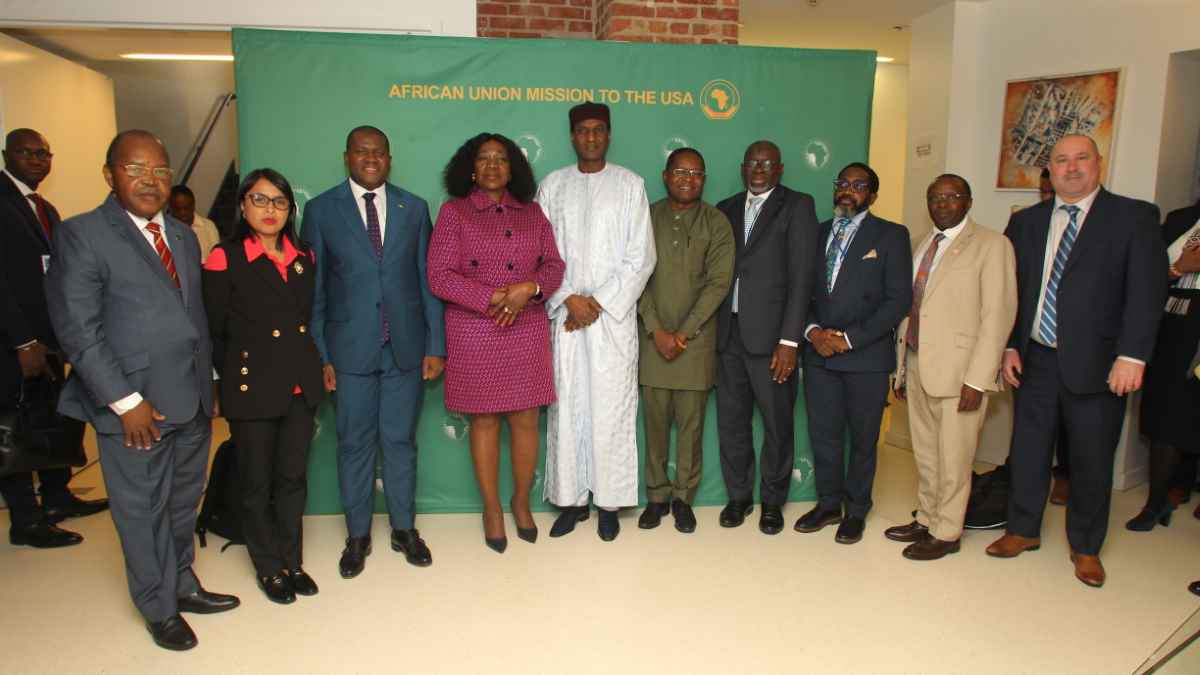
They spoke on Thursday at an event hosted by the African Union Commission and the African Development Bank Group at the African Union Mission to the United States on the sidelines of the 2025 Spring Meetings of the World Bank Group and the International Monetary Fund (IMF).

“We need to talk the talk and walk the talk. It is time to turn our commitments and pledges into concrete actions,” said Ambassador Hilda Suda-Mafudze, Permanent Representative of the African Union Mission to the U.S. “We need to invest in our systems of national accounts. If we want to have accurate measures of our wealth and create a store of assets, we can leverage them to drive our ambitions of shared prosperity and sustainable development.”

The event featured discussion of a 2024 African Development Bank Group report that found that including the value of carbon sequestered in African forests only would have resulted in an additional $66.1 billion of GDP for the continent in 2022, an expansion of about 2.2 percent. Professor Kevin Urama, African Development Bank Chief Economist and Vice President presented key findings from the report, Measuring the Green Wealth of Nations: Natural Capital and Economic Productivity in Africa.

Leaders emphasized that a proper valuation of Africa’s natural resources would transform the continent’s financial landscape by unlocking access to global financial flows, improving national risk profiles, and creating new capacity for investments in green economies and climate-resilient infrastructure.

This call to action comes ahead of the November UN Climate Change Conference in Belém, Brazil, where African leaders are expected to press for reforms to the global economic and financial infrastructure, so these better reflect Africa’s green wealth and sustainability contributions.

“It is time for us to redefine our identity as Africa,” said Nigerien Prime Minister Ali Lamine Zeine in a panel discussion on practical steps towards implementing the 2025 System of National Accounts (SNAs) in Africa. “Africa is underestimated. We must work strategically to change this.”

Africa’s green wealth and the important global public goods and ecosystem services it provides to the world are often overlooked in economic valuations

Panelists noted that several African countries still use SNAs dating back to 1968. SNAs are an international standard system of concepts and methods  for national accounts that have been adopted by most countries worldwide.

Madagascar’s Minister of Economy and Finance Rindra Rabarinirinarison called for more robust technology transfer and technical capacity building to enable African countries to build proper statistical systems for natural capital. She outlined that Madagascar has launched pilot projects to leverage and measure the value of its natural resources.

“Madagascar is a rich country but not rich,” she lamented, pointing to the country’s abundant natural resources.

Erich Strassner from IMF’s Statistics Department described the report as transformational and assured that the Fund was ready to work with the African Development Bank, the World Bank, and governments to implement its recommendations. He emphasized the need to focus on priorities in each country, “so that together we can put together a plan to bring each country up to speed on the new system of national capital evaluation.”

Quoting African Development Bank figures, Ambassador Suda-Mafudze observed that if countries rebased their GDP based on carbon sequestration by forests alone, the impact would be substantial, with estimated GDP increases of 38.2% in Côte d’Ivoire, 36.7% in Benin, and 33.5% in Niger. “We need to ensure a proper valuation of Africa’s green wealth. When we know the value of this significant asset base and incorporate its true value into our national accounts, we improve our economies’ risk profiles and enhance access to financial flows for financing our development,” the Ambassador said.

In his presentation, Vice President Urama pointed to the massive economic value of Africa’s natural resources—estimated at $6.2 trillion in 2018—and the fact that the continent accounts for 26% of global forest-based carbon capture despite contributing only 4% of global carbon emissions.

“Africa’s green wealth and the important global public goods and ecosystem services it provides to the world are often overlooked in economic valuations,” Urama said. “This significantly underestimates African countries’  gross domestic product, despite abundant green wealth.”

He said that in addition to natural capital, ecosystem services and informal economic activities were also not factored into GDP. Revaluing these assets through Natural Capital Accounting (NCA) and the updated System of National Accounts, which includes the informal sector, could significantly increase Africa’s GDP and improve access to sustainable finance, Urama noted.

“This is not just about correcting statistics. It’s about ensuring comparability of the measures of countries’ GDP in Africa and globally. By updating the System of National Accounts in countries, we can ensure that the basket of goods and services included in the measure of GDP of countries is the same, and avoid comparing oranges and  apples,” Urama said

He called on African countries to allocate appropriate budgets to upgrade their National Accounting Systems and rebase their GDPs, noting that “this is a smart investment that can deliver low-hanging fruit.”

The Executive Secretary of the African Economic Research Consortium, Prof. Victor Murinde, described the new model developed by the African Development Bank as transformative.

“It is a bold step to address a methodological gap in how the GDP of countries is measured to consider the true wealth of nations. Its recommendations provide rich materials for economists to work on in the coming years to improve the methodology for assessing the wealth of nations,” he remarked.

The African Development Bank expressed a commitment to work with the World Bank, the IMF, and other partners to implement the recommendations of the report. It is also advancing practical steps that include creating standard methods to value natural resources, connecting environmental goals with other policies, training local experts across Africa, and helping African countries sell their environmental benefits in worldwide carbon markets. The Bank Group will also host the African Natural Capital Accounting Community of Practice

Distributed by APO Group on behalf of African Development Bank Group (AfDB)

Business

Sierra Leone’s PDSL to Host Strategic Investor Roundtable at Paris Energy Forum

Published

on

Energy Capital

The Petroleum Directorate of Sierra Leone will lead a targeted roundtable at Invest in African Energy 2026, spotlighting upstream potential and cross-regional partnerships

PARIS, France, March 24, 2026/APO Group/ –The Petroleum Directorate of Sierra Leone (PDSL) is set to convene an investor roundtable at Invest in African Energy (IAE) Forum 2026 in Paris, underscoring growing interest in West and North African energy markets and the need for deeper capital engagement across exploration, renewable and offshore services. The session reflects a strategic effort by Sierra Leone to connect its emerging upstream prospects with established operators and project developers as the country moves to unlock the full potential of its emerging oil and gas industry.


Sierra Leone is increasingly positioning itself as a frontier oil and gas market with significant offshore potential, and part of the PDSL’s mandate is to catalyze investment interest in its offshore acreage through direct engagement with global capital. Recent data suggest the country holds estimated recoverable resources in the tens of billions of barrels, backed by discoveries and extensive multi‑client seismic datasets that prospective investors are evaluating. The PDSL is actively promoting licensing opportunities and drilling plans, emphasizing fiscal terms and exploration readiness to attract strategic partners.


A cornerstone of this strategy is the anticipated launch of the country’s sixth licensing round. Offering a rare early-entry opportunity into a largely untapped deepwater terrain with considerable upside, the upcoming bid round is backed by fresh 3D datasets which de-risk exploration and support new drilling campaigns. Just this month, GeoPartners announced that the final Pre-Stack Time Migration data for its recently acquired 3D multi-client seismic survey in the country was complete and is now available for licensing. The dataset provides a 3D window into the hydrocarbon potential of the underexplored northern Sierra Leone region.


Sierra Leone’s licensing drive comes as major operators advance exploration activities. In 2025, Eni signed a Reconnaissance Permit Agreement with the PDSL, securing rights to conduct reconnaissance and technical evaluation activities across offshore blocks G113, G129, G130, G131 and G132. The acreage covers 6,790 square kilometers within Sierra Leone’s territorial waters. Nigeria’s F.A. Oil Limited is pursuing drilling following its award of six offshore blocks through the country’s fifth licensing round in 2023. The company is currently seeking a farm-in partner to advance the project from exploration to production, offering a 40% stake in each of the G Blocks 53, 54, 55, 71, 72 and 73.


As these development unfold, the upcoming roundtable at IAE 2026 offers a unique opportunity for operators and policymakers to engage potential investors. The IAE 2026 Forum has become a strategic bridge between African upstream opportunities and global investors, with sessions like the PDSL roundtable designed to foster deeper dialogue and provide clarity on project pipelines and investment prerequisites. Discussions are expected to cover mechanisms for de‑risking exploration activity, optimizing fiscal and contractual frameworks and identifying synergies between hydrocarbon investment and renewable energy commitments.


For investors seeking differentiated exposure to African energy markets, the Sierra Leone roundtable represents both a focused exploration of frontier oil potential and a broader conversation about regional infrastructure, partnerships and the evolving demands of energy capital in the years ahead.


IAE 2026 (www.Invest-Africa-Energy.com) is an exclusive forum designed to connect African energy markets with global investors, serving as a key platform for deal-making in the lead-up to African Energy Week. Scheduled for April 22–23, 2026, in Paris, the event will provide delegates with two days of in-depth engagement with industry experts, project developers, investors and policymakers. For more information, visit www.Invest-Africa-Energy.com. To sponsor or register as a delegate, please contact sales@energycapitalpower.com


Distributed by APO Group on behalf of Energy Capital & Power.

Continue Reading

Energy

Cape Town Prepares for African Mining Week 2026 as Draft Program Reveals Continent’s Mineral Drive

Published

on

Energy Capital

African Mining Week returns for its 2026 edition with an expanded three-day program, bringing together African mining leaders and global partners to shape the future of the continent’s mining sector

CAPE TOWN, South Africa, March 24, 2026/APO Group/ –Global economic trends – from record-breaking commodity prices to intensifying geopolitical competition for resources – are reshaping the strategic importance of Africa’s mineral wealth. As global countries race to secure supply chains for energy transition metals – which are expected to triple by 2030 – Africa is positioning its 30% share of the world’s critical minerals as a key pillar of economic growth. African governments are modernizing mining codes, developing industrial corridors and investing in mineral processing facilities to support local beneficiation, job creation, workforce development and regional mineral markets.


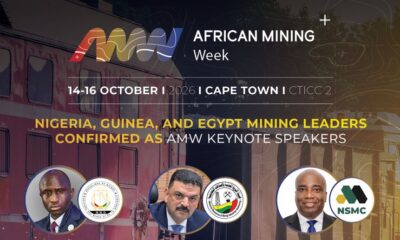
Against this backdrop, the upcoming African Mining Week (AMW) Conference & Exhibition – Africa’s premier gathering for mining stakeholders – has launched the draft program for its 2026 edition {https://apo-opa.co/3NneKLj}. Scheduled to take place October 14–16 in Cape Town, the event provides a platform where policymakers, global investors, project operators, technology providers, academia and mining service companies examine Africa’s mining opportunities, challenges and long-term strategic direction.

Under the theme ‘Mining the Future: Unearthing Africa’s Full Mineral Value’, the three-day, multi-track agenda reflects the growing urgency among African markets to strengthen value addition across the mining value chain.

Regional Cooperation and Policy Alignment in Focus

A key feature of the agenda is the Ministerial Forum, where African mining ministers will provide updates on regulatory reforms and policy alignment initiatives aimed at unlocking greater value from the continent’s mineral resources. Discussions will examine how harmonized regulatory frameworks and regional cooperation can accelerate investment flows and strengthen Africa’s position in global mineral supply chains.

The inclusion of regional policy integration reflects a growing continental push to leverage frameworks such as the African Continental Free Trade Area (AfCFTA) to enhance cross-border mineral cooperation and trade.

We are acting to enhance regional integration through frameworks such as the African Mining Vision and the Africa Mineral Strategy Group

“Africa’s integration is not only a political objective but a strategic economic vision,” stated Emmanuel Armah-Kofi Buah, Ghana’s Minister of Lands and Natural Resources, in remarks reported by Energy Capital & Power – organizers of AMW – in February 2026. “Our natural resources require coordinated policies. Isolated legal frameworks cannot fully unlock their value. Through integration and initiatives such as the ECOWAS [Economic Community of West African States] Mining Code and the African Mining Vision, we can build a stronger and more competitive mineral economy.”

Nigeria’s Minister of Solid Minerals Development, Henry Alake, echoed this emphasis on regional cooperation and beneficiation.

“We are acting to enhance regional integration through frameworks such as the African Mining Vision and the Africa Mineral Strategy Group,” he stated. “We must develop mineral corridors that connect resources, infrastructure and markets across the continent. Our goal is not to simply export raw materials, but to develop industrial hubs that create jobs and value across borders.”

Connecting Global Investors with African Opportunities

Strategic roundtables and Country Focus sessions form a key part of the AMW 2026 program, connecting African mining jurisdictions with international partners from the U.S, Europe, the Middle East and China. These sessions will provide African stakeholders with a platform to showcase exploration opportunities and project pipelines across the mining value chain.

Meanwhile, technical workshops and the exhibition floor at AMW 2026 will provide a platform for equipment manufacturers, technology providers and engineering firms to showcase innovations designed to enhance operational performance across mining operations.

By combining high-level policy dialogue with technical expertise and investment matchmaking, AMW 2026 positions itself as a critical marketplace where Africa’s mineral potential converges with global capital, technology and strategic partnerships – helping shape the next phase of growth for the continent’s mining sector.

AMW serves as a premier platform for exploring the full spectrum of mining opportunities across Africa. The event is held alongside the African Energy Week: Invest in African Energies 2026 conference from October 12-16 in Cape Town. Sponsors, exhibitors and delegates can learn more by contacting sales@energycapitalpower.com.

Distributed by APO Group on behalf of Energy Capital & Power.

Continue Reading

Business

Tony Elumelu Foundation Selects Seven North African Entrepreneurs in 2026 Cohort

Published

on

entrepreneurs

Seven North African entrepreneurs in technology, education, professional services and agriculture selected from 265,000 applications at historic Abuja ceremony

Hope is not just a feeling — it is a system we can build

ABUJA, Nigeria, March 24, 2026/APO Group/ —

  • 7 North African entrepreneurs selected from Morocco, Tunisia and Egypt
  • 51% of the 2026 cohort are women, all selected purely on merit, without any quota in place
  • 3,200 total entrepreneurs selected from 265,000+ applications across 54 African countries
  • USD 5,000 in non-refundable seed capital for each selected entrepreneur
  • Selection conducted independently by Ernst & Young


The Tony Elumelu Foundation (TEF) (www.TonyElumeluFoundation.org), the leading philanthropy empowering young African entrepreneurs, announced on Sunday, 22 March 2026 the 12th cohort of the TEF Entrepreneurship Programme at a ceremony held at the Transcorp Hilton, Abuja. The announcement was made by Founder Tony O. Elumelu, C.F.R.


Among the 3,200 entrepreneurs selected from 265,000 applications received from all 54 African countries: seven from North Africa. Three from Tunisia, two from Morocco, two from Egypt. Spanning technology, education, professional services and agribusiness, they represent a generation of North African founders building businesses that address the urgent needs of their communities. Their selection, which was conducted independently by Ernst & Young, places them among the most rigorously assessed young entrepreneurs on the continent.


This year’s cohort carries a historic signal: 51 percent of the 2026 entrepreneurs are women. They were selected purely on merit, without quota. Across hundreds of thousands of applications, women distinguished themselves through the strength of their ideas, the clarity of their business models and the ambition of their vision.


In 2026, the Foundation is empowering a total of 3,200 entrepreneurs across all its entrepreneurship programmes:


  • 1,751 entrepreneurs through Heirs Holdings Group: Heirs Energies, Transcorp Power, Transcorp Hotels, and United Capital;
  • 1,049 entrepreneurs in partnership with the European Commission, OACPS, BMZ and GIZ;
  • 100 entrepreneurs in partnership with Sèmè City Development Agency;
  • 100 entrepreneurs in partnership with DEG, the German Development Agency;
  • 100 entrepreneurs in partnership with the IKEA FoundationUNICEF’s Generation Unlimited and the Dutch Government; and
  • 100 entrepreneurs in partnership with UNDP and the Rwandan Ministry of Youth and Arts.


Each selected Tony Elumelu Entrepreneur will receive USD 5,000 in non-refundable seed capital, access to world-class business management training on TEFConnect, one-on-one mentorship, and entry into a powerful network of investors, partners and fellow entrepreneurs.


In his annual letter (https://apo-opa.co/4uOFepM), “A Story of Hope,” Tony O. Elumelu, C.F.R., Founder of the Tony Elumelu Foundation, shared a powerful message to the new cohort:


“For a long time, I believed luck was something that simply happened to you. Then I came to understand: luck can be engineered. Opportunity can be democratised. Hope is not just a feeling — it is a system we can build.” — Tony O. Elumelu, C.F.R., Founder, Tony Elumelu Foundation — 2026 Annual Letter


The Tony Elumelu Foundation has empowered over 2.5 million young Africans with access to business management training on TEFConnect (https://TEFConnect.com), and disbursed over USD 100 million in seed capital to more than 24,000 selected entrepreneurs.


Collectively, these entrepreneurs have generated USD 4.2 billion in revenue and created more than 1.5 million direct and indirect jobs. Through its support for African entrepreneurs, TEF has lifted 2.1 million Africans above the poverty line and positively impacted more than 4 million African households, with 46% of supported entrepreneurs being African women. Eighty percent of TEF-supported businesses survive and scale, against a global average of ten to twenty percent.


The announcement ceremony was broadcast live in English (https://apo-opa.co/3PWLiML), French (https://apo-opa.co/3PWLiML), Portuguese (https://apo-opa.co/4t4Y7Da) and Arabic (https://apo-opa.co/4bYHlQl).


Distributed by APO Group on behalf of The Tony Elumelu Foundation.


Continue Reading

Trending