Connect with us
Anglostratits

Energy

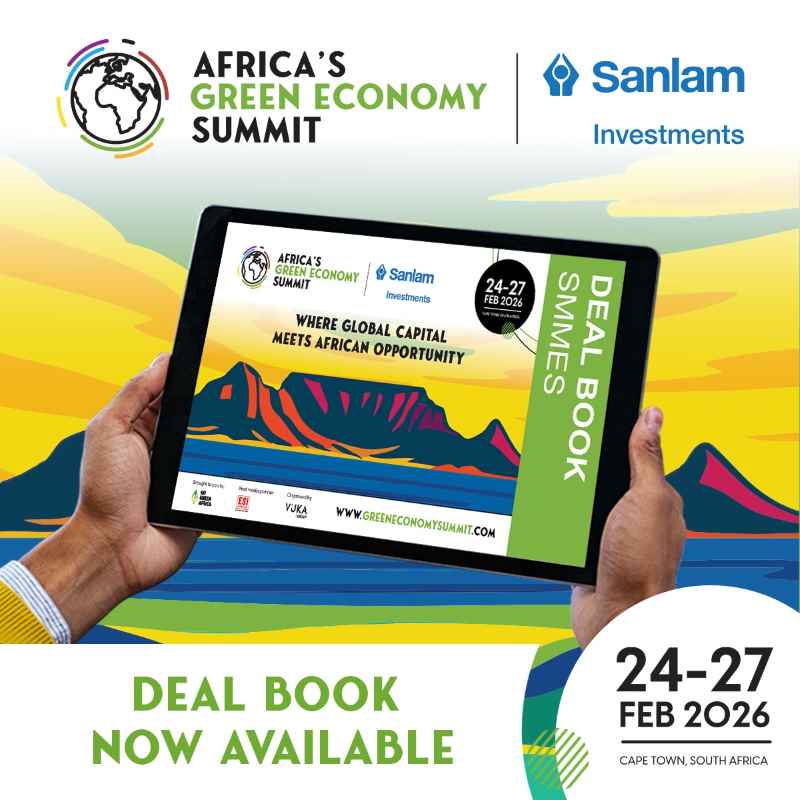
Africa’s Green Economy Summit (AGES) 2026 to unveil Africa’s premier pipeline of investment-ready green ventures making a difference toward net zero goals
Published

on

vukagroup

AGES 2026 is poised to be a pivotal event in driving Africa’s just transition, underscoring the continent’s leadership in developing scalable, sustainable, and economically viable solutions to global challenges

The Pitch Programme offers an unparalleled opportunity for investors to engage directly with the innovators shaping Africa’s green future

CAPE TOWN, South Africa, December 4, 2025/APO Group/ –Africa’s Green Economy Summit (AGES 2026) is set to host an unparalleled showcase of investment-ready green economy projects from across the continent. With over 100 applications meticulously vetted by its expert investors committee, nearly 30 pioneering Pan-African initiatives have been selected to present their transformative solutions. This curated pipeline, spanning crucial sectors from clean energy to climate-smart agriculture, underscores Africa’s pivotal role in the global green transition and AGES 2026’s commitment to connecting global capital with impactful African ventures.

Elodie Delagneau, Investment Project Lead at VUKA Group, emphasised the significance of this year’s selection: “The overwhelming response and the exceptional quality of applications reaffirm Africa’s immense potential in the green economy. AGES 2026 is not merely a conference; it is the definitive platform where serious capital meets serious impact. Our rigorous vetting process ensures that investors encounter thoroughly de-risked and scalable projects that are poised to deliver both significant financial returns and verifiable environmental and social benefits.”

A curated pipeline of innovation

The Pitch Programme is the culmination of extensive market research and rigorous evaluation, designed to identify and elevate projects that are not only innovative but also strategically aligned with Africa’s sustainable development goals. These initiatives represent the cutting edge of green and blue economy solutions, ready to drive tangible progress across the continent.

Our committee, comprised of leading investors and industry experts, has meticulously selected nearly 30 game-changing ventures. This sneak peek offers a glimpse into the future of Africa’s green economy, featuring solutions that are ripe for investment and set to transform industries and communities alike.

Approaching Africa’s critical green economy verticals

AGES 2026 will present a diverse portfolio of projects categorised into eight high-growth sectors, each offering compelling investment opportunities:

  • Energy: Powering Africa’s Green Transformation

The sector is fundamental for Africa’s development, with over 600 million lacking electricity. Projects range from utility-scale solar and wind to mini-grids, energy storage, and green hydrogen initiatives. These ventures offer rapid emissions reductions, enhance energy security, and unlock new economic opportunities. Investors will find projects leveraging Africa’s abundant renewable resources, supported by favourable policies and innovative financing.

  • Transport & E-Mobility: Accelerating Sustainable Connectivity

Addressing urbanisation and emissions, this sector showcases projects focused on electrifying Africa’s transport systems. Initiatives span electric buses, two/three-wheelers, and innovative logistics solutions. These projects aim to reduce fossil fuel consumption, improve urban air quality, and enhance economic productivity through modern, efficient, and clean mobility infrastructure.

  • Waste & Circular Economy: Transforming Waste into Value

This critical sector tackles public health, urban resilience, and climate mitigation by converting waste into valuable resources. Projects include advanced recycling facilities, waste-to-energy solutions, organic waste composting, and innovative approaches to utilising invasive species. These ventures create jobs, reduce landfill reliance, and generate new revenue streams from what was once considered waste.

  • Water & Resilience: Safeguarding Africa’s Most Precious Resource

Water security is paramount for health, agriculture, and industrial activity, especially as climate change intensifies drought and flood risks. Projects in this sector focus on building resilient water infrastructure, developing decentralised water services, and implementing climate-resilient solutions such as groundwater monitoring and integrated catchment rehabilitation.

  • Sustainable Agriculture & Food Systems: Cultivating Africa’s Future

With agriculture central to livelihoods, this sector presents projects focused on sustainable practices that increase productivity, climate resilience, and food security. Initiatives range from vertical farming and biochar-based fertilisers to agri-tech platforms and cold chain solutions. These projects aim to reduce emissions, enhance soil health, boost yields, and empower smallholder farmers across the continent.

  • Biodiversity & Nature Finance: Safeguarding Africa’s Natural Capital

Africa’s vast biodiversity underpins essential ecosystem services and climate regulation. Projects in this sector mobilise capital to protect, restore, and sustainably manage critical ecosystems like forests, wetlands, and coastal zones. Initiatives such as REDD+ programs and blue carbon projects offer high-impact conservation opportunities with significant co-benefits for local communities and tourism.
  • Digitalisation & Climate Tech: Accelerating Green Innovation

Digital tools are proving to be powerful accelerators for climate solutions, optimising energy use, enhancing agricultural productivity, and improving resource management. This sector features projects leveraging IoT, AI, and blockchain for supply chain traceability, carbon accounting, and new green business models. These technologies reduce transaction costs and dramatically increase the scalability of green projects.

  • Carbon Markets & Credits: Monetising Climate Action

Carbon markets are emerging as a powerful mechanism to mobilise private capital for climate mitigation and nature-based solutions. Projects here focus on generating high-integrity carbon credits through renewables, avoided deforestation, mangrove restoration, methane capture, and sustainable agriculture. These initiatives channel crucial finance to projects that deliver verifiable climate benefits alongside significant social outcomes.

Experience the power of connection

AGES 2026 stands as Africa’s most influential gathering for green investment, innovation, and policy. The summit is meticulously designed to foster direct connections between global capital and the most promising green economy projects.

“The Pitch Programme offers an unparalleled opportunity for investors to engage directly with the innovators shaping Africa’s green future,” Delagneau added. “Beyond the pitches, attendees will benefit from purpose-built matchmaking sessions, networking opportunities with leading DFIs, corporate partners, and policymakers, and deep insights into the continent’s evolving green economy landscape. Our goal is to significantly accelerate deal flow and ensure that every investor finds projects that align with their financial and impact mandates.”

The summit also includes a robust mentorship program for pitching projects, ensuring they are investor-ready and equipped with compelling narratives. This holistic approach reinforces AGES 2026’s commitment to not just showcasing projects but actively facilitating their success and growth.

AGES 2026 is poised to be a pivotal event in driving Africa’s just transition, underscoring the continent’s leadership in developing scalable, sustainable, and economically viable solutions to global challenges.

More information or registration: www.GreenEconomySummit.com

To download the event brochure, click here (https://apo-opa.co/4pRd1LN).

Distributed by APO Group on behalf of VUKA Group.
Home  Facebook

Business

Gas Exporting Countries Forum (GECF) Leadership Roundtable Brings Gas Producer Coordination to Paris

Published

on

Etu Energias

As African gas producers navigate rising domestic demand, global LNG competition and a renewed push for investment, the GECF Leadership Roundtable at the Invest in African Energy 2027 Forum will examine how greater coordination can support project development, market access and long-term gas monetization

PARIS, France, November 3, 2026/APO Group/ –Africa’s gas industry is entering a period in which cooperation between producing countries could become increasingly important. Demand is rising, LNG markets are being reshaped by geopolitical disruptions and new supply, while major gas developments across the continent continue to compete for capital.


Against this backdrop, the GECF Leadership Roundtable at the Invest in African Energy (IAE) Forum 2027 in Paris will bring the perspectives of gas-producing countries into a discussion focused on the commercial and strategic priorities shaping the sector.

The session comes as Africa continues to expand its role in global LNG markets. The GECF forecasts LNG exports from the continent to reach about 110 billion cubic meters (bcm), or 80 million tons per annum (mtpa), by 2030, rising to 215 bcm, or 160 mtpa, by 2050. The outlook spans producers including Algeria, Angola, Egypt, Equatorial Guinea, Mozambique, Mauritania, Senegal and Nigeria, while GECF projections point to growing LNG trade with Asia and within African markets.

Recent developments have reinforced the strategic value of that supply base. Tanzania’s long-delayed $42 billion LNG project has gained renewed attention as disruptions to Middle Eastern gas supplies have increased the value of diversified LNG sources, while ExxonMobil is advancing preparations for Mozambique’s Rovuma LNG project after years of delay.

For African producers, however, expanding exports is only one part of the equation. Domestic gas demand is rising at the same time that governments are seeking to use gas to improve electricity supply, support industrial development and create new revenue streams. That creates a need to balance export projects with domestic offtake, pipeline infrastructure, gas processing and gas-to-power development.

Coordination between producing countries can help address some of these challenges. Sharing experience on fiscal frameworks, project development, infrastructure and market access can help governments compete for investment while strengthening the case for regional gas infrastructure and cross-border trade.

The global market is also becoming more competitive. Reuters reported this month that gas and LNG infrastructure investment is expanding across multiple regions, with Asia accounting for the largest share of planned LNG import capacity. At the same time, disruptions to Middle Eastern supply have reinforced concerns around security of supply and increased the strategic importance of alternative producers. That creates an opening for African gas producers, but converting that opportunity into projects will require capital, infrastructure and credible long-term markets.

The GECF Leadership Roundtable at IAE 2027, taking place in Paris from May 11-13, will provide a senior-level setting to examine those issues alongside the investors and project developers needed to advance them. The wider forum is designed to connect African energy markets with global capital, with a focus on projects spanning gas, LNG, infrastructure and power.

For African gas producers, the question is how effectively its resources can be developed, connected to markets and converted into reliable energy and industrial growth. The Paris roundtable will put producer coordination at the center of that investment conversation.

Distributed by APO Group on behalf of Energy Capital & Power.


Continue Reading

Business

Joint Statement: Afreximbank and African Petroleum Producers’ Organisation (APPO) formally establish Africa Energy Bank
Published

on

Afreximbank

The creation of the Africa Energy Bank reaffirms African governments’ determination to secure their own energy future

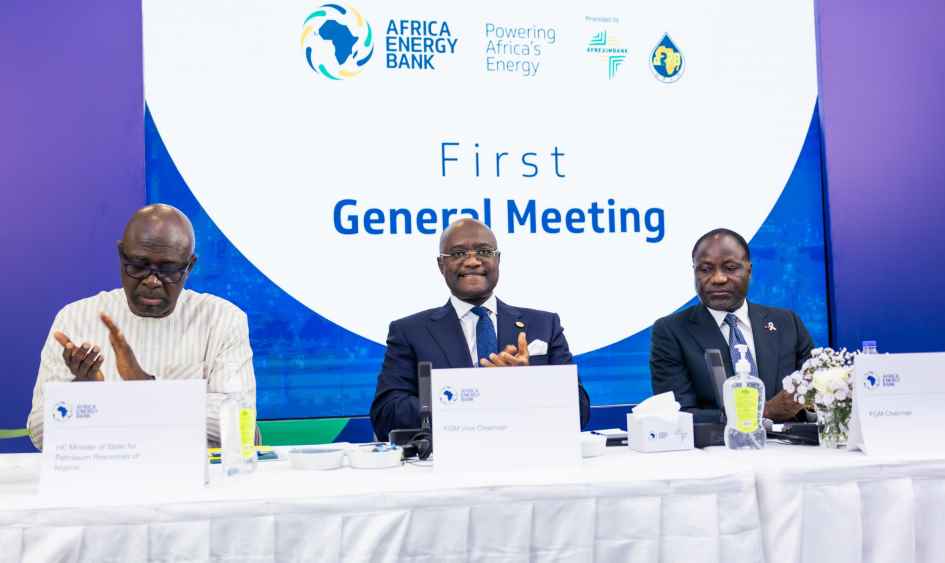
ABUJA, Nigeria, October 31, 2026/APO Group/ –African Export-Import Bank (Afreximbank) (www.Afreximbank.com) and the African Petroleum Producers’ Organisation (APPO) have formally announced the establishment of the Africa Energy Bank (AEB). The announcement was made during the AEB’s inaugural general meeting held in Abuja, Nigeria, on 31 October 2026.


The creation of the Africa Energy Bank reaffirms African governments’ determination to secure their own energy future. This move is in recognition that significant investments in energy generation and transmission was required to accelerating industrial growth and to leveraging the tremendous opportunities from the emerging technologies, particularly artificial intelligence (AI).

The Bank is being established at a time when the continent’s energy investment needs are estimated at US$200 billion. Traditional providers of short- and long-term financing to Africa’s energy sector are withdrawing funding from fossil fuels, even as oil and gas remain vital to the continent’s energy systems. The Africa Energy Bank aims to bridge this financing gap while supporting a just energy transition for African countries.

With an authorised capital of US$5 billion, the AEB will support projects across the energy value chain, including exploration and production, transportation, processing, refining, and distribution. These investments are intended to strengthen productive capacity, reduce reliance on imported petroleum products, and promote intra-African trade in energy goods. The Bank’s mandate also includes promoting robust African participation in the continent’s energy sector to ensure that Africa’s energy future is shaped by Africans.

The AEB will operate as an independent, supranational pan-African financial institution. It will seek to attract investments from governments, national oil companies, financial institutions, and private investors to support energy development across the continent.

Resolutions passed at the first general assembly included the appointment of the Bank’s inaugural President, Mr Helmy Ghazi, and the formation of its first Board of Directors, comprising members from the public and private sectors as well as leading policy institutions from across the continent.

Distributed by APO Group on behalf of Afreximbank.


Continue Reading

Business

5 Investment Opportunities Putting Congo Energy & Investment Forum (CEIF) 2027 on the Map for Central Africa
Published

on

CEIF 2027 connects investors with Congo’s energy projects and local partners, while providing entry points for commercial opportunities across Central Africa

BRAZZAVILLE, Republic of the Congo, November 2, 2026/APO Group/ –The Republic of Congo’s expanding oil and gas developments are creating new opportunities for investment, engineering contracts and commercial partnerships across the energy value chain. With offshore discoveries, mature-field redevelopment and three million tons per year of LNG capacity, the country is entering a new phase of energy development that requires capital, technology and international partnerships.


The Congo Energy & Investment Forum (CEIF) 2027, taking place June 1-3 in Brazzaville, will serve as the official platform connecting Central African energy decision-makers, operators, investors and service companies. Organized by Energy Capital & Power in collaboration with the Ministry of Hydrocarbons, the forum will bring together public- and private-sector stakeholders to advance investment discussions, facilitate partnerships and connect companies with emerging opportunities across the region.

Connect With Central Africa’s Energy Decision-Makers

CEIF 2027 will provide a platform to engage directly with Congolese authorities, regulators, national energy companies and policymakers shaping the region’s energy investment landscape. Taking place in partnership with the Ministry of Hydrocarbons, the event offers a bridge between the country’s policymakers and public- and private-sector companies. Conversations with decision-makers can help investors understand national development priorities, gain insight into the regulatory environment and identify opportunities for market entry or expansion.

Capitalize on Congo’s Upstream Investment and Production Ambitions

As Congo targets production growth toward 500,000 barrels per day, operators are pursuing new exploration and mature-field redevelopment to increase output. TotalEnergies’ 2026 Moho G discovery could unlock an estimated 100 million barrels of recoverable resources alongside the existing Moho F development, illustrating the potential to connect new discoveries to established offshore infrastructure. Meanwhile, Perenco and Trident Energy are pursuing development and redevelopment opportunities across mature assets, including well reactivation and infrastructure upgrades.

These activities could create opportunities for drilling contractors, engineering firms and production technology providers. CEIF 2027 offers a platform to explore project requirements and investment opportunities across Congo’s upstream sector.

Unlock Opportunities Across LNG, Gas and Power Infrastructure

With LNG exports established and liquefaction capacity reaching three million tons per year in 2026, Congo is looking towards its next phase of gas development. This will depend on sustaining feedgas supplies, connecting additional resources and expanding infrastructure.

Beyond LNG, Congo’s plans to expand electricity generation and improve transmission and distribution infrastructure present opportunities for power developers, equipment suppliers and investors. These priorities create potential opportunities for upstream operators, engineering companies, technology providers and investors interested in gas processing, power generation and distribution. CEIF provides a platform to advance these priorities.

Showcase Solutions and Build Commercial Partnerships at the Exhibition

The CEIF 2027 exhibition will provide a platform for companies to showcase their technologies, equipment and services directly to energy operators, policymakers, investors and potential clients across Central Africa.

Exhibitors will have opportunities to demonstrate solutions, engage with local service providers and identify potential partnerships across drilling, engineering, infrastructure and energy technology. For companies seeking to enter or expand in the region, the exhibition offers a direct route to building commercial relationships, exploring procurement opportunities and positioning their services for upcoming projects.

Access New Projects and Financing Opportunities

Turning project opportunities into investments requires clarity on development priorities, infrastructure requirements and financing structures. CEIF’s discussions will give participants an opportunity to assess the projects shaping Congo’s energy sector and engage with potential commercial and institutional counterparts.

Investors, lenders and project developers can use these exchanges to identify areas where financing, technical expertise or new investment structures may help advance projects across oil and gas, power generation and downstream industries.

Organized by Energy Capital & Power in collaboration with the Ministry of Hydrocarbons, CEIF 2027 will enable candid dialogue, facilitating new investments and deals in the country’s energy sector. For more information, visit www.congoenergyinvestment.com.

Distributed by APO Group on behalf of Energy Capital & Power.


Continue Reading

Trending