Connect with us
Anglostratits

Business

African Energy Week (AEW) 2024 Positions Women at Center of Africa’s Energy Transformation

Published

on

African Energy Week

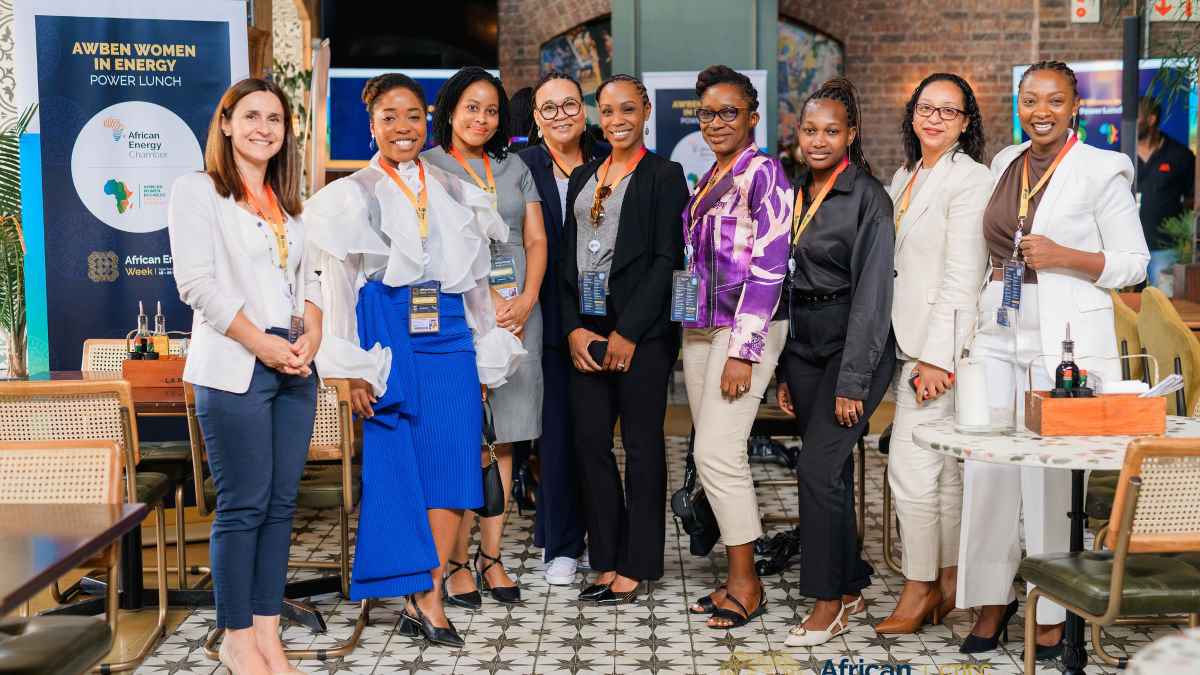
The upcoming African Energy Week: Invest in African Energy conference will host a dedicated forum on women in energy, in collaboration with the African Women Business Energy Network

CAPE TOWN, South Africa, July 31, 2024/APO Group/ — 

African Energy Week (AEW) (www.AECWeek.com): Invest in African Energy 2024 will feature the Transformative Impact of Women in Energy forum – hosted by the African Women Business Energy Network (AWBEN) – on November 7 in Cape Town. This forum will highlight African female policymakers, businesswomen and entrepreneurs who are leading innovative energy projects and driving economic transformation across the continent.

While the global energy industry has been traditionally male-dominated, the sector is experiencing a notable shift towards enhanced gender diversity, equity and inclusion. Driven by collective efforts for change, African women are increasingly being recognized for their dynamic contributions across leadership, policy, finance, technology and innovation within the energy sector.

AEW: Invest in African Energy is the platform of choice for project operators, financiers, technology providers and government, and has emerged as the official place to sign deals in African energy. Visit www.AECWeek.com for more information about this exciting event.

Established by the African Energy Chamber (AEC) – the voice of Africa’s energy sector – AWBEN empowers women in energy and supports women-owned businesses by facilitating investment and access to new business opportunities. Key initiatives include fostering collaboration among African women in the sector, hosting mentorship programs and promoting members’ personal and professional development. AWBEN also provides coaching and sponsorship for girls and young women in STEM, as well as encourages higher leadership positions for African women in energy.

It is imperative that we not only include, but actively build up and promote women at every level of the industry to harness the full potential of our continent’s energy resources

Similar initiatives are being implemented across the continent. USAID’s Power Africa initiative promotes female advancement in the energy sector, aiming for more equal representation within national and regional governments, private sector firms, power utilities and energy enterprises. Women in Rwandan Energy serves as a nation-wide commitment to providing career coaching, technical training, apprenticeships and mentorship services to empower women for successful careers and leadership roles in Rwanda’s energy sector. Programs like Women in African Power enhance female professional development through targeted networking events and skill training initiatives specific to the energy industry.

In Africa’s oil and gas space, women are increasingly assuming top leadership positions in both the public and private sector. Serving as Petroleum Commissioner of Namibia’s Ministry of Mines and Energy, Maggy Shino has played a key role in securing upstream investment from major international oil companies. With Namibia serving as a global exploration hotspot on the back of prolific offshore Orange Basin discoveries, Shino’s strategic vision and leadership have been instrumental in driving the country’s energy sector and attracting foreign investment.

Uganda’s Minister of Energy and Mineral Development Ruth Nankabirwa Ssentamu is playing a critical role in the country’s upstream market. With Uganda targeting first oil output by 2025, projects such as the $10-billion Lake Albert Development – home to the Tilenga and Kingfisher fields – are set to transform the national energy landscape. Ssentamu’s leadership has been crucial in advancing these projects, maximizing Uganda’s resource potential and establishing its position as a major up-and-coming oil market.

In Equatorial Guinea, Teresa Isabel Nnang Avomo, CEO of national oil company GEPetrol, has led initiatives to improve national oil and gas infrastructure, boost production and strengthen partnerships with international operators. Under her leadership, GEPetrol signed a PSC with energy major Chevron aimed at increasing production from Blocks EG-06 and EG-11, as well as awarded engineering firm Petrofac a technical service contract last month to support the operation of Block B, home to the Zafiro field.

With the global energy transition underway, women have also risen to become pivotal leaders in Africa’s clean energy space. Sandra Chukwudozie, Founder and CEO of clean energy firm Salpha Energy, is pioneering clean, affordable and innovative energy solutions for a carbon-neutral future. Rekik Bekele, CEO and Founder of Green Scene Energy, is targeting the delivery of affordable solar solutions in Ethiopia, while Monique Ntumngia, CEO of the Green Girls Project and Monafrik Energy, is advocating for climate-gender justice across the continent and leveraging AI to address clean energy challenges in rural African communities.

“The future of Africa’s energy sector hinges on the full participation of women. Their diverse perspectives and innovative approaches are essential for driving sustainable growth and economic transformation. It is imperative that we not only include, but actively build up and promote women at every level of the industry to harness the full potential of our continent’s energy resources,” said NJ Ayuk, Executive Chairman of the AEC.

At AEW: Invest in African Energy 2024, the Transformative Impact of Women in Energy forum will highlight the critical role that African businesswomen, entrepreneurs and policymakers are playing in energy sector innovation and growth. By showcasing their ongoing leadership and achievements, the forum aims to inspire further progress towards a more diverse and inclusive energy industry.

Distributed by APO Group on behalf of African Energy Chamber.

Business

SLB commissions new fluids systems plant in Pemba to support Mozambique’s offshore energy development

Published

on

Mozambique

New facility expands in-country drilling and completion fluids capability, advancing the next phase of SLB’s growth in Mozambique

PEMBA, Mozambique, October 9, 2026/APO Group/ –SLB (NYSE: SLB) (www.SLB.com) announced the opening of a new fluids systems plant in Pemba, Mozambique. The new facility strengthens in-country capacity to prepare, store and deliver drilling and completion fluids for offshore operations, reinforcing the infrastructure needed as Mozambique’s offshore activity grows and its role as a strategic energy hub for East Africa continues to expand.

The commissioning of the plant, also known as a liquid mud plant, coincides with SLB marking 70 years of operations in Mozambique. It reflects the company’s long-term commitment to investing in people, infrastructure and capability that support the country’s long-term offshore energy development plans.


With an initial storage capacity of 21,000 barrels, the liquid mud plant provides a scalable platform for future growth, supporting multiple customers and rising offshore activity while improving logistics and enhancing operational flexibility.

As SLB marks 70 years in Mozambique, this investment reflects our confidence in the country’s future and our commitment to supporting its energy ambitions

“As SLB marks 70 years in Mozambique, this investment reflects our confidence in the country’s future and our commitment to supporting its energy ambitions,” said Miguel Baptista, Central, East and Southern Africa, Managing Director, SLB. The new liquid mud plant strengthens local energy infrastructure, expands opportunities for local content development, and enhances our ability to support customers as they deliver some of Africa’s most significant offshore energy resources.”

The liquid mud plant project was delivered with strong local participation and that momentum is expected to continue into operations. During project delivery, more than 100 jobs were created in Pemba with nationals representing 80% of the workforce, reflecting a focus on building local capability.

The project was delivered with a strong focus on safety, operational integrity, and quality, achieving more than 67,000 hours worked without a recordable safety incident.

This key infrastructure strengthens SLB’s ability to support consistent service quality and enhance supply chain readiness for increasing offshore activity across Mozambique, supporting customers execute safely and efficiently while developing local skills and expertise.

Key Points:

  • SLB has commissioned a new fluids system plant in Pemba, expanding in-country drilling and completion fluids capability for offshore operations.
  • With an initial storage capacity of 21,000 barrels, the facility provides a scalable platform to support growing offshore activity in Mozambique.
  • The investment marks the next phase of SLB’s growth in Mozambique, strengthening local capability and supporting long-term offshore energy development.

Distributed by APO Group on behalf of SLB.


Continue Reading

Business

South African Energy Storage Association (SAESA) welcomes 4,600 MW battery storage prioritisation and calls for integrated energy planning

Published

on

Battery energy storage systems (BESS) are becoming critical system infrastructure, supporting flexibility, reducing avoidable curtailment, shifting energy into periods of demand and strengthening security of supply

JOHANNESBURG, South Africa, October 9, 2026/APO Group/ –The South African Energy Storage Association (SAESA) (www.SAESA.org.za) welcomes the prioritisation of 4,600 MW of battery energy storage under the first Integrated Resource Plan (IRP) 2025 Section 34 determination.


The timing is significant. Recent Integrated Energy Plan (IEP) modelling and assumptions discussions highlighted a fundamental shift that South Africa’s energy planning now needs to capture: we cannot plan the future power system by counting megawatts of generation alone.

We must plan for when energy is available, where it is available, how it moves through a constrained grid and how it is stored and dispatched when the system needs it most.

The announcement reinforces that shift. Battery energy storage systems (BESS) are becoming critical system infrastructure, supporting flexibility, reducing avoidable curtailment, shifting energy into periods of demand and strengthening security of supply.

For SAESA, the message for the IEP is clear: storage, flexibility and system services must be modelled as integral components of South Africa’s future electricity architecture, with their contribution considered from the outset of generation planning.

“The IEP must plan the power system we are becoming, not simply model the power system we have inherited,” says SAESA.

The IEP must plan the power system we are becoming, not simply model the power system we have inherited

Partnership with C&I Energy + Storage Summit

SAESA is an association partner of the C&I Energy + Storage Summit, created by VUKA Group, taking place on 28–29 October 2026 at The Maslow Hotel, Sandton, Johannesburg.

The summit brings together commercial and industrial energy users, project developers, financiers, regulators and solution providers to explore practical approaches to energy security, procurement and storage deployment.

For businesses assessing how storage can support their operations, the event offers an opportunity to meet SAESA and engage with the wider energy community on the decisions shaping South Africa’s evolving electricity system.

Commercial and industrial energy decision-makers are invited to apply to attend as hosted buyers. Qualifying buyers receive complimentary summit access and curated opportunities to engage with industry partners.


Meet SAESA at C&I Energy + Storage Summit: Join the Hosted Buyer Programme

The Hosted Buyer Programme connects commercial and industrial energy decision-makers with solution providers shaping South Africa’s evolving private energy market.

Qualified energy buyers receive complimentary access to the summit and curated engagement with industry partners exploring energy procurement, storage deployment and project development.

Apply for the Hosted Buyer Programme (https://apo-opa.co/4ehLijJ)

Distributed by APO Group on behalf of VUKA Group.


Continue Reading

Business

Afreximbank welcomes launch of Africa Credit Rating Agency as an important step in strengthening Africa’s financial architecture

Published

on

Expanding credible rating coverage can improve the information available to investors and support the development of deeper domestic and regional capital markets

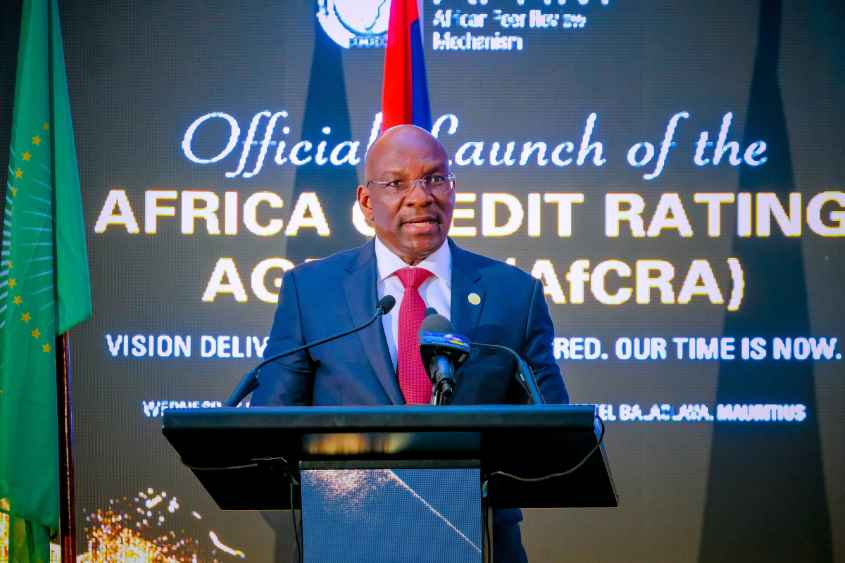
PORT LOUIS, Mauritius, October 8, 2026/APO Group/ –African Export-Import Bank (Afreximbank) (www.Afreximbank.com) welcomes today’s launch of the Africa Credit Rating Agency (AfCRA), an important milestone in strengthening Africa’s financial architecture and expanding the continent’s capacity to generate credible, independent analysis of African credit risk.


Credit ratings play an important role in determining access to capital, influencing investor perceptions and shaping the cost at which governments, institutions and businesses can finance development. It is therefore essential that assessments of African credit risk are independent, rigorous and evidence-based, while reflecting a complete understanding of the structures, institutions and economic realities being assessed.

The establishment of AfCRA adds an important African-led source of credit opinion to the market. Its value will not be measured by whether it produces more favourable ratings, but by the credibility of its analysis, the quality of its data and transparency of its methodology, and its ability to deepen understanding of African sovereigns, sub-sovereigns and corporate credit.

This is particularly important given that many African issuers remain unrated, while local-currency and sub-sovereign markets continue to have limited rating coverage. Expanding credible rating coverage can improve the information available to investors and support the development of deeper domestic and regional capital markets.

AfCRA must set a new benchmark for the continent, maintain its independence, and remain wholly owned and controlled by Africans

Alongside fellow members of the Alliance of African Multilateral Financial Institutions (AAMFI), Afreximbank has consistently maintained that African Multilateral Financial Institutions should be assessed on the basis of their fundamentals, performance, legal frameworks, mandates and operating models. Ensuring that these institutional characteristics are properly understood is essential to achieving informed, balanced and credible assessments of African risk.

Commenting on the uniqueness of the African market, and need for AfCRA’s rating methodology to reflect this, Mr Denys Denya, Senior Executive Vice President, Afreximbank, said: “The rating methodology AfCRA develops must recognise the uniqueness of our environment and its institutional structures. The Agency must set its own standards and not follow those set elsewhere — it must build a unique identity that conforms to an ‘African best practice.”

Highlighting the need for the autonomy of the Africa Credit Rating agency as it takes off, Mr Denya added: “Most importantly, AfCRA must set a new benchmark for the continent, maintain its independence, and remain wholly owned and controlled by Africans. We must all use it, and in return expect a complete assessment of where we (Africa) stand: the strengths the market has ignored, and the weaknesses we still need to fix.”

AfCRA should therefore be seen as complementary to existing international and regional rating agencies, broadening the range of credible analysis available to investors and issuers while strengthening competition, transparency and analytical capacity within Africa’s credit markets.

As Africa seeks to mobilise the scale of capital required for industrialisation, trade, infrastructure and economic transformation, credible African institutions that improve information, strengthen market confidence and deepen the continent’s financial markets will become increasingly important.

Afreximbank congratulates the African Union, the African Peer Review Mechanism (APRM) and all those involved in bringing AfCRA from concept to launch, and looks forward to the contribution the Agency will make to deeper, more transparent and more efficient African capital markets.

Distributed by APO Group on behalf of Afreximbank.


Continue Reading

Trending