Connect with us
Anglostratits

Health

A Signal Through the Mountains: Zhejiang Mobile’s 5G Brings Care to Rural China

Published

on

World Health Assembly

LISHUI, CHINA – Media OutReach Newswire – 29 October 2025 – At the 78th World Health Assembly in Geneva earlier this year, a rural healthcare project from eastern China drew global attention.

The mountain county of Jingning She Autonomous County in Zhejiang’s Lishui City introduced its “Smart Mobile Hospital + AI” model — an innovation that shows how digital transformation can bring quality medical services to remote regions.

Delegates said the project offers a glimpse into how technology can bridge healthcare gaps for mountain communities, where access to doctors has long been limited by geography.

For 81‑year‑old Liu Yuyu, those gaps used to mean several hours on steep mountain roads just to see a specialist in Hangzhou, the provincial capital. Now she simply visits her township clinic and meets doctors through a high‑definition screen. Her entire medical history, stored in Zhejiang’s cloud‑based health system, allows specialists hundreds of kilometers away to review her data and adjust treatment in real time.

Such changes are reshaping healthcare in Jingning She Autonomous County in Lishui City, Liu’s mountainous hometown in eastern Zhejiang. Powered by Zhejiang Mobile’s 5G network, artificial intelligence and big‑data tools, the “Smart Mobile Hospital + AI” program is bringing advanced care to even the most remote villages.

In Jingning, known as a land of “nine parts mountain, half part water and half part field,” visiting a doctor has long been a challenge. Some residents still spend an hour to reach a township clinic and more than two hours to the county hospital. With the new system, consultations and diagnostics once requiring a trip to the city can now happen almost instantly.

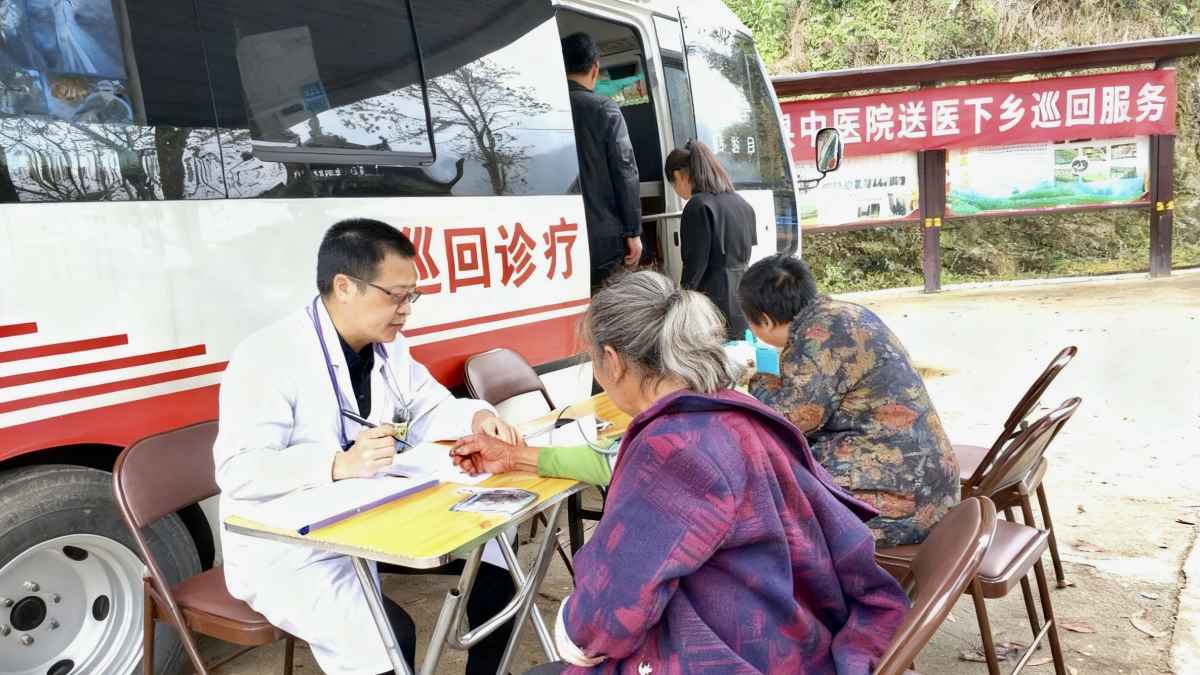
To overcome the region’s rugged geography, Zhejiang Mobile has transformed its service vehicles into 5G‑enabled mobile clinics. Each van maintains a stable signal on winding roads, transmitting high‑resolution images and test results to upper‑level hospitals. Inside, AI‑based software analyzes symptoms and supports local doctors in diagnosing patients and recommending treatments.

Each vehicle works as a mini hospital, equipped with more than 20 types of medical devices — from portable ultrasounds and ECG monitors to lung‑function analyzers. Township physicians can perform examinations, prescribe medication, and even provide emergency care on site. For complicated cases, they connect instantly with specialists in city or provincial hospitals through the same 5G network.

Local health authorities say Zhejiang Mobile’s platform helps automate the screening of chronic illnesses such as hypertension, coronary heart disease and cataracts, recommending drugs or further tests. This has significantly improved early detection and reduced serious cases among elderly residents.

To make the “Smart Mobile Hospital” serve not only daily clinical needs but also emergency response, Zhejiang Mobile worked with local authorities to connect data systems across public security, civil affairs and social‑insurance departments. The company helped build an integrated workflow that unites pre‑hospital emergency services with in‑hospital treatment.

When an emergency occurs in a remote mountain area, the system can automatically match and dispatch both a mobile hospital and an ambulance, ensuring rapid, coordinated rescue.

“When patients board the vehicle, facial‑recognition technology immediately confirms their identity and retrieves family and insurance information,” said Chen Lifeng, the director of the Dajun Township Health Center in Jingning County. “All registration and admission procedures are completed in advance, so the patient is effectively admitted upon boarding.”

Through a real‑time 5G link between the vehicle and the hospital, vital‑sign data is transmitted to emergency rooms as doctors provide remote guidance. This enables continuous treatment across the chain — from rescue site to vehicle to hospital.

Seven Zhejiang Mobile medical units now serve Jingning County, covering 67 villages and 78 regular stops. They have traveled more than 250,000 kilometers and delivered care to over 100,000 residents. For families once separated from modern healthcare by mountains, access is finally within reach.

Local doctors say 5G and AI are changing not only how patients are treated but how they think about medicine. Regular screenings catch illnesses earlier, and growing trust in remote consultations encourages people to seek help sooner.

As China continues modernizing its vast primary‑healthcare network, Jingning’s experiment is being closely watched. Zhejiang Mobile’s Smart Mobile Hospital may become a model for other remote regions seeking affordable, technology‑driven medical solutions.

Liu, who once dreaded the long trip to the city, now jokes that her doctors travel farther than she does. “They come here through the screen,” she says with a laugh. “And I don’t miss the bus anymore.”


Home  Facebook

Health

Taiwan entrepreneur Time Light Care brings smart elderly care to mainland as silver economy gains ground

Published

on

Time Light Care

TIANJIN, CHINA – Media OutReach Newswire – 29 June 2026 – A smart elderly care enterprise branded Time Light Care, based in north China’s Tianjin, has developed a proprietary smart elderly care management platform, drawing on Taiwan’s long-term care experience and riding the momentum of the mainland’s silver economy.

The nursing homes, positioned as “community-embedded, small-to-medium scale, high-quality care” facilities, allow the elderly to stay in familiar surroundings while remaining close to family members.

On the technology front, the company has introduced millimeter-wave radar monitors for completely bedridden residents to track breathing, pulse, and heartbeat in real time, with automatic alerts sent to caregivers’ phones in case of any abnormality.

The company has also introduced accessible vehicles equipped with detachable automatic wheelchairs that go directly to the bedside, helping “suspended seniors”—those who struggle to go downstairs due to the lack of elevators—to go out with dignity.

These industry efforts come as China’s elderly population aged 60 and above reached 320 million by the end of 2025, a figure projected to exceed 400 million by 2035, with the silver economy expected to surpass 30 trillion yuan (about 4.41 trillion U.S. dollars).

In February 2026, an executive meeting of the State Council proposed to promote the expansion and quality improvement of inclusive elderly care service supply, improving a tiered, categorized, inclusive, accessible, urban-rural covering, and sustainable elderly care service system. The series of measures outlined at the meeting charted the direction and identified priorities for better meeting the diverse and multi-level needs of hundreds of millions of elderly people.

“The mainland’s policy support and market scale have created immense opportunities for innovation in senior care,” said Jing Ran, the company’s representative, during an exclusive interview with China News Service. “Having succeeded in starting our business here, we now hope to encourage more young people from Taiwan to come, explore, and develop their careers on the mainland.”


Continue Reading

Health

Vestergaard and LifeStraw team up to boost community health impact in Kenya

Published

on

Vestergaard

Vestergaard first rehabilitated the Emusanda Health Centre in Lurambi, Kenya, in 2009, establishing a community clinic delivering essential primary and paediatric care, and comprehensive services for people living with HIV

NAIROBI, Kenya, June 24, 2026/APO Group/ –Vestergaard (https://Vestergaard.com/) and LifeStraw – sister companies united by shared values and a long commitment to social impact – are strengthening their collaboration in western Kenya through a new annual commitment from Vestergaard to donate 1,000 PermaNet® Dual long-lasting insecticidal mosquito nets. The initiative builds on more than a decade of joint engagement at Emusanda Health Centre, as well as LifeStraw’s global Give Back programme to provide communities across Kenya and other countries around the world with safe water.


Vestergaard first rehabilitated the Emusanda Health Centre in Lurambi, Kenya, in 2009, establishing a community clinic delivering essential primary and paediatric care, and comprehensive services for people living with HIV. Since LifeStraw became an independent company in 2020, it has continued to develop the facility – building a maternity ward and strengthening pre- and postnatal services – while Vestergaard has provided mosquito nets for every mother giving birth at the centre, and every family with children under 5 years old accessing care. Each family also receives a LifeStraw household water purifier, and LifeStraw’s local teams continue to support the clinic by filling staffing gaps and supplying essential medicines so services can operate around the clock.


Beyond Emusanda, LifeStraw’s Give Back programme has delivered safe water to schools and communities across Kenya and other countries, reaching more than 14 million children. At the same time, malaria remains a major threat to child health, with over 4 million cases estimated nationwide in 2024. Insecticide‑treated nets have been instrumental in reducing malaria globally, accounting for 72% (https://apo-opa.co/4vuLfIc) of all cases prevented between 2000 and 2024, while next‑generation dual active‑ingredient nets including PermaNet Dual have stopped an estimated 40 million cases since their introduction in 2019.

Safe water and malaria prevention are two of the most fundamental building blocks of community health, yet too many families still lack consistent access to either


By integrating distribution of Vestergaard’s latest mosquito net technology into LifeStraw’s existing community health programmes, the annual donation of PermaNet Dual will extend protection beyond healthcare facilities to boarding schools caring for orphans and children with disabilities, ensuring safer nights for some of the most at risk. Together, safe drinking water and malaria prevention form a simple but powerful package of protection for mothers, newborns, and school‑aged children.


Amar Ali, CEO of Vestergaard, said: “LifeStraw’s frontline work continues to show where the gaps are, and how well‑targeted interventions can protect children who might otherwise be left behind. By formalizing this annual PermaNet donation, we’re reinforcing our shared commitment to helping communities access the basic tools they need for a safer and healthier start in life.”


Alison Hill, CEO of LifeStraw, said: “Safe water and malaria prevention are two of the most fundamental building blocks of community health, yet too many families still lack consistent access to either. LifeStraw’s mission has always been rooted in the belief that safe water is a foundation for health and opportunity, but water alone is not enough. By integrating Vestergaard’s PermaNet Dual into our programs, we are bringing together the right interventions for families and children, improving both health and educational outcomes. It is a practical, scalable approach grounded in decades of work in these communities.”

Distributed by APO Group on behalf of Vestergaard Sàrl.


Continue Reading

Events

HKSTP Leads Largest-Ever Hong Kong Delegation to BIO 2026 Showcasing Life and Health Tech Strength

Published

on

Hong Kong

41 local tech firms, institutes and university spin-offs head to San Diego to forge global partnerships, reinforcing the city’s status as international healthcare innovation hub
HONG KONG SAR/SAN DIEGO, UNITED STATES – Media OutReach Newswire – 24 June 2026 – Hong Kong Science and Technology Parks Corporation (HKSTP), in collaboration with InvestHK as co-organiser, the Hong Kong Trade Development Council (HKTDC) as supporting organisation, and five renowned local universities – The University of Hong Kong, The Chinese University of Hong Kong, The Hong Kong University of Science and Technology, The Hong Kong Polytechnic University and City University of Hong Kong – to form the city’s largest-ever delegation of life and health technology innovators to the BIO International Convention 2026 (BIO 2026) in San Diego, from June 22 to 25.

Building on last year’s momentum, the 2026 Hong Kong delegation doubled the size of the Hong Kong Pavilion, expanding to a record of 41 organisations from HKSTP, including partner companies, research institutes, and for the first time with top five universities spin-offs. This landmark presence showcased Hong Kong’s deep strength across AI-enabled biotech, therapeutics, diagnostics, and pharma innovation, with potential outstanding “First-in-Class” and “Best-in-Class” assets. The delegation underscores the city’s leading role as Asia’s largest and the world’s second largest fundraising hub for the biotechnology sector.

Mr. Terry Wong, CEO of HKSTP, said, “BIO 2026 is a premier platform to showcase Hong Kong’s groundbreaking innovation, deepen partnerships, and open new pathways into global healthcare markets. As a super-connector, Hong Kong is uniquely positioned to bridge global innovators with opportunities across Asia and beyond. With strong R&D capabilities backed by world-class universities—five ranked among the QS Top 100, including two with medical schools now placed in the global top 20—Hong Kong’s biotech and medical research excellence is increasingly recognised worldwide. As the city’s innovation ecosystem orchestrator, HKSTP brings together talent, capital, research institutions, clinical partners, and industry leaders to accelerate the journey from discovery to impact. We will continue to empower life and health technology ventures, translating innovation breakthroughs into life-changing solutions that benefit communities around the world.”

HKSTP and Park Companies Advanced in Cross-border Innovation and Market Expansion

A key highlight of BIO 2026 is witnessing the signing of three major strategic partnerships:

LabCentral — HKSTP signed an MOU with one of the largest global non-profit biotech incubators, supporting life sciences startups with high-impact lab infrastructure and scientific community programmes. The collaboration will deepen ties between the U.S. and Hong Kong life sciences ecosystems through startup support, ecosystem engagement, and co-developed programmes, events and strategic initiatives. It will also help connect startups, investors, corporate partners and research institutions, creating stronger pathways for cross-border innovation and commercialisation.

Immuno Cure – the developer of the first-in-human novel therapeutic HIV vaccine ICVAX – announced its collaboration with OPIS, an international Contract Research Organization (CRO), at BIO 2026. Leveraging OPIS’s full-service, multi-country clinical trial expertise and regulatory knowledge, the partnership will support overseas clinical trial execution and establish a global framework to prepare for international expansion.

Zhaoke Ophthalmology signed an MOU with Laboratório Teuto, the first company to produce generic medicines and OTCs (Over the Counter – Prescription Exempt Medicines) in Brazil, to explore cross-border cooperation in ophthalmology. This is Zhaoke’s first strategic MOU in Brazil market. Leveraging its innovative pipeline and Teuto’s commercial network in Brazil, the partnership aims to bring advanced eye care treatments to Latin American patients while demonstrating the globalisation of Hong Kong-born biotech innovation.

Beyond the BIO 2026 Hong Kong Pavilion, HKSTP CEO Mr Terry Wong attended the “Translating Innovation Across Borders: Creating Global Gateways for Biotech Startups” panel sharing session. Mr. Wong shared his insights on cutting-edge biotech trends, Hong Kong’s strengths on life and health tech development, and HKSTP’s role in building a global bridge for nurturing global startup expansion, sustainable innovation and collaboration.

Furthermore, HKSTP and five Hong Kong university delegates visited the Salk Institute, home to six Nobel Laureates during BIO 2026 to explore partnerships and shape global biotech momentum through collaborative platforms. HKSTP, in collaboration with InvestHK as co-organiser, HKTDC as the supporting organisation, and powered by the Hong Kong Economic and Trade Office in San Francisco, hosted a Global Mixer during the exhibition. Industry leaders, incubators, and venture capital firms – including Bayer Pharmaceuticals, Johnson & Johnson Innovation, LabCentral, Roche, Simcere Pharmaceutical, and T.Rx Capital – were invited to join the judging panel for startup pitching sessions. The Pavilion also featured executive sharing and curated networking events for commercialisation, licensing, partnerships, investment and international market expansion.

Global recognition at Biomedical Pitch Competition

In the lead-up to BIO 2026, HKSTP actively drove engagement across the biotech sector and co-organised the 2026 Biomedical Pitch Competition with the Boston Capital Investment Club in Boston on May 23 and 24. Competing against around 170 biotechnology companies worldwide, HKSTP park company Meta Pharmaceuticals (HK) Limited won Third Place for its next-generation autoimmune therapeutics. The recognition underscores the strength of Hong Kong’s biotech pipeline and HKSTP’s commitment to translational medicine, commercialisation and globally scalable healthcare solutions.

HK’s biotech ecosystem rises to another level

Hong Kong continues to expand its global healthcare footprint as the world’s second-largest biotech fundraising hub. As Hong Kong’s flagship innovation and technology ecosystem, HKSTP is home to more than 300 life and health technology companies and helps innovators turn pioneering ideas into real-world impact. Its ecosystem connects capital, talent, infrastructure and market access across the biotech innovation journey.

Hong Kong Science and Technology Parks Corporation
Hong Kong Science and Technology Parks Corporation (HKSTP) was established in 2001 to create a thriving I&T ecosystem grooming 13 unicorns, more than 17,000 research professionals and over 2,500 technology companies from 26 countries and regions focused on developing healthtech, AI and robotics, fintech and smart city technologies, etc.

Our growing innovation ecosystem offers comprehensive support to attract and nurture talent, accelerate and commercialise innovation for technology ventures, with the I&T journey built around our key locations of Hong Kong Science Park in Pak Shek Kok, InnoCentre in Kowloon Tong and three modern InnoParks in Tai Po, Tseung Kwan O and Yuen Long realising a vision of new industrialisation for Hong Kong, where sectors including advanced manufacturing, micro-electronics and biotechnology are being reimagined.

Hong Kong Science Park Shenzhen Branch in Futian, Shenzhen plays positive roles in connecting the world and the mainland with our proximity, strengthening cross-border exchange to bring advantages in attracting global talent and allowing possibilities for the development of technology companies in seven key areas: Medtech, big data and AI, robotics, new materials, microelectronics, fintech and sustainability, with both dry and wet laboratories, co-working space, conference and exhibition facilities, and more.

Through our R&D infrastructure, startup support and enterprise services, commercialisation and investment expertise, partnership networks and talent traction, HKSTP continues to contribute in establishing I&T as a pillar of growth for Hong Kong.

Continue Reading

Trending