Connect with us
Anglostratits

Health

Taiwan entrepreneur Time Light Care brings smart elderly care to mainland as silver economy gains ground

Published

on

Time Light Care

TIANJIN, CHINA – Media OutReach Newswire – 29 June 2026 – A smart elderly care enterprise branded Time Light Care, based in north China’s Tianjin, has developed a proprietary smart elderly care management platform, drawing on Taiwan’s long-term care experience and riding the momentum of the mainland’s silver economy.

The nursing homes, positioned as “community-embedded, small-to-medium scale, high-quality care” facilities, allow the elderly to stay in familiar surroundings while remaining close to family members.

On the technology front, the company has introduced millimeter-wave radar monitors for completely bedridden residents to track breathing, pulse, and heartbeat in real time, with automatic alerts sent to caregivers’ phones in case of any abnormality.

The company has also introduced accessible vehicles equipped with detachable automatic wheelchairs that go directly to the bedside, helping “suspended seniors”—those who struggle to go downstairs due to the lack of elevators—to go out with dignity.

These industry efforts come as China’s elderly population aged 60 and above reached 320 million by the end of 2025, a figure projected to exceed 400 million by 2035, with the silver economy expected to surpass 30 trillion yuan (about 4.41 trillion U.S. dollars).

In February 2026, an executive meeting of the State Council proposed to promote the expansion and quality improvement of inclusive elderly care service supply, improving a tiered, categorized, inclusive, accessible, urban-rural covering, and sustainable elderly care service system. The series of measures outlined at the meeting charted the direction and identified priorities for better meeting the diverse and multi-level needs of hundreds of millions of elderly people.

“The mainland’s policy support and market scale have created immense opportunities for innovation in senior care,” said Jing Ran, the company’s representative, during an exclusive interview with China News Service. “Having succeeded in starting our business here, we now hope to encourage more young people from Taiwan to come, explore, and develop their careers on the mainland.”


Health

Nigeria achieves historic milestone as Health Textiles Nigeria begins manufacture of Vestergaard’s PermaNet® Dual mosquito nets

Published

on

Nigeria

The facility is the first in Nigeria to manufacture dual-active ingredient insecticide-treated mosquito nets (ITNs)

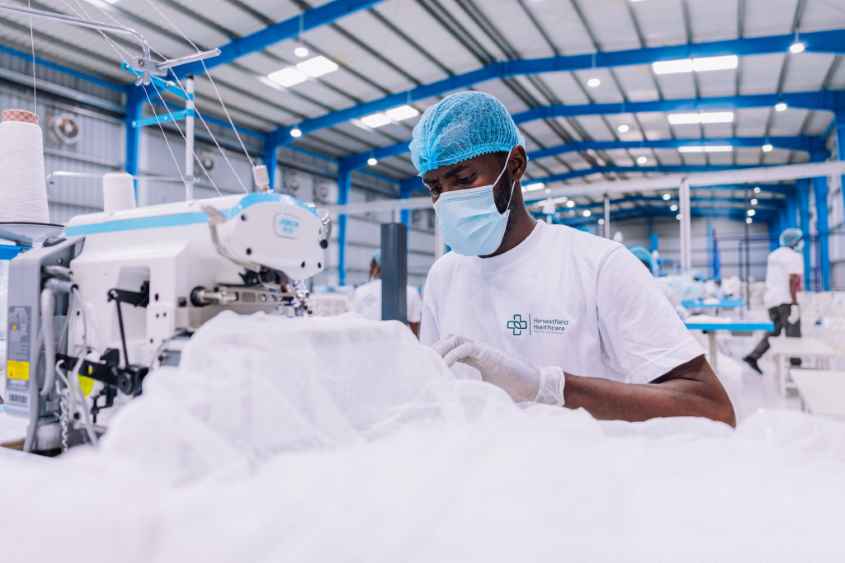
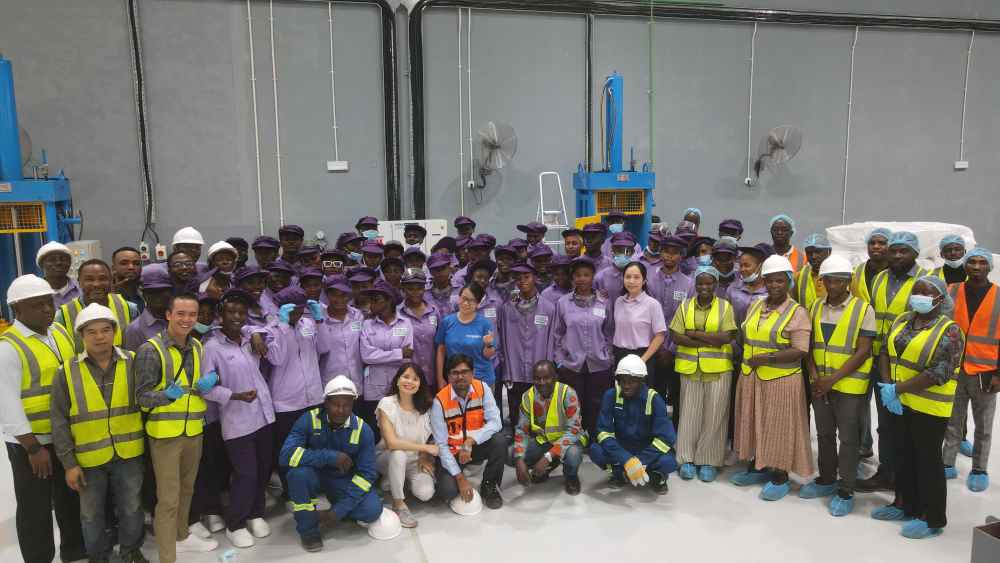
LAGOS, Nigeria, September 10, 2026/APO Group/ –Vestergaard Sàrl (www.Vestergaard.com) announced today that Health Textiles Nigeria FZE is now operational, marking a major milestone in the fight against malaria and establishing Nigeria as a leading hub for the production of next-generation mosquito nets in Africa. At scale, Health Textiles Nigeria will produce 10 million nets per year, employing more than 600 people in Nigeria.

The facility is the first in Nigeria to manufacture dual-active ingredient insecticide-treated mosquito nets (ITNs). It will produce PermaNet® Dual – Vestergaard’s most advanced net designed to combat insecticide resistance, which was prequalified by the World Health Organization (WHO) in 2023. Health Textiles Nigeria has been acknowledged by WHO as a Vestergaard production site.


As operations scale up, Health Textiles Nigeria represents a significant step forward in expanding access to one of the most effective tools available for malaria prevention. Support from the Government of Nigeria has been instrumental, symbolizing a shared commitment to strengthening malaria prevention through local initiatives.


Dr Muhammad Ali Pate, Coordinating Minister of Health and Social Welfare in Nigeria, said: “The commencement of local production of next-generation insecticide-treated nets is an important milestone for Nigeria’s health system and our fight against malaria. It also reflects our broader commitment to strengthening health security by building domestic capacity to manufacture the essential health products Nigerians need. Through partnerships that bring together global expertise, Nigerian talent and local production, we are building a more resilient healthcare value chain while creating skilled jobs and positioning Nigeria as a competitive manufacturing hub for Africa.”


This progress comes at a pivotal time in the global fight against malaria. Since 2000, ITNs including PermaNet Dual have been responsible for averting 1.13 billion cases (https://apo-opa.co/4ir1imJ). Yet malaria remains a significant  global health threat, particularly for women and young children, with an estimated 282 million cases and 610,000 deaths (https://apo-opa.co/4cAniHX) recorded by WHO globally in 2024. Africa remains hardest hit by malaria, and Nigeria accounts for a quarter of the world’s cases.


Health Textiles Nigeria (https://apo-opa.co/4xXcrjV) responds to this urgent need by expanding local capacity and expertise to produce life-saving malaria prevention tools, fulfilling the vision set out in a Memorandum of Understanding (MOU) signed in 2024 between Vestergaard and the Presidential Initiative for Unlocking the Healthcare Value Chain (PVAC). The agreement, which focuses on strengthening local production capacity, establishes Nigeria as West Africa’s first manufacturing hub for dual active-ingredient mosquito nets.


Today we welcome the start of a new chapter in Africa’s fight against malaria

Dr Abdu Mukhtar, National Coordinator of PVAC, said: “This milestone demonstrates what is possible when investment, technology transfer and government policy are deliberately aligned to build local manufacturing capability. When PVAC and Vestergaard signed the MOU in 2024, the objective was not simply to attract investment, but to translate partnership into productive capacity in Nigeria. Seeing Nigerian professionals trained, production underway and a pathway established to manufacture at scale is exactly the kind of outcome we want to replicate across the healthcare value chain.”


Health Textiles Nigeria is wholly owned by Vestergaard, a global leader in malaria prevention that has supplied approximately one-third of all insecticide-treated nets publicly procured worldwide since 2000. The company brings decades of manufacturing expertise, rigorous quality assurance systems and a proven track record in developing and scaling innovative vector-control technologies that have helped protect millions of people from malaria.


Amar Ali, CEO of Vestergaard, said: “Today we welcome the start of a new chapter in Africa’s fight against malaria, and we thank Minister Pate for his leadership and the unwavering support of the Nigerian government. By combining Nigerian talent with world-class manufacturing and Vestergaard’s deep expertise in innovative malaria prevention tools, Health Textiles Nigeria will deliver the highest standards of quality, compliance and performance. We believe this facility can become a benchmark for malaria prevention manufacturing in Africa and help ensure that life-saving mosquito nets are produced closer to the communities that need them most.”


Health Textiles Nigeria is placing quality, training and compliance at the heart of its operations. The company has already recruited around 80 employees, with rigorous training covering manufacturing excellence, product quality, health and safety, and regulatory compliance ongoing. As production expands, the facility is expected to create additional employment opportunities while developing a highly skilled workforce capable of supporting world-class health-product manufacturing.


The facility builds on Vestergaard’s decades of commitment to innovation, quality, and delivering practical solutions for malaria prevention. Every aspect of production is designed to meet the company’s stringent global standards, ensuring that PermaNet Dual manufactured in Nigeria delivers the performance, reliability and quality that health programmes around the world depend on.


As countries across Africa increasingly prioritize local manufacturing of essential health products, Health Textiles Nigeria demonstrates how international expertise and local capability can combine to strengthen supply chains, create skilled jobs and improve access to critical health interventions.


With production now underway, the first commercial orders are expected to be fulfilled in the coming months.

Distributed by APO Group on behalf of Vestergaard Sàrl.


Continue Reading

Health

African Bundibugyo ebolavirus vaccine candidate to be advanced to clinical trials

Published

on

ebolavirus

CEPI backs Minapharm’s Bundibugyo ebolavirus vaccine candidate, based on ProBioGen’s proprietary MVA-CR19 platform

CAIRO, Egypt, August 27, 2026/APO Group/ –Leading African biopharmaceutical company Minapharm Group (www.Minapharm.com), headquartered in Egypt with subsidiaries in Berlin, will receive up to US$16.5 million from the Coalition for Epidemic Preparedness Innovations (CEPI) to advance the development of a Bundibugyo ebolavirus vaccine candidate, strengthening efforts to develop vaccines to combat the fastest-growing and second-largest Ebola outbreak on record affecting the Democratic Republic of the Congo (DRC).


Minapharm’s Bundibugyo vaccine is designed by ProBioGen, a Berlin-based specialist within Minapharm Group, based on their proprietary modified vaccinia Ankara (MVA) vaccine platform, MVA-CR19. A similar technology underpins a licensed vaccine against smallpox and mpox, and has elicited long-term immunity in a vaccine targeting the related Zaire ebolavirus (https://apo-opa.co/4xrvZwE).

CEPI’s funding will advance the Bundibugyo vaccine candidate through preclinical development and into an early-stage clinical trial to assess the immunogenicity and safety of the vaccine candidate. The study in humans, known as a Phase 1 trial, is expected to take place in Africa.

Minapharm’s investigational vaccine becomes the fifth Bundibugyo-specific virus vaccine candidate supported by CEPI in response to the escalating epidemic. It joins a portfolio of promising CEPI-backed candidates* built on different vaccine technologies to maximise the likelihood of developing a safe and effective shot that could help bring this devastating crisis under control.

It is the only Bundibugyo vaccine candidate CEPI is funding that is designed to induce both B- and T-cell responses for comprehensive and long-lasting immunity.

“CEPI’s funding to Minapharm harnesses the growing strength of African-led innovation to help confront this increasingly severe outbreak and prepare for future threats”, said Dr Richard Hatchett, CEO of CEPI.  “In just three months, cases of Bundibugyo have spread rapidly across the DRC, making this the largest and deadliest outbreak the country has ever faced. We are proud to support Minapharm’s Bundibugyo vaccine candidate: it will round out CEPI’s portfolio, give the world another shot on goal, and advance Minapharm’s proprietary MVA platform, which if successful can serve as the basis for future African-manufactured filovirus vaccines. The faster we can advance a pipeline of promising candidates, the better our chances of saving lives and bringing this epidemic under control.”

CEPI’s goal is to bring at least two Bundibugyo vaccines to Emergency Use Authorisation and WHO Prequalification to respond to this outbreak, while also building readiness for future Bundibugyo epidemics.

CEPI’s funding to Minapharm harnesses the growing strength of African-led innovation to help confront this increasingly severe outbreak and prepare for future threats

Dr. Wafik Bardissi, Group Chairman and CEO of Minapharm and Chairman of ProBioGen, said: “For more than 25 years, Minapharm has built proven biologics capabilities in Egypt and, together with ProBioGen, established a cross-continental group model combining scientific innovation, proprietary technologies and advanced biomanufacturing.”

Dr. Bardissi added: “This programme demonstrates the strength of our capabilities across the full biologics continuum, from design and development through to manufacturing, in response to an urgent public-health threat. With CEPI’s support, we are turning scientific ingenuity into health sovereignty, drawing on the breadth of our technologies and know-how to advance a vaccine response for Africa.”

“ProBioGen’s MVA-CR19 platform was developed to enable rapid generation of recombinant MVA vaccine candidates and scalable manufacturing,” said Dr Volker Sandig, Chief Scientific Officer of ProBioGen. “We are proud to bring this platform and our CMC expertise to a Minapharm-led programme supported by CEPI, helping advance a Bundibugyo ebolavirus vaccine candidate towards clinical evaluation in response to an urgent public-health need.”

Dr Jean Kaseya, Director General, Africa CDC, said, “Bundibugyo virus is now driving the largest Ebola outbreak DRC has ever faced. A vaccine candidate advanced by an African company is exactly the kind of capability our continent needs – not just for this outbreak, but so that Africa can develop and manufacture the tools it needs to protect its own people. We welcome CEPI’s support for Minapharm’s work as a concrete step toward that health sovereignty.”

To develop the Bundibugyo-specific vaccine candidate, ProBioGen —a wholly-owned subsidiary of Minapharm based in Germany—will generate the recombinant MVA drug substance under Good Manufacturing Practice (GMP) guidelines. The drug substance is the active component of a vaccine which includes viral proteins that could train the immune system to recognise and fight a specific pathogen – in this case, Bundibugyo ebolavirus.  The drug substance will then be shipped to Minapharm’s facility in Cairo, Egypt, to create the drug product – the finished vaccine mixture which combines the drug substance with other vaccine ingredients and packaging ready for testing. In parallel, Minapharm plans to transfer drug substance manufacturing to its biotechnology facilities in Cairo, enabling fully local drug substance and drug product manufacturing.

The project leverages more than 25 years of Minapharm’s proven track record and experience in the development, end-to-end manufacturing and commercialisation of complex biologics in Africa.

If the Phase 1 trial of the vaccine candidate is successful, CEPI anticipates working with Minapharm and ProBioGen to support late-stage trials to generate efficacy data for emergency use authorisation and licensure. CEPI, Minapharm and ProBioGen are committed to enabling rapid, affordable supply of the vaccine to affected countries and to the populations that need them should it prove safe and effective.

A positive outcome from this project could also lay the foundation for the future expansion of Minapharm’s vaccine manufacturing capabilities, potentially with support from CEPI and other partners.

To date, CEPI’s Bundibugyo virus vaccine development programme receives funds from the European Commission through its 2026 grant under Horizon Europe to CEPI, the U.S. Department of State and CEPI’s existing core funding.

Distributed by APO Group on behalf of Minapharm Pharmaceuticals.


Continue Reading

Business

South Africa: African Development Bank and Biovac sign $15 million agreement to advance Africa’s first end-to-end cholera vaccine production

Published

on

African Development Bank

Financing will help triple Biovac’s annual production capacity up to 500 million doses, create 340 jobs, and strengthen South Africa’s role as a continental vaccine manufacturing hub

PRETORIA, South Africa, July 24, 2026/APO Group/ –The African Development Bank Group (www.AfDB.org) has finalised a loan of up to $15 million to the Biologicals and Vaccines Institute of South Africa Ltd (Biovac) (https://apo-opa.co/3RQJKp2) to support a new multi-vaccine manufacturing facility in Cape Town that will significantly expand Africa’s domestic capacity to produce vaccines.


The financing forms part of an expansion programme that will raise Biovac’s total annual manufacturing capacity up to 500 million doses. Once complete, Biovac is expected to become Africa’s first end-to-end producer of oral cholera vaccine and South Africa’s first locally produced inactivated polio vaccine, and the first on the continent to produce inactivated polio vaccine through technology-transfer partnerships with Sanofi, the International Vaccine Institute, Biological E Limited, EuBiologics, and Bharat Biotech. For more than two decades, Biovac has been South Africa’s primary vaccine supplier,

Africa currently imports more than 99 percent of the vaccines it uses, even though the continent carries a disproportionate share of the world’s vaccine-preventable disease burden. In response, the African Union aims to produce 60 percent of the continent’s vaccines locally by 2040. (https://apo-opa.co/4c0qcoV) Beyond vaccines, the project is projected to create around 340 full-time jobs, with an estimated 43 percent of these roles going to women and 30 percent going to youths. Biovac, which already employs more than 300 staff — half of them women — will also expand training in vaccine manufacturing, quality control, and regulatory science in partnership with local universities and other regional training institutions.

“This investment in Biovac is about much more than expanding vaccine production capacity. It is about building Africa’s health sovereignty, strengthening regional value chains, and creating industrial capabilities that will enable the continent to respond more effectively to future health emergencies,” said Solomon Quaynor, the Bank Group’s Vice President for Private Sector, Infrastructure and Industrialisation. “By supporting Africa’s first end-to-end oral cholera vaccine manufacturing facility and the continent’s first local production of inactivated polio vaccine, we are helping transform Africa from a consumer of imported vaccines into a producer of critical health solutions.”

The project will shift the narrative from majority-imported vaccines to majority-exported vaccines

“We welcome the African Development Bank as a partner in this landmark project and are proud that an institution so central to Africa’s development sees in Biovac the same opportunity we see, a chance to fundamentally shift the continent’s relationship with its own health security,” said Biovac Chief Executive Officer Morena Makhoana. “The project will shift the narrative from majority-imported vaccines to majority-exported vaccines. This is part of changing that reality permanently. This is what Africa’s health sovereignty looks like in practice, and we are honoured to be building it.”

The Bank Group’s support for Biovac aligns with its broader commitment to developing Africa’s pharmaceutical and vaccine manufacturing ecosystem, creating quality jobs, fostering innovation, and advancing African Union targets.

“This project allows one of Africa’s most experienced manufacturers to scale up exactly where the need is greatest: vaccines that protect children from cholera, polio, pneumonia and meningitis,” said Kennedy Mbekeani, the Bank Group’s Director General for Southern Africa, and Country Manager for South Africa.

The expansion project is also designed to plug directly into the continent’s emerging vaccine-financing architecture, including Gavi’s African Vaccine Manufacturing Accelerator (AVMA), (https://apo-opa.co/4c1QFT4) a $1.2 billion mechanism that rewards African manufacturers with milestone payments once they reach WHO prequalification, plus a per-dose top-up on vaccines supplied through UNICEF tenders.

Biovac’s new facility is expected to be completed by 2028 and will initially produce vaccines for cholera (oral) and subsequently for polio (IPV), pneumonia (PCV), and meningitis (MenX).

The Bank joins a syndicate of development finance institutions backing the project. The syndicate is led by the International Finance Corporation (IFC) and supported by a long-term quasi-equity facility from the Human Development Accelerator (HDX) programme, a European Union-backed initiative implemented by the European Investment Bank in partnership with the Gates Foundation. The package is complemented by grant funding and support from other global health partners for technology transfers that will bring new vaccines into Biovac’s portfolio.

Biovac is a South African biopharmaceutical company established in 2003 in partnership with the South African government to develop local vaccine manufacturing capability. Based in Cape Town, it currently manufactures and supplies much-needed routine paediatric vaccines and has delivered more than 450 million vaccine doses to countries across Southern Africa, including COVID-19 vaccines.

Distributed by APO Group on behalf of African Development Bank Group (AfDB).

Continue Reading

Trending