Connect with us
Anglostratits

Business

Water Security in Africa Starts with Educating Our Youth (By Chetan Mistry)

Published

on

urban economies

A general estimate by environmental agencies is that we waste 136 litres or 30 gallons per day per person, particularly in developed and urban economies

ACCRA, Ghana, January 25, 2023/APO Group/ — 

Chetan Mistry, Strategy and Marketing Manager at Xylem Africa (www.Xylem.com).

“We use football to teach children about drinking healthy water, regular handwashing, and staying away from germs. I always dreamed of helping young girls in my community to be educated, and to be whatever they want to achieve in the future.”

These are the words of Fatimatu, a 20-year-old coach and youth volunteer from Ghana’s Cape Coast region (https://bit.ly/3DdozTM). She dedicates much of her time to coaching local kids in football and helps them learn valuable life skills, including the value of water.

This is not just altruism. Every morning before she tends to her education and those of her youth footballers, Fatimatu carries buckets of water back to her home, helping her mother with daily chores. Access to water is an enormous burden for many women and children. According to UNICEF (https://bit.ly/3WFDoVM), women and children worldwide spend a shocking 200 million hours each day carrying water.

It’s an understatement to say they understand the value of water more than most of us. This shouldn’t be the case. Water is our most valuable resource. We can talk about rare earth minerals powering our gadgets, gold and silver fuelling our economies, and oil powering our vehicles. Yet none of that matters without water. If there is no water, there is no life, and the harder it becomes to access safe water sources, the less time we have to spend creating those other benefits of civilisation.

The bad news is that we are very wasteful and ignorant about water. But there is good news, too: by educating young people through the things that ignite their passions, such as football, storytelling and creativity, we are changing our attitudes.

Undervaluing Water

Across the world, in partnership with Manchester City Football Club, Xylem is supporting young community football leaders to educate their communities on the importance of water

We are irresponsible with water. A general estimate by environmental agencies is that we waste 136 litres or 30 gallons per day per person, particularly in developed and urban economies. Almost 40 percent of piped water fails to reach its source due to leaks, costing US$39 billion annually (https://bit.ly/3D8Kdsb). Most of those losses erode the finances of local communities, forcing them to cut back on services such as education and policing. Industries that monitor their electricity consumption down to the decimal tend to take a relaxed attitude towards water consumption and efficiency. Really, if we had to take a water test today, humanity would fail miserably.

Some of that blame lies with our busy lives and the modern conveniences of piped water. We start taking it for granted. But that is different with younger generations. They appreciate the message of looking after our natural resources. Recently, a friend told me about how her 6-year-old daughter gave her a lecture. The kid had learned about water security at school, and she got angry when my friend poured used cooking water down the drain.

“Mom, that should go on the plants!” she exclaimed. My friend had no response—her daughter was right. We had forgotten how to be responsible with water. But our children know, and they have every right to. It’s their future at stake.

The Kids Are Alright

During my career in the water industry, I’ve seen how powerful this dynamic is and how we can spread the message of water through the youth by teaching them about water security. Storytelling is very successful, such as Splash. This colourful character, designed here in Africa, brings water conservation to kids across the continent through colourful children’s book adventures. Children and teenagers are also discovering the opportunities of a career in water innovation—the annual Stockholm Junior Water Prize, running since the 1990s, encourages youths from over 40 countries to invent new ways to secure and deliver water to everyone.

But the greatest momentum is emerging from football. Across the world, in partnership with Manchester City Football Club, Xylem is supporting young community football leaders to educate their communities on the importance of water. Young coaches and teachers such as Fatimatu in Cape Coast, Ghana, are helping to make a difference, arming the next generation with the knowledge to change all our attitudes towards water.

Water is critical for the world we live in. Whether you enjoy a refreshing glass to cool down, nourish your crops, stroll along a mesmerising river stream, or cool the machinery that generates our electricity and modern resources, water is irreplaceable. Water security is fundamental to our survival.

Water security starts with educating our youth. Fortunately for us, that is already happening. How can we take it further and educate ourselves in the process? That’s a question we should all be asking. 

Distributed by APO Group on behalf of Xylem.

Business

Afreximbank Backs DOTT Services Limited, Uganda with a US$28 Million Facility for Regional Engineering, Procurement and Construction (EPC) Projects

Published

on

The financing will enhance DOTT’s capacity to execute strategic projects across the continent, facilitate intra-African trade in goods and services and strengthen regional value chains

CAIRO, Egypt, November 4, 2026/APO Group/ –African Export-Import Bank (Afreximbank) (www.Afreximbank.com) has activated and approved a US$28 million dual-tranche facility for DOTT Services Limited, the leading Uganda-based engineering, procurement and construction (EPC) contractor, and has begun disbursing funds to support the execution of its EPC projects pipeline, valued at more than US$550 million.


Provided under Afreximbank’s EPC Contract Promotion Initiative, the facility is designed to strengthen the capacity of African EPC champions to secure and execute large-scale infrastructure projects across the continent. Specifically, the financing will support DOTT Services Limited in executing contracts and pursuing near-term opportunities valued at approximately US$550 million across Uganda, Tanzania, Kenya and the Democratic Republic of Congo.

Commenting on the transaction, Mr. Humphrey Nwugo, Director of Regional Operations at Afreximbank’s Eastern Africa office, said:

Through the initiative, the Bank provides support, including financing, twinning and matchmaking

“This facility reflects Afreximbank’s commitment to building strong African EPC champions capable of delivering the infrastructure that underpins Africa’s industrialisation, trade and economic integration. By supporting DOTT Services Ltd, a well-established regional contractor with operations across five African countries, we are addressing a critical financing gap that has historically constrained the ability of African firms to participate meaningfully in large-scale, cross-border infrastructure projects.

The financing will enhance DOTT’s capacity to execute strategic projects across the continent, facilitate intra-African trade in goods and services and strengthen regional value chains. It also advances Afreximbank’s EPC Contract Promotion Initiative, which seeks to increase African participation in the development and delivery of Africa’s infrastructure.

Through partnerships such as this, we are ensuring that greater value, expertise, employment opportunities and economic benefits are retained within Africa while fostering the emergence of globally competitive African contractors.”

Mr. Nwugo further noted that most local commercial banks lacked the capacity to support intra-African and regional projects because they were poorly placed to absorb the associated cross-border risks, while international banks tended to prioritise non-African contractors. As a result, African entities were often left without adequate financial support.

He said: “Afreximbank’s EPC Initiative was therefore designed to address this challenge by supporting African EPC contractors in securing and executing a greater share of infrastructure contracts across the continent. Through the initiative, the Bank provides support, including financing, twinning and matchmaking, as well as issuing letters of support, among others”, he explained.

DOTT Services Limited presence in Africa spans 28-years, with operations in Uganda, Tanzania, South Sudan, Zambia, and the Democratic Republic of Congo (DR Congo). It also has European offices in Italy and the UK, and a workforce of over 6,000 people. The company procures from, and distributes to, African countries goods such as bitumen, asphalt, steel and spare parts, as well as yellow goods equipment and services, making it a significant player in intra-African trade. Its track record of promoting trade-supporting infrastructure across the continent makes it a natural partner for Afreximbank’s EPC Contract Promotion Initiative, which seeks to build African EPC champions capable of delivering the infrastructure that underpins intra-African trade.

Distributed by APO Group on behalf of Afreximbank.


Continue Reading

Business

Coca-Cola Beverages Africa (CCBA) invests in Africa’s leadership potential through EDGE

Published

on

Coca-Cola

Developed in partnership with Henley Business School Africa, the programme equips high-potential leaders with the skills, experiences and perspectives needed to drive growth, create value and deliver impact across the business

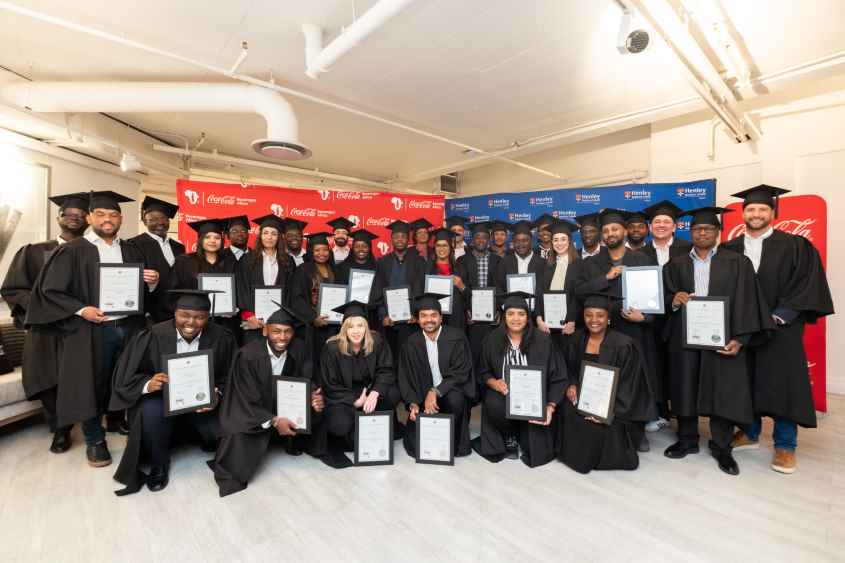
JOHANNESBURG, South Africa, November 4, 2026/APO Group/ –Thirty-one leaders from across 12 African countries have graduated from Coca-Cola Beverages Africa’s (CCBA) (https://www.CCBAgroup.com) EDGE Senior Leadership Acceleration Programme, marking the completion of the programme’s second generation and the first pan-African EDGE cohort.


Created by CCBA, EDGE is the company’s flagship senior leadership development programme. Building on previous participation from The Coca-Cola Company, the programme was further expanded in 2026 to include leaders from Equatorial Coca-Cola Bottling Company and Coca-Cola Hellenic Bottling Company, creating a broader pan-African learning experience across the Coca-Cola system.

Developed in partnership with Henley Business School Africa, the programme equips high-potential leaders with the skills, experiences and perspectives needed to drive growth, create value and deliver impact across the business.

The 2026 cohort marks an important milestone for EDGE as the programme brought together leaders from across the Coca-Cola system

The graduating cohort represented leaders from multiple countries and business functions. Through classroom learning, business projects, mentoring and coaching, participants gained practical experience in addressing real business opportunities and challenges.

With CCBA serving more than 840,000 customers across Africa, the company requires leaders who can navigate complexity and create value in diverse markets. EDGE helps build these capabilities through practical, business-focused learning.

“People are at the heart of everything we do, and programmes like EDGE demonstrate our commitment to investing in their growth and future success,” said Natasa Prodanovic, Chief People and Culture Officer at CCBA.

“The 2026 cohort marks an important milestone for EDGE as the programme brought together leaders from across the Coca-Cola system. By learning alongside colleagues from The Coca-Cola Company, Equatorial Coca-Cola Bottling Company and Coca-Cola Hellenic Bottling Company, participants were able to build meaningful connections, share diverse perspectives and strengthen collaboration across our markets.”

The curriculum focused on strategy, value creation, transformation, commercial decision-making, leading self and leading teams. Participants also presented business projects aligned to organisational priorities as part of the programme’s graduation requirements.

EDGE forms part of CCBA’s broader commitment to developing future leaders and building the capabilities needed to drive sustainable growth and impact across Africa.

Distributed by APO Group on behalf of Coca-Cola Beverages Africa.


Continue Reading

Business

Africa and Caribbean trade potential could reach $1.65 billion annually by 2030: International Trade Centre (ITC)-Afreximbank report

Published

on

Afreximbank

The report finds that around 80% of Africa’s annual goods export potential to the Caribbean remains untapped

ST. JOHN’S, Antigua and Barbuda, November 3, 2026/APO Group/ –Annual trade in goods and services between Africa and the Caribbean could reach up to $1.65 billion by 2030, excluding mineral fuels, according to a new report launched today by the International Trade Centre (ITC) and African Export-Import Bank (Afreximbank) (www.Afreximbank.com) on the sidelines of the Commonwealth Heads of Government Meeting in Antigua and Barbuda.


The report, Reshaping Africa-Caribbean Trade: Opportunities for Economic Transformation, (https://apo-opa.co/4eiz62u) finds that while Africa and the Caribbean share deep historical and cultural links, trade between the two regions continues to represent only a small share of each region’s overall trade, despite complementarities across sectors ranging from agribusiness and manufacturing to services and the creative economy.

A look at the numbers

The report finds that around 80% of Africa’s annual goods export potential to the Caribbean remains untapped, with are significant opportunities for export growth if trade and investment is actively promoted and facilitated.

Africa and the Caribbean must transform a shared history into shared prosperity

Caribbean export potential lies in the services sector, reaching $481 million. The report identifies business opportunities across several priority sectors, including processed food and animal feed, chemicals, minerals and metals, apparel and textiles, leather and footwear, tourism, transport services and creative industries.

These findings – and more – are based on trade and export potential analysis, detailed sector assessments and a survey of 1,175 businesses and business support organizations across Africa and the Caribbean.

Tapping into priority sectors

ITC Executive Director Pamela Coke-Hamilton (https://apo-opa.co/3WHHZMU), in launching the report, said: ‘At a time of major shifts in global trade, countries need to strengthen regional ties and invest in value addition, to build resilience. We know the major trade opportunities between Africa and the Caribbean – and now we can focus on helping businesses take advantage of those opportunities through better market intelligence, improved logistics and greater access to finance.’

Commenting on the report, Denys Denya, Senior Executive Vice President at Afreximbank, said: ‘Africa and the Caribbean must transform a shared history into shared prosperity. With our CARICOM office in Barbados, about $1 billion in approved transactions and a $5 billion regional financing commitment, Afreximbank is advancing this vision through financing, deposit mobilization under CENDEP, business links through the annual Afri-Caribbean Trade and Investment Forum, local-currency payments through CAPSS and creative-industry collaboration through CANEX. This report offers a practical roadmap to turn untapped potential into bankable opportunities across agribusiness, manufacturing, tourism and the creative economy. Through targeted financing, stronger transport and logistics links and strategic partnerships, we can build a Global Africa connected by heritage, trade, investment and shared opportunity.’

The report finds that businesses continue to face significant challenges, including high transport costs, limited direct shipping links, regulatory barriers, limited access to finance and difficulties in identifying trusted commercial partners. It highlights that future economic cooperation should extend beyond traditional trade in goods, including through joint investment ventures, digital services, creative industries and tourism. It also calls for targeted action to improve market intelligence and business matchmaking; expand access to trade finance and payment solutions; strengthen transport and logistics connectivity; support sector-specific value chain development; improve regulatory cooperation and market access; and foster stronger partnerships among business support organizations.

Read the full report HERE (https://apo-opa.co/4exHBH9)

Distributed by APO Group on behalf of Afreximbank.


Continue Reading

Trending