Connect with us
Anglostratits

Business

African Development Bank Group launches up to USD 5.1 billion response plan to offset energy and fertilizer shocks in African countries

Published

on

African Development Bank

The Global Energy And Fertilizer Crisis Response Framework (GEFCRF), approved on 1 September 2026, enables the Bank Group to deliver timely, targeted support to address the immediate needs stemming from the crisis and to strengthen African member countries against future shocks

ABIDJAN, Côte d’Ivoire, September 8, 2026/APO Group/ –The Board of Directors of the African Development Bank Group (www.AfDB.org) has approved a new framework to mitigate the impact of the global energy and fertilizer crisis on African countries.

The Global Energy And Fertilizer Crisis Response Framework (GEFCRF), approved on 1 September 2026, enables the Bank Group to deliver timely, targeted support to address the immediate needs stemming from the crisis and to strengthen African member countries against future shocks.


Building on successful experiences from the Bank’s COVID-19 Response Facility and the African Emergency Food Production Facility, the framework is designed to provide immediate relief while laying foundations for stronger, more self-reliant and resilient African economies

The framework will be financed through an additional USD 4.1 billion in African Development Bank lending and up to USD 960 million from the African Development Fund, the Bank Group’s concessional lending arm.  The additional resources will increase the Bank’s 2026 lending target to approximately USD 12.7 billion, enabling the Bank Group to provide timely and targeted support to countries affected by the crisis while strengthening resilience to future shocks.

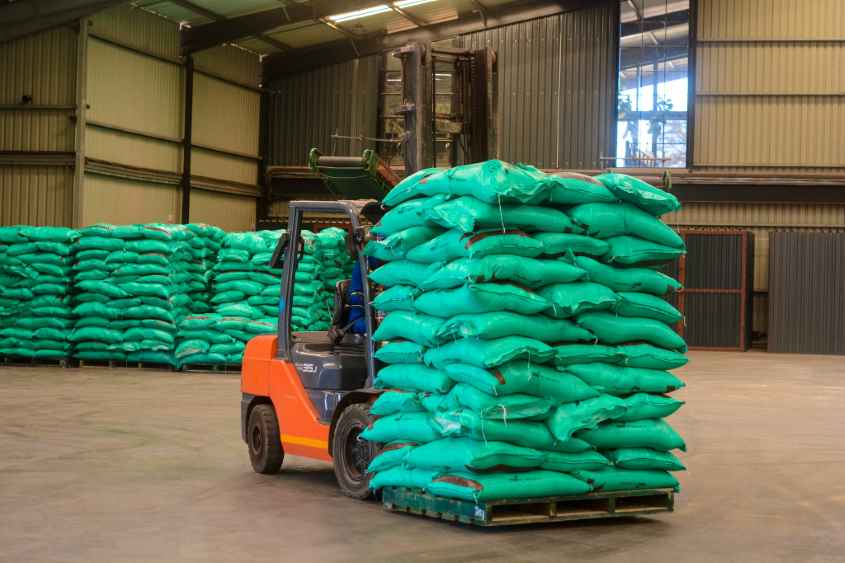
When fertilizer becomes too expensive or difficult to find, farmers use less and harvests can suffer

The response is temporary and valid for one year from the Board’s approval date, after which it will be reviewed before extending. The GEFCRF will be demand-driven, with support tailored to address the specific vulnerability levels with an appropriate financial and policy response.

The ongoing crisis in the Middle East continues to pose a significant external shock to African economies, reflected in rising global prices for energy, food, fertilizers and other commodities on which many African countries remain heavily dependent and import massively.

Disruptions to global trade routes and logistics, including key maritime corridors, are compounding these pressures by increasing transport costs, delaying deliveries, and amplifying supply chain fragility.

The GEFCRF will work across four main pillars to:

  • Stabilise macroeconomic conditions: Provide rapid counter-cyclical financing, short-term buffers, and coordinated fiscal, monetary, and debt policy responses during shocks.
  • Secure critical food, energy and fertilizer supply systems: Use emergency and trade finance to protect food, energy, and fertilizer supplies, while supporting vulnerable populations in particular vulnerable women and stabilising markets.
  • Protect essential spending and vulnerable households: Safeguard priority public expenditures and deploy targeted social protection to cushion vulnerable groups in particular women and youth, reduce reliance on broad subsidies and prevent deepening of fragility.
  • Sustain reforms for medium to long-term resilience building: Policy space preserved for medium-term reforms that reduce dependence on volatile external energy, food and fertilizer markets, establish foundations for diversified supply chains and regional solutions and enhance fiscal resilience and crisis-response readiness.

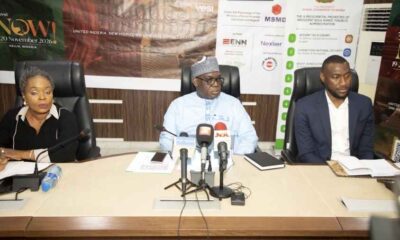
“This framework is about listening and responding to the urgent needs of African countries, helping them protect households and vulnerable populations, keep food, fertilizer and energy systems functioning, and preserve hard-won development gains while building greater resilience for the future,” said Abdul Kamara, Acting Vice President for Country and Regional Operations, “A crisis response must do more than cushion the shock. It must make countries stronger. That is exactly what this framework aims to achieve.”

“The Bank’s new Global Energy and Fertilizer Crisis Response Framework gives us a way to respond to the pressures African farmers are facing as the conflict in the Middle East disrupts global trade,” noted Martin Fregene, Officer in Charge Vice President for the Agriculture, Human and Social Development.

“When fertilizer becomes too expensive or difficult to find, farmers use less and harvests can suffer. Access to finance is part of the solution, helping businesses keep fertilizer moving to farmers, while we work to build stronger fertilizer markets and more local supply in Africa, “he added.

Distributed by APO Group on behalf of African Development Bank Group (AfDB).


Events

Wuhan takes its cultural showcase abroad at Duisburg China Festival

Published

on

Duisburg China Festival

DUISBURG, GERMANY – Media OutRech Newswire – 8 September 2026 – The 2026 Duisburg China Festival kicked off here on Friday afternoon, with participation from some Chinese and German cities, aimed at strengthening ties between the two countries.

The three-day festival features a wide range of cultural booths and interactive zones showcasing traditional Chinese cuisine, culture and contemporary art.

On Friday evening, top-tier performing arts troupes from Wuhan, capital city of central China’s Hubei Province, jointly staged the festival’s opening gala. Nearly 40 artists presented more than a dozen distinctive programs spanning Peking opera, Hanju opera, Chuju opera, acrobatics, and ethnic song and dance.


The Duisburg China Festival is a vivid expression of exchange between China and Germany, allowing Germans to experience and understand China up close, said Chang Haitao, acting consul general of the Chinese Consulate General in Dusseldorf.

In 1982, Duisburg and Wuhan became sister cities, the first of its kind between Germany and China. The two cities have maintained close people-to-people and economic exchanges, forging a bond between them ever since.

Impressed by the performance of the Chinese artists, Duisburg Mayor Soeren Link said that the opening gala was unforgettable for its standard, quality, richness, and the many different facets it presented.

Duisburg attaches great importance to its sister-city relationship with Wuhan and hopes to continue strengthening German-Chinese friendship as well as exchange and dialogue between the two sides, said Link.

Markus Teuber, commissioner for China affairs at the Mayor’s Office of Duisburg, said the rich array of theatrical, song and dance performances brought by Wuhan offered German audiences an excellent window into Chinese culture, and expressed hope that the two cities will continue to deepen cultural exchange in the future.

For Yang Jing, deputy director of the Wuhan Municipal Bureau of Culture and Tourism, the presence of Wuhan city at the festival “marks an important step in Wuhan culture’s global outreach.”

The Duisburg China Festival is an annual signature cultural event for the city, injecting fresh grassroots momentum into the development of German-Chinese friendship.


Continue Reading

Energy

UR Energy’s Abel Manumbu Brings Regional Power Focus to African Mining Week (AMW) 2026

Published

on

UR Energy

Manumbu will join a panel examining the infrastructure needed to support Africa’s mineral value addition corridors

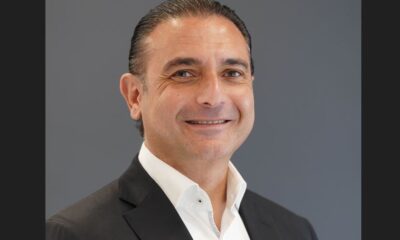
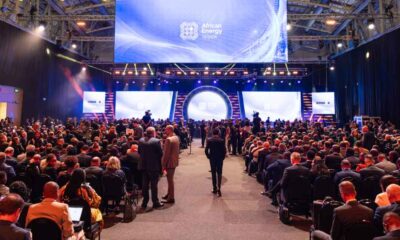
CAPE TOWN, South Africa, September 8, 2026/APO Group/ –Abel Manumbu, Founder and Managing Director of UR Energy Limited, has been confirmed as a speaker at the African Mining Week (AMW) 2026 conference, taking place from October 14–16 in Cape Town.

Manumbu will participate in the Enabling Africa’s Value Addition Corridors panel discussion, sponsored by the Africa Finance Corporation. The session will examine how reliable energy infrastructure can support mineral processing hubs and downstream manufacturing investment across Africa.


His participation comes as UR Energy advances power projects across Southern and Eastern Africa, with a focus on renewables, flexible generation, grid integration and project finance. In Malawi, the company is advancing the 75 MW AZA gas-to-power independent power producer project in Salima, located near the ESCOM Nanjoka substation.

The project is designed to strengthen electricity supply in a region hosting several mineral developments, including the Kasiya rutile-graphite, Kangankunde rare earths, Kanyika niobium, Kayelekera uranium and Salima titanium projects.

UR Energy is also developing the 65 MW Kanawa Kishapu Solar PV and Battery Energy Storage System project in Tanzania under a Memorandum of Understanding with the Tanzania Electric Supply Company. The project forms part of the company’s broader strategy to develop power infrastructure supporting industrial and mining demand.

Across the Nacala Corridor connecting Mozambique, Malawi and Zambia, UR Energy is working to develop LNG supply chains aimed at providing baseload and captive power solutions for industrial and mineral processing projects.

Manumbu’s participation at AMW 2026 will bring an energy infrastructure perspective to discussions around Africa’s mineral value addition corridors, as governments and industry seek to expand domestic processing while addressing the power requirements associated with new mining and industrial developments.

Distributed by APO Group on behalf of Energy Capital & Power.


Continue Reading

Business

Conlog expands smart utility offering with new water metering capability

Published

on

CAPE TOWN, South Africa, September 8, 2026/APO Group/ —

A new SANAS-accredited Water Meter Verification Laboratory strengthens Conlog’s growing smart water offering, building on the company’s established capabilities across electricity, manufacturing and utility technology services.


As an established manufacturing and technology services provider, Conlog has built decades of capability around electricity metering and the technologies that support smarter utility management. Now, the company is extending that expertise into smart water solutions, broadening the way it supports municipalities and utilities facing increasingly complex infrastructure, revenue and resource-management challenges.

Central to this expansion is Conlog’s smart water metering offering, supported by the company’s newly opened SANAS-accredited Water Meter Verification Laboratory. The facility complements Conlog’s existing electricity laboratory capability and represents an important extension of the testing, verification and quality-assurance infrastructure already embedded within the business.

Developing Conlog’s Water Meter Verification Laboratory

Officially opened on 20 July 2026, following several months of operation since December 2025, the Water Meter Verification Laboratory enables Conlog to test and verify water meters in accordance with applicable national standards. Its establishment gives the company greater control over the quality, performance and regulatory compliance of its growing water metering portfolio while reducing reliance on external testing facilities.

For Conlog, this capability is closely connected to the evolution of its smart solutions offering. As the company expands further into smart water metering, access to accredited in-house testing supports faster product validation, stronger quality assurance and more responsive product development. It also provides Conlog’s research and development teams with performance data that can inform the continued development and improvement of smart water solutions.

The laboratory is accredited to perform water-meter testing in accordance with applicable SANS requirements and has been specifically configured to support smart and prepayment water-meter technologies. Advanced automation and digital data capture further enhance the facility’s ability to conduct testing efficiently while maintaining the consistency and accuracy required by South Africa’s legal metrology framework.

These capabilities strengthen the smart water solutions Conlog brings to municipalities and utilities. Accurate, independently verified metering can support more reliable consumption data, greater billing integrity, improved revenue protection and the identification of water losses and consumption anomalies. In a market where utilities are under increasing pressure to manage scarce water resources more effectively, dependable metering forms an important part of more intelligent water management.

Developing the laboratory was a multi-year undertaking involving engineering, quality assurance, operations, facilities, procurement, project management and executive leadership. Conlog designed and equipped the facility, developed compliant testing procedures and quality-management systems, trained personnel and completed the rigorous assessment processes required for SANAS accreditation.

Key milestones included the construction and commissioning of the facility, the procurement, manufacture and calibration of specialised test equipment, and the successful completion of SANAS assessments and NRCS designation. Together, these investments have created an advanced local testing capability that supports both Conlog’s current smart water portfolio and the continued development of future solutions.

Team recognition in contributing to skills and technology advancements 

The official opening brought together government, industry and Conlog stakeholders to recognise the teams behind the project and demonstrate how the new capability fits into Conlog’s broader utility offering.

Honourable Premier Tami Ntuli officiated at the opening in recognition of the laboratory’s contribution to local economic development, skills advancement and technological innovation. The programme included leadership presentations, an address by Honourable Premier Tami Ntuli, a guided tour and a ceremonial ribbon-cutting.

During the visit, Honourable Premier Tami Ntuli and other guests toured Conlog’s manufacturing operations and the new Water Meter Verification Laboratory. Conlog showcased its smart electricity and water metering solutions, prepayment technology, local manufacturing capabilities and quality-assurance processes, demonstrating how its established electricity expertise is being complemented by a growing smart water proposition.

Particular interest was shown in the laboratory’s automated testing systems and in the strong representation of women across Conlog’s manufacturing lines. Honourable Premier Tami Ntuli also commended Conlog’s investment in advanced technology and highlighted the importance of collaboration between government and industry in strengthening infrastructure and supporting economic growth.

The new laboratory therefore represents more than an additional testing facility. It strengthens the technical infrastructure behind Conlog’s expansion into smart water while building on capabilities the company has already established through electricity metering, manufacturing, technology and laboratory services.

As African utilities work to reduce water losses, protect revenue and manage resources more sustainably, Conlog is extending its smart utility expertise to address both electricity and water. Its SANAS-accredited Water Meter Verification Laboratory provides an important layer of assurance behind that broader offering, supporting the development of compliant, reliable and increasingly intelligent water solutions for the market.

The full ESI Africa article can be read here: https://apo-opa.co/4ykEA4c

Conlog CEO Logan Moodley recently spoke with ESI Africa about his journey from computer sciences and physics to a leadership role driving changes in the smart and prepayment electricity and water metering industry. The full podcast can be accessed here: https://apo-opa.co/4ii555z

Distributed by APO Group on behalf of VUKA Group.


Continue Reading

Trending