Connect with us
Anglostratits

Tech

A City of Innovation and Openness: Hohhot’s Answer to Integrated Development

Published

on

industrial innovation

HOHHOT, CHINA – Media OutReach Newswire – 28 August 2026 – On 25 August, Hohhot convened a conference on deepening the integration of technological innovation and industrial innovation. At the event, the city officially released its Measures for Advancing Deep Integration of Technological Innovation and Industrial Innovation, together with an overarching implementation plan. The 20 measures share one objective: to place economic and social development firmly on an innovation-driven path and accelerate Hohhot’s emergence as an important growth pole for high-quality development in northern China.

“The less developed a region is, the more it needs to pursue an innovation-driven development strategy.” This message, voiced at the conference, reflects the clear-eyed resolve of a provincial capital city.

That resolve is underpinned by real strengths.

Here, the National Dairy Technology Innovation Centre has shortened dairy-cattle breeding evaluation from four years to just 45 days and cultivated China’s first probiotic strain for infants and young children derived from Chinese breast milk, helping the “Dairy Capital of China” advance towards becoming a global dairy hub. A major scientific facility for aerospace, sky-to-ground, cross-scale metrology, benchmarked against international leaders, is rising in Horinger New District. Inner Mongolia University of Technology has launched the region’s first new-energy industrial large model open to the world. Meanwhile, a domestic enterprise—the only one currently able to produce 4N5 high-purity germanium products consistently—is helping quantum technology and calcium-titanium mineral photovoltaics overcome key raw-material bottlenecks. From a single microbial strain to a beam of light, technological and industrial innovation are converging here and reinforcing one another.

Even more compelling is the city’s tangible commitment.

Municipal fiscal investment in science and technology will double in 2026 and double again in 2027. Newly recognised national-level innovation platforms will receive a one-off research grant of RMB 3 million, while each “Qingcheng Science and Technology Innovation Leading Talent” may receive up to RMB 500,000 in research support. By 2030, Hohhot aims to introduce an additional 10 academicians of the Chinese Academy of Sciences and the Chinese Academy of Engineering, as well as 50 high-level innovation teams. Through a policy approach of “enjoy benefits without application and receive them directly and swiftly”, the city will provide inclusive computing-power vouchers, model vouchers and token vouchers to technology-oriented small and medium-sized enterprises—lowering barriers to innovation and demonstrating the city’s sincerity in supporting innovators.

Openness is a defining feature of Hohhot.

Drawing on the Hohhot Area of the China (Inner Mongolia) Pilot Free Trade Zone, the city is building an international science and technology cooperation base with countries along the Belt and Road. It is also deepening coordination with Beijing’s Haidian District through a “two-hour innovation circle”, exploring a new pathway in which research and development take place elsewhere while results are transformed and applied in Hohhot. Hohhot understands that innovation cannot thrive as an undertaking enclosed behind walls.

Like the Mongolian horse, it is resilient, diligent and determined—never resting until the goal is achieved. This is the character of the city: the breadth and inclusiveness of the grasslands, combined with the courage and pioneering spirit to open northwards, explore new frontiers and put ideas into action.

From the “Dairy Capital of China” to China’s “Cloud Valley”, from the pastures of Chilechuan to the computing-power clusters of Horinger, this green city is becoming a city of innovation.

Hohhot extends an invitation to the world: here there are supportive policies, real-world application scenarios and a genuine commitment to partnership—together with a vast landscape in which to join hands with those who strive and build for the future.

Business

PhotonPay Raises $40M Series C to Scale Its Stablecoin-Centric Financial OS

Published

on

Financial OS

Led by Blockchain Capital, the funding will accelerate the expansion of PhotonPay’s stablecoin-centric Financial OS, connecting stablecoin liquidity with global fiat networks to unlock digital assets for everyday corporate operations and cross-border settlement.
HONG KONG SAR – Media OutReach Newswire – 29 October 2026 – PhotonPay today announced the closing of a $40 million Series C funding round led by Blockchain Capital, with participation from new investor SBI Group and follow-on investments from existing investors IDG Capital, GL Ventures, and Lightspeed Faction. Blacksheep Technology acted as exclusive financial advisor to PhotonPay on the transaction.


The new capital will support the expansion of PhotonPay’s stablecoin-centric Financial Operating System (Financial OS), with investment focused on enhancing multi-asset wallet capabilities, expanding global card issuing, strengthening local clearing infrastructure in key markets, and developing an agent-ready financial execution layer.

As of August 2026, PhotonPay’s annualized transaction volume reached US$65 billion. The company has secured 34 payment and financial licenses and regulatory authorizations across the Americas, Europe and Asia, and serves over 200,000 business customers across more than 200 countries and territories.

As stablecoins move beyond crypto-native use cases into corporate treasury, settlement and commercial spending, PhotonPay sees the next phase of global finance not as a choice between stablecoins and fiat currencies, but as the convergence of both. Its Financial OS connects on-chain liquidity with the banking, clearing and card networks businesses rely on for everyday operations.

“Moving money across borders in seconds means little if it still takes days to put that capital to work,” said Lewison Chen, Founder and CEO of PhotonPay. “Stablecoins are accelerating global money movement, while local clearing and global card issuing connect that liquidity to local settlement and everyday business spending. Our Financial OS brings these capabilities together, making the underlying infrastructure far less visible to businesses, even as it becomes more essential than ever.”

“At the same time, business software is becoming increasingly autonomous,” Chen added. “AI is shifting financial workflows from people manually operating fragmented tools toward systems that understand business intent and coordinate execution across assets, accounts and financial rails. That creates the foundation for agentic commerce. Stablecoins change how money moves. AI changes how it gets put to work. But commerce is still what money is for.”

Moving Money Across Assets and Markets

PhotonPay’s Financial OS brings together multi-asset wallets, global money movement, foreign exchange, local clearing, and global card issuing through an integrated API-first architecture. This unified system gives businesses access to the financial capabilities they need to manage and deploy funds across markets.

Stablecoins sit at the core of this architecture. PhotonPay’s multi-asset wallet connects stablecoin liquidity with fiat balances, integrating asset conversion, foreign exchange, and local clearing into a single connected workflow. This enables businesses to move funds across supported on-chain and traditional financial networks, turning digital asset liquidity into purchasing power for local payments and everyday corporate spending.

Supporting this dual-rail infrastructure is PhotonPay’s established global financial network. Businesses can open local collection accounts in 17 key markets and receive funds in more than 60 currencies. On the payout side, the network supports over 100 payment routes across local clearing systems, bank transfers, and digital wallets, including payouts to 74 major local e-wallets. Approximately 97% of payout transactions reach recipients within hours or on the same day, with 68% arriving in real time.

Global card issuing extends these capabilities into programmable business spending. Through PhotonPay’s APIs, businesses and platforms can issue virtual and physical cards, configure granular spending controls, and embed card payments directly into their software and automated workflows. Over the past 12 months, PhotonPay issued 4.4 million cards, up 275% YoY.

Beyond its first-party payment solutions, PhotonPay makes its infrastructure available through embedded finance, enabling technology platforms to natively integrate global accounts, payments, and card issuing into their own products. The company now serves more than 100 enterprise and platform partners, extending the reach of its Financial OS into industry-specific workflows.

From Financial Intent to Agentic Commerce

As AI agents assume active operational roles, financial infrastructure must evolve beyond API access to enable programmable, policy-governed execution. It requires systems capable of translating high-level instructions into coordinated financial actions, with deterministic controls governing how those actions are executed.

In May 2026, PhotonPay and Mastercard completed a live agentic payment demonstration using a tokenized PhotonPay card, validating AI-initiated transactions across existing global card networks.

Building on this milestone, PhotonPay is developing standardized financial interfaces designed for developers and AI agents. With planned support for the Model Context Protocol (MCP), PhotonPay aims to make account information, balances, card functions, and payments accessible as composable financial primitives, allowing AI agents to securely retrieve context and initiate financial workflows within defined authorization boundaries.

To govern this agent-ready layer, PhotonPay is developing a policy-based execution framework designed to enforce programmable authorization rules, spending limits, and transaction-level controls. The framework is intended to enable AI agents to coordinate financial tasks across supported accounts and assets, while ensuring that execution remains subject to explicit, enforceable policies set by businesses.

PhotonPay is also advancing its AI-assisted risk review capabilities, designed to identify complex cases for human assessment. Together, these initiatives reflect a foundational principle of autonomous finance: AI may interpret intent and coordinate tasks, but financial execution must remain governed by verifiable authorization, deterministic controls, and auditable records.

“Connecting financial networks is only the beginning. The real breakthrough is abstracting that complexity behind a unified, programmable financial layer, so businesses and AI agents can move from intent to execution within clearly defined boundaries,” said Chen.

Simple on the Surface, Deep by Design

The promise of a Financial OS is simplicity: enabling businesses to manage assets, route money, and execute payments through a unified financial operating layer. Yet delivering that simplicity requires deep financial infrastructure beneath the surface.

While stablecoins accelerate borderless value transfer, turning that liquidity into local settlement, supplier payments, and corporate spending still depends on established banking relationships, domestic clearing rails, foreign exchange infrastructure, and global card networks. Each market brings its own regulatory and operational requirements.

For PhotonPay, building a Financial OS means abstracting these fragmented global networks into a programmable, interconnected financial system. The objective is not to eliminate financial complexity, but to manage it within the underlying infrastructure, so businesses can operate without having to navigate these systems themselves.

“AI can simplify how businesses interact with financial services, but it cannot replace the infrastructure required to deliver them,” said JP Pi, Chief Compliance Officer at PhotonPay. “Establishing local financial capabilities takes years of investment, institutional partnerships, and regulatory engagement. Software or AI models alone cannot replicate that depth. The simplicity businesses experience is the result of that heavy lifting, not a substitute for it.”

PhotonPay has engineered a financial foundation spanning both stablecoin and fiat rails, connecting multi-asset conversion with local clearing networks. Institutional partnerships with J.P. Morgan, Standard Chartered, and DBS, alongside connections to domestic payment systems such as Brazil’s Pix and Mexico’s SPEI, form the backbone of this network.

The new capital will enable PhotonPay to strengthen its local clearing and compliance infrastructure in existing markets while expanding into new jurisdictions, scaling the reach of its Financial OS across corporate spending, embedded finance, and agentic commerce.

“Businesses want one provider that can handle their payments across currencies and markets, whether they’re using bank transfers, stablecoins or cards. Lewison and his team have spent a decade building the banking relationships, licenses and local payment infrastructure to deliver that. We believe PhotonPay’s ability to bring these capabilities together gives it a strong advantage as businesses adopt stablecoins for everyday payments.” – BCAP,Yuanhan Li,Partner

“As stablecoins become increasingly integrated into global payment systems, bridging digital assets with traditional financial infrastructure will be essential to unlocking their real-world potential. PhotonPay’s established global payment network and its vision for a stablecoin-centric Financial OS align closely with SBI Group’s strategy to advance digital financial infrastructure and expand the practical adoption of digital assets. We look forward to supporting PhotonPay’s continued growth and exploring opportunities for strategic collaboration across the SBI Group ecosystem.” – Eiichiro So, CEO & Managing Director of SBI Ven Capital



Continue Reading

Business

Huawei Wireless Unveils Innovation Breakthroughs to Pioneer New Communications Networks

Published

on

Huawei

The innovation breakthroughs for pioneering new communications networks include RetinaMIMO, new materials, and OSCAR solution among other root technologies. By tackling coverage, energy consumption, and capacity challenges, the breakthroughs drive ubiquitous experience, simplified and green networks, and superior spectral efficiency. The breakthroughs have unlocked a wealth of new capabilities, including the world’s first commercial U6 GHz device VitaAAU, GigaGreen Plus series, and UBBPi series.
Huawei promotes A2A-T standards and drives commercial open-source OpenAN through extensive partnerships to build an open telecom agent ecosystem.


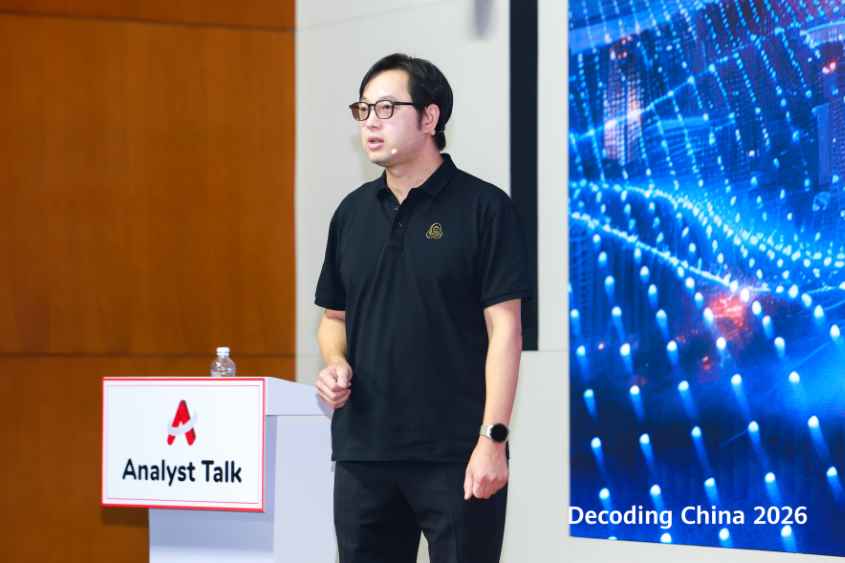
SHANGHAI, CHINA – Media OutReach Newswire – 29 October 2026 – At Huawei Decoding China 2026, Fang Xiang, Corporate Vice President and President of Wireless Network Solution of Huawei, unveiled a series of innovation breakthroughs to pioneer new communications networks. The innovation breakthroughs mark major leaps in root technologies focused on ubiquitous experience, simplified and green networks, and superior spectral efficiency. With the breakthroughs, Huawei has launched the world’s first commercial U6 GHz device VitaAAU, GigaGreen Plus series, and UBBPi series. Additionally featuring the new progress in open ecosystem for telecom agents, the breakthroughs will lay a solid foundation for new communications networks.

With booming intelligent devices and services, new devices, traffic, and applications are taking shape in the mobile industry. The new devices are expanding network connectivity from people to things and agents, increasing the number of connections by 100 times. Device-cloud synergy for intelligent services calls for stronger uplink capabilities to support training and inference, shifting network focus from downlink dominance to both uplink and downlink. With new applications, come a diversity of new interaction modes, calling for higher standards in experience and driving networks to support ubiquitous steady ultra-low latency with a high reliability.

As the world steps into an intelligent era, the value of connectivity is not only about quantity—it’s more about quality. This has been inspiring Huawei to convert cutting-edge breakthroughs into the commercial practices of new communications networks by focusing on root technologies for ubiquitous experience, simplified and green networks, and superior spectral efficiency.

Pioneering ubiquitous experience

RetinaMIMO is a new pioneering technology designed to solve the challenge of concurrent ultra-high bandwidth and ubiquitous coverage. It features the industry’s first Retina scanning system that allows RF link topologies to be reconstructed to eliminate coverage collapse in the vertical direction. It also adopts a reconstructed antenna array architecture to address the diminishing marginal gains as array elements (AEs) increase.

Based on RetinaMIMO, Huawei has launched the world’s first commercial U6 GHz device VitaAAU. Compared with similar products with 1024 AEs, VitaAAU widens coverage by about 30%, enabling U6 GHz to match C-band in both horizontal and vertical directions. This enables operators to deliver U6 GHz coverage for new communications networks on their C-band sites, minimizing overall TCO. To date, VitaAAU has seen commercial adoption in the UAE and other markets, with peak downlink speeds exceeding 10 Gbps, making ubiquitous premium experience a reality.

Pioneering simplified, green networks

Huawei’s pioneering EP power amplifier (PA) architecture capitalizes on new materials and technologies to solve the problem of energy efficiency decline on higher frequency bands, maximizing energy conversion efficiency. The industry’s first-ever multimode dielectric filters allow antennas to have small dimensions and low power consumption on multi-channel networks with high frequency bands. Powered by new materials, technologies, and architectures, VitaAAU antenna is reduced to 1.5 m in diameter while supporting “0 Bit 0 Watt 0 Loss”, delivering superior energy saving efficiency. These innovations enable Huawei’s GigaGreen Plus series products to achieve significant reductions in dimensions, weight, and power consumption, better positioned to power simplified and green networks.

Pioneering superior spectral efficiency

Multi-band, multi-cell, and multi-user interference is a major restrictive factor of capacity. The time scaling of the Tau (τ) law is introduced to base stations for the first time to realize optimal dynamic resource scheduling across all domains based on the OSCAR solution. With low-latency bus and high-speed interconnect technology, a high-speed architecture is built to enable the real-time exchange of massive data. Thanks to software and hardware synergy, new UBBPi series products improve average user experience by 1.3 times while reducing power consumption by approximately 40%, further improving spectral and energy efficiency.

Pioneering open-source autonomous networks

Autonomous networks have emerged as an inevitable choice to deal with the growing AI services and increasing network complexity. RANSpirit is another industry first from Huawei, implementing single-domain network autonomy based on the telecom foundation model and digital twins. To date, RANSpirit is serving more than 1.2 million cells across 25 networks around the world, providing assistance to more than 2,000 engineers.

Extensive agent collaboration relies on an open, win-win ecosystem. This galvanizes Huawei to join industry partners to develop ecosystem standards, communities, and industry alliances. In terms of standards, Huawei adapts to the TM Forum, building a cross-agent foundation on the A2A-T standard and framework agreed upon by the industry. In terms of communities, Huawei jointly promotes neutral open-source communities and donates open-source agent components to the Linux Foundation, driving global collaboration and innovation. With regard to industry alliances, Huawei has taken the initiative to pool ecosystem strengths to accelerate business implementation based on the GSMA industry platform.

Fang concluded with the reiteration of Huawei’s unswerving pursuit of dual-drive innovation to promote new breakthroughs in mobile networks and work with partners from around the world to deepen the OpenAN ecosystem, advancing new communications networks through technological innovation and open collaboration.

FAQs

Q1: Why is it challenging to balance ultra-high bandwidth and ubiquitous coverage?

Ultra-high bandwidth depends on higher frequency bands. As we know, a higher frequency leads to a greater propagation loss of electromagnetic waves and a weaker ability for them to penetrate obstacles, because high-frequency signals attenuate fast and have short coverage distances, while ubiquitous coverage requires signals to travel a long distance in complex environments. Inherently, the two priorities pull in sharply opposite directions.


Continue Reading

Business

Cassava Technologies becomes an authorised reseller of Claude on Amazon Bedrock

Published

on

The agreement allows Cassava to give organisations across Africa another route to access these capabilities, helping them adopt AI technology more easily as they prepare for future growth

LONDON, United Kingdom, October 27, 2026/APO Group/ –Cassava Technologies (www.CassavaTechnologies.com), a global technology leader, has become authorised to resell access to Anthropic’s Claude models through Amazon Bedrock.

Claude is Anthropic’s state-of-the-art large language model, offering features like advanced reasoning, vision analysis, code generation, and multilingual processing. The agreement allows Cassava to give organisations across Africa another route to access these capabilities, helping them adopt AI technology more easily as they prepare for future growth.


Our goal is simple, advanced AI within reach of every business, government, researcher, entrepreneur and university across the emerging markets globally

“What matters to our customers is being able to use AI in their business, and that starts with access to the best models. Bringing Anthropic’s Claude to them through Amazon Bedrock delivers on this need, which is supported by the infrastructure, partnerships and services African businesses need to adopt them responsibly and take a greater part in the digital economy. Our goal is simple, advanced AI within reach of every business, government, researcher, entrepreneur and university across the emerging markets globally,” said Hardy Pemhiwa, President and Group CEO of Cassava Technologies.


Through Amazon Bedrock, organisations can access Anthropic’s Claude models and incorporate them into their own applications and services. Cassava’s authorised reseller status gives African customers a way to access Claude through a local partner focused on serving businesses across the continent.


Through its digital ecosystem, which encompasses connectivity, cloud, cyber security and AI solutions, along with a continent-wide data centre footprint, Cassava is investing in the infrastructure and solutions needed to support the wider adoption of artificial intelligence across Africa.

Distributed by APO Group on behalf of Cassava Technologies.


Continue Reading

Trending