Connect with us
Anglostratits

Business

Global Africa Business Initiative shifts Digital and Health Action Pathways into higher gear to accelerate continent’s economic transformation

Published

on

Africa

The GABI Solutions Lab challenged some of Africa’s top business leaders to develop an ambitious, actionable work plan to overcome the roadblocks holding the continent back

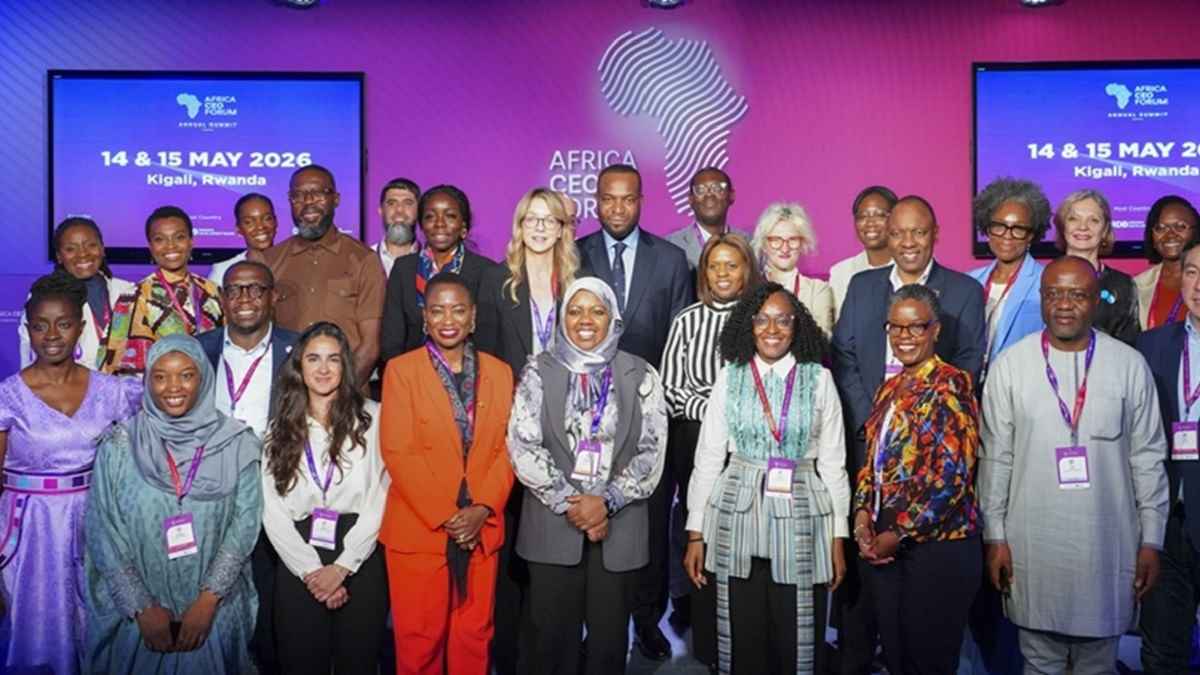
KIGALI, Rwanda, May 25, 2026/APO Group/ –The Global Africa Business Initiative (GABI) (https://GABI.UNGlobalCompact.org) has shifted its new Digital and Health Action Pathways into a higher gear in order to accelerate the continent’s economic transformation by identifying and driving solutions to problems that slow progress.


Convening on the sidelines of the Africa CEO Forum in Kigali, Rwanda on 15 May, the GABI Solutions Lab challenged some of Africa’s top business leaders to develop an ambitious, actionable work plan to overcome the roadblocks holding the continent back.


“Africa does not face a shortage of ideas, but a significant gap in execution and the financing required to scale solutions,” said Sanda Ojiambo, Assistant Secretary-General and CEO of the United Nations Global Compact. “The GABI Solutions Lab was a focused working session where public and private sector leaders co-developed practical solutions, structured bankable partnerships, and unlocked viable financing pathways that can be advanced immediately.  The aim is to ensure that commitments are translated into measurable, real-world outcomes at scale,” she added.


The GABI Action Pathways for Digital Transformation and Health were launched at Unstoppable Africa last September by a coalition of African and global leaders committed to advancing transformation from aspiration to delivery. The Solutions Lab in Kigali advanced and connected those two pathways, using digital technology in health as a practical test case for the broader challenge of bringing private capital into public-interest infrastructure at scale. As co-architects of solutions, participants worked through the specific conditions that would make each challenge bankable and implementable, drawing on real-world scenarios presented by public and private sector leaders.


Among the key discussion themes were how to accelerate investment in digital public infrastructure, connectivity, skills, and governance to ensure that AI becomes a force multiplier for African development; how to reduce the adoption timeline for proven infrastructure solutions; and how to deploy financing models for sovereign digital infrastructure at scale across multiple African markets.


Caitlin Burton, CEO of AI and robotics company Zipline Africa, headquartered in Rwanda, highlighted the need to move beyond pilot programmes towards the scaled implementation of proven technologies. “Across much of Africa, adoption is still moving at the pace of traditional aid cycles and public sector implementation timelines rather than the speed of modern technology deployment. We need financing models, incentives, accountability mechanisms, and partnerships that can collapse the adoption timeline for proven infrastructure from decades to years and create greater urgency for action,” she said.

Africa does not face a shortage of ideas, but a significant gap in execution and the financing required to scale solutions


Kate Kallot, Founder and CEO of Kenya-based data infrastructure company, Amini, emphasized the importance of sovereign AI infrastructure and digital capability development across the continent, saying, “Many developers and builders across the continent lack the tools or access required to build solutions that reflect local realities. The lack of data is a symptom of a much larger digital divide, including limited connectivity and infrastructure gaps. The challenge now is how to deploy financing models for sovereign digital infrastructure at scale, across multiple markets, in a way that delivers real capability into the hands of governments and citizens within the next 12 months.”


Nigeria’s Federal Minister of Communications and Digital Economy Bosun Tijani, spoke about the speed of AI adoption. “Without meaningful connectivity, skilled people, and governance systems that can support adoption at scale, we risk falling further behind. The real challenge is not whether Africa will adopt AI, but whether we have built the absorptive capacity required to use it to transform our economies and key sectors,” he said.


Senior industry leaders from the Aig-Imoukhuede Foundation, Afreximbank, Ecobank, McKinsey, PMI, mPedigree, ServiceNow, Safaricom, and the United Nations were also present to drive the transformation conversation.


Now in its fifth year, GABI is a global platform that brings together business leaders, policymakers, and investors to drive Africa’s economic growth. It is built on a simple premise: Africa’s potential is unlocked when public ambition aligns with private capital — and that happens by doing business with Africa, not just in Africa.


Unstoppable Africa, GABI’s flagship event, will take place at the Marriott Marquis in New York on 20-21 September. Follow the latest developments at Unstoppable Africa – YouTube (http://apo-opa.co/4nO8nOz).


For more information on the Global Africa Business Initiative, visit GABI.UNGlobalCompact.org/.

Distributed by APO Group on behalf of Global Africa Business Initiative.


Business

Spiro and Entrepreneurial Solutions Partners (ESP) kick off pilot programme in Rwanda, aiming to support 5,000 women entrepreneurs across Africa

Published

on

Spiro

Spiro and ESP aim to support 5,000 women across Africa by 2030, encouraging greater participation of women in the continent’s growing electric mobility sector

KIGALI, Rwanda, October 28, 2026/APO Group/ —

  • 50 women have already begun their training in Rwanda, following the programme’s launch as part of an initial pilot targeting 500 participants.
  • The programme combines practical and entrepreneurial training, access to affordable electric motorcycles, financing and commercial opportunities to help women build their own businesses.
  • Spiro and ESP aim to support 5,000 women across Africa by 2030, encouraging greater participation of women in the continent’s growing electric mobility sector.
  • The initiative aims to increase women’s participation in electric mobility, particularly in Rwanda, where they represent just 4% of transport workers.


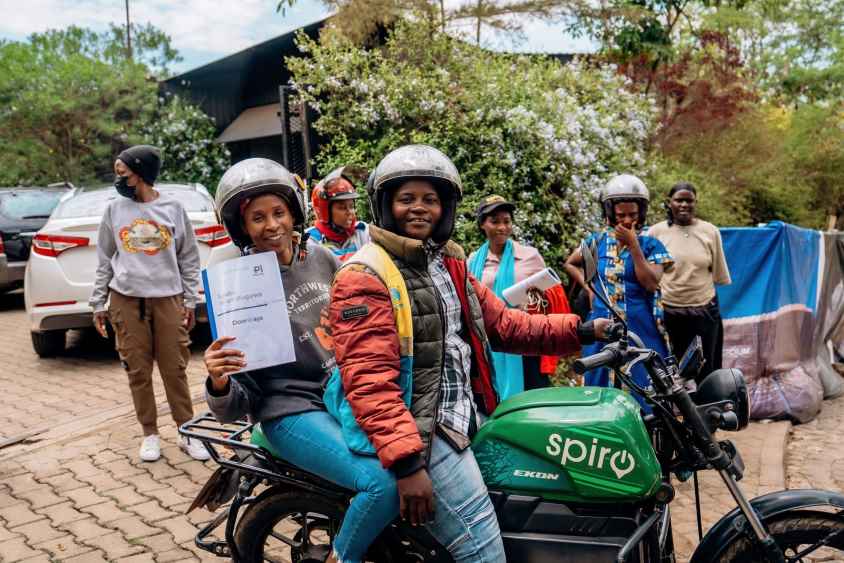
Spiro (www.Spironet.com), Africa’s leading electric mobility company, and Entrepreneurial Solutions Partners (ESP), a pan-African firm specialising in entrepreneurship development, have launched the Women in E-Mobility programme in Rwanda, an initiative designed to help women become professional electric motorcycle riders, develop their own businesses and generate sustainable income.


The programme is already underway, with the first 50 women having started training October 2026. They form the first cohort of a pilot targeting 500 women in Rwanda, before a planned expansion to other African markets to reach 5,000 participants by 2030.

This initiative reflects Spiro’s ambition to ensure that the growth of electric mobility in Africa creates new opportunities for women. While motorcycles are a major source of employment in transport, delivery and logistics, women remain largely underrepresented in the sector. In Rwanda, women account for just 4% of transport workers, despite a 2025 study in Kigali finding that 47.7% of women surveyed would consider becoming motorcycle taxi drivers.

Electric mobility is creating new economic opportunities across Africa, and we want more women to be part of this transformation

The Women in E-Mobility programme aims to address these challenges by providing participants with practical motorcycle riding and road safety training, financial literacy, digital skills and entrepreneurship support. Women will also gain access to affordable financing, including lease-to-own arrangements, enabling them to acquire Spiro electric motorcycles and use its battery-swapping network.

Beyond access to vehicles, the programme will connect participants with ride-hailing, delivery and logistics platforms, helping them secure customers and build sustainable businesses. Through this approach, Spiro and ESP aim to encourage more women to pursue careers in electric mobility and contribute to the sector’s growth.

“Electric mobility is creating new economic opportunities across Africa, and we want more women to be part of this transformation. Through this programme, we are giving women the tools to become professional drivers, build their own businesses and generate income. Our ambition is to encourage a new generation of women entrepreneurs who will help shape the future of mobility on the continent,” said Anant Badjatya, Group CEO of Spiro.

The programme combines Spiro’s electric mobility infrastructure with the entrepreneurship expertise of Entrepreneurial Solutions Partners (ESP), a pan-African firm helping entrepreneurs access financing, develop their skills and grow their businesses.

“For women entrepreneurs, having access to a motorcycle is only the first step. Building a successful business also requires skills, financing, customers and ongoing support. By combining ESP’s entrepreneurship expertise with Spiro’s electric mobility ecosystem, we want to create practical and sustainable economic opportunities for women,” said Eric Kacou, Co-founder and CEO of Entrepreneurial Solutions Partners.

Rwanda was selected as the starting point for the programme, building on its growing electric mobility ecosystem and Spiro’s established local presence, including its assembly operations and battery-swapping network.

The initial pilot will help assess participants’ progress, income generation and business performance before the programme is progressively extended to other African countries where Spiro operates between 2027 and 2030. To support this expansion, Spiro and ESP are seeking to engage development finance institutions, impact investors, governments and commercial partners to facilitate access to financing, strengthen training and expand commercial opportunities.

Through Women in E-Mobility, both partners aim to demonstrate how the transition to cleaner transport can also encourage women’s entrepreneurship, create jobs and support economic development across Africa.

Distributed by APO Group on behalf of Spiro.


Continue Reading

Business

Venezuela’s Revised Hydrocarbons Law Ties Investor Terms to Asset Type

Published

on

Etu Energias

New contract models and tiered fiscal rates give companies several routes into Venezuela, each matched to a different class of upstream asset

CARACAS, Venezuela, October 28, 2026/APO Group/ –Venezuela’s amended Organic Hydrocarbons Law has opened several distinct routes into the country’s oil and gas sector, each suited to a different type of asset and a different appetite for operational control. Heavy-oil acreage in the Orinoco Belt, mature onshore fields, offshore gas and refining are all available to international capital, and Venezuela Energy Week (VEW) 2027 will bring the companies weighing those options to Caracas to negotiate directly with PDVSA and the Ministry of Hydrocarbons.


The government made its pitch in Cape Town, South Africa last week, where Vice Minister of Commercial Policy Ricardo Gomez presented 303 billion barrels of proven oil reserves and 193 trillion cubic feet of natural gas at the Venezuela Global Investment Forum during African Energy Week (AEW) 2026. “The opportunities extend from upstream projects to downstream and refining,” he said, as PDVSA works toward its target of 105 definitive oil contracts by year-end.

Participation Contracts

The most direct route is the hydrocarbon productive participation contract (CPPH). Under it, a Venezuela-domiciled company operates a designated area at its own cost and risk for 25 years. With ministry approval, it can also market its share of production. Eni moved its Junín-5 heavy-oil field onto the model in September. The Italian company left its minority joint venture position to become exclusive operator of an asset holding 35 billion barrels of certified oil in place.

Joint Ventures

Companies preferring a partnership can enter a restructured joint venture with PDVSA. The state company keeps majority ownership, but can now hand operational management and marketing rights to its international partners. Mature fields are open through either structure, and their existing wells and infrastructure offer a quicker path to revenue. GeoPark took the contract route at the Bare field – a heavy-oil asset in the Orinoco Belt – under a 25-year agreement. It plans to reactivate up to 1,100 wells and lift output to around 90,000 barrels per day (bpd) by 2038.

Infrastructure Contracts

Venezuela is seeing a lot of interest as a result of aggressive fiscal and regulatory changes that are making the country more attractive

Direct ministerial contracts and strategic alliances cover oilfield services and infrastructure. Projects on offer include pipeline rehabilitation, export terminals and refinery upgrades. Domestic refineries currently process 350,000 bpd, and PDVSA aims to raise throughput to as much as 600,000 bpd in 2027.

Offshore Gas Follows Its Own Licensing Track

Offshore gas is awarded through a separate licensing process. bp, a Gold Sponsor of VEW 2027, operates the second phase of the cross-border Loran field. It holds the license in equal shares with Abu Dhabi’s XRG and Qatar’s UCC Oil and Gas Holding.

Tiered Fiscal Terms Support Investment Across the Value Chain

Each route to investment sits within a revised fiscal regime. Regulations published in July cap royalties at 30% and the integrated hydrocarbons tax at 15%, with combined rates of 20% for greenfield projects, 25% for extra-heavy oil, 30% for non-producing brownfields and 35% for producing brownfields. Qualifying offshore projects and developments incorporating upgrading or refining infrastructure may receive reductions of up to five percentage points.

“Venezuela is seeing a lot of interest as a result of aggressive fiscal and regulatory changes that are making the country more attractive,” Scott Gilbert, Non-Executive Chairman of Apertura Energy, told the AEW forum.

Companies entering through a CPPH will need a locally incorporated entity, and securing marketing authorization early gives operators greater control over revenue. U.S. companies also structure contracts around the conditions attached to Treasury general licenses, which govern how payments and contract law are handled in deals with PDVSA.

VEW 2027 will put those terms on the table in Caracas, with the Ministry of Hydrocarbons and PDVSA, both patrons of the event, meeting investors across two conference days and a day of site visits. By February, PDVSA’s year-end contracting drive is expected to have produced additional agreements, giving investors a clearer picture of how the revised contractual and fiscal frameworks are being applied in practice.

VEW 2027 takes place February 22–25 at the Simon Bolivar Convention Center in Caracas. Organized by Energy Capital & Power and taking place under the patronage of Acting President Delcy Rodríguez, PDVSA and the Ministry of Hydrocarbons, VEW is the country’s flagship oil and gas investment platform. To register or learn more about sponsorship and speaking opportunities, visit www.VenezuelaEnergyWeek.com.

Distributed by APO Group on behalf of Energy Capital & Power.


Continue Reading

Business

Afreximbank approves US$975 million facility for the Management Buy-Out of Oryx Energies

Published

on

afreximbank

The transaction marks a major step in strengthening Africa’s energy security and demonstrates the growing capacity of African financial institutions to support Africa’s industrial future with African capital

CAIRO, Egypt, October 28, 2026/APO Group/ –African Export-Import Bank (Afreximbank) (www.Afreximbank.com) has disbursed a landmark US$ 975 million financing facility to part-finance the Management Buy-Out of Oryx Energies SA (OESA), the holding company of Addax Energy SA, bringing one of the largest and longest-established independent providers of energy products and services in Africa under majority African ownership for the first time.


The transaction marks a major step in strengthening Africa’s energy security and demonstrates the growing capacity of African financial institutions to support Africa’s industrial future with African capital. The acquisition offers the continent an opportunity to retain economic value, pivot toward energy sovereignty, and align resources with Africa’s development agenda.

This financing also builds on Afreximbank’s broader support for Africa’s energy sector, including investments in upstream production and refining capacity. It reflects the Bank’s commitment to providing appropriately structured financing that enables African businesses to strengthen their operations, develop energy infrastructure and expand trade across the continent. Afreximbank acted as sole lender, facility agent, security trustee and escrow agent for the transaction.

This transaction advances Afreximbank’s mandate to drive the structural transformation of African economies

Speaking on the Management Buy-Out, Mr. Moussa Diao, CEO of Oryx Energies SA, said:

“This management buy-out marks an important milestone in the history of Oryx Energies and the continuation of a journey that our management team has been part of for many years. It also reflects the strength of experienced African leadership and its ability to guide established businesses towards new opportunities. It provides an opportunity to build on the strong foundations of the business, drawing on our longstanding experience and deep understanding of African energy markets. Our ambition remains to strengthen our activities in energy trading and infrastructure development across Africa.”

Mr. Diao noted that the transaction would not have been possible without the confidence and support of Afreximbank, whose involvement reflects confidence not only in the management team and the business, but also in the opportunities that Africa continues to offer. It further demonstrates the increasingly important role of African financial institutions in supporting established African businesses and enabling their continued development.

Commenting on the transaction, Dr. George Elombi, President and Chairman of the Board of Directors of Afreximbank, said:

“This transaction advances Afreximbank’s mandate to drive the structural transformation of African economies. Through the Management Buy-Out of Oryx Energies SA’s trading and distribution business, we have secured a strategic platform to deepen Africa’s energy industrial ecosystem, strengthen energy infrastructure and capture more value from the continent’s abundant natural resources. It will also promote greater African ownership and participation in development by empowering local entrepreneurs, expanding local value creation, building capacity, creating jobs and retaining more economic value on the continent.”

Distributed by APO Group on behalf of Afreximbank.


Continue Reading

Trending