Connect with us
Anglostratits

Business

Africa Strengthens Foundations to Lead Its Own Financing as Domestic Pools Surpass External Flows, Africa Finance Corporation (AFC) Report Shows

Published

on

Africa

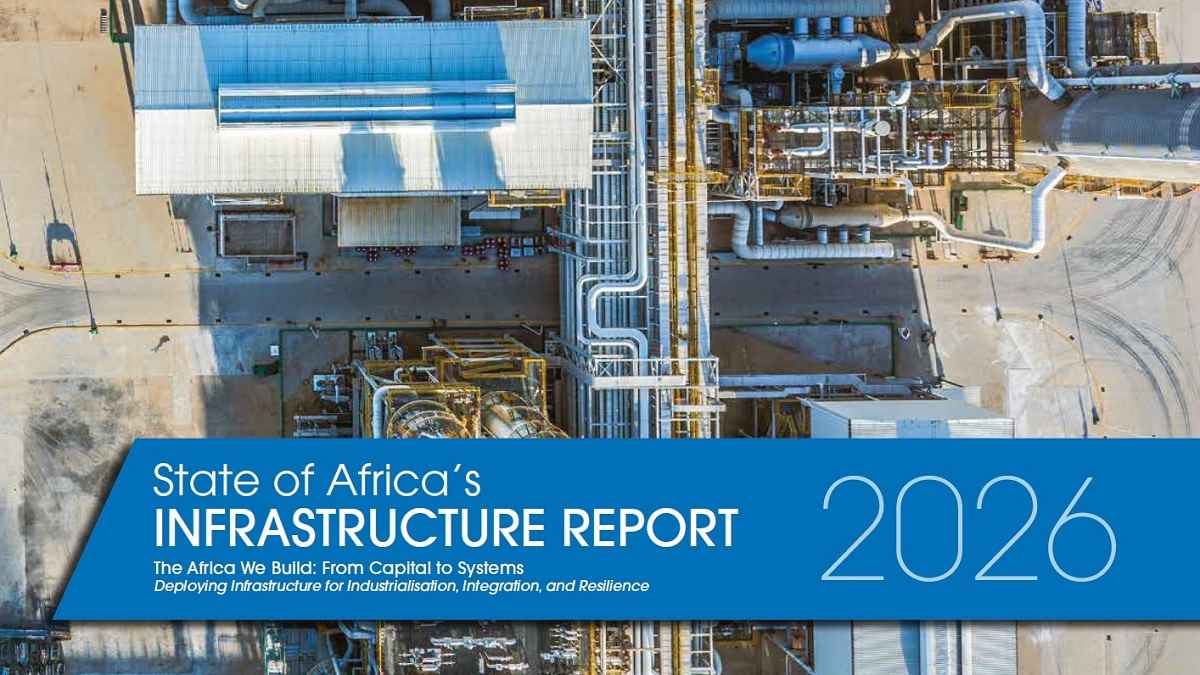
AFC’s State of Africa’s Infrastructure Report 2026 argues that Africa’s next development breakthrough will come from deploying domestic capital into infrastructure, industry and integrated systems at scale

NAIROBI, Kenya, April 23, 2026/APO Group/ —

  • Africa’s development challenge is increasingly shifting from capital raising to productive capital deployment in infrastructure and industry, according to AFC’s State of Africa’s Infrastructure Report 2026
  • Non-bank domestic capital pools now exceed US$2 trillion, surpassing ~US$1.7 trillion in cumulative external flows to Africa (2014–2024)
  • Official development assistance fell from US$83.8 billion in 2020 to US$73.5 billion in 2023, with further declines expected for 2025–2026
  • Sovereign issuance dropped from over US$29 billion in 2018 to US$4–6 billion annually in 2022–2023, with only limited recovery through 2024–2025
  • Domestic pension and insurance assets crossed US$1 trillion for first time
  • Central bank reserves at US$530 billion in 2025, from US$480 billion in 2024
  • Gold now represents ~17% of reserves, up from less than 10% in 2022–2023
  • Africa’s biggest infrastructure opportunity lies in integrated systems—connecting energy, transport, industry and digital layers into demand‑anchored ecosystems that improve bankability and enable scale


Africa’s domestic capital base has reached a scale that now exceeds external financing flows over the past decade, marking a turning point in how the continent funds its growth and industrialisation, according to the Africa Finance Corporation’s (www.AfricaFC.orgState of Africa’s Infrastructure Report 2026.

SAIR 2026 finds that cumulative external flows to Africa totalled approximately US$1.7 trillion between 2014 and 2024, while Africa’s non-bank domestic capital pools exceed US$2 trillion. The implication is clear: African capital now has a stronger foundation to play a significantly larger role in financing the continent’s development.

Launched at The Africa We Build Summit in Nairobi, co-hosted by AFC and H.E. Dr William Samoei Ruto, President of the Republic of Kenya, the SAIR 2026 report argues that the overarching development priority has shifted from capital mobilisation to intermediation—converting savings into infrastructure, industry, and productive investment at scale.

“The constraint is no longer capital—it is intermediation,” Samaila Zubairu, President & CEO of AFC, said at the The Africa We Build Summit today. “We have the savings, but not yet the systems to channel them into infrastructure and industry at scale. Closing that gap is now Africa’s most important economic task. The next phase of Africa’s infrastructure story must move beyond standalone assets towards integrated systems.”

Local Capital on the Rise

Driving the increase in domestic institutional capital, pension and insurance assets have surpassed US$1 trillion for the first time. Public development bank assets stand at US$276 billion, and sovereign wealth funds at US$164 billion, while central bank reserves increased from US$480 billion in 2024 to US$530 billion in 2025.

This increase has been supported in part by stronger commodity dynamics and rising gold accumulation. Gold now represents approximately 17% of Africa’s total reserves, up from less than 10% in 2022–2023, while physical holdings rose from 663 tonnes in 2022 to an estimated 738 tonnes in 2025.

Despite its increased scale, domestic capital remains largely concentrated in short-term, low-risk assets—particularly government securities—reflecting limited investable pipelines, regulatory incentives favouring liquidity, and insufficient risk-sharing mechanisms. The result is a persistent gap between available savings and long-term productive investment.

Africa is not capital-poor—it is capital-rich but system-poor

External Financing Recedes

At the same time, external financing is becoming less reliable, reinforcing the case for a domestic capital-led development model. Official development assistance to Africa fell from US$83.8 billion in 2020 to US$73.5 billion in 2023 and is projected to decline further. The OECD estimates global official development assistance fell 23.1% in 2025, the largest annual contraction on record.

Sovereign issuance remains well below pre-2019 levels, falling from over US$29 billion in 2018 to US$4–6 billion annually in 2022–2023, while foreign direct investment has remained concentrated at roughly US$45–55 billion annually, insufficient to meet the continent’s broad investment needs.

As a result, external capital is increasingly complementary, rather than foundational , to Africa’s development model.

From Assets to Integrated Systems

The biggest potential for capital deployment lies in demand-driven integrated infrastructure, according to SAIR 2026. In transport and logistics, corridors deliver the greatest value when designed as production ecosystems rather than transit routes—linking ports, rail, roads, logistics, storage, and trade facilitation to industrial demand. A continental backbone is already taking shape; the opportunity now is to improve performance, execution, and coordination.

This is particularly evident in East Africa. Mombasa—one of Africa’s busiest ports—handles more than 45 million tonnes of cargo annually, while rail investments are extending connectivity inland, including along the Naivasha–Kisumu corridor. In aviation, SAIR 2026 identifies air transport as the most immediate and scalable lever for integration. Across Kenya, Rwanda, and Ethiopia, aviation contributes a combined US$5.5 billion to GDP and supports around one million jobs, demonstrating how connectivity can rapidly translate into trade and growth.

Similarly, in energy, the priority is no longer incremental capacity additions alone, but integrated systems combining generation, transmission, storage, fuels, and industrial demand. Cross-border infrastructure such as the Ethiopia–Kenya interconnector shows how regional systems can move power to where it is needed most and improve system-wide efficiency.

Resilience Gap

Recent shocks—from Russia–Ukraine to the 2026 Gulf crisis—underscore the cost of fragmented systems and the urgency of building domestic processing, storage, and supply-chain resilience. The continent continues to import over 70% of its refined fuel and faces an estimated US$230 billion annual import bill across essential goods—including fuel, food, plastics, steel, and fertiliser, according to SAIR 2026.

In digital infrastructure, while connectivity has expanded rapidly, the next opportunity lies in building the “missing middle”—terrestrial backbone networks, metro fibre, data centres, Internet Exchange Points, and enterprise platforms that convert connectivity into productivity, services exports, and job creation.

Across all sectors and African countries, the report’s conclusion is consistent: the development challenge is increasingly institutional and systemic. Capital exists, and infrastructure assets are expanding. The next breakthrough will come from linking finance, energy, transport, industry, and digital systems into coherent ecosystems capable of supporting growth at scale.

“Africa is not capital-poor—it is capital-rich but system-poor,” said Zubairu. “The priority must be to build the institutions, instruments, and project pipelines required to deploy that capital into infrastructure and industry at scale.”

Distributed by APO Group on behalf of Africa Finance Corporation (AFC).

Business

Sierra Leone Signs Offshore Petroleum License with Marginal Energy

Published

on

Sierra Leone

The deal marks a new step in positioning Sierra Leone as an emerging upstream destination with over $225 million in committed exploration investment

PARIS, France, April 23, 2026/APO Group/ –The Government of Sierra Leone has signed a new offshore petroleum license agreement with Nigerian-based independent energy company Marginal Energy, advancing efforts to attract upstream investment and unlock the country’s hydrocarbon potential.


The agreement was formalized on April 23 at the Invest in African Energy Forum in Paris, reinforcing Sierra Leone’s growing profile among frontier exploration markets.

Signed through the Petroleum Directorate of Sierra Leone (PDSL), the license grants Marginal Energy exclusive rights to explore, develop and produce hydrocarbons across five offshore blocks – G-Blocks 145, 146, 147, 160 and 161 – covering approximately 6,800 KM2.

The deal establishes a full-cycle upstream program, spanning exploration through to potential production, under a fiscal and regulatory framework designed to balance investor returns with national value creation.

According to details released by PDSL, the agreement includes a structured exploration period of up to seven years, alongside a minimum work program incorporating 3D seismic acquisition, advanced geoscience studies and drilling commitments. The company has committed to invest more than $225 million during the exploration phases.

In a statement released by PDSL, President Julius Maada Bio said the agreement reflects the government’s commitment to “responsibly harnessing Sierra Leone’s natural resources for sustainable economic transformation,” adding that partnerships with capable investors will help accelerate development of the country’s petroleum sector.

PDSL Director General Foday Mansaray described the deal as “an important step in unlocking Sierra Leone’s offshore potential,” emphasizing the country’s focus on transparency and competitiveness. The agreement also includes provisions for local content development, technology transfer and environmental management, aligning with Sierra Leone’s broader strategy to ensure long-term economic benefits from resource development.

For Marginal Energy, which brings over two decades of experience in the Niger Delta, the agreement represents an entry into a largely underexplored basin with significant upside potential. The company said it is committed to deploying its technical and financial capabilities to advance exploration while maintaining high standards of environmental and operational performance.

The signing comes as African governments continue to position their upstream sectors to attract capital amid shifting global energy dynamics. It also follows a reconnaissance permit agreement signed by PDSL with Shell at the forum a day earlier, enabling Shell to conduct advanced geological and geophysical surveys across multiple offshore blocks.

Distributed by APO Group on behalf of Energy Capital & Power.

Continue Reading

Business

New strategic partnership in the Arab States region to enhance access to green finance for small and medium-sized enterprises

Published

on

ICIEC

It will support financing across a broad range of sustainability-related areas

Across our region, SMEs are the backbone of economies and helping them grow and innovate is critical to strengthening economic resilience and climate ambition

AMMAN, Jordan, April 23, 2026/APO Group/ –The United Nations Development Programme (UNDP), has signed a Joint Statement of Intent with the Islamic Corporation for the Development of the Private Sector (ICD) (https://ICD-PS.org) and the Islamic Corporation for the Insurance of Investment and Export Credit (ICIEC) —both members of the Islamic Development Bank (IsDB) Group—introducing a new blended finance structure that leverages credit insurance to catalyze private investment in climate-smart sectors.


This partnership will unlock capital for green small and medium-sized enterprises (SMEs) and support national efforts to achieve climate and sustainable development goals across the Arab States region. It will support financing across a broad range of sustainability-related areas, including climate change mitigation and energy transition, climate adaptation and resilience, sustainable water usage and governance, circular economy and management, sustainable agriculture and food systems and other green finance sectors.

“Across our region, SMEs are the backbone of economies and helping them grow and innovate is critical to strengthening economic resilience and climate ambition,” said Abdallah Al Dardari, UN Assistant Secretary General and Director of UNDP’s Regional Bureau for Arab States. “Through this new partnership we will work closely with regional financial institutions to expand SMEs access to green finance, to accelerate inclusive, climate-resilient development in line with UNDP’s flagship Green Finance Platform.”

In countries benefiting from the new partnership, ICD will provide financing facilities to partner banks and financial institutions while ICIEC will offer comprehensive credit insurance and risk-sharing solutions to encourage financial institutions to expand financing to green sectors, in addition to leveraging reinsurance partnerships to enhance the facility’s capacity and long-term sustainability.

“By uniting ICIEC’s risk mitigation, ICD’s financing, and UNDP’s development network, we are creating a scalable engine for green private sector growth,” stressed Mohammad Asheque Moyeed, Acting Director, Banking Department at ICD. “This partnership is our shared commitment to building a more inclusive and sustainable future for SMEs across our member countries.”

“Our role in this partnership is to unlock capital for the SMEs driving a greener, more diversified economy,” explained Yasser Alaki, Director of Business Development, ICIEC. “Through our credit insurance solutions, ICIEC provides the essential risk assurance that enables financial institutions to confidently channel financing toward this vital growth sector.”

Serving as a convener of the partnership, UNDP will facilitate linkages between financial institutions and SMEs engaged in its programmes and will coordinate joint efforts to mobilize resources to lower the cost of risk-sharing mechanisms.

Distributed by APO Group on behalf of Islamic Corporation for the Development of the Private Sector (ICD).

Continue Reading

Business

Africa Finance Corporation (AFC) Establishes Nairobi Office, Targeting Additional US$2 Billion in Regional Investments and Financial Services Solutions

Published

on

AFC

AFC plans to deploy and mobilize more than US$2 billion across the region over the next three to five years

NAIROBI, Kenya, April 23, 2026/APO Group/ –Africa Finance Corporation (AFC) (www.AfricaFC.org) and the Government of Kenya have signed a Host Country Agreement establishing AFC’s first regional office in Nairobi, expanding the Corporation’s platform for scaling infrastructure investment and industrial development across Africa.


The agreement was signed by H.E. Dr. Musalia Mudavadi, Prime Cabinet Secretary (and Cabinet Secretary for Foreign and Diaspora Affairs), and AFC President and CEO, Samaila Zubairu. The signing ceremony, witnessed by H.E. President William Samoei Ruto at AFC and Government of Kenya’s ongoing The Africa We Build Summit in Nairobi, formalizes Kenya as the host country of AFC’s Regional Office. This positions the Corporation closer to a high-growth and capital rich market with increasing demand for bankable infrastructure solutions.

“Kenya welcomes the entry of AFC into the country and in the East Africa region. Kenya continues to be not only the hub for the region but in the continent,” said Prime Cabinet Secretary H.E. Mudavadi. “Kenya represents one of Africa’s most compelling growth corridors. Kenya’s economy is projected to expand by 5.3% in 2026, while the broader East African Community (home to over 400 million people) is growing at approximately 6% annually.”

Nairobi’s established role as a regional logistics, financial and technology hub makes it a natural base for AFC’s operations across transaction origination, capital mobilisation and cross-border project execution.

This signing marks a pivotal moment in Kenya’s economic development journey

AFC plans to deploy and mobilize more than US$2 billion across the region over the next three to five years. Focus will remain on sectors with strong multiplier effects, including logistics and trade corridors, power and transmission, special economic zones, digital infrastructure, and climate-resilient assets. The Regional Office will drive capital mobilization and structured local currency solutions, delivering AFC’s investments and financial services products to its clients and partners, utilizing transaction frameworks that improve bankability and crowd in institutional capital.

The Regional Office will serve as a full-service platform—originating, structuring and executing transactions—while deepening portfolio optimization via partnerships with governments, institutional investors and private operators.

AFC’s expansion builds on an established track record in Kenya. Since Kenya joined AFC in 2017, the Corporation has committed over US$1.3 billion across energy, transport and industrial projects. Current initiatives include the development of the Dongo Kundu Integrated Industrial Park and Naivasha Special Economic Zone II in partnership with Arise Integrated Industrial Platforms, as well as ongoing support for the expansion of Jomo Kenyatta International Airport.

President Ruto said: “This signing marks a pivotal moment in Kenya’s economic development journey. By deepening our partnership with AFC, we are reinforcing Kenya’s position at the forefront of infrastructure and industrial transformation in Africa. AFC’s presence in Nairobi will help create jobs and strengthen our capacity to deliver transformative projects aligned with Kenya’s Vision 2030.

“AFC’s decision to establish its first regional office here also reflects Kenya’s role as a preferred base for pan-African and international institutions seeking a platform for regional growth. With inflation easing and progress in fiscal consolidation, Kenya offers a stable environment for long-term structured development finance.”

Samaila Zubairu, President and CEO of Africa Finance Corporation, said: “Nairobi’s position as a logistics, finance and technology hub makes it a natural anchor for AFC’s East African operations. Establishing a Regional Office in Nairobi allows us to originate faster, structure more effectively, and deploy capital at scale across interconnected markets. Our focus is on building investable infrastructure platforms that unlock regional trade, industrial capacity and long-term economic growth.”

Distributed by APO Group on behalf of Africa Finance Corporation (AFC).

Continue Reading

Trending