Connect with us
Anglostratits

Business

Future business leaders kickstart their careers at Coca-Cola Beverages Africa

Published

on

Ascend

Leaders in training will work on projects that drive business growth, build professional credibility, and strengthen their readiness for leadership roles

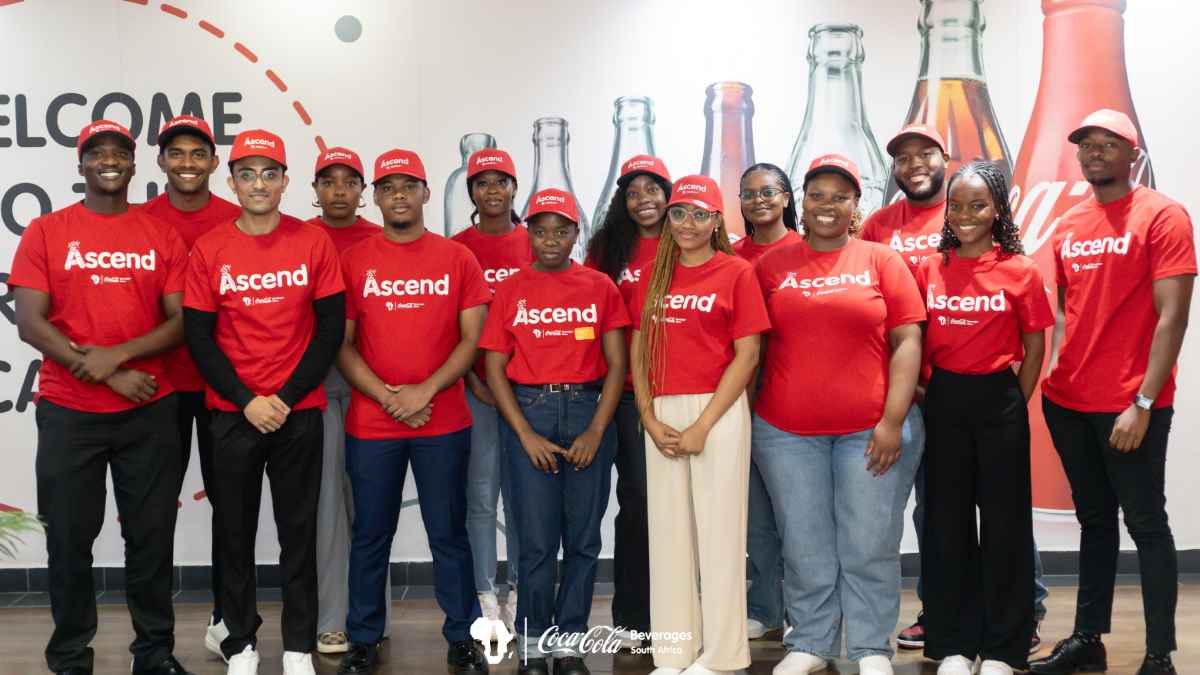
JOHANNESBURG, South Africa, March 17, 2026/APO Group/ –Coca-Cola Beverages Africa (CCBA) (www.CCBAGroup.com) has welcomed more than 60 emerging leaders from across its African markets into the Ascend Leaders in Training Programme, an 18‑month accelerated leadership journey designed to unleash talent and develop the continent’s next generation of business leaders.

Running from March 2026 to August 2027, the programme offers young talent from Botswana, Ethiopia, Kenya, Malawi, Mozambique, South Africa, Tanzania, Uganda and Zambia a structured pathway into leadership roles within one of Africa’s most admired consumer goods companies. The initiative reflects CCBA’s commitment to unparalleled professional growth, providing an exciting journey of learning and development within a passionate, caring team.

Drawn from diverse academic backgrounds – including business, engineering, supply chain, marketing and finance – participants will gain on‑the‑ground experience across key business functions such as Supply Chain, Commercial, Finance, Public Affairs, Communications and Sustainability (PACS), and People and Culture. While working in their home markets, they will also be part of a broader pan‑African learning community.

CCBA’s Ascend programme is designed to give emerging leaders the opportunity to learn fast, lead early, and make a meaningful impact

“Whenever I enjoyed a Coke, I often wondered ‘Where does this come from? How is it made?’. Now I have the incredible opportunity to learn everything that goes into that small bottle of Coke,” said Lathitha Madyibi, a member of the Ascend cohort in South Africa.

“My first week of the programme has been both exciting and eye-opening. Experiencing the environment firsthand has made me appreciate the scale and coordination behind CCBA’s operations. Seeing how different teams and functions work together to keep everything running smoothly has been particularly insightful.” added Dawit Yared, from the Ethiopia cohort.

The Ascend programme provides rotational assignments, mentorship from experienced leaders, and exposure to real business challenges. Leaders in training will work on projects that drive business growth, build professional credibility, and strengthen their readiness for leadership roles. Those who successfully complete the programme may be considered for permanent positions with greater responsibility and long‑term career prospects within the CCBA group.

“CCBA’s Ascend programme is designed to give emerging leaders the opportunity to learn fast, lead early, and make a meaningful impact,” said Natasa Prodanovic, CCBA Chief People and Culture Officer.

She added, “At CCBA, we don’t simply offer them a job – we offer them a platform to grow, take ownership, and shape the future of the largest bottler of Coca-Cola products in Africa. This cohort reflects the talent, diversity and ambition that will define the next chapter of our organisation.”

Distributed by APO Group on behalf of Coca-Cola Beverages Africa.


Business

Human Resources (HR) Holds the Keys to an Artificial Intelligence (AI)-Ready Organisation

Published

on

HR

Successful AI transformation starts with the knowledge and wisdom of people

JOHANNESBURG, South Africa, March 18, 2026/APO Group/ –Artificial intelligence can create enormous advantages for organisations and has become an important competitive consideration. But during 2025, AI hype started showing cracks as many companies reported failed pilots and underwhelming results.


Yet, the organisations that got it right experienced incredible improvements to their productivity. Their secret? Focus on people.


“Technology always depends on how people use it, and that remains true with artificial intelligence. But what many don’t realise is how much more it matters. Most AI projects fail because there isn’t enough human input and enablement,” says Heinrich Swanepoel, Head of Business Development at Deel Local Payroll, powered by PaySpace.


Why people matter for AI


AI isn’t taking many jobs from people. Even though there is a parallel trend between AI hype and workforce reductions, AI is often a scapegoat for other factors causing layoffs, such as economic strain and over-hiring. In fact, less than 5% of job cuts in the US since 2023 are directly because of AI (https://apo-opa.co/4lxwW14).


Casting AI against humans creates a skewed perspective that one should replace the other, which is often a fallacy that leads to expensive rehires (https://apo-opa.co/4cOonwJ). It also blinds leaders to the fact that successful AI stems from empowering and upskilling people. Overlook human capital, and you undermine AI’s true potential.


Digital progress hinges on the hierarchy of ‘people, process, and technology’. AI adoption leans even more heavily into the realm of people than other technologies, and its success depends heavily on HR involvement.


“AI isn’t an IT transformation. It’s an organisational redesign that HR must drive if businesses are to unlock AI’s full strategic potential,” wrote EY’s AI Client Strategy Leader, Catriona Campbell, in a Linkedin post (https://apo-opa.co/4bv1JY1). “The organisations that build solid foundations will create smarter systems and stronger, more adaptive workforces.”


What makes AI work in businesses?


Without understanding your workforce, you’ll be applying AI in the dark and hoping something sticks

The most successful AI projects currently focus on improving the responsibilities of high-value individuals. For example, using AI to automate aspects of Know Your Customer (KYC) and anti-fraud verification is helping save considerable time. In those cases, technical teams find it easy to liaise directly with the affected professionals and use their input.


But when AI adoption needs to be more widespread—for example, to help service agents quickly grasp a customer’s context; aid managers with reliable meeting summaries and actions; and give salespeople more time with prospects—the wheels come off. Deployment strategies underestimate the scope of AI’s impact, leading to poor adoption and major skill gaps. Employees know this, with over half saying that enhanced training should be the top priority to improve AI outcomes (https://apo-opa.co/4cUTVRB).


An AI strategy also fails when it doesn’t resonate with a company’s people and processes. That context should come from HR, the custodian of workforce strategy and talent management.


“Without understanding your workforce, you’ll be applying AI in the dark and hoping something sticks. But with that understanding, you’ll know where to target your efforts. That is especially important at the start of AI adoption when you need some wins to prove the investment is worthwhile,” says Swanepoel.

Enabling HR to enable AI

Successful AI projects reveal several tactics that support the human-centric approach:


  • Provide HR with modern human resource platform software that improves data-gathering, process design, and visibility for planning and measurement.
  • Develop continuous HR insights over annual reviews, giving companies more movement space and flexibility around AI strategies.
  • Conduct a skills audit to highlight how different people and departments could benefit from AI services.
  • Support AI skills development, specifically general AI literacy, policies, and a culture of safety where employees can question and confidently own AI output.
  • Measure where AI adds value, how it affects people, and what the balance should be between people and AI in a specific process or situation.

These answers will also inform other considerations such as AI governance, technical investments, and finding clear value in a sea of hype. It all starts with understanding your workforce: who they are, what they do, and what AI can do for them.

“AI is about people. It either works with them or replaces something they do. In either case, the path to AI success starts by understanding your people and empowering HR to give you that understanding,” says Swanepoel. “If your HR people cannot do this because they have old systems and outdated processes, most of your AI efforts are on shaky ground. But focus on your people, and your AI vision will become much clearer.”

Distributed by APO Group on behalf of Deel Local Payroll, powered by PaySpace.


Continue Reading

Events

BWH® Hotels Strengthens Commitment to African Development Ahead of Future Hospitality Summit (FHS) Africa 2026

Published

on

BWH

BWH Hotels (https://apo-opa.co/4uyD3GL), a leading global hospitality enterprise including WorldHotels™ (https://apo-opa.co/4uzDlgu), Best Western® Hotels & Resorts (https://apo-opa.co/3NbqMr0) and SureStay® Hotels (https://apo-opa.co/4lHsm0A), announced today its renewed commitment to the African continent as the group prepares to participate in the upcoming Future Hospitality Summit (FHS) Africa  (www.FutureHospitality.com/Africa), taking place from 31 March – 1 April, 2026. The company will once again be represented by Wytze van den Berg, VP International Operations, BWH Hotels and his team, who will contribute to key discussions on hospitality investment and growth across the region.


Strong Momentum Across High Growth Markets

BWH Hotels continues to see rising confidence and sustained investor interest across African markets, driven by increasing regional stability and strong long-term inbound travel projections. “Investor confidence comes with predictability. While the world is filled with uncertainties, we are seeing growing trust and confidence across many African countries,” said van den Berg. “The continent’s future projected tourism numbers are promising and reinforce investor appetite across key markets.”

The company highlights Ethiopia, Tanzania, Egypt and Morocco as markets showing particularly strong development momentum, supported by a wave of new pipelines and hotel projects, especially in Northern Africa.

Record Pipeline Growth in Morocco and Egypt

Morocco and Egypt are now the two fastest‑growing development markets in Africa. “In the past year, we have signed more than 25 new pipeline properties in Morocco, and we are actively working on a dozen additional projects in Egypt,” noted van den Berg. “These two markets are rapidly accelerating and represent major growth engines for our brand family across Africa.” This expansion supports BWH Hotels’ strategy to broaden its portfolio including Best Western Hotels & Resorts and WorldHotels, offering diverse development opportunities for different market segments—from upscale and upper‑midscale properties to soft‑branded luxury.

The continent’s future projected tourism numbers are promising and reinforce investor appetite across key markets

New Openings Strengthen Regional Presence

Strategic expansion across Africa continues with four new hotel openings planned for this year, strengthening the group’s footprint in key regional markets. The growth includes two new properties in Nigeria, one in Ethiopia, and one in Tanzania—reflecting the brand’s commitment to supporting Africa’s dynamic tourism and business‑travel sectors. In Nigeria, the Best Western Premier McDons Skye Hotel and the Best Western Plus Ambience Hotel Ikeja represent the group’s upscale and upper‑midscale offerings, combining modern design, international service standards and locally inspired hospitality. These openings underscore BWH Hotels’ long‑term investment in Africa and its mission to deliver high‑quality accommodations in fast‑growing destinations.


Hotel Highlights

Best Western Premier McDons Skye Hotel, Owerri, Nigeria

  • Upscale, contemporary hotel designed for both business and leisure travelers
  • Rooftop bar and restaurant offering panoramic city views
  • Stylish guestrooms with premium bedding, modern technology and workspace-friendly layouts
  • State-of-the-art fitness center and outdoor pool
  • Flexible meeting and event facilities equipped with advanced AV solutions
  • Convenient access to major commercial districts and transport links

Best Western Plus Ambience Hotel – Ikeja, Lagos, Nigeria

  • Upper-midscale hotel situated in one of Lagos’ key business hubs
  • Modern, comfortable rooms featuring ergonomic design and high-speed connectivity
  • On‑site restaurant serving international and Nigerian cuisine
  • Well-equipped meeting room ideal for small corporate gatherings
  • Fitness center and relaxation areas for business travelers on the go
  • Proximity to Murtala Muhammed International Airport and Ikeja City Mall

Looking Ahead to FHS Africa 2026

As BWH Hotels prepares for FHS Africa, the company aims to further engage with investors, developers and hospitality leaders to drive conversations around sustainable hotel growth, brand diversification and the longterm outlook for African travel demand. “We are proud to once again participate in FHS Africa, which remains a critical platform for shaping the future of the continent’s hospitality sector,” concluded van den Berg. “Africa continues to be a priority region for BWH Hotels, and we look forward to contributing our insights and strengthening our partnerships across the continent.”

Distributed by APO Group on behalf of Future Hospitality Summit Africa (FHS Africa).


Continue Reading

Energy

Mozambique Oil Industry Withdraws from London Africa Energies Summit Over Local Content Concerns

Published

on

African Energy Chamber

Home to come of the continent’s largest gas discoveries, Mozambique is emerging as an increasingly more prominent voice on the global gas stage

LONDON, United Kingdom, March 17, 2026/APO Group/ –Mozambique’s oil and gas industry has announced that it will withdraw from participating at the Africa Energies Summit – hosted by Frontier Energy Network in London this May – citing concerns over the treatment of Black professionals and broader local content issues linked to the event’s organizers. The decision reflects mounting frustration among Mozambican and African industry stakeholders who argue that platforms claiming to represent Africa’s energy sector must reflect the values of inclusion, fairness and local participation that increasingly shape the continent’s energy agenda.


The decision to withdraw was driven by concerns that the Summit’s leadership has failed to address repeated calls to improve diversity and transparency around hiring practices. African Energies Summit earns most of its revenues from Africa, yet its pattern of discrimination amounts to an intentional lock-out of Black professionals. Gayle Meikle from Ireland and Daniel Davidson from Scotland have resisted calls to disclose workforce diversity data and have also refused to end the policy of not hiring Black professionals and set out a plan for diversity.

“In 2026, this is not the behavior that we expect from anyone who uses the name Africa and our oil and gas sector. The behavior of Gayle Meikle and Daniel Davidson towards the hiring of Black professionals is something that many Mozambicans and Africans find offensive. Our members will not be going to London,” stated Florival Mucave, President of the Mozambique Energy Chamber.

The withdrawal carries particular weight given Mozambique’s rising influence in the global gas market. The country is home to some of the largest natural gas discoveries in recent decades and is rapidly emerging as one of Africa’s most prominent voices in the LNG industry. Despite delays, Mozambique’s biggest projects are now returning to the development pipeline.

We don’t want environments where young Mozambicans will be discriminated upon solely based on their skin color and not on their qualifications or merits from experience

The TotalEnergies-led Mozambique LNG project achieved a full restart across its onshore and offshore activities in January 2026, following the lifting of force majeure in 2025. Construction activities has now resumed, with over 4,000 workers – 3,000 of which are Mozambican – mobilized. First LNG production is on track for 2029, with $4 billion contracts awarded to Mozambican companies. Force majeure for the ExxonMobil-led Rovuma LNG project was also lifted in 2025. The 18-million-ton-per-annum (mtpa) project is now advancing toward FID in 2026.

“Mozambique understands all too well what it means when citizens are not happy with the oil and gas sector. We saw a response with the uprising in the north that stalled major gas projects. Our country is experiencing big debates around local content and community involvement,” stated Mucave.

These milestones come as major offshore projects make headway. Following the start of operations at the Eni-led Coral Sul FLNG facility in 2022, the company is now advancing the Coral Norte FLNG project. In 2025, Coral Norte reached FID, with the 3.4 mtpa facility on track to begin operations in 2028. Project advancements reflect the country’s commitment to addressing the challenges that delayed projects.

“At a time when we are restarting mega gas projects and pushing for drilling and action from our politicians, the message about the oil industry should not be about regression on local content – it should be about addressing the unfortunate ideology of African energy events that Black professionals are seemingly not good enough for. We have worked with the oil and gas industry to promote STEM education and it is working. We don’t want environments where young Mozambicans will be discriminated upon solely based on their skin color and not on their qualifications or merits from experience,” Mucave added.

Mozambique’s gas sector is entering a decisive period as LNG projects return to the development pipeline and exploration activity gains momentum across the Rovuma Basin. For industry leaders, ensuring that the sector remains inclusive and supportive of African professionals will be critical not only for Mozambique’s success but also for the credibility of Africa’s broader energy narrative.

“Failure to maintain an oil and gas industry culture that fosters innovation, collaboration and inclusion in Africa will only disrupt gas operations, create doubts about the industry and adversely affect our industry as well as our future success both for Mozambicans and Africans. The oil industry should not destroy the goodwill Africans have shown to them over the last few years by supporting platforms that Africans see as insulting to their children,” concluded Mucave

Distributed by APO Group on behalf of African Energy Chamber.

Continue Reading

Trending