Connect with us
Anglostratits

Energy

African Energy Chamber (AEC) Backs East Africa Court Ruling, Warns of Escalating Foreign Funded “Lawfare” Against African Energy Progress


Published

on

African Energy Chamber

East Africa’s top court has cleared the way for the landmark EACOP project, a decisive affirmation of African sovereignty, energy development and long-term regional prosperity

JOHANNESBURG, South Africa, November 28, 2025/APO Group/ –East Africa has entered a decisive moment in its energy journey. With the East African Court of Justice (EACJ) dismissing a long-running lawsuit aimed at stopping the East African Crude Oil Pipeline (EACOP), the region has reaffirmed its commitment to advancing a strategically vital project designed to unlock jobs, supply chains and long-term energy security for Uganda and Tanzania.

The African Energy Chamber (AEC) strongly welcomes the ruling. For the Chamber, the court’s decision reinforces a message it has championed for years: Africa must be allowed to build its own energy future without interference, intimidation or weaponized litigation funded from abroad. The judgement is not only a welcome affirmation of the rule of law in the region, but also a clear signal that Africa will not allow externally driven obstructionism to derail its development. After the five years of litigation, the EACJ upheld its earlier finding that the lawsuit brought by a consortium of civil society organizations had been filed outside the treaty’s 60-day limitation period. With this ruling, the region’s highest court has sent a strong message: legal processes must be respected, timelines matter and projects central to East Africa’s industrialization cannot be held hostage indefinitely by procedural maneuvering.

The Chamber views the decision as a win for Uganda, Tanzania, TotalEnergies, CNOOC and every local community that stands to benefit from the jobs, investment and infrastructure linked to EACOP. The Chamber has been on the ground in Uganda, touring the so-called affected areas that activists frequently reference in campaigns abroad. What the Chamber witnessed firsthand contradicts many of the narratives being amplified in Western media. Communities are not calling for projects to be shut down; they are asking for progress, opportunity and the chance to benefit from their own natural resources. EACOP represents exactly that – a strategic pipeline that will deliver 210,000 barrels per day of Ugandan crude to the port of Tanga, unlocking value chains that can transform both economies.

The AEC will continue supporting Uganda, Tanzania, TotalEnergies and all partners developing EACOP

“Ugandans support this project. They want jobs, investment and the opportunity to participate in an industrial future,” says NJ Ayuk, Executive Chairman, AEC. “This ruling reinforces what we have always maintained: development cannot be outsourced, delayed or derailed by external groups using African courts for ideological battles.”

The court’s ruling arrives at a time when foreign funded “lawfare” is escalating across the continent. The same pattern witnessed in East Africa is already well documented in South Africa, where lawsuits filed by non-governmental organizations backed by Western foundations have successfully delayed offshore projects by TotalEnergies and Shell. The Western Cape High Court’s 2025 decision to rescind the environmental authorization for Block 5/6/7, after years of litigation, is now a textbook example of how continuous legal challenges can paralyze investment. Shell’s long-running Wild Coast case follows the same formula – repetitive appeals, procedural hurdles and campaigns designed to generate uncertainty rather than ensure compliance. These actions, while framed as community advocacy, are increasingly viewed by African stakeholders as systematic efforts to block African energy development while Europe and North America expand their own fossil fuel infrastructure.

Mozambique is facing similar obstacles. Litigation targeting financing for the Mozambique LNG project has escalated to multiple jurisdictions, with lawsuits filed in the United States to block a multibillion-dollar loan from the U.S. Exim Bank and criminal complaints in France alleging war-crimes complicity. While legitimate human rights oversight is necessary, the cumulative effect of these lawsuits is the prolonged stalling of Africa’s largest LNG development – a project critical for regional electrification and long-term economic growth. Each delay reinforces the AEC’s argument that Africa is being held to a double standard, expected to meet development needs without the very energy systems that powered the industrial growth of the West.

Against this backdrop, the EACJ ruling stands out as a reaffirmation that African institutions are capable, credible and committed to ensuring that transformative projects proceed within the bounds of law and due process. The Chamber commends Uganda and Tanzania for their steadfast leadership and congratulates TotalEnergies and CNOOC for maintaining discipline and long-term vision while navigating intense pressure from activist networks. The AEC maintains that EACOP is one of Africa’s most important infrastructure projects – a pipeline that will enable value creation, export growth, expanded local content and revenue streams for decades to come.

“This ruling is a statement of confidence in African sovereignty and a rejection of efforts to dictate Africa’s energy future from abroad. As the continent continues to grapple with deep energy poverty, it cannot afford to allow its development to be stalled by foreign funded litigation that offers no viable alternative for industrialization or economic upliftment. The AEC will continue supporting Uganda, Tanzania, TotalEnergies and all partners developing EACOP. The project is lawful, strategic and essential for East Africa’s long-term prosperity,” concludes Ayuk.

Distributed by APO Group on behalf of African Energy Chamber.

Home  Facebook

Business

SLB commissions new fluids systems plant in Pemba to support Mozambique’s offshore energy development

Published

on

Mozambique

New facility expands in-country drilling and completion fluids capability, advancing the next phase of SLB’s growth in Mozambique

PEMBA, Mozambique, October 9, 2026/APO Group/ –SLB (NYSE: SLB) (www.SLB.com) announced the opening of a new fluids systems plant in Pemba, Mozambique. The new facility strengthens in-country capacity to prepare, store and deliver drilling and completion fluids for offshore operations, reinforcing the infrastructure needed as Mozambique’s offshore activity grows and its role as a strategic energy hub for East Africa continues to expand.

The commissioning of the plant, also known as a liquid mud plant, coincides with SLB marking 70 years of operations in Mozambique. It reflects the company’s long-term commitment to investing in people, infrastructure and capability that support the country’s long-term offshore energy development plans.


With an initial storage capacity of 21,000 barrels, the liquid mud plant provides a scalable platform for future growth, supporting multiple customers and rising offshore activity while improving logistics and enhancing operational flexibility.

As SLB marks 70 years in Mozambique, this investment reflects our confidence in the country’s future and our commitment to supporting its energy ambitions

“As SLB marks 70 years in Mozambique, this investment reflects our confidence in the country’s future and our commitment to supporting its energy ambitions,” said Miguel Baptista, Central, East and Southern Africa, Managing Director, SLB. The new liquid mud plant strengthens local energy infrastructure, expands opportunities for local content development, and enhances our ability to support customers as they deliver some of Africa’s most significant offshore energy resources.”

The liquid mud plant project was delivered with strong local participation and that momentum is expected to continue into operations. During project delivery, more than 100 jobs were created in Pemba with nationals representing 80% of the workforce, reflecting a focus on building local capability.

The project was delivered with a strong focus on safety, operational integrity, and quality, achieving more than 67,000 hours worked without a recordable safety incident.

This key infrastructure strengthens SLB’s ability to support consistent service quality and enhance supply chain readiness for increasing offshore activity across Mozambique, supporting customers execute safely and efficiently while developing local skills and expertise.

Key Points:

  • SLB has commissioned a new fluids system plant in Pemba, expanding in-country drilling and completion fluids capability for offshore operations.
  • With an initial storage capacity of 21,000 barrels, the facility provides a scalable platform to support growing offshore activity in Mozambique.
  • The investment marks the next phase of SLB’s growth in Mozambique, strengthening local capability and supporting long-term offshore energy development.

Distributed by APO Group on behalf of SLB.


Continue Reading

Business

South African Energy Storage Association (SAESA) welcomes 4,600 MW battery storage prioritisation and calls for integrated energy planning

Published

on

Battery energy storage systems (BESS) are becoming critical system infrastructure, supporting flexibility, reducing avoidable curtailment, shifting energy into periods of demand and strengthening security of supply

JOHANNESBURG, South Africa, October 9, 2026/APO Group/ –The South African Energy Storage Association (SAESA) (www.SAESA.org.za) welcomes the prioritisation of 4,600 MW of battery energy storage under the first Integrated Resource Plan (IRP) 2025 Section 34 determination.


The timing is significant. Recent Integrated Energy Plan (IEP) modelling and assumptions discussions highlighted a fundamental shift that South Africa’s energy planning now needs to capture: we cannot plan the future power system by counting megawatts of generation alone.

We must plan for when energy is available, where it is available, how it moves through a constrained grid and how it is stored and dispatched when the system needs it most.

The announcement reinforces that shift. Battery energy storage systems (BESS) are becoming critical system infrastructure, supporting flexibility, reducing avoidable curtailment, shifting energy into periods of demand and strengthening security of supply.

For SAESA, the message for the IEP is clear: storage, flexibility and system services must be modelled as integral components of South Africa’s future electricity architecture, with their contribution considered from the outset of generation planning.

“The IEP must plan the power system we are becoming, not simply model the power system we have inherited,” says SAESA.

The IEP must plan the power system we are becoming, not simply model the power system we have inherited

Partnership with C&I Energy + Storage Summit

SAESA is an association partner of the C&I Energy + Storage Summit, created by VUKA Group, taking place on 28–29 October 2026 at The Maslow Hotel, Sandton, Johannesburg.

The summit brings together commercial and industrial energy users, project developers, financiers, regulators and solution providers to explore practical approaches to energy security, procurement and storage deployment.

For businesses assessing how storage can support their operations, the event offers an opportunity to meet SAESA and engage with the wider energy community on the decisions shaping South Africa’s evolving electricity system.

Commercial and industrial energy decision-makers are invited to apply to attend as hosted buyers. Qualifying buyers receive complimentary summit access and curated opportunities to engage with industry partners.


Meet SAESA at C&I Energy + Storage Summit: Join the Hosted Buyer Programme

The Hosted Buyer Programme connects commercial and industrial energy decision-makers with solution providers shaping South Africa’s evolving private energy market.

Qualified energy buyers receive complimentary access to the summit and curated engagement with industry partners exploring energy procurement, storage deployment and project development.

Apply for the Hosted Buyer Programme (https://apo-opa.co/4ehLijJ)

Distributed by APO Group on behalf of VUKA Group.


Continue Reading

Energy

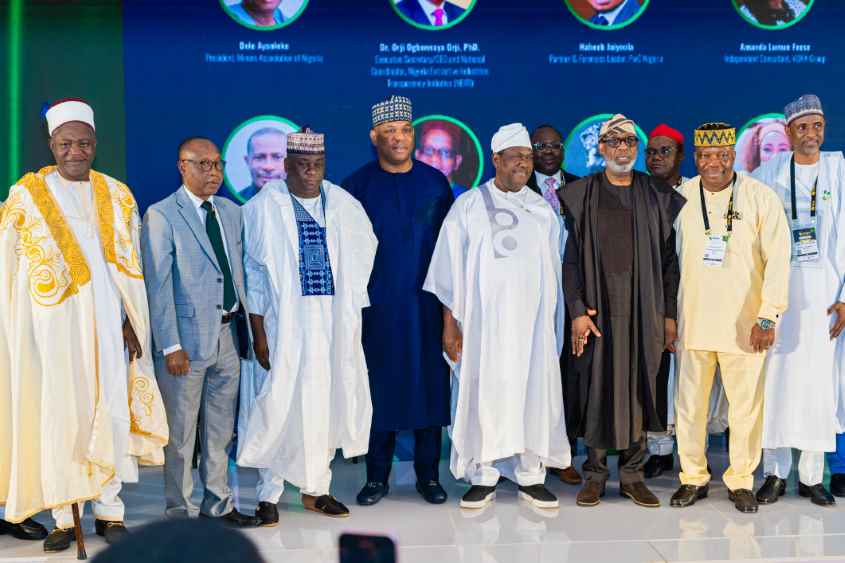
Nigeria Mining Week 2026 sets the agenda for the sector’s next decade
Published

on

Nigeria Mining Week

International Lithium Association and Mercuria Energy Trading NG join Nigeria Mining Week 2026 ahead of its opening in Abuja on 12 October

Nigeria has the mineral endowment to play a growing role in global supply chains, including critical minerals

CAPE TOWN, South Africa, October 8, 2026/APO Group/ —Programme and delegate passes: www.NigeriaMiningWeek.com

With less than a week to go, Nigeria Mining Week 2026 has added a global commodity trader and the world’s lithium trade association to its programme. Mercuria Energy Trading NG has signed as a Gold Sponsor, and the International Lithium Association (ILiA) has joined as a Supporting Association.


They join Nigeria’s mining leaders, investors and operators in Abuja from 12 to 14 October for three days on the questions that will define the sector’s next decade: who finances Nigerian projects, who buys their output, and how much of it is processed in Nigeria.

Now in its 11th edition, the event takes place at the Abuja Continental Hotel under the theme “Unlocking Investment and Growth through Partnerships”. More than 3,080 attendees and more than 90 sponsors and exhibitors are expected across seven strategic forums.

The decisions made on processing, financing and market access over the next few years will shape Nigerian mining for the decade ahead. Nigeria Mining Week puts the people making those decisions in the same room.

On the agenda

The programme follows six content pillars: exploration and geological data; financing and investment; industrialisation and processing; infrastructure and power; ESG, transparency and community development; and international and regional collaboration.

  • 12 October: pre-conference and roundtables on geological data, financing for junior miners, compliance and enforcement, and power and infrastructure.

Available to conference attendees only.

  • 13 October: conference and exhibition opening, the new Critical Minerals Forum, the Women in Extractive Industries Forum and technical workshops
  • 14 October: Gold Day, sessions on steel and industrial minerals, the Deal Room and further technical workshops

The Deal Room is a curated space for one-on-one meetings between mining projects and financiers, off-takers and strategic partners. Projects seeking offtake or financing can apply to take part.

International Lithium Association joins as Supporting Association

ILiA, the global trade association for the lithium industry, will take part in the Critical Minerals Forum on 13 October. Astrid Karamira, EMEA Representative Director at ILiA, joins the panel “Building Reliable Pathways from Nigeria to Global Battery, Magnet & EV Markets”.

The session looks at what Nigerian projects must do to reach international battery markets: technical and quality standards, traceability and responsible sourcing, export readiness, and the step from exploration success to commercial operation.

“Global buyers are asking more of their suppliers on quality, traceability and responsible sourcing than ever before. Nigeria Mining Week is an opportunity to discuss openly what those expectations mean in practice, and how Nigerian projects can meet them.”

Mercuria Energy Trading NG signs as Gold Sponsor

Mercuria Energy Trading NG is the Nigerian subsidiary of Mercuria, one of the world’s leading independent energy and commodity groups. It brings a buyer and offtaker perspective to the programme.

For many Nigerian projects, a credible buyer is the gap between a promising deposit and a financed mine. Mercuria will contribute to discussions on commodity trading and offtake partnerships, critical minerals supply chains, and infrastructure and logistics.

“Nigeria has the mineral endowment to play a growing role in global supply chains, including critical minerals. We look forward to sharing how trading, offtake and logistics partnerships can help Nigerian projects reach global markets.”

Event details

The programme is subject to change.

Distributed by APO Group on behalf of Nigeria Mining Week.


Continue Reading

Trending