Connect with us
Anglostratits

Business

2024 GoGettaz Agripreneur Prize Winners Announced: Africa’s Top Young Agrifood Innovators Receive US$166,000 in Prize Money

Published

on

GoGettaz

Visionary agripreneurs from 11 African countries recognised for launching innovative businesses that drive agricultural transformation across the continent

The future of Africa’s food systems lies in the hands of its young entrepreneurs

KIGALI, Rwanda, September 10, 2024/APO Group/ — 

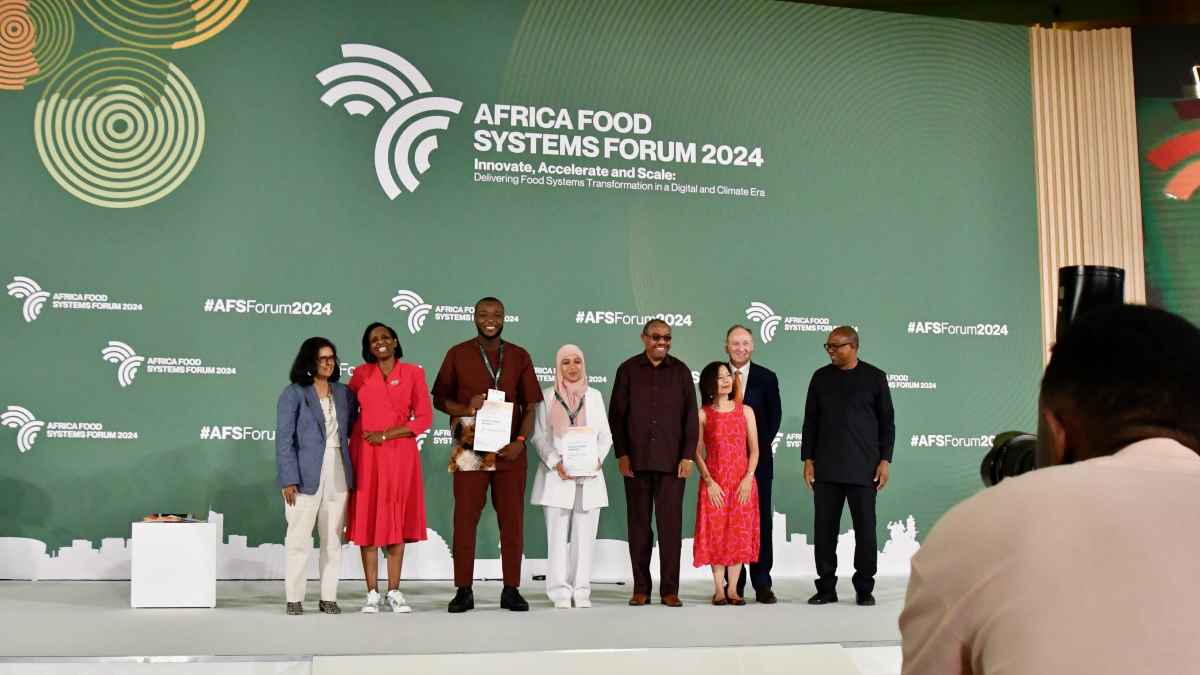
Celebrating Africa’s top young agrifood entrepreneurs at the 2024 Africa Food Systems Forum (AFSF) in Kigali, Rwanda; Visionary agripreneurs from 11 African countries recognised for launching innovative businesses that drive agricultural transformation across the continent. 

In a celebration of African agrifood innovation, two young entrepreneurs were awarded the prestigious GoGettaz Agripreneur Prize Competition Grand Prizes at the Africa Food Systems Forum 2024 last Friday in Kigali. During the highly anticipated Youth Town Hall event, GoGettaz judges selected Fatima El Khou, Founder, CEO, and Head of Research & Innovation from Jafife (Morocco), and Dr. Iddi Mohammed Faried, Co-founder and CEO of Kodu Technology (Ghana) to each receive $50,000 for their groundbreaking solutions in agriculture.

Fatima El Khou’s company, Jafife (https://Jafife.ma/), is revolutionizing the agri-food supply chain in Morocco with digitalized solar-powered technology that transforms crops and seafood into long-lasting dried food products maintaining nutritional value and quality. Utilizing renewable energy, Jafife’s food products and natural dyes provide eco-conscious solutions across industries, while empowering local producers.

Dr. Iddi Mohammed Faried’s company Kodu Technology (https://KoduTechnology.com/) has introduced a scientific innovation in Ghana that transforms banana and plantain fibers into eco-friendly sanitary pads for women, addressing health and hygiene challenges. Kodu Technology’s innovation not only creates a sustainable and affordable alternative to traditional menstrual products with a mission to eradicate “period poverty” in rural communities but also supports local agriculture and contributes to the circular economy by repurposing agricultural waste.

“These young agripreneurs have shown that Africa’s solutions to food systems transformation are already being implemented,” said Dr. Agnes Kalibata, President of AGRA. “Their drive, creativity, and commitment to building sustainable agribusinesses are exactly what we need to achieve lasting change across the continent. It’s inspiring to see such transformative ideas come to life.”

  • In addition to the grand prizes, four young entrepreneurs were each awarded a $15,000 Impact Award, recognizing their transformative contributions across critical areas including rural livelihoods, technology, job creation, improving rural livelihoods, natural resource use, climate resilience, nutrition, youth and women’s empowerment. The 2024 GoGettaz Impact Award winners are:
  • Charles Oyamo – Rethread Africa (https://Rethread.Africa/), Kenya, Technology Impact Prize.  Rethread Africa converts agricultural waste from smallholder farmers into sustainable bioplastics, providing eco-friendly materials for various industries. Rethread’s technology reduces the reliance on synthetic materials and increases farmers’ income without additional labour, promoting sustainable agriculture.
  • Tisya Mukuna, La BOITE (www.La-Kinoise.com), DR Congo – Job Creation and Improving Rural Livelihoods Impact Prize.  La BOITE produces La Kinoise coffee, cultivated and transformed entirely in Kinshasa, managing the entire value chain from plantation to processing. By reviving abandoned coffee plantations and supporting local cooperatives, La Boite improves agricultural practices and create economic opportunities through its “One Cart, One Job” program.
  • Salimata TohAGRIBANANA (https://AGRIBANANA.net/), Côte d’Ivoire – Resource Use and Climate Impact Prize. AGRIBANANA transforms banana plant waste into eco-friendly products like natural fibres, paper pulp, and biodegradable packaging. Agribanana’s patented process adds value to agricultural waste, promoting sustainable consumption and reducing environmental impact.
  • Riantsoa MialinarindraSakafo Madagascar (www.Sakafo-Madagascar.com) – Job Creation, Nutrition and Gender Impact Prize. Sakafo Madagascar processes fruits and vegetables grown by small-scale farmers into traceable, nutritious food products. Safako’s holistic ecosystem supports sustainable farming practices, reduces post-harvest loss, and promotes a circular economy with composting and clean energy initiatives in Madagascar.

Additionally, each of the remaining 6 finalists received a GoGettaz “Young Catalyst Award” of $1,000 each, recognizing their excellence and catalytic contributions to grow, transform, and positively impact Africa’s agrifood systems:

  • Deborah Nzarubara – Grecom (www.Grecom-RDC.com), DR Congo. Grecom specializes in the production, sale, and transformation of beekeeping products using its NYUKI TECH platform. Grecom’s platform enables apiculturists to track and manage its hives remotely, ensuring optimal production and bee health, while connecting small producers to market information and customers.
  • Arristine Mendes – SHADDAÏ Aquaculture (https://apo-opa.co/47mUmzf), Senegal. SHADDAÏ Aquaculture produces fish feed without fish meal, using alternative protein sources and lysis technology for digestibility. This innovation protects the environment by reducing overfishing while providing high-quality feed to support sustainable aquaculture.
  • Mogale Maleka – Agang Bokamoso Farms (AB Farms) (https://ABFarms.co.za/), South Africa.  AB Farms’ patented vertical hydroponic system operates efficiently during water and power shortages, using 90% less water and 10 times less land than traditional farming. AB Farms’ vertical farming system enables farmers to produce nutritious crops that are virtually pesticide free, in urban areas, on degraded land, or in areas with poor soil conditions.
  • Bruk Getahun – ChipChip (https://ChipChip.social/), Ethiopia. ChipChip.Social uses an innovative “group buying” model to provide affordable, quality food to urban families while empowering farmers. ChipChip’s platform aggregates demand, reducing logistics costs and offering consumers wholesale prices, which are at least 20% lower than market rates.
  • Mohamed Amine Bensalem – Hayat Technology, Tunisia. Hayat Technology’s GrowIt system uses AI-driven sensors and real-time data analysis to optimize water usage and enhance crop management. This advanced irrigation technology is accessible and affordable for farmers, improving productivity and sustainability.
  • Mostafa Hassanen – Plug’n’Grow (www.PlugNGrow.me), Egypt. Plug’n’Grow specializes in hydroponic and aquaculture solutions, enabling growers to produce premium quality crops with minimal resources. Plug’n’Grow’s systems reduce capital and operational costs by 70% compared to traditional methods, optimizing resource efficiency and crop yields.

The esteemed judges panel for 2024 consisted of GoGettaz partners and experts from across the African continent. The judges were:

  • Ada Osakwe (Founder & CEO, Agrolay Ventures, AGRA Board Member, GoGettaz Lead Judge) Nigeria
  • Fina Kayisanabo (Private Sector Development Team Lead, USAID) Rwanda
  • Jane Baldwin (Head of Agrifood Systems, Pan African Programs, Mastercard Foundation) Canada
  • Luis Alfredo Pérez (Senior Vice President Africa, Yara International) Guatemala
  • Nana Amoah (Director of Gender, Youth, and Inclusiveness for AGRA) Ghana
  • Tchegoun Koba (Global Technical Advisor for Youth Employment & Entrepreneurship, SNV) Senegal

The 2024 GoGettaz Agripreneur Prize finale began this year with remarks from GoGettaz winners from previous years and inspiring words from Ms Solange Tetero, Director General of Youth Empowerment in the Ministry of Youth and Arts, Government of Rwanda. Entertainment featured young dancers from the Sherrie Silver Foundation in Rwanda.

This year, GoGettaz expanded its reach, focusing on underrepresented Francophone regions and encouraging innovations addressing climate challenges and solutions. The campaign’s success was evident with increased participation and diversity among finalists who this year hailed from 11 African countries.  To find out more, please find year’s Top-12 Deal Book: https://apo-opa.co/3XmxjA8

Amath Pathe Sene, Managing Director of the Africa Food Systems Forum, highlighted the importance of youth-driven solutions. “The future of Africa’s food systems lies in the hands of its young entrepreneurs. Their ideas are not just innovative – they are necessary.”

Strive Masiyiwa, Founder and Chairman of Econet Group and GoGettaz Africa co-founder, addressed the standing-room-only audience at the Youth Dome event just before the Top-12 finalists went on stage for their 3-minute pitches and five-minute grilling by the GoGettaz expert judging panel. Excerpted remarks:

“It’s remarkable to see the extraordinary number of African entrepreneurs who are pioneering solutions across so many African countries,” he noted.  “To all participants, and I’m not just talking to those who made the finalists, I’ve always said (GoGettaz) is one award in which the winner is anyone who participates, because at the end of the day, we can give you an award, but it’s not an end in itself.”

“The end is to build African enterprises that create jobs, that can scale, that can solve real problems as they build the prosperity of nations,” he remarked. “If you are a participant, you are a winner, not just the finalists, because you are showing us you have the confidence, you have the ability, and you have put together a business. Pat yourself on the back and give a high-five to your team for participating… because entrepreneurs try, try, and try again until they succeed.”

To this year’s finalists, I am so proud of you. I have gone through the lists and been following the reports. To the winners: Well done. Africa thanks you. I thank you,” he concluded.

Svein Tore Holsether, President and CEO of Yara International and co-founder of GoGettaz, emphasized the significance of youth-led innovation in addressing food security challenges. “These young entrepreneurs are transforming food systems with bold, inventive solutions. Their impact will resonate far beyond Africa.”

This year marked a significant increase in female participation, an important milestone in an industry often dominated by men. Morocco, DRC, and Côte d’Ivoire saw a surge in representation, further testament to the inclusivity and broad regional impact of the 2024 GoGettaz annual campaign and competition.

As the 2024 GoGettaz Agripreneur Prize Competition concludes, GoGettaz and its partners commended the resilience, creativity, and leadership of Africa’s young  agripreneurs. With a growing network of innovators, the focus now shifts to fostering mentorship and policy-making that supports youth and women in agriculture.

To learn more about this year’s finalists and to stay informed about upcoming opportunities, visit https://GoGettaz.Africa and follow our journey toward transforming African agriculture through innovation and entrepreneurship.

Distributed by APO Group on behalf of 2024 GoGettaz Agripreneur Prize Competition.

Business

Afreximbank Africa Trade Report shows Africa can turn geopolitical disruptions into long-term growth opportunity

Published

on

Afreximbank

The report highlights Africa’s continued growth resilience despite significant headwinds occasioned by escalating geopolitical tensions and ensuing economic shifts

CAIRO, Egypt, June 24, 2026/APO Group/ –African Export-Import Bank (Afreximbank) (www.Afreximbank.com) has launched the 2026 edition of its flagship African Trade Report themed “Leveraging Geopolitics for Trade and Industrialisation in Global Africa.” The report presents a comprehensive review of trade and economic developments across Africa and globally in the context of the 2025 operating environment, while outlining available strategic options for Africa to transform ongoing geopolitical tensions and associated supply chain disruptions into long-term resilience for growth and shared prosperity across the continent.


The report highlights Africa’s continued growth resilience despite significant headwinds occasioned by escalating geopolitical tensions and ensuing economic shifts. Reflecting the continent’s growth resilience, the report shows that while global economic growth slowed to 3.4 percent in 2025 and is projected to further ease to 3.1 percent in 2026, Africa’s real GDP growth strengthened from 3.4 percent in 2024 to 4.5 percent in 2025. This performance not only surpasses the global average but also highlights the continent’s improving economic fundamentals in a fractured world economic order.

Africa’s merchandise trade also delivered strong performance, expanding by 6.1 percent to reach approximately US$1.5 trillion, while aggregate inflation declined sharply from 21.6 percent in 2024 to 13.1 percent 2025. These outcomes reflect the stabilising effects of prudent macroeconomic management, ongoing policy and institutional reforms, and the countercyclical interventions of development finance institutions across the continent.

Commenting on the Africa Trade Report’s findings, Dr Yemi Kale, Group Chief Economist and Managing Director of Research and Trade Intelligence at Afreximbank, said:

By strategically leveraging these shifts, Africa can build a more resilient, competitive and inclusive economic future

Africa stands at a critical juncture. Geopolitical tensions and economic fragmentation are reshaping global trade patterns, but they also present a historic opportunity for the continent. By strategically leveraging these shifts, Africa can build a more resilient, competitive and inclusive economic future.

Afreximbank

“It is imperative for the continent to act decisively to strengthen regional value chains, deepen industrial capacity, expand access to trade finance, and accelerate continental integration. Through coordinated policy action, strategic infrastructure investment, and stronger development finance institutions, Africa can build a more resilient, inclusive, and value-added trade ecosystem. Africa cannot afford to delay.”

The report further highlights that Africa’s export performance remains constrained by a persistent trade finance gap, estimated at approximately US$74 billion in 2025. The challenge is exacerbated by limited foreign exchange liquidity and the continued decline in correspondent banking relationships, factors that restrict the continent’s capacity to fully realise its trade and industrial potential.

At the same time, evolving shipping routes and prolonged disruptions to global logistics networks continue to extend delivery timelines and increase freight and trading costs. These pressures are particularly acute for African economies that remain heavily reliant on imported inputs and external markets, even as global supply chains increasingly reconfigure toward resilience, diversification, and emergence of alternative production hubs.

The report also outlines several strategic priorities, including the accelerated implementation of the African Continental Free Trade Area (AfCFTA), the expansion of digital payments infrastructure through the Pan-African Payment and Settlement System (PAPSS), and coordinated reforms to the global financial architecture. It further underscores the growing role of African financial institutions in strengthening economic resilience. Afreximbank, a founding member of the Alliance of African Multilateral Financial Institutions (AAMFI), disbursed US$17.5 billion in 2024 and is working to double intra-African trade finance by 2026. Meanwhile, Pan African Payment and Settlement System (PAPSS) is already helping to reduce transaction costs and lessen reliance on foreign currencies across the continent.

As geopolitical tensions continue to reshape global supply chains and trade patterns, the continent’s ability to leverage these shifts will depend on strengthening industrial ecosystems, expanding intra-African trade, and sustaining coordinated financial support. Ultimately, a combination of adaptive policy frameworks, strategic trade positioning, and robust direct foreign investment interventions will be central to driving a resilient, inclusive, and sustainable industrialisation pathway for Global Africa. The imperative now is to act with ambition and urgency. This would require accelerating the implementation of the African Continental Free Trade Area (AfCFTA), expanding intra-African trade finance, strengthening transport and logistics infrastructure, and deepening digital payment systems through the Pan-African Payment and Settlement System (PAPSS).

The full report can be downloaded here:  https://apo-opa.co/4xNkbFx

Distributed by APO Group on behalf of Afreximbank.


Continue Reading

Business

Islamic Development Bank (IsDB) Institute Strengthens Global Partnerships through Strategic Bilateral Engagements at 2026 Group Annual Meetings

Published

on

IsDBI

The meetings reaffirmed IsDBI’s commitment to advancing Islamic economics and finance as a catalyst for sustainable development, innovation, financial inclusion, and economic transformation across Member Countries and beyond

BAKU, Azerbaijan, June 24, 2026/APO Group/ –The Islamic Development Bank Institute (IsDBI) (https://IsDBInstitute.org/) successfully conducted a series of bilateral meetings with government institutions, multilateral organizations, financial regulators, academic institutions, development agencies, and industry leaders on the sidelines of the 2026 IsDB Group Annual Meetings in Baku, Azerbaijan.


The meetings reaffirmed IsDBI’s commitment to advancing Islamic economics and finance as a catalyst for sustainable development, innovation, financial inclusion, and economic transformation across Member Countries and beyond.

The engagements covered a wide spectrum of strategic themes, including Islamic finance ecosystem development, regulatory and legislative reform, capacity building, sukuk market development, Islamic social finance, digital transformation, fintech, sustainable finance, waqf innovation, and knowledge partnerships.

Among the key engagements were discussions with representatives from the Governments of Tajikistan, Libya, Maldives, Türkiye, Ethiopia, and Sierra Leone on strengthening Islamic finance ecosystems through technical assistance, regulatory enhancement, and institutional capacity development.

The Institute also met with leading international organizations and standard-setting bodies, including the Islamic Financial Services Board (IFSB), AAOIFI, the Eurasian Development Bank, and the Islamic Microfinance Development Fund (FDMI). The meetings explored avenues for collaboration in research, standards development, capacity building, and strategic initiatives aimed at broadening the global reach and impact of Islamic finance.

Several meetings focused on innovation and emerging opportunities, including discussions with Rosatom State Corporation on sustainable financing solutions and sukuk structures, Islamic Money Australia on digital Islamic banking models, and INCEIF University on Islamic social finance data, waqf tokenization, and applied research collaboration.

The Institute also explored partnerships with organizations from Brazil, Palestine, Somalia, Senegal, Djibouti, and the private sector to advance knowledge dissemination, capacity-building programs, blended Islamic finance solutions, cash waqf digitalization initiatives, and investment-related research.

Commenting on the outcomes of the engagements, the Institute’s team, led by Acting Director General, Dr. Sami Al-Suwailem, noted that the meetings reflected the growing global interest in leveraging Islamic economics and finance to address contemporary development challenges and unlock new opportunities for inclusive and sustainable growth.

The discussions generated a pipeline of follow-up initiatives, including technical assistance programs, joint research projects, capacity-building activities, policy advisory support, and collaborative knowledge-sharing platforms.

The 2026 IsDB Group Annual Meetings provided a valuable platform for strengthening existing partnerships, establishing new strategic relationships, and advancing the Institute’s mission of promoting innovative, impactful, and development-oriented Islamic economics and finance solutions worldwide.

Distributed by APO Group on behalf of Islamic Development Bank Institute (IsDBI).


Continue Reading

Energy

Nigeria Accelerates $750B Mining Vision Ahead of African Mining Week (AMW) 2026

Published

on

Etu Energias

African Mining Week will showcase opportunities within Nigeria’s mining value chain as the country seeks capital to unlock its $750 billion worth of untapped mineral deposits

CAPE TOWN, South Africa, June 24, 2026/APO Group/ –Nigeria’s mining sector is entering a new phase of growth as regulatory reforms, downstream investments and international partnerships strengthen investor confidence in one of Africa’s largest untapped mineral markets. The country’s solid minerals sector has secured approximately $3 billion in investments over the past three years, reflecting growing investor confidence as the West African nation seeks to bridge the financing gap hindering large-scale mining development.


The investment milestone comes as Nigeria deepens engagement with investors to unlock its estimated $750 billion in untapped mineral resources. The country is targeting an increase in mining’s contribution to GDP to 10%, creating lucrative investment opportunities for global mining industry players.

These developments come as African Mining Week (AMW) 2026 – Africa’s Most Influential Mining Conference, taking place in Cape Town from October 14-16 – prepares to showcase Nigeria’s expanding project pipeline and investment opportunities. Through dedicated country sessions, project showcases and executive networking, the event will connect international investors with Nigerian policymakers, mining companies and service providers driving the country’s mining transformation.

Nigeria’s expanding investment pipeline is a testament to its drive to strengthen partnerships. In June 2026, indigenous company Romulus Mining announced plans to increase investments across its gold and lithium portfolio from approximately $50 million to $150 million over the next three years, underscoring growing private sector confidence in the country’s mining outlook.

A partnership deal signed with Turkey in May 2026 is expected to support cooperation in geological exploration, mining technologies, digitalization and capacity building, while creating new opportunities for Turkish investment and technical expertise across Nigeria’s mining value chain.

Meanwhile, the advancement of several downstream projects – including a $600 million lithium processing facility in Nasarawa State and a $200 million lithium processing plant in Abuja – underscores Nigeria’s commitment to boosting mineral production and supporting industrialization.

Amid these developments, AMW 2026 provides a timely platform for investors seeking to capitalize on one of Africa’s most promising mining markets. The event will facilitate strategic partnerships that support exploration, mineral processing and long-term industry growth, reinforcing Nigeria’s ambition to develop a $1 billion economy by 2030 on the back of its mining industry.

Distributed by APO Group on behalf of Energy Capital & Power.

Continue Reading

Trending