The Reconnek App is connecting those of African descent in the Diaspora back to the Motherland
LAS VEGAS, United States of America, March 8, 2023/APO Group/ —
Reconnek, a new mobile app owned and published by tech giant NW Tech Capital, Inc. (OTC: NWTT) (www.NWTCapital.com) announced today its partnership with various governmental institutions on the continent of Africa to connect those affected by the transatlantic slave trade back to the motherland. Through ancestral offerings, the app provides a unique opportunity for individuals to discover and explore their roots and reconnect with their ancestors. The app is set to launch its DNA testing feature on April 26th, 2023. Genetic ancestral DNA testing will be provided by Roundtable Diagnostics (www.AamaniHealthcare.com), which will supply the app with DNA testing kits for Autosomal analysis, connecting the population group contributing to the ethnic mix of users in the diaspora.
Are you an African descendant living in the Diaspora? Do you feel disconnected from your roots and long for a deeper connection to your heritage? You’re not alone. Millions of people around the world are searching for ways to reconnect with their African culture and history. The Reconnek app (www.Reconnek.com) will explore how it can bridge the gap between Africa and its descendants in the Diaspora, allowing users to rediscover their shared past, present, and future. Join us as we embark on a journey of reconnection that will change lives forever!
The Reconnek app is an application offered in the Google Play store as well as the Apple App store. Reconnek is a place for people born in foreign communities to find each other in their new home city for tips, dates, jobs, and more. While also bridging the ancestral gap for those affected by the Transatlantic Slave trade back to their roots.
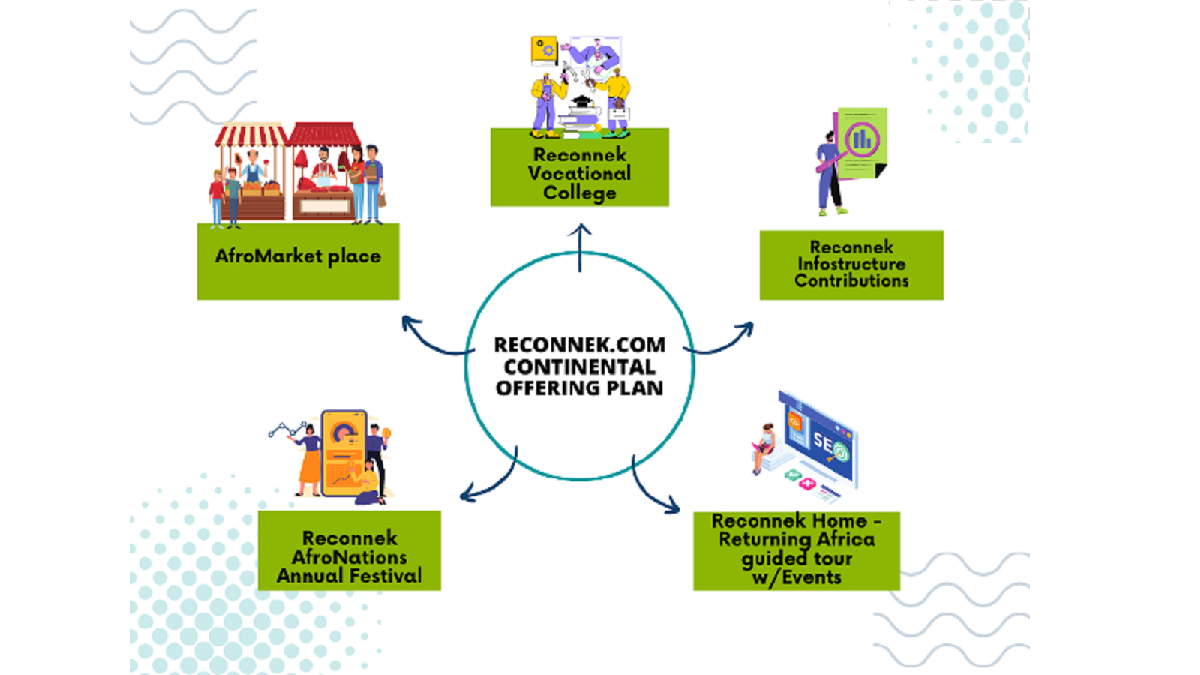
Reconnek Home Festival in Nigeria
Reconnek’s partnership with governmental institutions aims to support the repatriation efforts of those affected by the transatlantic slave trade. Through the app, users can access information about their ancestry, including family history, migration routes, and cultural traditions. They can also connect with local communities and participate in cultural events and ceremonies. The objective is to reinforce the actions and measures securing the full enjoyment of economic, social, cultural, civil, and political rights of people of African Descent, and their full and equal participation in society.
The Reconnek App is a new tool that is helping to connect African descendants in the diaspora back to the Motherland. The app was created by two young entrepreneurs, who are of African descent. The app is still in its early stages, but it has already been used by thousands of people to reconnect with their roots.
The Reconnek App is based on the premise that many African descendants in the diaspora do not know where their ancestors came from. This is because the transatlantic slave trade tore families apart and erased much of Africa’s history. The app allows users to input their ancestor’s name and country of origin and then uses data from ships’ manifests and other historical records to try to match them up with an ancestor who was taken from Africa during the slave trade.
So far, the Reconnek App has been successful in connecting hundreds of people with their African ancestors. It is hoped that as more people use the app, it will help to close the gap between the diaspora and Africa and shed light on the hidden history of the transatlantic slave trade.
The efforts of the Nigerian Tourism Development Corporation (NTDC) an agency of the Nigerian state, and specifically the Ministry of Culture, Tourism, and National Orientation, are responsible for the overall development of the country’s tourism. NW Tech Capital, Inc. hopes that with the new incoming administration Presidential elect Tinubu will honor previous working efforts to bring jobs to the youth and connect those in the diaspora.
We are excited to partner with governmental institutions to offer this unique opportunity for people to reconnect with their ancestral roots and discover their identity
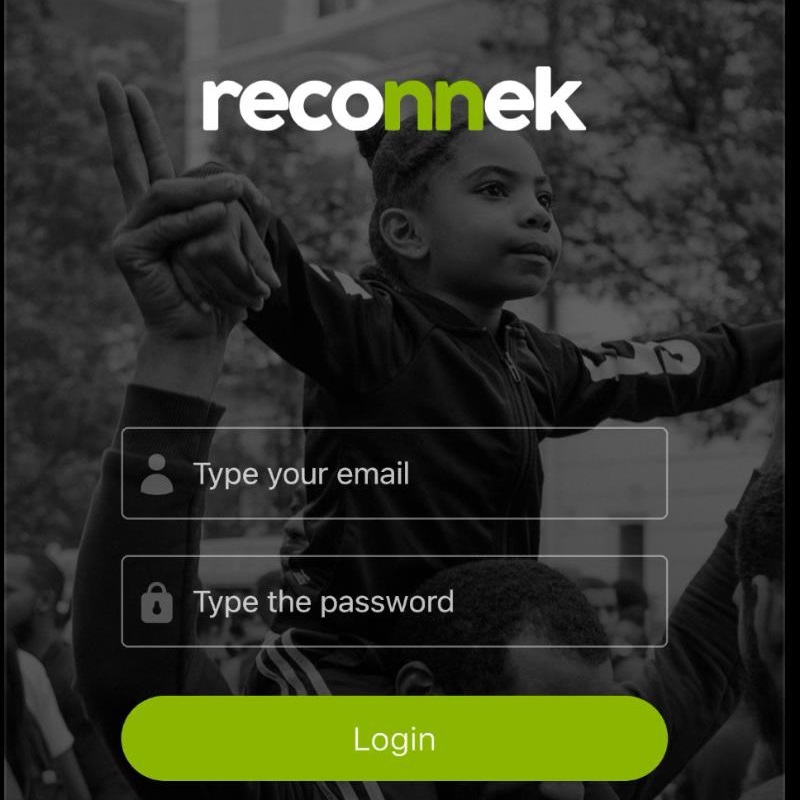
“We are excited to partner with governmental institutions to offer this unique opportunity for people to reconnect with their ancestral roots and discover their identity,” said Cedric Yengo Founder of Reconnek. “Our app is designed to be accessible to everyone, regardless of their location, and we are committed to ensuring that everyone has the opportunity to explore their heritage.”
The app’s features include a DNA ancestry test, which provides users with a breakdown of their genetic ethnicity, and a virtual reality experience that allows users to explore historical sites and cultural landmarks. The app also includes a community forum where users can connect with others and share their experiences.
Why the reconnection of one’s roots is important
There are many reasons why African diasporic peoples need to reconnect with their African roots. For one, it helps us to remember our history and where we come from. It also allows us to tap into a rich cultural heritage that can be used to enrich our lives today. Additionally, reconnecting with our African roots can help us to better understand the experiences of our ancestors and how they were able to overcome adversity. Finally, reconnecting with our African roots can help us to create a stronger sense of community and solidarity among people of African descent.
“Our partnership with Reconnek represents an important step in the ongoing efforts to address the legacy of the transatlantic slave trade,” said Folorunsho Coker the Director General of the Nigeria Tourism Development Corporation (https://apo-opa.info/3SV4ubr) “We believe that this initiative will help to foster greater understanding and empathy between different communities and contribute to a more inclusive and equitable future.”
Many challenges come with reconnecting with our African roots. For one, we may not have any connection to our African heritage. We may be the product of generations of diaspora, and our only connection to Africa may be through the histories and cultures that have been passed down to us. This can make it difficult to connect with our African roots on a personal level. Additionally, there may be language barriers that make it difficult to communicate with our African brothers and sisters. And finally, we may not have access to the resources that would help us reconnect with our African roots. But despite all these challenges, reconnecting with our African roots is important to work that must be done to heal the wounds of the past and build a better future for all Africans. There are many ways to reconnect with our African roots. One way is to learn about our history. This can be done by researching our ancestors, reading books about African history, and watching films that portray African culture. Another way to reconnect with our roots is to visit Africa. This can be done by taking a trip to the continent, attending an African cultural event, or meeting people of African descent who live in Africa. Finally, we can reconnect with our roots by celebrating our African heritage. This can include cooking traditional foods, listening to African music, and participating in traditional ceremonies and celebrations.
There are many benefits to reconnecting with our African roots. For one, it can help us to understand our history and where we come from. It can also give us a sense of pride and belonging and help us to connect with our culture. Additionally, it can help us to better understand our place in the world and how we can contribute to making it a better place for all.
“We are proud to partner with Reconnek in providing DNA testing kits for Autosomal analysis to those of African descent in the diaspora. Our mission has always been to provide accurate and reliable genetic testing services, and we are thrilled to contribute to this initiative to help individuals connect with their ancestral roots. We believe that this partnership will pave the way for greater understanding and inclusivity in our global community, and we look forward to the positive impact it will have.” – Kristin Oloso Chairperson of Roundtable Diagnostics.
Reconnek is now available for download on the App Store and Google Play. For more information about Reconnek and its partnership with governmental institutions, please visit the app’s website at (www.Reconnek.com).
Distributed by APO Group on behalf of NW Tech Capital Inc..
SBM Offshore will participate as Silver Sponsor at African Energy Week 2026, where they are set to showcase FPSO expansion in Angola, Namibia and Guyana amid strong financials and a deepwater innovation strategy
CAPE TOWN, South Africa, June 9, 2026/APO Group/ –Multinational oil and gas services company SBM Offshore will participate at this year’s African Energy Week (AEW) 2026 Conference and Exhibition as a Silver Sponsor, reinforcing the company’s long-term commitment to Africa’s expanding deepwater oil and gas industry. Their participation comes as SBM Offshore accelerates brownfield optimization projects in Angola while aggressively positioning itself for new frontier developments in Namibia’s Orange Basin.
SBM Offshore’s return to AEW, which takes place from October 12–16 in Cape Town, is expected to draw significant industry attention as operators, financiers and EPC contractors evaluate the next wave of floating production infrastructure across the Atlantic Basin. With more than 20 years of experience in Africa and over $31 billion in contract backlog globally, the company remains one of the world’s most influential FPSO suppliers.
The Sponsorship follows several major milestones announced during 2025 and 2026. On May 26, the American Bureau of Shipping approved SBM Offshore’s seawater intake riser technology developed alongside Shell. The system pumps cold seawater from depths of 700m to FPSO topsides, reducing onboard cooling energy demand and improving emissions performance for future African and South American projects.
The company’s financial position strengthened considerably following the $2.32 billion sale of FPSO One Guyana to ExxonMobil in February 2026. The transaction helped drive a 216% year-on-year increase in Q1 2026 directional revenue to $3.5 billion while reducing SBM Offshore’s net debt from $5.7 billion to $3.2 billion by March 21, 2026.
SBM Offshore continues to demonstrate the technical expertise, operational scale and long-term investment approach needed to advance Africa’s next generation of energy projects
In March 2026, ExxonMobil awarded SBM Offshore front-end engineering and design contracts for the Longtail development in Guyana. The proposed FPSO is expected to feature the world’s highest gas-handling capacity ever deployed on a floating production vessel, processing 1.2 billion cubic feet of gas and 250,000 barrels of condensate daily.
Across Africa, SBM Offshore continues expanding its offshore footprint. In Angola, the company signed multi-year extensions in December 2025 with Esso Exploration Angola for FPSO Mondo and FPSO Saxi Batuque in Block 15, extending operations through 2032. Brownfield upgrades and life-extension works commenced in early 2026 to support declining reservoir pressure management and maintain environmental compliance standards.
The company also finalized a share purchase agreement with Equatorial Guinea’s national oil company GEPetrol in December 2025, restructuring regional asset ownership and supporting localized operational transitions. The FPSO Aseng formally exited SBM Offshore’s lease-and-operate fleet during the same period as management responsibilities shifted toward Equatoguinean entities.
Namibia retains a central focus of SBM Offshore’s African growth strategy. The company is actively competing for TotalEnergies’ Venus FPSO contract in the Orange Basin, one of Africa’s largest recent offshore discoveries with estimated resources of roughly 2 billion barrels. SBM Offshore has expanded its Cape Town commercial engineering workforce while positioning its standardized technologies for upcoming South Atlantic developments.
“SBM Offshore’s participation at this year’s event reflects the growing momentum behind Africa’s deepwater industry and the critical role FPSO technology will play in unlocking new production. From Angola’s mature offshore hubs to Namibia’s frontier discoveries, SBM Offshore continues to demonstrate the technical expertise, operational scale and long-term investment approach needed to advance Africa’s next generation of energy projects,” says NJ Ayuk, Executive Chairman, African Energy Chamber.
Looking ahead, SBM Offshore aims to combine frontier expansion with lower-emission offshore production systems. Through partnerships with SLB and Cognite, the company is integrating industrial AI platforms to its global fleet while scaling standardized hull construction to accelerate project delivery timelines across Africa and Latin America.
Distributed by APO Group on behalf of African Energy Chamber.
South Africa has moved from rolling blackouts to a year of stable supply, and Minister Kgosientsho Ramokgopa now turns to the grid expansion and market reforms needed to keep the lights on and draw private capital
CAPE TOWN, South Africa, June 9, 2026/APO Group/ –Kgosientsho Ramokgopa, Minister of Electricity and Energy of the Republic of South Africa, has been confirmed as a featured speaker at African Energy Week (AEW) 2026, where he is expected to outline the next phase of the country’s power-sector recovery and the investment drive needed to expand the electricity grid.
Taking place October 12-16, AEW 2026 represents the largest energy gathering on the African continent, offering a strategic platform for dealmaking and partnerships. Minister Ramokgopa’s participation reflects the country’s ambitions to strengthen investment flows across the power and energy markets, supporting long-term generation resilience and improved transmission networks.
South Africa has moved from one of the worst phases of its electricity crisis to its most stable supply in years. The country recently passed a full year without load-shedding, and the grid is at its strongest in half a decade, with roughly 4,400 MW more generation on hand than a year earlier. The return of Kusile Power Station to its full output of about 4,800 MW helped anchor the turnaround.
South Africa’s recovery shows what disciplined execution can achieve, and opening the grid to private capital is the logical next step
With supply stabilized, Ramokgopa has reframed the current market challenge as being less about generation and more to do with transmission, offtakers and bottlenecks, pointing to more than 130 GW of generation projects that have yet to secure firm offtake agreements. That bottleneck sits at the center of the country’s largest infrastructure push. The Transmission Development Plan calls for 14,000 km of new power lines and 105 substations by 2030, at a cost of roughly R400 billion, to unlock an additional 22.5 GW of capacity.
Because neither Eskom nor the state can fund that build alone, the government has opened transmission to private investment for the first time through the Independent Transmission Projects (ITP) program. In December 2025, Ramokgopa named seven prequalified bidders for the first phase, all of them international-led consortia. The phase covers 1,164 km of high-voltage lines across seven corridors, with a combined value of about $1 billion. A request for proposals is expected in the second half of 2026.
“South Africa’s recovery shows what disciplined execution can achieve, and opening the grid to private capital is the logical next step,” says NJ Ayuk, Executive Chairman of the African Energy Chamber. “The real opportunity now is in transmission, and the investors who help build that network will open up generation that will change South Africa’s future for the better.”
Private appetite is already evident on the generation side. The latest round of the Renewable Energy Independent Power Producer Procurement Program drew 10.2 GW of bids against the 5 GW on offer. In the 2025/26 financial year, eight new independent power projects came online with a combined 800 MW, and another 1,610 MW is under construction.
Minister Ramokgopa is also expected to address the Integrated Resource Plan 2025, the government’s blueprint guiding new generation capacity, and the rollout of a competitive wholesale electricity market intended to open the sector beyond Eskom.
As AEW 2026 prepares to convene policymakers, investors and operators at the Cape Town International Convention Center this October, Minister Ramokgopa’s participation is the host nation’s signal that its power sector is open for investment.
Distributed by APO Group on behalf of African Energy Chamber.
Positioned as a pan-African marketplace, CMAS connects policy, project pipelines, capital and buyers in a structured environment focused on enabling real deal flow
CAPE TOWN, South Africa, June 9, 2026/APO Group/ –Africa is emerging as an exciting destination to develop carbon market projects with improved policy certainty and more and more projects becoming investment-ready. As global carbon markets transition from rule-setting to real transactions, with Article 6 mechanisms moving into implementation and compliance-driven demand such as CORSIA accelerating, attention is shifting towards where credible supply, policy certainty and investment-ready projects can be delivered at scale.
Against this backdrop, the Carbon Markets Africa Summit (CMAS) that is organised by VUKA Group has released its official 2026 programme, outlining how Africa’s carbon markets can move beyond frameworks into execution, investment and transactions. The summit will take place from 13–15 October 2026 in Kigali, Rwanda, hosted by the Ministry of Environment of Rwanda, with UNDP and the African Development Bank (AfDB) as host organisations, the Development Bank of Southern Africa (DBSA) as host partner, and AUDA-NEPAD as the strategic institutional partner.
Positioned as a pan-African marketplace, CMAS connects policy, project pipelines, capital and buyers in a structured environment focused on enabling real deal flow.
This year’s programme reflects a changing market dynamic, one where integrity, quality and transaction readiness are becoming decisive.
“Carbon markets are entering a more selective and operational phase. The question is no longer whether Africa has a role to play, but whether the continent can bring forward credible projects, enabling frameworks and market infrastructure to transact at scale,” said Emmanuelle Nicholls, Project Lead. “CMAS 2026 is designed as a response to that moment – connecting the actors, pipelines and capital needed to move from ambition to execution.”
Africa’s carbon markets must be built on integrity, equity, and continental coordination so that carbon finance delivers real value
Within this evolving context, the summit places strong emphasis on the foundations required to scale markets responsibly. As Estherine Fotabong, Director at AUDA-NEPAD, notes, “Africa’s carbon markets must be built on integrity, equity, and continental coordination so that carbon finance delivers real value for communities, ecosystems, and sustainable development across the continent.”
A programme built for execution
The CMAS 2026 programme spans the full carbon market value chain from policy and Article 6 implementation to project development, finance and transactions. Key highlights include the keynote opening session on delivering projects, capital and transactions at scale, a high-level dialogue on trust and market readiness, ministerial and technical roundtables, and sessions focused on buyer demand, investor priorities and deal structuring.
A central feature is a curated pipeline of African carbon projects across nature-based solutions, regenerative agriculture, carbon removals, waste-to-value and blue carbon, presented through project showcases, case studies and investment-ready deal rooms.
The programme also includes solution labs and technical workshops addressing critical bottlenecks—including Article 6 and CORSIA implementation, early-stage finance, MRV systems and project bankability, alongside live demonstrations of digital carbon infrastructure, ensuring focus on practical market development and delivery.
CMAS 2026 is hosted in Rwanda, a country advancing carbon market frameworks under Article 6, and takes place at a pivotal moment as global markets increasingly prioritise integrity, quality and real delivery at scale.
We use cookies on our website to give you the most relevant experience by remembering your preferences and repeat visits. By clicking “Accept”, you consent to the use of ALL the cookies.
This website uses cookies to improve your experience while you navigate through the website. Out of these, the cookies that are categorized as necessary are stored on your browser as they are essential for the working of basic functionalities of the website. We also use third-party cookies that help us analyze and understand how you use this website. These cookies will be stored in your browser only with your consent. You also have the option to opt-out of these cookies. But opting out of some of these cookies may affect your browsing experience.
Necessary cookies are absolutely essential for the website to function properly. These cookies ensure basic functionalities and security features of the website, anonymously.
Cookie
Duration
Description
cookielawinfo-checkbox-analytics
11 months
This cookie is set by GDPR Cookie Consent plugin. The cookie is used to store the user consent for the cookies in the category "Analytics".
cookielawinfo-checkbox-functional
11 months
The cookie is set by GDPR cookie consent to record the user consent for the cookies in the category "Functional".
cookielawinfo-checkbox-necessary
11 months
This cookie is set by GDPR Cookie Consent plugin. The cookies is used to store the user consent for the cookies in the category "Necessary".
cookielawinfo-checkbox-others
11 months
This cookie is set by GDPR Cookie Consent plugin. The cookie is used to store the user consent for the cookies in the category "Other.
cookielawinfo-checkbox-performance
11 months
This cookie is set by GDPR Cookie Consent plugin. The cookie is used to store the user consent for the cookies in the category "Performance".
viewed_cookie_policy
11 months
The cookie is set by the GDPR Cookie Consent plugin and is used to store whether or not user has consented to the use of cookies. It does not store any personal data.
Functional cookies help to perform certain functionalities like sharing the content of the website on social media platforms, collect feedbacks, and other third-party features.
Performance cookies are used to understand and analyze the key performance indexes of the website which helps in delivering a better user experience for the visitors.
Analytical cookies are used to understand how visitors interact with the website. These cookies help provide information on metrics the number of visitors, bounce rate, traffic source, etc.
Advertisement cookies are used to provide visitors with relevant ads and marketing campaigns. These cookies track visitors across websites and collect information to provide customized ads.