Connect with us
Anglostratits

Business

United States Strategy toward Sub-Saharan Africa vs Chinese Influence in the Democratic Republic of Congo (By Jean-Pierre ALUMBA LUKAMBA)

Published

on

Congo

United States Strategy toward Sub-Saharan Africa vs Chinese Influence in the Democratic Republic of Congo (By Jean-Pierre ALUMBA LUKAMBA)

It is critical that the United States works to rebalance its relations with African countries, especially as the continent undergoes dramatic demographic and economic changes

JOHANNESBURG, South Africa, June 27, 2024/APO Group/ — 

By Jean-Pierre ALUMBA LUKAMBA. Jean-Pierre Alumba Lukamba is the International Executive Director for AFRICAN DIASPORA FOR DEVELOPMENT (http://www.African-Diaspora.org).

U.S. policymakers on both sides of the aisle have grown more anxious about Russia and China influence on the African continent as China/Russia-Africa relations have deepened in a variety of areas, including trade and commercial ties, military-security relations, and technology. However, American policymakers across the political spectrum have not prioritized African countries when it comes to U.S. foreign policy plans. Rather, Washington’s limited focus on Africa has lacked coordination and now is often unsettled by an ill-defined concept of “Chinese/Russia influence.” 

In August 2022, U.S. President Joe Biden launched U.S new Strategy toward Sub-Saharan Africa, but it looks also like another U.S. African strategy business as usually because it’s not talking to the African people. It’s a kind of up – up approach, not as it should be, bottom up approach with more emphasize on American and African people to people solidarity to strengthen the historical ties between the two peoples. 

It is critical that the United States works to rebalance its relations with African countries, especially as the continent undergoes dramatic demographic and economic changes. Africa’s population is expected to double to 2.5 billion by 2050, accounting for more than one-quarter of the global population. In addition, prior to the COVID-19 pandemic, the continent was home to 7 of the world’s 10 fastest-growing economies. As Africa expert Judd Devermont argues, “Every global problem is going to have an African dimension to it.” From climate change and pandemic responses to cyber governance, African countries are sure to play a significant role in the future of global affairs.

U.S. policymakers must realize that if they are unable to advance U.S.-Africa relations in the near future, especially in upcoming U.S – Africa Summit this in December, they will miss a crucial opportunity to participate in a rapidly changing region where American national interests are at stake.

Most importantly, the United States cannot continue to rely solely on a strategy of criticizing Chinese and Russian’s engagement across Africa.

This piece of opinion outlines key facts regarding the DRC that U.S. policymakers need to understand in order to get U.S. Africa-focused policy. Here are some key factors about the DRC:

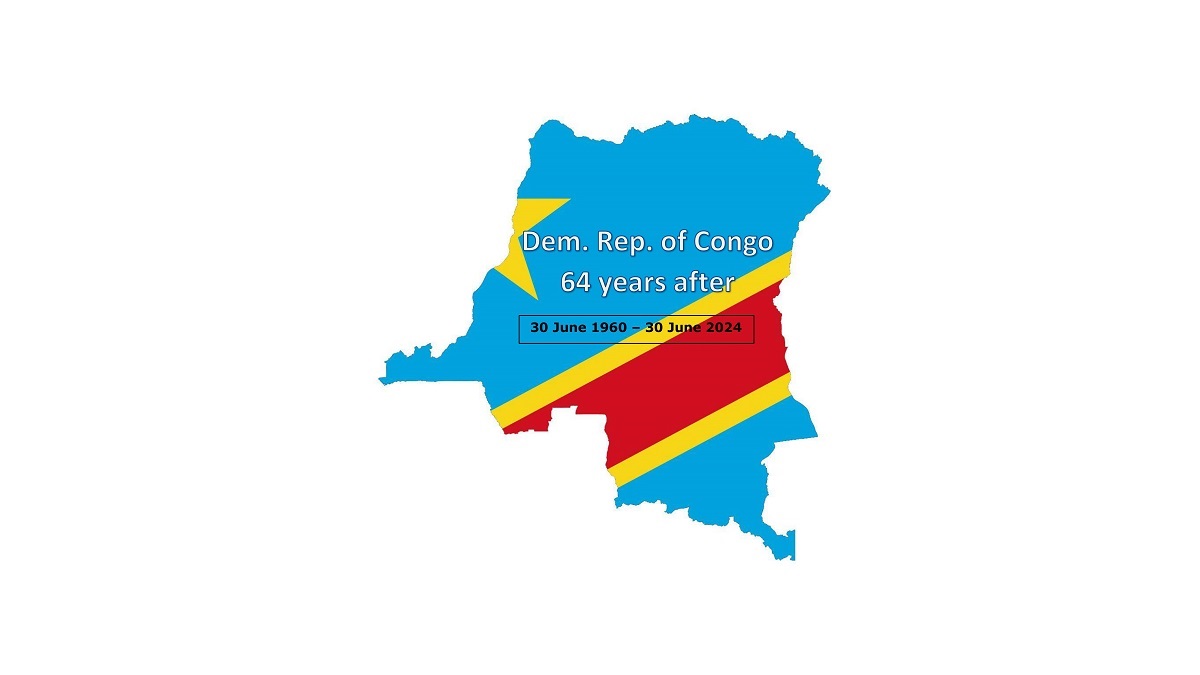
  • The Democratic Republic of the Congo is the second largest country in Africa. It borders nine countries: Angola, Burundi, the Central African Republic, the Republic of Congo, Rwanda, South Sudan, Tanzania, Uganda, and Zambia;
  • With the population around 100 million, with estimated 74% of youth, the people of the DRC represent over 200 ethnic groups, with nearly 250 languages and dialects spoken throughout the country. Kinshasa, the capital, is the second largest French-speaking city in the world;
  • The DRC is among the most resource-rich countries on the planet, with an abundance of gold, cobalt, Uranium, Diamond, tantalum, tungsten, and tin – all minerals used in electronics such as cell phones and laptops, the country has also hydropower potential, significant arable land, immense biodiversity, and the world’s second-largest rainforest;

The U.S. should support the implementation of the DRC vision as a business land

  • Music is its biggest export;
  • On October 30, 1974, boxer Muhammad Ali, nicknamed “The Greatest,” reclaimed the word heavyweight title by winning the “Rumble in the Jungle” against George Foreman in Kinshasa, Zaire (now the Democratic Republic of the Congo);
  • Former NBA All-Star Dikembe Mutombo was born in the Democratic Republic of the Congo. In 1997, he founded a humanitarian foundation to improve the health, education and quality of life for the people in the DRC;
  • DRC is one of the most important countries in Africa for biodiversity conservation. More than 81 million people live here — as do a number of spectacular endemic species like the okapi, Grauer’s gorilla, bonobo, and Congo peacock along with over 400 other species of mammals, over 1,000 bird species, over 400 fish species, and over 10,000 species of plants;

In the DRC, only 1.8% of existing roads are tarred and less than 10% of the population has access to electricity today. Recently there have been pushes to improve, including the announcement of  $1 billion package from the World Bank for infrastructure development;

In view of the above, it can be seen that the DRC can easily offer business opportunities in the following sectors:

  • Agribusiness;
  • Infrastructure development;
  • Energy, water and sanitation;
  • Waste Management;
  • Property development;
  • Banking;
  • Insurance;
  • Media;
  • Clothing;
  • Food and beverage;
  • Education;
  • Health;
  • Hospitality industry;
  • Tourism;
  • Manufacturing industry;
  • Public transport;
  • Ports and airports;
  • Petrol and gas;
  • Mining.

These business opportunities between the United States and the DRC can only be possible through the existence of a responsible leadership in the DRC. This will enable respect of human rights, democracy, good governance, social well-being, open society, peace and security, trade and investment, development and excellent business climate.

Currently the country is plagued by corruption, embezzlement of public funds, mismanagement squanders natural resources, food insecurity, bad governance, abuse of human rights, destruction of fauna and flora by the Chinese, lack of adequate public infrastructure, poverty, lack of development vision as well as security conflicts with certain neighboring countries. Added to this is the 2023 chaotic election which created a lot questions regarding the legitimacy of the current DRC regime.

However the U.S. administration and CSOs can work together with the Congolese people through the CSOs and FBOs to change the current situation for the betterment of both people and pave the way for peace, stability and development in the DRC.

Recommendations

  • US to have a significant discussions with the DRC current regime in considering peace talks with the current main Congolese armed group the Alliance Fleuve Congo “AFC” lead by Corneille NANGAA;
  • US officials to distance themselves from the DRC officials involved in organizing the country 2023 chaotic elections including all who are involved in systemic corruption, hate speeches, state crimes, serious abuse of human rights and the leaders of the urban militia group called Forces du Progrès operating mainly in Kinshasa;
  • US to identify and work with new emerging potential visionary leaders in the DRC for peace, stability and the development of the DRC and the Great Lakes Region of Africa;
  • To encourage U.S. companies and CSOs to invest and implement projects in the following sectors : economy, Health, Education, Tourism and Agribusiness;
  • To promote  sport and cultural exchange projects between U.S. and Congolese citizens;

CONCLUSION

What facilitates the Russian and Chinese influence in the DRC is the ease in obtaining visa as well as the numerous scholarships that these countries grant to Congolese, especially to young people. If the U.S. wants to maintain and guaranty his ties with the DRC, the U.S. policies and decisions makers should take into account the above strategy used by Russian and Chinese emphasizing sustainable development, human right, social well-being of the population, youth entrepreneurship and open society.

The U.S. should support the implementation of the DRC vision as a business land.

Distributed by APO Group on behalf of African Diaspora for Development (ADD).

Business

Afreximbank Posts Robust Q1 2026 Results with 25% Growth in Net Income and Improved Profitability

Published

on

Afreximbank

The results demonstrate continued resilience, disciplined balance sheet management and strong deal execution despite a challenging global operating environment

The growth in net interest income and profitability demonstrates the strength of our operating model and the continued relevance of our mandate

CAIRO, Egypt, May 22, 2026/APO Group/ –African Export-Import Bank (“Afreximbank” or the “Bank”) (www.Afreximbank.com) and its subsidiaries (the “Group”) announced its results for the three months ended 31 March 2026. The results demonstrate continued resilience, disciplined balance sheet management and strong deal execution despite a challenging global operating environment.


The Group continued to expand its lending activities in Q1 2026, resulting in total credit exposure growing by 2% to reach a portfolio of US$42 billion, up from US$41 billion as of 31 December 2025. This performance reflects Afreximbank’s leading role as a Development Finance Institution (DFI) in financing trade and trade-enabling infrastructure, and its strategic contribution to economic resilience across Africa and the Caribbean.

Average loans and advances for Q1 2026 stood at US$32 billion, up 8% compared to the same period in the prior year, driving the recorded growth in interest income. The Group’s liquidity position remained strong, with cash and cash equivalents of US$5.6 billion, representing 14% of total assets, consistent with FY2025 and above the Bank’s strategic minimum.

Asset quality also remained strong, with the non-performing loan (NPL) ratio at 2.40%, broadly in line with 2.43% at FY2025 and below industry average.

Shareholders’ funds increased to US$8.6 billion at 31 March 2026, up from US$8.4 billion at FY2025, supported by internally generated capital of US$268.9 million and new equity investments received during the quarter, underscoring the Bank’s continued ability to mobilise capital from its shareholders in support of its growth and development mandate.

The Group delivered strong profitability during the quarter.  Notwithstanding declining benchmark rates, total interest income rose by 14% year-on-year to reach US$813.6 million, while net interest income increased by 24% to US$510.0 million, compared with US$411.2 million in the first quarter of 2025. The Group’s cost-to-income ratio remained contained at 19%, well within the Group’s strategic ceiling of 30%. As a result, Profit for the period increased to US$268.9 million, up from US$215.4 million in Q1 2025.

The Group continued to maintain a strong capital position, with a capital adequacy ratio of 23% as at 31 March 2026, in line with the Bank’s long-term capital management targets.

During the quarter, Afreximbank continued to demonstrate its counter-cyclical role in response to external shocks. In March 2026, the Bank launched a US$10 billion Gulf Crisis Response Programme to help member countries mitigate adverse spillover effects from the Gulf crisis. The facility is designed to support liquidity, stabilise trade and payments, and address supply-side disruptions, particularly in energy, tourism and aviation, fertilisers, food and other critical imports.

The Bank also continued to deploy targeted financing and advisory support to strengthen trade flows, industrial capacity and economic resilience across Africa and CARICOM. Regional integration received further momentum following South Africa’s ratification of the Bank’s Establishment Agreement in February 2026, bringing one of Africa’s largest and most diversified economies into the Bank’s membership and giving the Bank full continental coverage.

Highlights of the results for Afreximbank Group are shown below:

Financial Performance Metrics

Q1’2026

Q1’2025

Gross Income (US$ million)

874.1

784.9

Net Income (US$ million)

268.9

215.4

Return on average equity (ROAE)

13%

12%

Return on average assets (ROAA)

2.62%

2.38%

Cost-to-income ratio

19%

16%


Financial Position Metrics

Q1’2026

FY’2025

Total Assets (US$ billion)

41.7

42.3

Total Liabilities (US$ billion)

33.0

33.9

Shareholders’ Funds (US$ billion)

8.6

8.4

Non-performing loans ratio (NPL)

2.40%

2.43%

Cash/Total assets

14%

14%

Capital Adequacy ratio (Basel II)

23%

          23%


Mr. Denys Denya, Afreximbank’s Senior Executive Vice President, commented:

“Against a backdrop of continued global uncertainty, heightened geopolitical risks and tight financial conditions, the Group delivered a resilient first-quarter performance, underpinned by disciplined balance sheet management, sound asset quality and strong capital and liquidity buffers. The growth in net interest income and profitability demonstrates the strength of our operating model and the continued relevance of our mandate. Our swift launch of the US$10 billion Gulf Crisis Response Programme further underscores Afreximbank’s counter-cyclical role in supporting member countries during periods of disruption. We remain focused on stabilising trade flows, easing liquidity pressures and advancing the industrial and economic transformation of Africa and the Caribbean.”

Distributed by APO Group on behalf of Afreximbank.

Continue Reading

Business

Via Licensing Alliance Expands Voice Codec Program with New Licensee, New Licensors, Publishes Comprehensive Pool Rate Structure

Published

on

Via Licensing Alliance

SAN FRANCISCO, CALIFORNIA, UNITED STATES – Media OutReach Newswire – 22 May 2026 – Via Licensing Alliance (Via) today announced continued momentum for its Voice Codec patent pool, including the addition of a new unnamed licensee and new licensors, NovaVoice Limited and Cordial IP, further growing the program’s patent stack and market penetration from its initial five, large global licensors.

The addition of the new licensee, unnamed at this time, reflects growing industry adoption of the collaborative licensing pathway Via’s Voice Codec program creates for accessing IP rights to critical voice technologies. This addition reflects a growing market uptake of advanced voice technologies, including EVS and IVAS, driven by rising demand as 5G and 5G-Advanced technologies are adopted worldwide.

Additionally, Via continues to prioritize transparency and has published its full rate structure for the Voice Codec pool, providing further clarity and predictability for implementers and to the broader market. For implementers, the full rate structure allows for complete visibility as they consider the appropriate royalty structure to choose from to meet their product level costs, evaluate future growth paths for their product lines, or plan their geographical expansion plan needs. This level of disclosure not only reduces uncertainty in licensing decisions but also enables more consistent benchmarking, reinforcing confidence in fair, market-aligned SEP licensing practices. The program’s royalty rates are listed on Via’s website at https://www.via-la.com/licensing-programs/voice-codec/#license-fees.

The addition of the new licensors indicates increased interest from patent holders in licensing their voice technology SEPs through highly efficient, aggregated licensing vehicles such as patent pools. Future growth in both the licensor list and the number of patents consolidated through the pool license will continue to enhance the value of the Voice Codec License for implementers. Via’s Voice Codec program licensors are listed here: https://www.via-la.com/licensing-programs/voice-codec/#licensors.

Via’s Voice Codec pool covers Enhanced Voice Services (EVS), which supports voice communications across more than one billion and growing active devices globally, as well as Immersive Voice and Audio Services (IVAS), which will play a central role in next-generation voice and spatial audio applications.

“We are pleased to welcome these new entrants to our pool, which signal continued growth and momentum our Voice Codec program,” said Kevin Mack, President of Via Licensing Alliance. “This pool license offers strong value relative to other market options and represents the only collaborative licensing solution for EVS and IVAS technologies, making it a smart and efficient pathway for companies seeking to license critical voice capabilities.”

EVS remains a foundational technology for high-quality voice communications in 5G and 5G-Advanced networks, with adoption continuing to expand as 5G, 5G-Advanced and future network iterations reach global scale. As spatial audio and advanced voice technologies expand into 6G and a broader range of non-cellular devices, the importance of IVAS technologies is expected to increase, with Via’s pool offering an early and effective licensing pathway.

For more information about the Voice Codec patent pool, including information for prospective licensees, please visit https://www.via-la.com.

About Via Licensing Alliance:
Via Licensing Alliance is the collaborative licensing leader, dedicated to accelerating global technology adoption, fostering participation, and generating return on innovation with balanced licensing solutions for innovators and manufacturers of all sizes around the globe. Via has operated dozens of licensing programs for a variety of technologies. Via is an independently managed company owned by industry-leading participants with over 25 years of intellectual property licensing leadership. For more information about Via, please visit https://www.via-la.com.


Continue Reading

Business

Joint statement welcoming the Republic of Togo’s announcement on Visa facilitation for African nationals

Published

on

Togo

The AfCFTA Secretariat and Afreximbank commend the Government and people of the Republic of Togo for hosting Biashara Afrika 2026 and for their continued commitment to advancing Africa’s economic integration agenda

LOMÉ, Togo, May 21, 2026/APO Group/ –The AfCFTA Secretariat and African Export-Import Bank (Afreximbank) (www.Afreximbank.com) welcome the announcement by the Government of the Republic of Togo, under the leadership of H.E. Faure Essozimna Gnassingbé, President of the Council of the Republic of Togo, regarding measures to facilitate visa-free entry for all nationals of African States holding valid passports, as announced by the Minister of Security on 18 May 2026.

The announcement was made in Lomé on the sidelines of Biashara Afrika 2026, the continent’s premier trade and business platform, which has brought together policymakers, private sector leaders, investors, and stakeholders from across Africa to advance dialogue on intra-African trade, investment, and regional integration.

Throughout the engagements, participants underscored the importance of facilitating the movement of African citizens, entrepreneurs, and investors as an important enabler of intra-African trade and economic cooperation. Against this backdrop, the announcement reflects the growing continental momentum towards strengthening connectivity and deepening African integration.

The AfCFTA Secretariat and Afreximbank, to which Togo is a State Party and a Member State, envision a continent where goods, services, capital, and people move more freely across borders in support of an integrated African market. Measures that facilitate mobility and connectivity continue to contribute towards advancing the broader mandate of both institutions; the attainment of the aspirations of Agenda 2063.

The AfCFTA Secretariat and Afreximbank commend the Government and people of the Republic of Togo for hosting Biashara Afrika 2026 and for their continued commitment to advancing Africa’s economic integration agenda.

Distributed by APO Group on behalf of Afreximbank.

Continue Reading

Trending