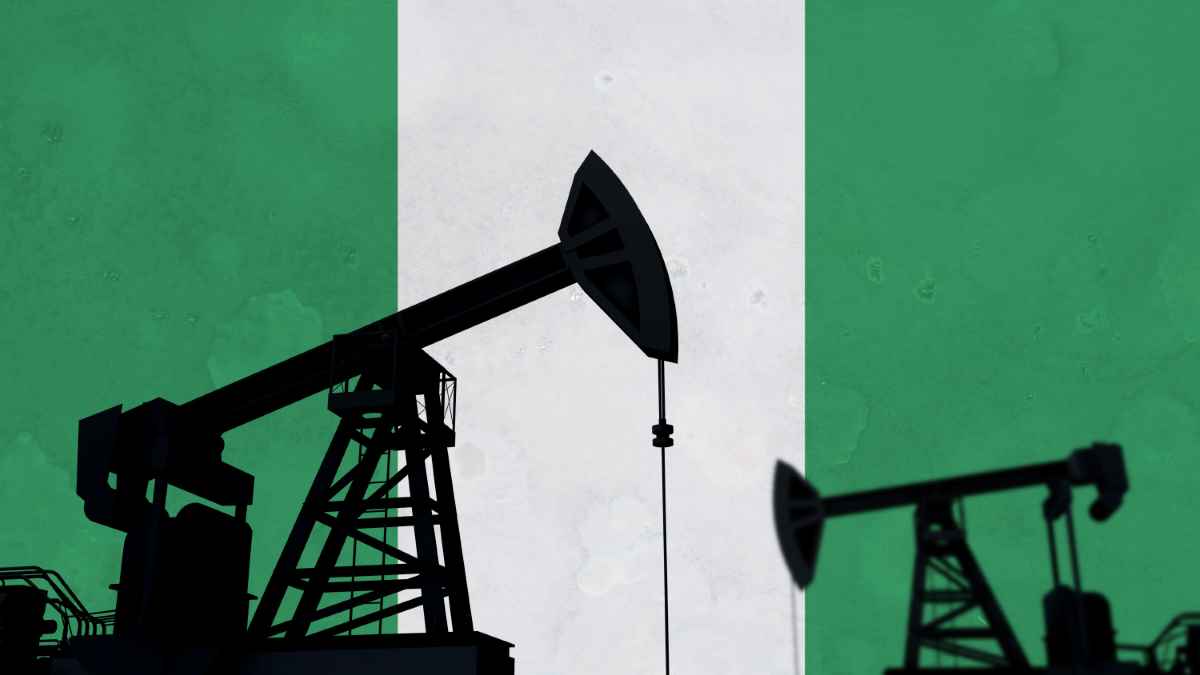
With two-thirds or more of its revenue coming from oil, investor flight is a serious problem for Nigeria
LAGOS, Nigeria, July 29, 2024/APO Group/ —
By NJ Ayuk, Executive Chairman, African Energy Chamber (www.EnergyChamber.org).
Nigeria, a previous bright spot on big oil and gas investors’ radar screens, has dimmed substantially as investor attention is increasingly drawn to new and emerging developments in Namibia, Ivory Coast, Angola, and the Republic of Congo.
With two-thirds or more of its revenue coming from oil, investor flight is a serious problem for Nigeria.
Divestments: The Reasons and the Buyers
Big foreign players, including TotalEnergies and Shell, are exiting or shifting their priorities in Nigeria, rattled by a variety of deleterious forces: an uninviting regulatory environment, lack of transparency, safety issues, vandalism, and theft, among other factors.
For a country whose economy is dependent on fossil fuels, this divestment by majors, totaling around £17 billion since 2006, is catastrophic. Nigeria’s 37 trillion barrels of reserves can do the country no good underground.
Among those looking to pull out of the country, at least in part, is France’s TotalEnergies. The company is seeking to sell its share of Shell Petroleum Development Company of Nigeria, Limited (SPDC), although it will continue to have 18% of its investments in Nigeria.
TotalEnergies CEO Patrick Pouyanne says (https://apo-opa.co/3A2CNbe) his company hasn’t explored for oil in Nigeria for 12 years, explaining, “There is always a new legislature in Nigeria about a new petroleum law. When you have such permanent debates, it’s difficult for investors looking for long-term structure to know what direction to go.”
TotalEnergies’ stance highlights the obvious — investors want predictable environments and simple, trustworthy systems of regulation. A dearth of these factors seems to have trumped the fact that Nigeria yet contains large reserves that could be tapped.
Five global oil companies are still working in the country, but three of those — Shell, Eni, and ExxonMobil — are selling in-country assets valued at £1.8 billion, £4 billion, and £11.9 billion, respectively.
Both Shell and Eni have stated an intent to continue operating in Nigeria’s offshore sector, and ExxonMobil has expressed a commitment to continued investment in Nigeria.
Nigerian companies such as Seplat, Aiteo, and Eroton have moved quickly to buy divested assets. So has the Nigerian government, which has been named top bidder for 57 oilfields and granted licenses to 130 firms for development.
I am pleased to see indigenous companies seizing these opportunities created by divestments. I also urge them to take serious measures to control emissions and limit flaring, as large international firms have. In doing so, they will be taking care of their own families, neighbors, friends, and fellow citizens, while building top-notch reputations.
Large or small companies — Nigeria must never choose one or the other. International oil companies, national oil companies, independents, and indigenous companies all have important roles to play in Nigeria’s economic growth.
Where the Investments Are Going
As I said, Ivory Coast, Namibia, the Republic of Congo, and Angola are drawing investors’ attention away from Nigeria.
Shell is pursuing deepwater blocks in Ivory Coast for exploration, while large Italian firm Eni has just added offshore Block CI-205 to its vast Murene Bailene discovery of 2021. Production from the Baleine discovery has shot Ivory Coast’s production to 30,000 barrels per day (bpd), a number that is expected to rise an astonishing 556% to 200,000 bpd by 2027.
All of this is happening while Ivory Coast is successfully emphasizing carbon-reducing technologies and natural gas as a transition fuel.
Overseas investment has also spurred significant recent discoveries in Namibia, earning the country the nickname, “new Guyana.” (That South American country’s crude oil production soared by a yearly average of 98,000 bpd from 2020 to 2023, making Guyana the third-fastest growing non-OPEC oil-producing country.)
Notable among recent Namibian discoveries is TotalEnergies’ Venus Discovery, for which the French major is seeking approval to move ahead by the close of 2025. Venus is expected to produce up to 180,000 bpd of oil.
Nigeria must work tirelessly to mitigate not only government instability, but other factors that discourage investment
TotalEnergies is also looking to invest $600 million in exploration and production in the Republic of Congo’s Moho Nord deep offshore field this year. As I have said before, this kind of investment is evidence that the company is in the Republic of Congo to stay.
Angola, too, has become a major investment site for TotalEnergies. The firm’s CEO has said (https://apo-opa.co/3A2CNbe) it will invest $6 billion in energy in Angola, as “a country with a more stable policy framework.”
Nigerian Reforms and Rules Changes
March 2024 brought some much-needed federal policy reforms to Nigeria’s petroleum industry in the form of presidential executive orders and policy directives. The reforms are aimed at improving the country’s investment environment and reinvigorating growth in its petroleum industry.
The changes include investor tax credits, an investment allowance, simplifying contracting procedures, and easing local content rules.
The tax credits apply to non-associated gas greenfields — that is, new ventures — both onshore and in shallow water and vary according to hydrocarbon liquids (HCL) content. The credit becomes an allowance after 10 years, making it an ongoing investment incentive.
A 25% investment allowance has also been added for qualified capital expenditures (QCEs) on plants and equipment, cutting down on large capital outlays and thus encouraging industry growth and improvement.
Changes in third-party contracting aim to decrease both contracting costs and the time it takes for companies to get to production. The new rules encompass financial approval thresholds, consent timelines, and contract duration. The requirements call for only one level of approval at each contract stage and establish time limits for completion of approvals.
Local content requirements have also been modified to take local capacity into account, enabling investors to keep their projects cost competitive.
Overall, the executive orders help clear up the regulatory fog that has been discouraging major investment and will hopefully help the country regain its status among investors.
The Economy and the New Licensing Round
It’s been estimated that Nigeria requires USD 25 billion of investment per year to keep its production at 2 million bpd — a level that will sustain the nation’s economy. Historically, 2014 marked the peak of investment in Nigerian oil at USD 22.1 billion.
The federal government is strategizing for increased oil production to meet this fiscal need in an environment where vandals have attacked pipelines and stolen oil — factors the government has claimed as reasons it has fallen short of its 1.5 million bpd OPEC quota. (Though not by much: for example, production in March 2024 declined from 1.47 million bpd to 1.45 million bpd, according to S&P Global Commodity Insights.)
Looking to improve those figures in the remainder of 2024, the government’s target is 1.78 million bpd. Although recent problems on the Trans Niger Pipeline and maintenance by oil companies have dropped output, President Bola Tinubu expects a return to target levels.
By using every available well to increase production and revenue, the government aspires to increase crude production to 2.6 million bpd by 2027.
In April 2024, Nigeria began a new oil and gas licensing round, with an attached promise to investors that the process would be transparent. The new round is intended to help stem the flow of investments to African competitors like Angola and Namibia by easing the process of acquiring oil blocks.
The new licensing round offers 19 onshore and deepwater oil blocks, plus an additional 17 deep offshore blocks. These were chosen for their attractiveness to foreign investors who have both the necessary finances and technical savvy to develop the areas.
Successful bidders will be held to precise exploration timelines.
Bidding had begun on seven offshore blocks in 2022 but was delayed for the installation of a new government — just the sort of shaky situation large foreign investors like to avoid.
With that experience in mind, Nigeria must work tirelessly to mitigate not only government instability, but other factors that discourage investment, be they regulatory hurdles, lack of transparency, or safety and security issues.
Distributed by APO Group on behalf of African Energy Chamber.














 Business5 days ago
 Business4 days ago
 Energy5 days ago
 Business5 days ago
 Events4 days ago