Connect with us
Anglostratits

Energy

The Great Build-Out: Namibia’s Energy Supply Chain Enters its Make-or-Break Phase

Published

on

African Energy Chamber

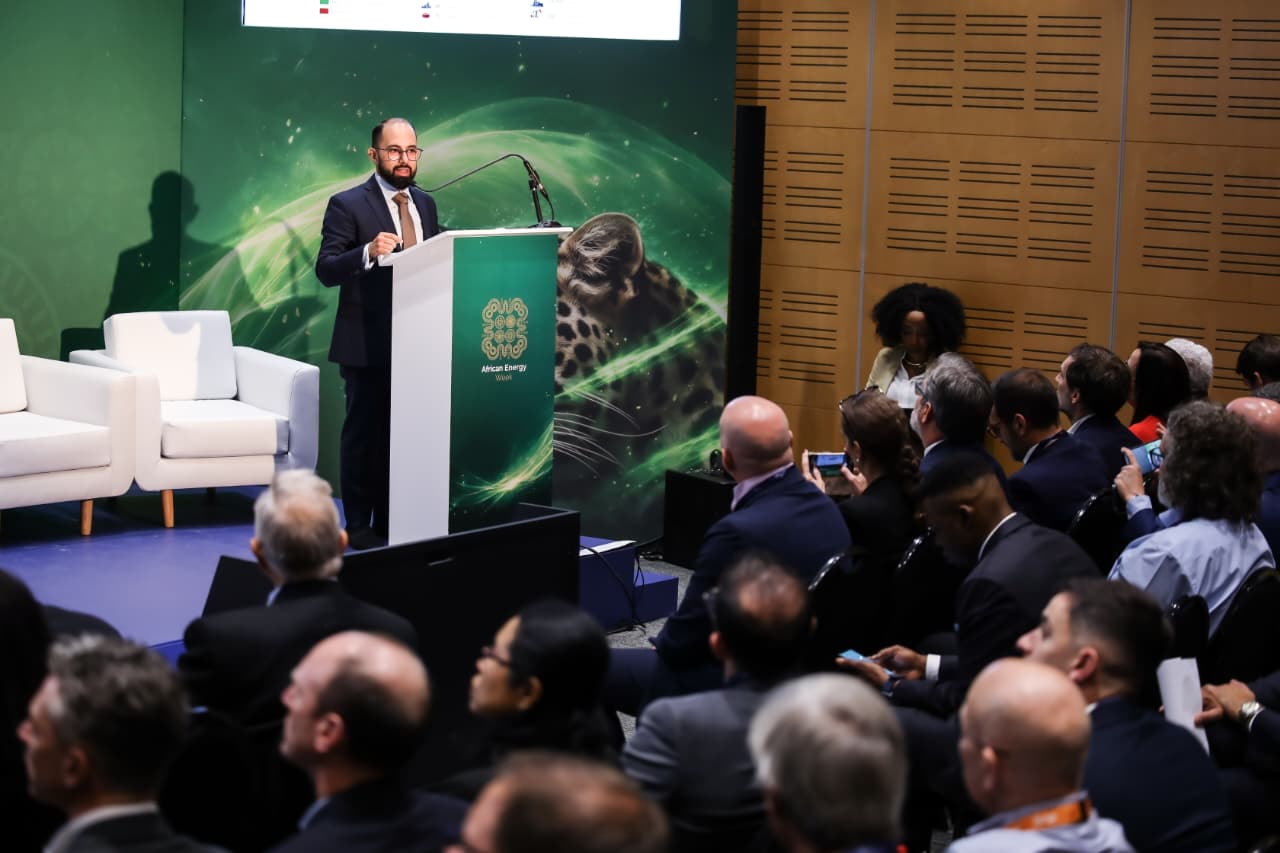
At NIEC 2026, AEC Advisory Board Member Nosizwe Nokwe-Macamo and industry leaders highlighted Namibia’s push to build a competitive energy supply chain, balancing international investment with rising local capacity, regional demand integration and downstream development opportunities

WINDHOEK, Namibia, April 21, 2026/APO Group/ –Major offshore oil discoveries in the Orange Basin, combined with expanding green hydrogen developments, are reshaping how Namibia is structuring its energy supply chain. New local content frameworks, port expansions in Walvis Bay and Lüderitz, and rising investment from global operators and service firms are accelerating domestic participation and capacity.


At the Namibia International Energy Conference (NIEC) in Windhoek, the African Energy Chamber’s (AEC) Advisory Board Member Nosizwe Nokwe-Macamo underscored the urgency of regionalizing demand and strengthening local capacity across southern Africa’s energy value chain. The Chamber’s broader message supports Namibia’s emergence as a supply hub, anchored in offshore oil momentum and long-term opportunities in refining and industrial integration. The question now facing Namibia is how far the country can realistically advance in building an independent, competitive energy supply chain while continuing to rely on international partners to provide capital, technology and operational expertise.

“Namibia is sitting on the cusp of something great,” Nokwe-Macamo said. “We have a huge market here in southern Africa. [Namibia] has been so successful when it comes to offshore projects, and they could become the supply hub for the region. There is a medium- long-term opportunity to have downstream infrastructure here in Namibia that could supply the region with products. With this in mind, regionalizing demand becomes very important.”

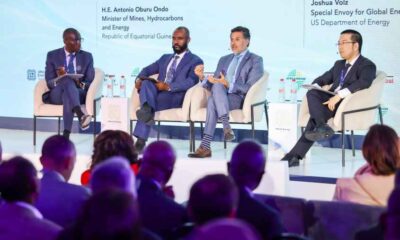
During the NIEC panel discussion – which was moderated by AEC Senior Vice President Verner Ayukegba – legal and business advisory firm CLG echoed these sentiments, highlighting that Namibia’s competitiveness in building a local energy supply chain depends on aligning regulation with market realities. CEO Oneyka Cindy Ojogbo stressed that effective local content policies must reduce import dependence while ensuring affordability for operators, balancing long-term industrial development with regulatory stability to avoid short-term legislation that could undermine investment confidence.

If operators are able to source local goods and services instead of importing it, there’s a more affordable bottom line

“There’s certainly a business case for local content in Namibia’s energy sector,” stated Ojogbo, adding, “If operators are able to source local goods and services instead of importing it, there’s a more affordable bottom line. This provides a clear incentive for operators to support local capacity in operating countries. There’s a tendency for legislation to be opportunistic and focus on short-term issues. The key here is a balance, otherwise the entire structure fails and falls apart.”

Oilfield service provider KAESO Energy Services has emerged as a key technical player in Namibia’s offshore energy build-out, providing downhole tools, asset management and maintenance support across multiple Orange Basin drilling campaigns. With a 28,500m2 operational base in Lüderitz, the company supports major operators including TotalEnergies, Galp and Rhino Resources, while maintaining strong partnerships with international service firms and expanding regional training capacity.

KAESO General Manager Jorge de Morais emphasized the importance of assessing whether Namibian firms can achieve long-term operational independence within the energy supply chain. He noted that while local companies are increasingly active in offshore services, the sector is still heavily reliant on international operators and expertise, showcasing the need to build deeper domestic capability to sustain competitiveness.

From the perspective of a locally owned Namibian logistics and maritime operations company, Zephyr Marine Services is increasingly embedded in the country’s offshore oil and gas value chain, supporting exploration activity in the Orange Basin. The firm provides vessel coordination, asset logistics and operational planning, while deploying digital systems and AI-enabled tools to improve efficiency, compliance and offshore coordination. This growing local capability is central to reducing reliance on imported services and strengthening Namibia’s position in a competitive, integrated energy value chain.

CEO Quintin Simon highlighted during the session that the company is actively building the technical, financial and operational capacity required to compete alongside international operators in Namibia’s offshore sector. He noted that while partnerships remain essential, Zephyr is focused on developing systems and alliances that enable greater competitiveness and long-term integration into the country’s evolving oil and gas supply chain.

Namibia’s supply chain stands to become truly competitive through balanced integration of international operators and rapidly scaling local capability, a perspective consistently championed by the AEC. Regional demand integration, local content enforcement and downstream expansion are critical, but long-term success hinges on building technical independence without undermining investment confidence or operational efficiency.

Distributed by APO Group on behalf of African Energy Chamber.

Business

South Africa’s Orange Basin Gains Momentum as Navitas Takes Block 1 CBK Operatorship

Published

on

African Energy Chamber

The African Energy Chamber backs Navitas and Eco (Atlantic) Oil & Gas’ Block 1 CBK partnership, which stands to strengthen prospects for domestic energy investment

CAPE TOWN, South Africa, September 22, 2026/APO Group/ –Following regulatory approval from the South African government, Navitas Petroleum has assumed operatorship of Block 1 CBK offshore South Africa. This follows Eco Atlantic’s completion of a farm-down of a 37.5% working interest in the license to Navitas.


The deal provides the Atlantic Margins explorer’s partner with one of the Orange Basin’s largest exploration blocks. The frontier region has drawn major industry players including Shell, TotalEnergies, bp, and Galp since play-opening discoveries offshore Namibia started transforming the area’s upstream landscape in 2022.

The African Energy Chamber (AEC) welcomes the completion of Eco (Atlantic) Oil & Gas’ farm-down in Block 1 CBK. As the voice of the African energy sector, the Chamber views the transaction as an important step in advancing exploration and unlocking the country’s significant offshore oil and gas potential.

Completed on September 22 following South African regulatory approvals, the transaction transfers operatorship of the 19,929-km2 block to Navitas. Eco retains a 37.5% interest, while local partner OrangeBasin Energies maintains 25%. Eco received $4 million in cash and will be carried by Navitas for up to $7.5 million of its share of the work program.

South Africa has an opportunity to turn its offshore resource potential into investment, energy security, jobs and economic growth

Block 1 CBK sits within the Orange Basin, one of Africa’s most active frontier exploration areas, directly adjacent to Namibia and close to recent discoveries by Galp Energia, TotalEnergies, Rhino Resources and Shell. Three legacy wells have already confirmed a gas discovery with tested flow rates of 32.4 million standard cubic feet per day.

“South Africa has an opportunity to turn its offshore resource potential into investment, energy security, jobs and economic growth,” says NJ Ayuk, Executive Chairman, AEC. “Partnerships that combine international capital and technical expertise with local participation can help move these resources toward development while creating wider opportunities across the African energy value chain.”

An August 2026 review by Eco and Navitas estimated more than 3.6 billion barrels of unrisked prospective oil resources and approximately 4.5 trillion cubic feet of prospective gas resources on Block 1 CBK. The partners are continuing advanced interpretation and reprocessing of existing seismic data to identify prospects and potential drilling targets, with the farm-down carrying Eco’s share of a work program that includes two planned exploration wells.

The transaction also demonstrates how farm-downs can distribute exploration risk while preserving exposure to high-impact African resources. Navitas assumes operational responsibility and expenditure commitments, while Eco retains substantial upside. If the existing option with OrangeBasin Energies is exercised in full and Navitas acquires half of the additional interest, Eco and Navitas would each hold 47.5% with OrangeBasin Energies retaining 5%.

For South Africa, successful exploration could support domestic oil and gas supply, attract international investment and generate demand for local services, technology and expertise. The project also forms part of a broader Orange Basin exploration story spanning South Africa and Namibia, reinforcing the region’s growing importance within Africa’s upstream landscape.

The AEC supports continued collaboration between government, international operators, African companies and financial and technical partners to advance Block 1 CBK. As Navitas assumes operatorship, the project provides an opportunity to convert substantial geological potential into exploration activity, investment and, ultimately, energy and economic value for South Africa and the continent.

Distributed by APO Group on behalf of African Energy Chamber.


Continue Reading

Energy

Democratic Republic of the Congo (DRC) Brings Oil Development Push to African Energy Week (AEW) 2026 as Hydrocarbons Minister Leads Sector Agenda

Published

on

African Energy Chamber

The Democratic Republic of the Congo is advancing new petroleum data, exploration and infrastructure initiatives as Minister of State for Hydrocarbons Acacia Bandubola Mbongo prepares to address investors and industry leaders at African Energy Week 2026

CAPE TOWN, South Africa, September 23, 2026/APO Group/ –The Democratic Republic of the Congo is stepping up efforts to develop its hydrocarbons industry, with Minister of State for Hydrocarbons Acacia Bandubola Mbongo set to speak at African Energy Week (AEW) 2026 in Cape Town, where she will present the country’s evolving oil and gas agenda to international investors and industry stakeholders.


Her appearance comes as Kinshasa moves to strengthen some of the infrastructure needed to support a more active petroleum sector. In July, the country launched its first national petroleum and gas data bank, inaugurated by Bandubola in Kinshasa. The platform is intended to centralize and improve access to geological and petroleum information, providing a more structured basis for exploration and investment.

Exploration is also moving up the government’s agenda. On September 15, Bandubola chaired discussions on accelerating the development of oil blocks 1 and 2 in the Albertine Graben, an area in eastern DRC where the government has been seeking to advance petroleum activity. The latest discussions underscore Kinshasa’s focus on moving prospective acreage toward development rather than leaving resources at the exploration stage.

The DRC has an enormous opportunity to build a stronger domestic oil and gas industry, but realizing that potential requires more than resources underground

At the same time, the DRC is looking beyond its borders for technical expertise. In May, Bandubola signed an agreement with Algeria’s energy minister covering cooperation in hydrocarbon exploration and production, as well as technical expertise and petroleum data. The partnership reflects Kinshasa’s efforts to draw on experience from established African oil and gas producers as it builds out its own sector capabilities.

The government is also working on the downstream side of the industry. Earlier this year, the hydrocarbons ministry outlined projects aimed at improving fuel supply in three provinces, including additional storage and distribution infrastructure. Such investments form part of a broader effort to strengthen the systems needed to supply a country with significant distances between producing areas, population centers and markets.

Bandubola’s role also has a regional dimension. The DRC is taking on a leadership position within the African Petroleum Producers’ Organization in 2026, giving the Minister an additional platform to engage with other African oil and gas producers on investment, technical cooperation and the development of the continent’s petroleum resources.

For investors, the DRC’s challenge is increasingly about translating prospective resources into a functioning industry – supported by credible data, exploration activity, infrastructure and partnerships. AEW 2026 provides a platform for the government to outline how it intends to do that and where international capital and expertise could fit into the next stage of development.

“The DRC has an enormous opportunity to build a stronger domestic oil and gas industry, but realizing that potential requires more than resources underground. It requires credible data, infrastructure, technical expertise and investment partnerships that can turn geological potential into productive assets and economic opportunity,” said NJ Ayuk, Executive Chairman of the African Energy Chamber. “Acacia Bandubola Mbongo’s participation comes at an important moment as the country works to put those building blocks in place and engage investors on the opportunities emerging across its hydrocarbons sector.”

Distributed by APO Group on behalf of African Energy Chamber.


Continue Reading

Business

Kenya’s Oil Ambitions Meet a New Refining Push at African Energy Week (AEW) 2026

Published

on

African Energy Chamber

Kenya is positioning itself for a larger role in East Africa’s energy market, with Cabinet Secretary for Energy and Petroleum James Opiyo Wandayi set to participate in African Energy Week 2026

CAPE TOWN, South Africa, September 22, 2026/APO Group/ –Kenya’s energy story is no longer confined to developing its nascent oil industry or expanding its already substantial renewable power base. In 2026, the country has emerged as a potential hub for both upstream and downstream investment, while continuing to build out the electricity infrastructure needed to support a growing economy, with Cabinet Secretary for Energy and Petroleum James Opiyo Wandayi set to bring Kenya’s evolving energy agenda to African Energy Week 2026.


At the center of that shift is the proposed 700,000-barrel-per-day refinery in Lamu, which Dangote Industries plans to develop at a cost of around $15-16 billion. The company expects to break ground later this month and complete the project by 2030, with the facility intended to supply refined products to Kenya and neighboring East African markets.

The project would give Kenya a much larger role in regional fuel supply, but it also highlights the infrastructure and supply questions facing the country’s petroleum ambitions. Kenya does not yet have commercial crude production, meaning the proposed refinery will need to secure feedstock from domestic production as it develops or from producers elsewhere in the region and international markets. Reuters has reported that potential sources include South Sudan and Uganda, although infrastructure and geopolitical considerations complicate those options.

That makes Kenya’s upstream progress particularly relevant. In May, Wandayi said the country expected to begin commercial oil production in Turkana by the end of 2026, marking a significant step beyond the small-scale early oil program that has operated in the South Lokichar Basin.

Kenya is entering an important period for its energy sector, with opportunities emerging across the petroleum value chain as well as geothermal, renewables and power infrastructure

The petroleum push is unfolding alongside an ambitious electricity strategy. Kenya recently raised its planned additional generation capacity from 1,500 MW to 5,500 MW, with the revised pipeline incorporating geothermal, hydropower and nuclear generation. The country already produces approximately 93% of its electricity from renewable sources, with geothermal playing a particularly important role.

The challenge now extends beyond adding generation. Kenya is also examining the cost and structure of its electricity market, including power-purchase agreements, transmission and distribution infrastructure. The government has been under pressure to address electricity costs even as it seeks to attract the investment needed for new capacity.

For Wandayi, whose portfolio encompasses both petroleum and the wider energy sector, those developments converge around a common question: how to turn major energy projects into infrastructure, investment and industrial growth.

“Kenya is entering an important period for its energy sector, with opportunities emerging across the petroleum value chain as well as geothermal, renewables and power infrastructure,” said NJ Ayuk, Executive Chairman of the African Energy Chamber. “The proposed Lamu refinery, the development of Kenya’s oil resources and the country’s expanding power ambitions demonstrate the breadth of investment opportunities available. What matters now is creating the conditions for capital and technical expertise to move these projects from ambition into execution.”

Wandayi’s participation at AEW 2026 will put that broader agenda before investors, developers, financiers and energy companies from across Africa and beyond. His portfolio places him at the intersection of Kenya’s efforts to develop domestic petroleum resources, build new downstream infrastructure and expand a power system increasingly dominated by renewable generation.

AEW 2026 takes place in Cape Town from October 12-16, bringing together African governments, energy companies, investors and financiers for discussions spanning oil and gas, power, renewables, infrastructure, critical minerals and energy finance.

Distributed by APO Group on behalf of African Energy Chamber.


Continue Reading

Trending