Connect with us

Energy

The Africa Energy Bank (AEB) Effect: How the Africa Energy Bank is Re-Writing the Frontier Investment Playbook

Published

on

African Energy Chamber

As global upstream capital tightens, the Africa Energy Bank is stepping in to unlock risk capital, crowd in partners and accelerate frontier exploration across Africa’s oil and gas sector

LAGOS, Nigeria, January 30, 2026/APO Group/ –While global exploration and production capital expenditure is set to reach $504 billion in 2026, the upstream market is also entering a period of heightened discipline. International oil companies are prioritizing capital efficiency, investors are narrowing exposure to hydrocarbons and commercial banks are scaling back long-cycle lending. For Africa – home to some of the world’s most prospective yet underexplored basins – this tightening threatens to stall exploration just as geological momentum is accelerating. However, with the rise of the Africa Energy Bank (AEB), the continent has the chance to redefine how frontier projects are financed, reshaping risk allocation and restoring confidence in Africa’s upstream investment case.


Financing Africa at a Moment of Constraint

Spearheaded by the African Petroleum Producers Organization (APPO) and the African Export-Import Bank (Afreximbank), the AEB was established under an overarching goal to address the continent’s energy finance gap – estimated by the African Energy Chamber (AEC) at between $31.5 billion and $45 billion annually. With an initial capitalization of $5 billion, the Bank’s mandate spans upstream, midstream and energy-linked infrastructure, with a core focus on addressing the early-stage financing gap that has historically constrained exploration and appraisal activity. The bank is expected to grow to $120 billion within three to five years, reflecting its potential as a major financing institution in Africa.

Momentum is already building towards the AEB’s operationalization. As of December 2025, Nigeria completed the fully furnished headquarters of the Bank in Abuja. December 2025 also saw Senegal approve its share of payment for the Bank, with the country joining Nigeria, Angola and Ghana fulfilling their requisite capital shares. Other APPO member states including the Republic of Congo, Algeria, Benin, Equatorial Guinea and Ivory Coast have pledged to make their payments, representing a key step towards realizing the potential of this critical institution.

The AEB is about restoring balance, empowering African projects and ensuring the continent controls its own energy destiny

Unlocking New Frontiers

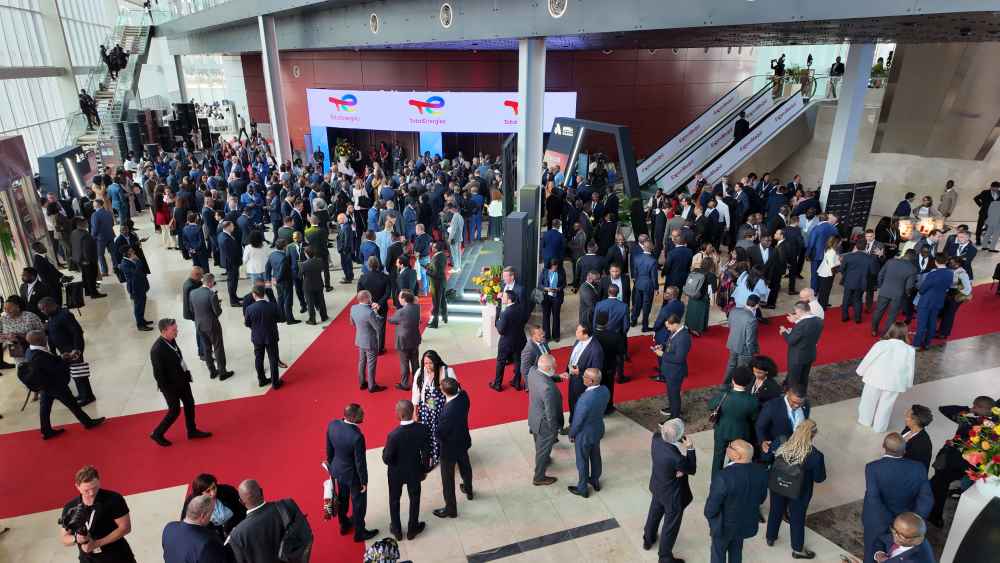
The AEB’s impact is expected to be most visible across Africa’s frontier oil and gas provinces, where exploration interest is strong but financing remains a central challenge. In Namibia, recent deepwater discoveries have transformed geological perceptions, yet advancing appraisal drilling and infrastructure planning requires fresh capital. TotalEnergies hopes to reach a final investment decision for its Venus project in 2026, while Galp is advancing its Mopane discovery toward development. Frontier drilling is currently underway by Shell at PEL 39, Rhino Resources at PEL 85 and Chevron at PEL 82. AEB-backed financing could shorten the timeframe from exploration to development, supporting the creation of a new petroleum province in Africa.

Over the border, South Africa’s offshore basins are similarly attracting renewed interest, but regulatory complexity and long lead times amplify financing risk – precisely where structured, patient capital becomes critical. TotalEnergies, Impact Oil & Gas and Shell are planning multi-well drilling campaigns, while a moratorium lift on shale gas exploration in 2025 is expected to drive onshore exploration in the Karoo. Zimbabwe is also advancing onshore exploration, with Invictus Energy recently reopening its funding search following a failed agreement with Al Mansour Holdings.

Further north, countries across the MSGBC Basin are seeking partners and capital to advance frontier exploration. Hoping to mirror offshore success seen in Senegal (Sangomar) and Mauritania (BirAllah), regional neighbors are engaging operators to invest. Home to Africa’s largest discovery of 2021, Ivory Coast has seen explorers return in force in recent years, with companies such as Murphy Oil Corporation set to drill in the coming months. As frontier exploration advances, the AEB not only strengthens balance sheets, but also de-risks early-stage projects and accelerates the path from geological promise to commercial development.

The AEB on a Global Stage at AEW 2026

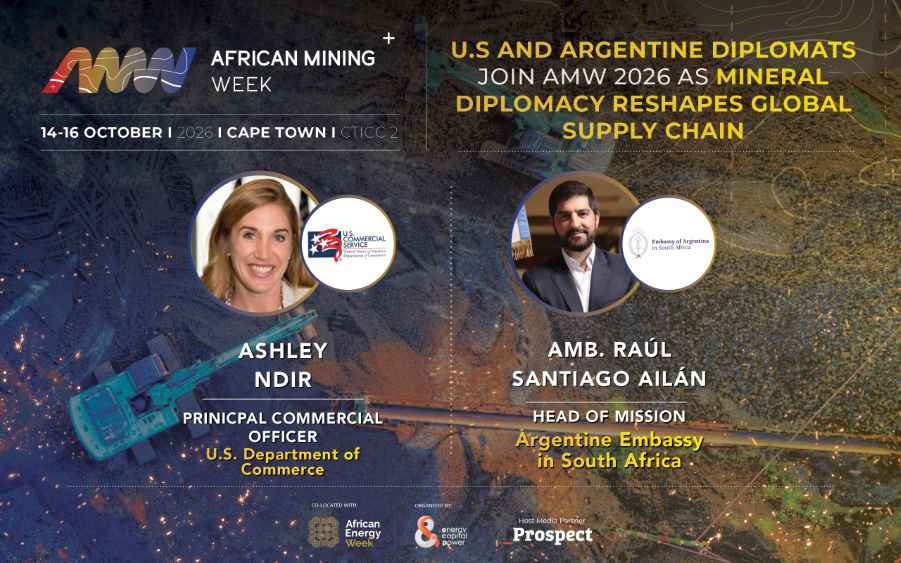
The AEB is expected to take center stage at this year’s African Energy Week conference – taking place October 12-16 in Cape Town. As the continent’s leading energy investment platform, the event will convene policymakers, financiers and operators to examine how institutions like the AEB are reshaping capital flows into frontier markets. At a time of tightening global capital and rising African ambition, the AEB effect is clear: frontier exploration is no longer a leap of faith – it is becoming a structured, financeable pathway to Africa’s energy future.

“Africa does not lack resources or opportunity – it lacks access to capital that understands its realities. The AEB is about restoring balance, empowering African projects and ensuring the continent controls its own energy destiny,” stated NJ Ayuk, Executive Chairman, African Energy Chamber.

Distributed by APO Group on behalf of African Energy Chamber.

Business

Angola Strengthens Global Investment Drive Across Oil, Gas and Mineral Resources

Published

on

With sweeping reforms across the extractive sector, Angola is entering a new phase defined by transparency, regulatory modernisation, value addition, and international partnership

LONDON, United Kingdom, May 8, 2026/APO Group/ –At a defining moment in Angola’s economic transformation, the Critical Minerals Africa Group (CMAG) (https://CMAGAfrica.com), together with the Government of Angola and the Ministry of Mineral Resources, Petroleum and Gas of the Republic of Angola (MIREMPET), will convene global investors, policymakers, and industry leaders in London for the Angola Oil, Gas & Mining Investment Conference on 14 May 2026.


More than a conference, this gathering represents a strategic international engagement at a time when Angola is actively reshaping its economic future and positioning itself as one of Africa’s most compelling destinations for long-term investment in natural resources, infrastructure, and industrial development.

With sweeping reforms across the extractive sector, Angola is entering a new phase defined by transparency, regulatory modernisation, value addition, and international partnership. The country’s leadership is sending a clear message to global markets: Angola is open for investment and ready to build transformational partnerships that support sustainable growth and economic diversification.

This is not simply about resource development, it is about building long-term industrial growth, strengthening energy and mineral supply chains, and shaping Angola’s future

The event will be headlined by H.E. Diamantino Azevedo, Minister for Mineral Resources, Oil and Gas of Angola, whose leadership since 2017 has been central to advancing Angola’s mineral and hydrocarbons agenda. Under his stewardship, Angola has accelerated institutional reform, strengthened governance frameworks, promoted private sector participation, and prioritised sustainable resource development.

As global demand intensifies for critical minerals, energy security, and resilient supply chains, Angola is uniquely positioned to become a strategic partner to international investors and industrial economies. The country’s vast untapped mineral wealth, significant oil and gas reserves, expanding infrastructure ambitions, and commitment to economic diversification present a rare investment window for global stakeholders.

Speaking ahead of the event, Veronica Bolton Smith, CEO of the Critical Minerals Africa Group said:

“Angola stands at a pivotal point in its national development. The reforms taking place across the country’s extractive sectors are creating unprecedented opportunities for responsible international investment and strategic partnership. This is not simply about resource development, it is about building long-term industrial growth, strengthening energy and mineral supply chains, and shaping Angola’s future as a globally competitive investment destination. We believe this moment represents one of the most important opportunities for international partners to engage with Angola’s leadership and participate in the country’s next chapter of economic transformation.”

The event is expected to attract a distinguished international audience, including sovereign representatives, institutional investors, mining and energy executives, infrastructure developers, development finance institutions, and strategic partners seeking direct engagement with Angola’s leadership.

Distributed by APO Group on behalf of Critical Minerals Africa Group (CMAG).


Continue Reading

Business

African Union (AU) Commissioner Mataboge Joins African Energy Week (AEW) 2026 as Continent Scales Interconnected Energy Infrastructure

Published

on

Lerato Mataboge’s participation reflects the African Union’s commitment to transforming African energy systems, prioritizing African-led innovation and priorities

CAPE TOWN, South Africa, May 7, 2026/APO Group/ –Lerato D. Mataboge, Commissioner for Infrastructure and Energy at the African Union (AU), has joined the upcoming African Energy Week (AEW) Conference and Exhibition – taking place October 12-16 in Cape Town – as a speaker. Her participation puts the AU’s institutional voice at the center of the event at a moment when the continental body is moving from policy architecture to execution, and growing increasingly vocal about the conditions it will and will not accept from international partners.


Mataboge has been among the clearest African voices pushing back on the terms of the global energy transition debate. At the World Economic Forum in Davos in January 2026, she challenged the prevailing narrative, arguing that baseload power is a non-negotiable prerequisite for African industrialization and that the continent cannot be assessed by the same benchmarks applied to economies that already have reliable electricity. Africa holds around 20% of the world’s identified uranium resources yet accounts for less than 1% of global nuclear electricity consumption, a disparity she has cited as emblematic of a broader pattern of resource wealth that has yet to translate into energy sovereignty.

Commissioner Mataboge is the institutional link between Africa’s continental energy ambitions and the investors and developers who can make them real

Speaking in Cape Town in March, Mataboge noted that Africa has approximately 245 GW of installed generation capacity, while electricity consumption averages around 600 kWh per person per year, roughly five times below the global average. Closing the gap means connecting between 90 and 100 million additional people to electricity annually, requiring roughly $200 billion in annual investment by 2030 against a current annual investment level of approximately $45 billion.

Mataboge’s mandate at the AU is to build the institutional architecture that can begin to mobilize that capital at scale. She is overseeing the operationalization of the African Single Electricity Market (AfSEM), which aims to integrate the continent’s fragmented regional power pools into a unified electricity market, alongside the Continental Power Systems Masterplan and the Ten-Year Infrastructure Investment Plan for Cross-Border Connectivity, the AU’s master pipeline for transmission and generation projects. These frameworks have been in development for years, but the challenge has been turning them into bankable propositions that attract private capital. At AEW 2026, that case will be made to the investors and developers who can act on it.

“Commissioner Mataboge is the institutional link between Africa’s continental energy ambitions and the investors and developers who can make them real,” said NJ Ayuk, Executive Chairman of the African Energy Chamber. “Her message is clear – that Africa will not subordinate its development needs to external financing conditions that were never designed with this continent in mind. AEW is the right room to have that conversation, and the right moment.”

AEW 2026 – Africa’s premier energy event – convenes Africa’s foremost policymakers, financiers, developers and operators to advance the continent’s energy agenda. Commissioner Mataboge’s address will place the AU’s institutional framework, and the financing gap it is working to close, at center stage.

Distributed by APO Group on behalf of African Energy Chamber.

Continue Reading

Energy

InterOil’s Angola Oil & Gas (AOG) 2026 Silver Sponsorship Reflects Drive to Scale Logistics, Local Content

Published

on

Integrated logistics, local workforce development and offshore execution converge as Angola’s project pipeline expands

LUANDA, Angola, May 7, 2026/APO Group/ –Angolan oilfield services provider InterOil has joined the upcoming Angola Oil & Gas (AOG) Conference and Exhibition as a Silver Sponsor, taking place September 9-10 with a pre-conference on September 8. For over 21 years, InterOil has worked alongside international operators, playing a strategic role in maintaining stable and reliable offshore activities. It’s AOG sponsorship not only demonstrates a commitment to the growth of the industry, but positions the logistics and offshore support provider at the center of Angola’s next wave of deepwater and infrastructure-led projects.

InterOil’s sponsorship reflects a core reality in Angola’s hydrocarbon market: as projects become more complex and move into deeper waters, the ability to sustain operations through integrated logistics solutions is emerging as a defining constraint. The company’s model – combining onshore coordination with offshore execution – addresses this directly, ensuring continuity across high-intensity operations where downtime carries significant financial and technical risk.

Operating in a complex offshore environment, InterOil has built its track record around reliability and operational discipline. A key reference point is the Kaombo development in Block 32, operated by TotalEnergies. Since 2014, the company has supported the project through integrated onshore and offshore logistics, sustaining operations for both the FPSO Kaombo North and FPSO Kaombo South. The development remains one of Angola’s most technically complex offshore assets, and InterOil’s role in maintaining operational continuity underscores the importance of logistics providers in stabilizing production and ensuring efficiency at scale.

This operational focus is complemented by a long-term commitment to local content development. InterOil has prioritized the recruitment, training and advancement of Angolan professionals, embedding structured capacity-building and knowledge transfer into its operating model. In a market where local participation is both a regulatory requirement and a strategic imperative, this approach supports workforce development while reinforcing operational resilience.

As Angola seeks to sustain production above one million barrels per day by expanding infrastructure, accelerating offshore projects and deepening local participation across the value chain, the role of logistics providers is becoming more strategic. AOG 2026 provides a platform where these capabilities are integrated into broader project discussions, connecting operators, service providers and investors around execution as a core pillar of project success. InterOil’s participation underscores a broader industry shift: in Angola’s next phase of growth, operational delivery will carry as much weight as resource potential.

Distributed by APO Group on behalf of Energy Capital & Power.

Continue Reading

Trending

Exit mobile version