Connect with us
Anglostratits

Business

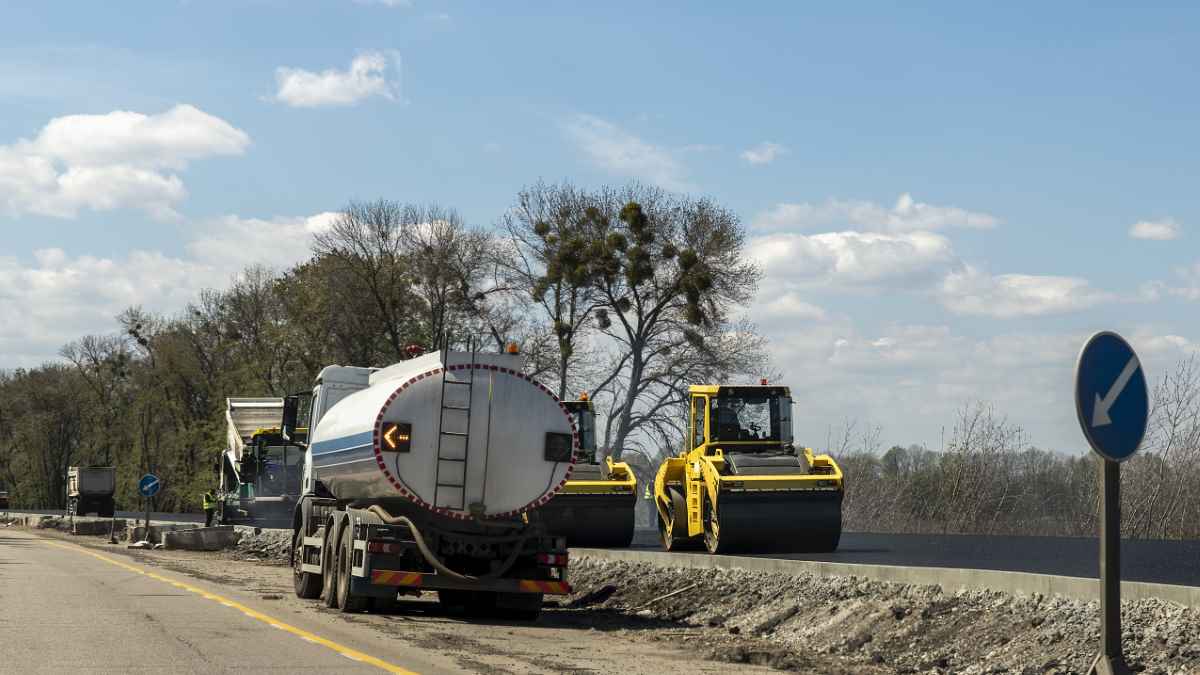
Six Connectivity Projects to Watch in Senegal

Published

on

Connectivity Projects

Senegal is investing heavily in infrastructure to promote transportation and economic growth and the MSGBC Oil, Gas & Power 2023 conference – which is organized by Energy Capital & Power – will highlight investment and partnership opportunities within the west African country’s infrastructure segment

LUANDA, Angola, July 11, 2023/APO Group/ — 

The Emerging Senegal Plan – a framework for the country’s economic and social policy – prioritizes infrastructure development and aims to drive long-term growth on the back of private investment. The strategy is divided into two phases, with the first relying on public investment-led growth and the second prioritizing private investment.

To support this, the government established a new public-private partnership statute in 2021 to boost private sector involvement and reduce the government’s financial burden, leading to the launch of several large-scale infrastructure projects.

Dakar Bus Rapid Transit Project

The Dakar Bus Rapid Transit (BRT) project is a comprehensive metropolitan program that aims to provide high-quality transportation. It entails a mass transportation system comprised of large-capacity electric buses that operate solely in dedicated lanes. The BRT project, which is set to begin in the fourth quarter of 2023, will cover a route of 18.3 km, traveling through 14 communes and serving around 300,000 people daily. The BRT, which is being funded by both the World Bank and the European Investment Bank (https://apo-opa.info/3PRDR7z), will cut travel time from an average of 95 minutes to 45 minutes, enabling increased urban mobility and access to employment and markets.

Phase II of the Regional Express Train

The 19-km connection between Diamniadio and Blaise-Diagne International Airport is expected to be finished by the end of 2023, with the addition of seven more trains. When the line is finished, the journey from Dakar to the airport (55 km) will take 50 minutes at a peak speed of 160 km/h. Firms Equans and Thales are in charge of signaling and electrification, while firms Eiffage, ENGIE Ineo and Alstom are in charge of construction. In an interview with Energy Capital & Power, Malick Guaye, First Deputy at the Municipality of Sandiara, indicated that the train should eventually reach the city’s special economic zone.

The government established a new public-private partnership statute in 2021 to boost private sector involvement and reduce the government’s financial burden

Port of Ndayane

Construction on the planned port of Ndayane began in April 2023 and is projected to be completed in 2026, making it one of the major ports in West Africa. The project, which spans over 1,500 hectares, is funded by the Senegalese government with a 40% stake and Dubai Port World with the remaining 60%, as well as help from foreign banks. The port’s goal is to accommodate larger vessels and manage more cargo, increasing the transportation sector and cementing Senegal’s status as a key economic hub in West Africa. The first phase of development will feature a 5-km marine waterway and a container terminal of 840 meters. A 300-hectare special economic zone will be linked to the port.

Dakar-Thiès-Tivaouane-Saint-Louis Highway

Senegal has started the construction of a 200-km roadway connecting Dakar to Tivaouane and Saint-Louis. The project’s goal is to increase connectivity in the country’s northern areas and make it easier to harness the region’s mineral and agricultural resources. The government, the World Bank, the Saudi Fund, and the Société Générale banking group are all contributing to the construction. The highway will be critical in trans-African roadways connecting Tanger to Nouakchott, Dakar to Lagos and Alger, and Nouakchott to Dakar.

Renovation of Regional Airports

Following the reopening of the Saint-Louis airport, which now has the infrastructure to receive flights from Europe, the airports of Cap-Skirring, Kolda, Sédhiou, Simenti, Kaolack, Podor, Bakel and Linguère will be upgraded to meet regional development standards and to capitalize on their economic and touristic potential. The makeover will serve to enhance tourism in the country.

The upcoming MSGBC Oil, Gas & Power conference and exhibition – which is organized by Energy Capital & Power and taking place from November 21-22 this year – will further unpack developments underway across Senegal’s infrastructure sector. During the conference, high-level speakers from Senegal including the Minister of Petroleum and Energies Sophie Gladima will provide updates on some of the country’s largest infrastructure and connectivity projects while showcasing future investment opportunities. For more information, visit https://MSGBCOilGasandPower.com/

Distributed by APO Group on behalf of Energy Capital & Power.

Business

How the Product Leadership Accelerator (PLA) is Re-Engineering African Enterprises for a Digital-First Economy

Published

on

Leadership

As Africa looks to technology for the next wave of economic evolution, the PLA stands at the center of that journey, turning the SVPG Product Operating Model into a reality for the continent’s most innovative and ambitious enterprises

LAGOS, Nigeria, May 20, 2026/APO Group/ –As the global community celebrates World Product Day, a profound shift is taking place across Africa’s enterprise landscape. The Product Leadership Accelerator (PLA), www.AfricaPLA.com, an initiative of the Innovate Africa Foundation, is officially setting a new gold standard for how value is created and scaled, in Africa, by transforming African enterprises from traditional service providers into high-velocity, “product-led” engines of growth.


The PLA is bridging the gap between legacy business models and the modern Product Operating Model. This methodology, practiced by global companies like Apple, Netflix and Amazon, is now being localized, through the PLA, to ensure African enterprises and startups alike solve the continent’s toughest challenges through relentless innovation and de-risked execution.

Building a Pan-African Product Management Talent Pipeline

The PLA is currently powering its 2026 Accelerator Program, a rigorous 12-week program featuring 48 product managers from 13 African countries, including Nigeria, Egypt, Ghana, South Africa, and Kenya. In a significant move for gender equity in tech, the cohort maintains a female representation of about 54%, ensuring the future of African product leadership is as diverse as the markets it serves.

As the fellows tackle real-world problem statements across diverse industries during the 12 week accelerator program, they are mentored by an elite roster of practitioners who have built products at enterprises such as Interswitch, Netflix, Amazon, Microsoft, Paystack, and mPesa. They also receive strategic, high-level guidance from global product legends Marty Cagan and SVPG Partner Christian Idiodi.

“Building in Africa requires a distinct level of empathy, adaptability, and mastery of the product operating model,” explains Nkem Nweke, Lead at the PLA. “We empower leaders and enterprises to harness tools like AI while offering them strategic product management advisory. Our goal is to support companies in adopting a product-led culture which drives sustainable economic growth. By mitigating risks before investing significant capital or public resources, we help both enterprises and startups create solutions that truly meet market and consumer needs.”

Enterprise Transformation and Proven Outcomes

Our goal is to raise product leaders who are deeply versed in the mechanics of discovery and delivery

The impact of the PLA extends deep into the corporate sector through its specialized Product Management Advisory. Organizations reliant on technology spanning telecoms, FMCG, commerce, retail, finance, and government, are increasingly seeking to leverage the PLA’s expertise to shift their product teams from traditional project-based approaches to outcome-driven product cultures that drive growth.

The effectiveness of the PLA’s approach is best seen through its corporate partnerships. Afrinvest, a leading financial institution, serves as a primary example of how the PLA’s advisory services drive immediate corporate value.

“The PLA didn’t just upskill one individual; it has been a game-changer for our internal innovation culture, sparking a ripple effect of outcome-driven progress throughout our entire product department. “says Victor Ndukauba, Deputy MD, West Africa Afrinvest. “Seeing the speed at which our team can now identify and solve real consumer problems is why we’ve increased our participation this year.”

This sentiment is echoed by partners like Insight7, One Cluster and Agile Product Management, who view the PLA as the engine room for the continent’s digital maturity.

Central to this transformation is integrating tools like Artificial Intelligence (AI), enabling product managers to achieve world-class standards, driving efficiency, and ensuring African businesses set the pace for global innovation.

De-Risking African-Built Solutions

For founders, the stakes have never been higher. “Our goal is to raise product leaders who are deeply versed in the mechanics of discovery and delivery, ” notes Osa Awani, Head of Program at the PLA. “We see the shift happening in real-time as our fellows move from theoretical knowledge to building solutions that address market friction with surgical precision.” When founders and Product Managers master the product operating model, they stop guessing; and with a commitment to solving real problems, African product leaders will not only compete globally they will lead.”

Impact by the Numbers

  • 13 Countries: Active representation in the 2026 cohort, including Nigeria, South Africa, Ghana, Egypt, Kenya, Rwanda, Zimbabwe, Cameroun, Egypt and more.
  • 54%+ Female Representation: Leading the charge in inclusive tech leadership.
  • Scores of Scholarships: The Innovate Africa Foundation has provided scholarships to dozens of African product managers to attend prestigious SVPG Masterclasses, resulting in career promotions, career pivots to executive leadership, and the launch of new tech ventures.
  • 3-City Product Tour: Recently concluded engagements with product leaders across Lagos, Nairobi, and Cape Town.

A Future Defined by Innovation

Founded by Christian Idiodi, (partner at the globally renowned Silicon Valley Product Group),  the PLA is rooted in the belief that the intersection of world-class tools such as Artificial Intelligence (AI) and strategic product management is essential to mastering the craft of creating exceptional products for Africa; thereby unlocking Africa’s economic potential. By offering cutting-edge tools, a robust network, and the innovative mindset of the world’s most successful organizations, the PLA ensures Africa’s challenges are addressed with future-ready, world-class solutions.

Distributed by APO Group on behalf of Product Leadership Accelerator (PLA).


Continue Reading

Business

Congo’s Minister Onanga to Fast-Track Deals, Drive Local Content and Expand Floating Liquefied Natural Gas (FLNG) in New Investment Push

Published

on

Congo

High-level talks between the Republic of Congo’s Minister of Hydrocarbons Stev Simplice Onanga and the African Energy Chamber focused on accelerating deal flow, strengthening local content and SNPC, and advancing FLNG expansion to position the country as a regional gas hub

BRAZZAVILLE, Republic of the Congo, May 20, 2026/APO Group/ –The African Energy Chamber (AEC) (www.AfricanEnergyChamber.org) has reinforced its strategic partnership with the Republic of Congo following a high-level meeting between Executive Chairman NJ Ayuk and newly appointed Minister of Hydrocarbons Stev Simplice Onanga in Brazzaville this week, setting the stage for a renewed push to accelerate investment, strengthen local capacity and expand the country’s LNG footprint.


Held shortly after Minister Onanga’s appointment, the meeting underscored a shared commitment to faster, more efficient deal-making across Congo’s oil and gas sector. Both sides emphasized that reducing delays in project approvals and execution will be critical to maintaining Congo’s competitiveness and attracting new capital into upstream and gas development.


A key focus of discussions was the development of a stronger local industry. Minister Onanga outlined a clear ambition to see Congolese companies grow beyond traditional service roles to become operators, license holders and regional players capable of competing across African markets. This includes building companies that not only support domestic projects, but can also export expertise and services beyond Congo.


The AEC welcomed this vision, committing to work closely with the Ministry to help develop a new generation of competitive Congolese firms. This effort will focus on strengthening technical capacity, expanding access to opportunities in field development and drilling, and ensuring local companies are positioned to participate more meaningfully across the value chain.


In parallel, Minister Onanga called for enhanced collaboration to strengthen Société Nationale des Pétroles du Congo (SNPC), with the goal of transforming it into one of Africa’s leading national oil companies. The vision is for SNPC to evolve beyond its current partnership model with international oil companies to take on a more operational role – managing assets, leading projects and driving exploration and production both domestically and, over time, internationally.


“Congo is focused on building a stronger national energy ecosystem from the ground up,” said Ayuk. “We agreed with the Minister on the need to develop Congolese companies into competitive players that can scale beyond borders. Strengthening SNPC is central to this, so it becomes a more active operator, managing and developing assets. This is about building long-term capacity in-country and positioning Congo as a leading force in African energy.”

With Minister Onanga, we’re seeing a real commitment to getting things done – moving deals faster, empowering Congolese companies and scaling LNG


Beyond local industry development, the meeting reinforced Congo’s broader ambition to strengthen its position within Africa’s energy landscape. Minister Onanga highlighted his intention to align national strategy with continental priorities, drawing on his experience as former Chair of the African Petroleum Producers’ Organization (APPO) Board of Governors. Continued engagement with institutions such as APPO and OPEC will remain central to this approach.


Gas development – particularly floating LNG (FLNG) – emerged as another key pillar of the discussion. Congo has already made significant progress through projects such as Eni’s Congo LNG development, where the 0.6 mtpa Tango FLNG and the upcoming Nguya FLNG facility are expected to increase the country’s LNG export capacity to around 3 mtpa.


Building on this momentum, discussions pointed to the potential for additional FLNG developments. With ongoing conversations around new projects and favorable conditions aligning, a future FLNG expansion could further scale production and reshape Congo’s role in the regional gas market. Expanding capacity would not only strengthen export revenues, but also support domestic gas utilization and industrial growth.


“With Minister Onanga, we’re seeing a real commitment to getting things done – moving deals faster, empowering Congolese companies and scaling LNG,” added Ayuk. “The stars are aligning for Congo to lead the continent in floating LNG. If this momentum continues, there’s no doubt the country can position itself as one of Africa’s leading gas hubs.”


With a renewed focus on fast-tracked investment, local industry development and LNG expansion, the AEC’s engagement with Congo signals a more execution-driven phase for the country’s energy sector – one aimed at building in-country value, strengthening regional influence and delivering long-term growth.


Distributed by APO Group on behalf of African Energy Chamber.

Continue Reading

Business

PayPal Brings PayPal USD to Users Across 70 Markets Worldwide and Expands Access in Africa

Published

on

PayPal

Now accessible to millions of PayPal consumers and merchants, PayPal USD helps provide stable purchasing power and enable lower-cost global commerce

SAN JOSÉ, United States of America, May 20, 2026/APO Group/ –PayPal (www.PayPal.com) today announced it is making PayPal USD (PYUSD) available in 70 markets worldwide in the PayPal account. This dollar-backed stablecoin enables users to send funds globally, with faster settlement and lower cost than traditional payment methods.

As global commerce becomes increasingly digital, individuals and businesses are looking for faster and more seamless ways to transact across borders. Stablecoins like PYUSD help power an inclusive, fast, lower-cost, global commerce system.

“Consumers and businesses around the world are looking for faster, more seamless ways to transact globally and the current system still charges too much, takes too long, and settles on timelines that were designed for a different era,” said May Zabaneh, Senior Vice President and General Manager of Crypto, PayPal. “We are working to change that. Enabling PYUSD in users’ accounts across 70 markets gives people faster access to their funds, lower-cost ways to send money across borders, and a more direct path to participating in the global economy, and that is what drives commerce forward for everyone.”

“Bringing PYUSD to Africa is about delivering tangible value to the people and businesses driving growth in these dynamic markets,” said Otto Williams, Senior Vice President and General Manager of the Middle East and Africa, PayPal. “Consumers gain a flexible, stable way to move funds faster, while businesses can streamline cross-border payments, improve settlement times, and unlock new opportunities for growth. By increasing access to a regulated, USD-backed digital currency, we’re breaking down barriers and helping reduce friction in global commerce across the region.”

Users in newly supported markets can buy, hold, send, and receive PYUSD directly from their PayPal account.¹ Additionally, eligible users can earn rewards on their PYUSD holdings,² can i transfer funds to friends and family, whether on PayPal or to third-party digital wallets, and convert PYUSD to local currency when withdrawing funds³ for everyday spending.

Businesses that accept PYUSD can use proceeds in minutes rather than days or weeks, improving liquidity and reducing reliance on traditional settlement cycles. Faster access to funds can help businesses manage working capital, support cross-border operations, and participate in global commerce.

Bringing PYUSD to Africa is about delivering tangible value to the people and businesses driving growth in these dynamic markets

Following the launch of PYUSD in the United States in 2023, this expansion is another critical step in creating the liquidity, utility, and ubiquity of PYUSD necessary to create a more inclusive, global commerce ecosystem. By making it available in more places through PayPal, PYUSD helps consumers send funds internationally at a lower cost, while enabling businesses to settle faster, reduce foreign payment fees, and access proceeds more quickly.

PYUSD is now broadly available across multiple global regions, including Africa, Asia-Pacific, Europe, Latin America, The Middle East, and North America.

For more information about PYUSD, please visit https://apo-opa.co/49g0TOy


1. User experience may vary based on local regulations and PayPal experience.

2. Rewards are not available to Singapore or United Kingdom-based users. Rewards rate will be determined at all times in PayPal’s sole discretion, is not guaranteed, and is subject to change. Terms Apply (https://apo-opa.co/3RctVZh).

3. Terms and conditions apply (https://apo-opa.co/3RctVZh)


Distributed by APO Group on behalf of PayPal USD (PYUSD).

Continue Reading

Trending