4G Capital is dedicated to bridging the finance gap to advance MSMEs and help informal traders transition to the formal economy on fair and equitable terms
NAIROBI, Kenya, November 18, 2022/APO Group/ —
Micro, small and medium-sized enterprises (MSMEs) are considered critical for driving economic development that will reduce unemployment and poverty across Africa.
These enterprises, of which there are around 40 million in the region, account for 60 per cent of Africa’s workforce and form an enormous part of many nations’ economies, generating over 50% of all wealth. However, these businesses, vital to uplifting living standards, are severely underfinanced. In Africa, the financing gap is thought to be around $330 billion annually. The key to bridging this is the microfinance sector, providing financial services to those who do not have access to traditional banking and credit services.
4G Capital offers a way to move faster and go deeper
In Kenya and Uganda, 4G Capital is dedicated to bridging the finance gap to advance MSMEs and help informal traders transition to the formal economy on fair and equitable terms.
The company, operating since 2013, provides unsecured working capital microloans alongside critical enterprise and financial literacy training via digital channels and in person through nationwide branches.
4G Capital, rather than blind-lending digitally, lends to individuals after a due diligence and onboarding process that identifies their needs and focuses on training them to sustainably and profitably grow their businesses. This ultimately means they can repay their loans and dramatically increases the chance of building viable businesses that can truly make a wider socioeconomic difference. Research shows 4G Capital’s customers grow their revenues by an average of 82% annually.
So far, 4G Capital has issued more than 2.27 million loans to over 307,000 clients, 53% of which are rural MSMEs and almost three-quarters run by women.
In-house technology and data science have been critical to this end. Credit reference bureaus (CRBs) across Africa face difficulty in including the informal sector, not least because they struggle to obtain complete financial profiles of individuals and their businesses.
4G Capital does not rely upon CRBs to assess whether a client can be served, with all risk assessment and due diligence activities being taken in-house. Similarly, 4G Capital does not report defaulters to the CRB, instead working with them to return to financial health.
The company addresses a problem that is bigger than you might think. Figures from 2018 show that just 11% of Africa’s population had their credit information recorded by private credit bureaus, a worryingly low figure when compared to comparable regions such as emerging Asia (17%) and Latin America (79%). And it is worrying because traditional banks rely on these consumer credit models to evaluate risk, meaning large cohorts of the African population are excluded from the world of credit.
4G Capital bypasses this outdated model. And where others attempt due diligence by mining information from phone bills and mobile money records, 4G Capital, by contrast, physically visits and interviews each customer and processes findings through its “EVA” (evaluation algorithm) AI platform. Customers are then given in-person and online financial literacy training alongside their loans.
In a global economic crisis, we need to energise small business earning power
Rewarding client loyalty
Given the small size of capital injections offered, clients typically take out several micro-loans consecutively as they seek to mature their businesses.
4G Capital has launched a loyalty programme to support their growth ambitions, whereby clients gain more favourable borrowing rates as they repay subsequent loans.
This, the company says, is in response to several factors. Not only does it demonstrate 4G Capital’s leadership in challenging market conditions, where clients tackle extreme increases in cost-of-living and cost-of-operating, but it also forms a vital part of its mission to use and protect client data responsibly.
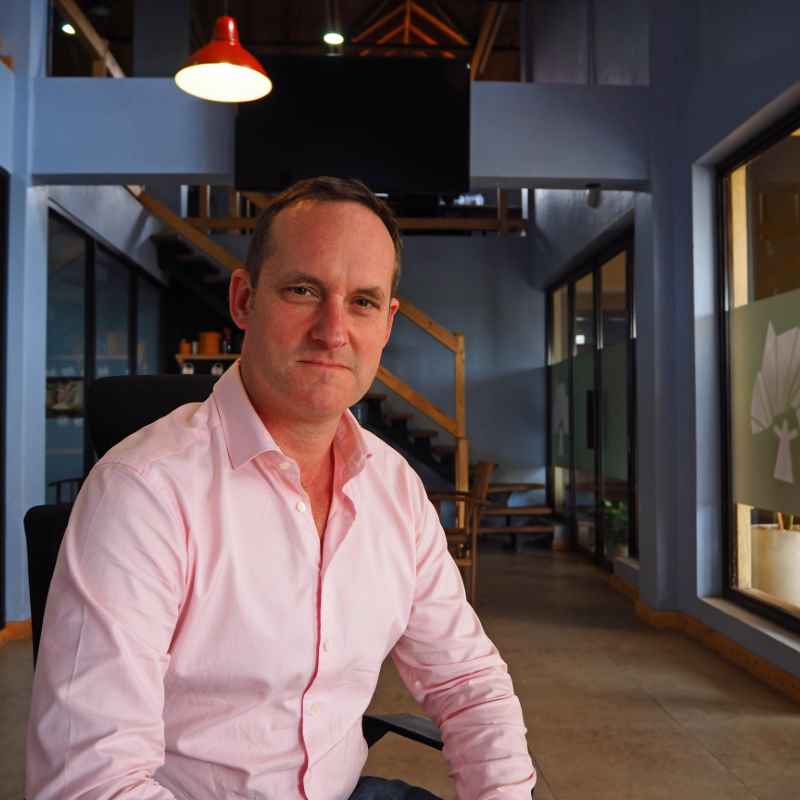
“In a global economic crisis, we need to energise small business earning power,” affirmed 4G Capital CEO Wayne Hennessy-Barrett.
“By dropping our prices, we stand with mwananchi to help small traders grow their credit score and access discounting while retaining our award-winning blend of enterprise training and working capital loans. Digital financial service providers have a vital role in helping the informal economy transition to an integrated part of a modern nation”.
The move to reward loyalty and discount its “Upia” direct lending product is enshrined in 4G Capitals #HeroesoftheHustle campaign, which aims to recognise the growth and resilience of the grassroots economy in Kenya and Uganda.
All 4G Capital’s 300,000-plus clients will benefit from the scheme. There are four loyalty categories; Bronze, Silver, Gold and Diamond, with interest rates ranging from 0.9% to 0.75%, respectively.
Typically, 4G Capital sees its clients grow their revenues by an average of 82% yearly.
Jane Oyolo, for instance, runs a budding second-hand clothes business. She travels to Nairobi weekly in her Probox to purchase bales of clothes which she resells in Nyanza Province. When she was first introduced to 4G Capital, she received a loan of around $160. Since then, Jane has made her repayments within the minimum loan repayment period and has taken on numerous repeat loans.
“4G Capital has been of immense help,” she told us. “Through my business profits, I have bought a plot of land and have even built a foundation for a house.”
Indeed, as businesses such as Jane’s increase their earning power and creditworthiness, they can engage more traditional financial services and command larger working capital debt, propelling them into the formal economy and on to the next level of development and maturity. This will be critical to driving socio-economic development across the continent, the objective of 4G Capital’s mission ‘to grow business with capital and knowledge’.
Aurionpro’s upgraded iCashpro platform for DTB delivers a unified digital experience across payments, trade, virtual accounts, and real-time reporting, enhancing straight-through processing, visibility, and control for both the bank and its corporate customers
MUMBAI, India, April 30, 2026/APO Group/ –Aurionpro Solutions Limited (www.AurionPro.com) (BSE: 532668 | NSE: AURIONPRO), a global leader in banking technology, announced the expansion and upgrade of its transaction banking engagement with Diamond Trust Bank (DTB), to modernize and enhance the bank’s corporate transaction banking capabilities across multiple countries.
This multi-country transaction banking upgrade covering Kenya, Uganda, and Tanzania aligns with DTB’s intent to enhance customer experience, streamline operations, and support growing transaction volumes as it expands its regional corporate banking footprint. DTB continues to focus on building a more agile, ‘digital-first’ banking experience, particularly around payments for its corporate customers across Africa, and is now well positioned to scale these capabilities. As part of its broader transformation agenda, the bank has been steadily investing in platforms that enhance scale, reliability, and service consistency across markets.
Through this partnership, we are proud to lead the next era of transformation in transaction banking, helping DTB enhance operational agility
Aurionpro’s upgraded iCashpro platform for DTB delivers a unified digital experience across payments, trade, virtual accounts, and real-time reporting, enhancing straight-through processing, visibility, and control for both the bank and its corporate customers. By enabling DTB to standardize and scale its transaction banking operations across countries, the platform ensures consistent service levels, stronger control, and improved efficiency. It also supports enhanced user experience, advanced security, and the flexibility to introduce new features as DTB expands its regional transaction banking footprint.
Murali Natarajan (https://apo-opa.co/48trPdk), Managing Director & CEO, DTB Kenya commented: “We are delighted to strengthen and broaden our partnership with Aurionpro Solutions as part of DTB’s ongoing digital transformation journey across multiple markets. Our focus on innovation, operational excellence, and customer-centricity continues to guide our technology investments. This upgrade strengthens our transaction banking capabilities, enabling us to deliver greater value to our customers through robust digital channels and seamlessly integrated experiences.”
Ashish Rai, Group CEO, Aurionpro Solutions, commented: “We are pleased to deepen our multi-country engagement with Diamond Trust Bank and support the next phase of its transaction banking modernization. As DTB continues to scale across markets, platform resilience and consistency become paramount. Through this partnership, we are proud to lead the next era of transformation in transaction banking, helping DTB enhance operational agility, deliver superior experiences to corporate customers, and create long-term value across geographies.”
He added, “Aurionpro’s iCashpro lays a strong digital foundation for transaction & wholesale banks across the globe to grow their corporate and SME client portfolio today, while creating a clear roadmap for next- generation capabilities in AI-driven insights, advanced automation and API-led connectivity for businesses in Kenya and across Africa.”
Distributed by APO Group on behalf of Aurionpro Solutions Ltd.
Minerals Council CEO to share insights on policy, infrastructure and investment trends shaping South Africa’s mining industry
CAPE TOWN, South Africa, April 30, 2026/APO Group/ –The upcoming African Mining Week (AMW) conference will feature Mzila Mthenjane, CEO of the Minerals Council of South Africa, as a speaker. Scheduled for October 14 – 16, 2026 in Cape Town, the event will bring together global investors, policymakers and industry leaders, with Mthenjane’s participation highlighting the council’s commitment to engaging international stakeholders and promoting investment across South Africa’s mining sector.
His participation comes at a critical moment as the Minerals Council works closely with government on finalizing the Mineral Resources Development Bill 2025, a policy framework aimed at strengthening the country’s mining investment climate and the sector’s contribution to GDP. According to the council, the revised legislation will support new investment across the value chain as South Africa seeks to mobilize R2 trillion over the next five years to unlock its critical minerals potential.
The policy reforms come amid shifting production trends in the sector. In 2025, South Africa recorded declines in gold and platinum group metals output of 1.9% and 4.1%, respectively. The new regulatory framework is expected to strengthen public-private partnerships and stimulate investment, enabling South Africa to increase production and capitalize on strong global commodity prices. Increased private sector investments is crucial with South Africa seeking targeting to unlock an estimated R40 trillion in untapped iron ore potential as well as maintain its position as the world’s leading producer of chrome and manganese.
At AMW 2026, Mthenjane is expected to outline these trends, providing insights into how the council is contributing to addressing challenges disrupting the sector. Infrastructure and energy costs remain key concerns for industry players. To support the energy-intensive sector, South Africa approved a 35% reduction in electricity tariffs for major ferrochrome producers, helping stabilize an industry that has faced significant cost pressures after electricity prices surged by roughly 900% since 2008.
Logistics constraints are also a priority area for reform. South Africa’s economy is losing an estimated R1 billion per day due to inefficiencies across rail and port infrastructure. As a result, the government is considering measures supported by the Minerals Council to increase private sector participation in logistics. Planned reforms include rail modernization initiatives targeting 250 million tons of freight capacity by 2029, alongside port upgrades and private operator participation aimed at strengthening mineral exports and improving supply chain efficiency.
Beyond infrastructure and policy reforms, the Minerals Council is advocating for stronger exploration investment to support long-term industry growth.
At AMW, Mthenjane is expected to highlight these developments and outline the steps required to reinforce South Africa’s position in the global minerals supply chain. His insights will offer investors and stakeholders a timely perspective on opportunities within the country’s mining sector.
Distributed by APO Group on behalf of Energy Capital & Power.
Seychelles energy minister will speak at AEW 2026, positioning her to highlight reforms, renewable projects and investment opportunities as the island nation advances its transition toward a diversified energy system
CAPE TOWN, South Africa, April 29, 2026/APO Group/ –Marie-May Jérémie, Minister of Environment, Climate, Energy and Natural Resources for Seychelles will participate as a speaker at this year’s African Energy Week (AEW) 2026, taking place from October 12–16 in Cape Town. Her participation underscores the country’s growing role in shaping Africa’s small-island energy transition agenda.
Minister Jérémie’s presence at AEW 2026 comes at a critical time as Seychelles accelerates efforts to reduce its heavy reliance on imported fossil fuels. The event provides a platform to attract investment, strengthen policy alignment and showcase bankable projects, positioning the country as a viable destination for private-sector participation in island energy systems.
Seychelles is demonstrating how policy reform and innovation can unlock investment in constrained environments
In May last year, international finance institution the World Bank approved the Renewable Energy Acceleration Program, a seven-year initiative aimed at modernizing the grid and increasing renewable energy penetration to 15% by 2030. The program focuses on unlocking private capital while strengthening transmission infrastructure to accommodate variable renewable energy sources.
Project development is gaining traction in the country, particularly in innovative technologies suited to Seychelles’ land constraints. The 5.8 MW Seysun Lagoon floating solar PV project, developed by independent renewable power producer Qair, is under construction and expected online in 2026.
Alongside renewables, Seychelles continues to pursue upstream opportunities to diversify its economy. The government approved new exploration entrants in 2025 and extended exiting petroleum agreements, while securing an infrastructure partnership with China. Multilateral estimates suggest over $800 million in investment will be required over the next 25 years.
Regulatory reform is central to this transition, with Seychelles introducing an independent power producer framework to open the market to private developers. Standardized power purchase agreements, grid access reforms and strengthened public-private partnership structures are being implemented to improve transparency, reduce risk and accelerate project bankability across solar, storage and emerging wind opportunities.
“Minister Jérémie’s participation highlights the strategic importance of island nations in Africa’s broader energy transition,” says NJ Ayuk, Executive Chairman, African Energy Chamber. “Seychelles is demonstrating how policy reform and innovation can unlock investment in constrained environments. Her insights will be critical to advancing dialogue on resilient, low-carbon energy systems across the continent.”
Distributed by APO Group on behalf of African Energy Chamber.
We use cookies on our website to give you the most relevant experience by remembering your preferences and repeat visits. By clicking “Accept”, you consent to the use of ALL the cookies.
This website uses cookies to improve your experience while you navigate through the website. Out of these, the cookies that are categorized as necessary are stored on your browser as they are essential for the working of basic functionalities of the website. We also use third-party cookies that help us analyze and understand how you use this website. These cookies will be stored in your browser only with your consent. You also have the option to opt-out of these cookies. But opting out of some of these cookies may affect your browsing experience.
Necessary cookies are absolutely essential for the website to function properly. These cookies ensure basic functionalities and security features of the website, anonymously.
Cookie
Duration
Description
cookielawinfo-checkbox-analytics
11 months
This cookie is set by GDPR Cookie Consent plugin. The cookie is used to store the user consent for the cookies in the category "Analytics".
cookielawinfo-checkbox-functional
11 months
The cookie is set by GDPR cookie consent to record the user consent for the cookies in the category "Functional".
cookielawinfo-checkbox-necessary
11 months
This cookie is set by GDPR Cookie Consent plugin. The cookies is used to store the user consent for the cookies in the category "Necessary".
cookielawinfo-checkbox-others
11 months
This cookie is set by GDPR Cookie Consent plugin. The cookie is used to store the user consent for the cookies in the category "Other.
cookielawinfo-checkbox-performance
11 months
This cookie is set by GDPR Cookie Consent plugin. The cookie is used to store the user consent for the cookies in the category "Performance".
viewed_cookie_policy
11 months
The cookie is set by the GDPR Cookie Consent plugin and is used to store whether or not user has consented to the use of cookies. It does not store any personal data.
Functional cookies help to perform certain functionalities like sharing the content of the website on social media platforms, collect feedbacks, and other third-party features.
Performance cookies are used to understand and analyze the key performance indexes of the website which helps in delivering a better user experience for the visitors.
Analytical cookies are used to understand how visitors interact with the website. These cookies help provide information on metrics the number of visitors, bounce rate, traffic source, etc.
Advertisement cookies are used to provide visitors with relevant ads and marketing campaigns. These cookies track visitors across websites and collect information to provide customized ads.