Connect with us
Anglostratits

Business

Rekindling the Passion and Energy

Published

on

Energy

New Eskom board chairman Mpho Makwana shared his views on the just transition, securing South Africa’s energy needs, and getting Eskom fired up again

CAPE TOWN, South Africa, October 6, 2022/APO Group/ — 

New Eskom board chairman Mpho Makwana gave an interview on the side-lines of the Green Energy Africa Summit (GEAS) (https://GreenEnergyAfricaSummit.com/in Cape Town. Speaking only days after the new Eskom board was appointed, he shared his views on the just transition, securing South Africa’s energy needs, and getting Eskom fired up again.

We are speaking on the side-lines of the Green Energy Africa Summit. What are your objectives in coming to the summit, and what is the importance of events like these?

The Green Energy Africa Summit, and similar energy events like Africa Oil Week, are important in terms of connecting the energy-producing economies of the continent with other participants in the global supply chain. Engaging at these events helps us find a common understanding of how to balance the notion of just access with the idea of a just transition. That’s the biggest challenge our continent faces.

It’s important to understand that we only have one planet that is inhabitable for human beings. We are duty bound to figure out how to change our actions to ensure it continues to be habitable for generations to come.

We equally face the challenge that most members of society live in poverty. What is the point of talking about a future green planet where most people will still be poor?

Just-transition mechanisms must be balanced with the idea of “just access”. We need to figure out how to take everybody along so that the poorest of the poor feel like they are a part of this green future in a meaningful way – in terms of jobs, and access to economic opportunities.

Another key insight from this event has been the need to do everything in moderation. We need to ensure we maintain balance, in the spirit of sustainable ESG practices. By way of example, many years ago, Israel looked into wave-power technology. It was a novel idea, but then it became clear that there were other environmental impacts.

Every new idea must be tested against its ESG impacts. Is it sustainable? Will it create new jobs? Will it keep the cost of producing electricity affordable? What it costs to turn a tonne of coal into electricity is already extremely high. As far as possible, we need to work to get Eskom back to the days when it was renowned for producing the cheapest electricity in the world.

There’s something we’ve missed. Because if you inflate the costs of a megawatt of electricity, you are exacerbating the problem of access to electricity. So, we must do everything in moderation as we pursue ESG principles and sustainability.

Events like these also improve Pan-African integration. Integration is improving in Africa, but it is not yet on the same level as Europe, where one can commute across the continent. That level of integration does something remarkable to culture. Your supply chains also begin to cross-pollinate. Events also have economic knock-on effects. The hospitality industry benefits, retail benefits, and it helps to build a sense of pan-African integration.

Finding the ideal energy mix has been a major theme at the Green Energy Africa Summit. What is the ideal energy mix for Eskom? South Africa is suffering major energy shortages and regular load-shedding. How do you see Eskom meeting our growing energy needs going forward?

Firstly, there’s a government programme and policy that Eskom has to implement. But as we implement that policy, we need to be practical in our pursuit of a healthy energy mix. We need to learn from the mistakes that other economies may have made. Spain, Germany, and a few other economies have learned some painful and perhaps valuable lessons. Spain tried decades ago to go totally solar. It almost bankrupted the country. Perhaps at the time, solar prices were still high. But it indicates that no single source of energy can give you absolute sustainability. Germany attempted to move to full wind power, and also learned some painful lessons. The difference between South Africa and Germany is that Germany’s neighbours have enough capacity to support their energy needs, and an integrated grid. South Africa is the only major producer in our region, and we do not have that luxury. We need to be responsible and careful in managing any transition to ensure that it’s sustainable.

Secondly, we need to remember the importance of “coal-based towns” and the economic value chains that they support. If we think of the town of Ogies in Mpumalanga, if we were to – overnight – remove that town’s role as a coal town, what would the people of that town be expected to do? This applies to 10 similar towns in the region that currently are central to the provision of electricity in South Africa.

The map of South Africa’s energy supply chain dates to the early centuries of industrialisation. Today, South Africa has various hubs of economic activity. We no longer have gold mines only in Gauteng. North West province has become a new mining hub. As a country, we need to figure out how to balance our grid in line with these new industrial developments.

This would have to evolve with time. We must consider that our country has made certain commitments to the rest of the world in terms of the Paris Agreement. But we also have significant coal reserves with low sulphur content.

You have just been appointed as Chairman of the new board at Eskom, South Africa’s state energy utility. It is a pivotal role, to say the least. What are your immediate priorities?

The immediate priority is to keep the lights on. We have to grapple with how to return the energy availability factor – the EAF – to healthy levels. Under normal conditions, the EAF is 86%. Currently, our EAF is much lower. The president has challenged the Eskom board to get back to 75%. That is a tall order given the state of the systems in the country.

As a country, we need to figure out how to balance our grid in line with these new industrial developments

The other priority is people. You have 40 000 people working at Eskom, who understand to varying degrees where all nuts and bolts fit together. We need to reignite a sense of self-worth in these people. People have been psychologically battered throughout this loadshedding challenge.

I recall back when we prepared for the 2010 FIFA World Cup when I was Eskom CEO and chair. I went from region to region, to excite Eskom employees to be great hosts to the world for the World Cup. This time around, the challenge is to reignite in Eskom employees a passion for serving their country and its economy.

Related to this is the idea of reigniting a sense of internal competitiveness between power stations. Power Station X can compete against Power Station Y to see who maintains the highest EAF levels. This would get us well on the way to maintaining healthy energy availability factors across our operations. It’s not spreadsheets or robotics that will turn Eskom around. It’s people. We need to rekindle their passion and energy.

Another priority is that we need to energise communities. The average power station is hosted by a community. We need to excite each community around meaningful energy production and encourage them to see their power station as part of the continuity of the supply environment, and an asset that supports their livelihoods. Nobody will come and cut transmission cables if the community sees it as an asset of its own, which is part of a national asset – our power station fleet.

What is your stance on the unbundling of generation, transmission and distribution?

For me, it’s about best practice. Let’s take a country like Sweden, for example, which has a dynamic energy system. It was among the first countries in the world to do this. The system employed there might also make sense in South Africa. The approach is to find energy sources in every region that suit the assets of that area. In South Africa, it might work by harnessing solar energy in the Northern Cape, and biomass energy in KwaZulu Natal, where we have a large sugar-cane industry. We could have provincial waste-management system that generates energy and supports environmental sustainability. The two major cities in KwaZulu Natal – Pietermaritzburg and Durban – could relieve the grid of 100-200MW. In each of the other provinces, the most suitable energy resources can be leveraged. Agricultural waste in the Free State. Wind power in the Eastern Cape, for example.

Sweden employs such a model, where each region employs the most suitable mechanism of generating energy. There, regions that have suitable watercourses have hydropower facilities. Transmission lines are owned separately, and the distribution mechanism is decentralised in line with those provincial dynamics.

Power generation is capital intensive. But the IPP model has shown us that if you define the terms of reference, investors will come. We need to be practical. You can’t have everybody depending on one entity. Certainly, you need this entity to provide baseload power for the country, but then other parties and regions should be able to top up that base load from their position of advantage. We need to appreciate that the existing grid was designed 100 years ago, and so the dynamics of the next 100 years are going to be different. Therefore, let’s balance those things.

How do you see us unlocking the contribution of IPPs in the green energy space, and integrating them into the grid?

There’s huge opportunity for households, and for office buildings to provide green energy back to the grid. There are also major innovations happening in the area of finance. South Africa’s major banks have all pioneered smart solutions that allow individuals and businesses to finance renewable-energy installations on their buildings in the same way one currently finances a home or a car.

This is a great example of being proactive to find solutions to our energy challenges. We all lament loadshedding but actually the solution is that if we all redirect our spending, we can create new jobs. If the average household puts rooftop solar in place using these new financing mechanisms, small businesses will be built on that.

This is one way we can reignite our economy. It won’t be huge, but it will make a difference. Each one of us should be asking ourselves what we can do to create opportunities for ourselves, or for small businesses.

In the days before democracy, we had street committees. We can use the same model to build neighbourhood micro-grids. If there’s an open piece of land in a neighbourhood, rather than rushing to occupy it with residential developments, let’s look at whether homeowners’ associations can team up to install a solar facility and set up a microgrid. Microgrids can be set up from the outset whenever a new estate development is built.

Each home would have rooftop solar, and communities can build their own microgrids. So there are many possibilities that we should all be leveraging, and not constantly pointing fingers. I think it’s time for us to start asking, “What can I do to solve the problem?”

How would opening up the grid to more green energy affect the Eskom business model?

Remember, there are Eskom power stations that are reaching the end of their lifespan. By expanding our grid and devolving energy opportunities, we can free up space for us to continue with that programme of mothballing our power stations, refurbishing them and then later recommissioning them. It will actually give us a breather, rather than causing trouble.

How are you enjoying your new role?

I am still at the very beginning of my journey as Eskom chairman. I’m still onboarding, and we have a long way ahead of us. We’re essentially settling in as a board. Maybe after the first quarter we will be able to comment further, but we certainly have an exciting journey ahead.

Green Energy Africa Summit 2022 runs from October 4-5 at the Cape Town International Conference Centre.

Distributed by APO Group on behalf of Green Energy Africa Summit.

Business

Sierra Leone’s PDSL to Host Strategic Investor Roundtable at Paris Energy Forum

Published

on

Energy Capital

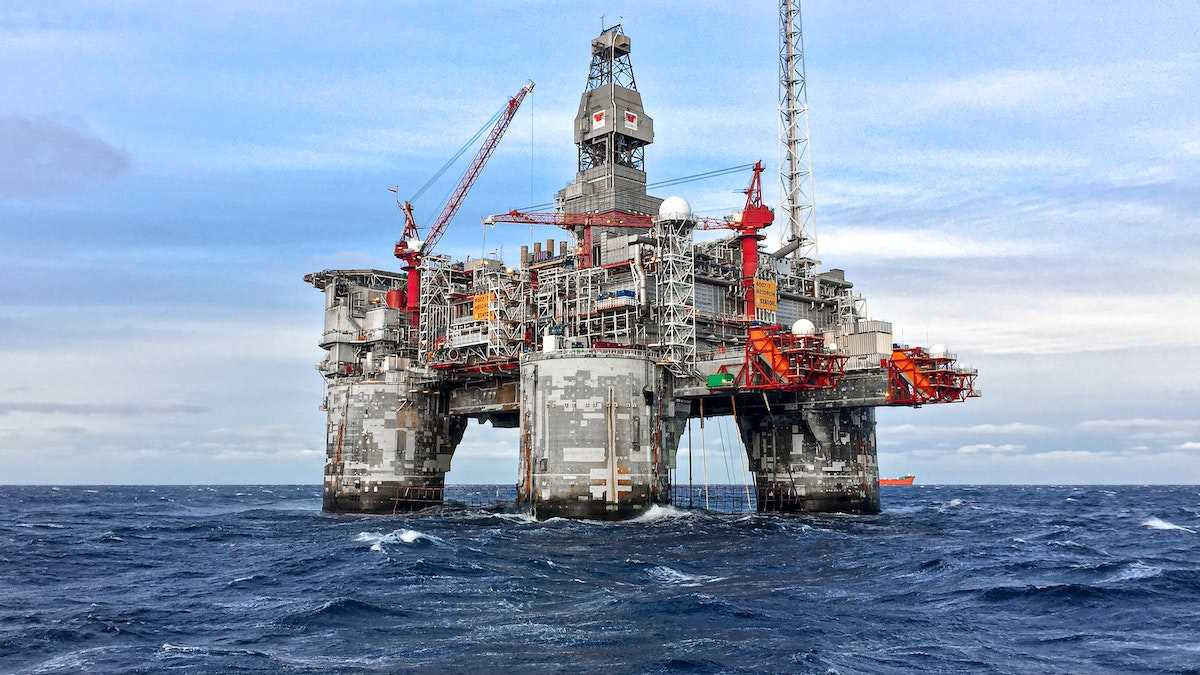
The Petroleum Directorate of Sierra Leone will lead a targeted roundtable at Invest in African Energy 2026, spotlighting upstream potential and cross-regional partnerships

PARIS, France, March 24, 2026/APO Group/ –The Petroleum Directorate of Sierra Leone (PDSL) is set to convene an investor roundtable at Invest in African Energy (IAE) Forum 2026 in Paris, underscoring growing interest in West and North African energy markets and the need for deeper capital engagement across exploration, renewable and offshore services. The session reflects a strategic effort by Sierra Leone to connect its emerging upstream prospects with established operators and project developers as the country moves to unlock the full potential of its emerging oil and gas industry.


Sierra Leone is increasingly positioning itself as a frontier oil and gas market with significant offshore potential, and part of the PDSL’s mandate is to catalyze investment interest in its offshore acreage through direct engagement with global capital. Recent data suggest the country holds estimated recoverable resources in the tens of billions of barrels, backed by discoveries and extensive multi‑client seismic datasets that prospective investors are evaluating. The PDSL is actively promoting licensing opportunities and drilling plans, emphasizing fiscal terms and exploration readiness to attract strategic partners.


A cornerstone of this strategy is the anticipated launch of the country’s sixth licensing round. Offering a rare early-entry opportunity into a largely untapped deepwater terrain with considerable upside, the upcoming bid round is backed by fresh 3D datasets which de-risk exploration and support new drilling campaigns. Just this month, GeoPartners announced that the final Pre-Stack Time Migration data for its recently acquired 3D multi-client seismic survey in the country was complete and is now available for licensing. The dataset provides a 3D window into the hydrocarbon potential of the underexplored northern Sierra Leone region.


Sierra Leone’s licensing drive comes as major operators advance exploration activities. In 2025, Eni signed a Reconnaissance Permit Agreement with the PDSL, securing rights to conduct reconnaissance and technical evaluation activities across offshore blocks G113, G129, G130, G131 and G132. The acreage covers 6,790 square kilometers within Sierra Leone’s territorial waters. Nigeria’s F.A. Oil Limited is pursuing drilling following its award of six offshore blocks through the country’s fifth licensing round in 2023. The company is currently seeking a farm-in partner to advance the project from exploration to production, offering a 40% stake in each of the G Blocks 53, 54, 55, 71, 72 and 73.


As these development unfold, the upcoming roundtable at IAE 2026 offers a unique opportunity for operators and policymakers to engage potential investors. The IAE 2026 Forum has become a strategic bridge between African upstream opportunities and global investors, with sessions like the PDSL roundtable designed to foster deeper dialogue and provide clarity on project pipelines and investment prerequisites. Discussions are expected to cover mechanisms for de‑risking exploration activity, optimizing fiscal and contractual frameworks and identifying synergies between hydrocarbon investment and renewable energy commitments.


For investors seeking differentiated exposure to African energy markets, the Sierra Leone roundtable represents both a focused exploration of frontier oil potential and a broader conversation about regional infrastructure, partnerships and the evolving demands of energy capital in the years ahead.


IAE 2026 (www.Invest-Africa-Energy.com) is an exclusive forum designed to connect African energy markets with global investors, serving as a key platform for deal-making in the lead-up to African Energy Week. Scheduled for April 22–23, 2026, in Paris, the event will provide delegates with two days of in-depth engagement with industry experts, project developers, investors and policymakers. For more information, visit www.Invest-Africa-Energy.com. To sponsor or register as a delegate, please contact sales@energycapitalpower.com


Distributed by APO Group on behalf of Energy Capital & Power.

Continue Reading

Energy

Cape Town Prepares for African Mining Week 2026 as Draft Program Reveals Continent’s Mineral Drive

Published

on

Energy Capital

African Mining Week returns for its 2026 edition with an expanded three-day program, bringing together African mining leaders and global partners to shape the future of the continent’s mining sector

CAPE TOWN, South Africa, March 24, 2026/APO Group/ –Global economic trends – from record-breaking commodity prices to intensifying geopolitical competition for resources – are reshaping the strategic importance of Africa’s mineral wealth. As global countries race to secure supply chains for energy transition metals – which are expected to triple by 2030 – Africa is positioning its 30% share of the world’s critical minerals as a key pillar of economic growth. African governments are modernizing mining codes, developing industrial corridors and investing in mineral processing facilities to support local beneficiation, job creation, workforce development and regional mineral markets.


Against this backdrop, the upcoming African Mining Week (AMW) Conference & Exhibition – Africa’s premier gathering for mining stakeholders – has launched the draft program for its 2026 edition {https://apo-opa.co/3NneKLj}. Scheduled to take place October 14–16 in Cape Town, the event provides a platform where policymakers, global investors, project operators, technology providers, academia and mining service companies examine Africa’s mining opportunities, challenges and long-term strategic direction.

Under the theme ‘Mining the Future: Unearthing Africa’s Full Mineral Value’, the three-day, multi-track agenda reflects the growing urgency among African markets to strengthen value addition across the mining value chain.

Regional Cooperation and Policy Alignment in Focus

A key feature of the agenda is the Ministerial Forum, where African mining ministers will provide updates on regulatory reforms and policy alignment initiatives aimed at unlocking greater value from the continent’s mineral resources. Discussions will examine how harmonized regulatory frameworks and regional cooperation can accelerate investment flows and strengthen Africa’s position in global mineral supply chains.

The inclusion of regional policy integration reflects a growing continental push to leverage frameworks such as the African Continental Free Trade Area (AfCFTA) to enhance cross-border mineral cooperation and trade.

We are acting to enhance regional integration through frameworks such as the African Mining Vision and the Africa Mineral Strategy Group

“Africa’s integration is not only a political objective but a strategic economic vision,” stated Emmanuel Armah-Kofi Buah, Ghana’s Minister of Lands and Natural Resources, in remarks reported by Energy Capital & Power – organizers of AMW – in February 2026. “Our natural resources require coordinated policies. Isolated legal frameworks cannot fully unlock their value. Through integration and initiatives such as the ECOWAS [Economic Community of West African States] Mining Code and the African Mining Vision, we can build a stronger and more competitive mineral economy.”

Nigeria’s Minister of Solid Minerals Development, Henry Alake, echoed this emphasis on regional cooperation and beneficiation.

“We are acting to enhance regional integration through frameworks such as the African Mining Vision and the Africa Mineral Strategy Group,” he stated. “We must develop mineral corridors that connect resources, infrastructure and markets across the continent. Our goal is not to simply export raw materials, but to develop industrial hubs that create jobs and value across borders.”

Connecting Global Investors with African Opportunities

Strategic roundtables and Country Focus sessions form a key part of the AMW 2026 program, connecting African mining jurisdictions with international partners from the U.S, Europe, the Middle East and China. These sessions will provide African stakeholders with a platform to showcase exploration opportunities and project pipelines across the mining value chain.

Meanwhile, technical workshops and the exhibition floor at AMW 2026 will provide a platform for equipment manufacturers, technology providers and engineering firms to showcase innovations designed to enhance operational performance across mining operations.

By combining high-level policy dialogue with technical expertise and investment matchmaking, AMW 2026 positions itself as a critical marketplace where Africa’s mineral potential converges with global capital, technology and strategic partnerships – helping shape the next phase of growth for the continent’s mining sector.

AMW serves as a premier platform for exploring the full spectrum of mining opportunities across Africa. The event is held alongside the African Energy Week: Invest in African Energies 2026 conference from October 12-16 in Cape Town. Sponsors, exhibitors and delegates can learn more by contacting sales@energycapitalpower.com.

Distributed by APO Group on behalf of Energy Capital & Power.

Continue Reading

Business

Tony Elumelu Foundation Selects Seven North African Entrepreneurs in 2026 Cohort

Published

on

entrepreneurs

Seven North African entrepreneurs in technology, education, professional services and agriculture selected from 265,000 applications at historic Abuja ceremony

Hope is not just a feeling — it is a system we can build

ABUJA, Nigeria, March 24, 2026/APO Group/ —

  • 7 North African entrepreneurs selected from Morocco, Tunisia and Egypt
  • 51% of the 2026 cohort are women, all selected purely on merit, without any quota in place
  • 3,200 total entrepreneurs selected from 265,000+ applications across 54 African countries
  • USD 5,000 in non-refundable seed capital for each selected entrepreneur
  • Selection conducted independently by Ernst & Young


The Tony Elumelu Foundation (TEF) (www.TonyElumeluFoundation.org), the leading philanthropy empowering young African entrepreneurs, announced on Sunday, 22 March 2026 the 12th cohort of the TEF Entrepreneurship Programme at a ceremony held at the Transcorp Hilton, Abuja. The announcement was made by Founder Tony O. Elumelu, C.F.R.


Among the 3,200 entrepreneurs selected from 265,000 applications received from all 54 African countries: seven from North Africa. Three from Tunisia, two from Morocco, two from Egypt. Spanning technology, education, professional services and agribusiness, they represent a generation of North African founders building businesses that address the urgent needs of their communities. Their selection, which was conducted independently by Ernst & Young, places them among the most rigorously assessed young entrepreneurs on the continent.


This year’s cohort carries a historic signal: 51 percent of the 2026 entrepreneurs are women. They were selected purely on merit, without quota. Across hundreds of thousands of applications, women distinguished themselves through the strength of their ideas, the clarity of their business models and the ambition of their vision.


In 2026, the Foundation is empowering a total of 3,200 entrepreneurs across all its entrepreneurship programmes:


  • 1,751 entrepreneurs through Heirs Holdings Group: Heirs Energies, Transcorp Power, Transcorp Hotels, and United Capital;
  • 1,049 entrepreneurs in partnership with the European Commission, OACPS, BMZ and GIZ;
  • 100 entrepreneurs in partnership with Sèmè City Development Agency;
  • 100 entrepreneurs in partnership with DEG, the German Development Agency;
  • 100 entrepreneurs in partnership with the IKEA FoundationUNICEF’s Generation Unlimited and the Dutch Government; and
  • 100 entrepreneurs in partnership with UNDP and the Rwandan Ministry of Youth and Arts.


Each selected Tony Elumelu Entrepreneur will receive USD 5,000 in non-refundable seed capital, access to world-class business management training on TEFConnect, one-on-one mentorship, and entry into a powerful network of investors, partners and fellow entrepreneurs.


In his annual letter (https://apo-opa.co/4uOFepM), “A Story of Hope,” Tony O. Elumelu, C.F.R., Founder of the Tony Elumelu Foundation, shared a powerful message to the new cohort:


“For a long time, I believed luck was something that simply happened to you. Then I came to understand: luck can be engineered. Opportunity can be democratised. Hope is not just a feeling — it is a system we can build.” — Tony O. Elumelu, C.F.R., Founder, Tony Elumelu Foundation — 2026 Annual Letter


The Tony Elumelu Foundation has empowered over 2.5 million young Africans with access to business management training on TEFConnect (https://TEFConnect.com), and disbursed over USD 100 million in seed capital to more than 24,000 selected entrepreneurs.


Collectively, these entrepreneurs have generated USD 4.2 billion in revenue and created more than 1.5 million direct and indirect jobs. Through its support for African entrepreneurs, TEF has lifted 2.1 million Africans above the poverty line and positively impacted more than 4 million African households, with 46% of supported entrepreneurs being African women. Eighty percent of TEF-supported businesses survive and scale, against a global average of ten to twenty percent.


The announcement ceremony was broadcast live in English (https://apo-opa.co/3PWLiML), French (https://apo-opa.co/3PWLiML), Portuguese (https://apo-opa.co/4t4Y7Da) and Arabic (https://apo-opa.co/4bYHlQl).


Distributed by APO Group on behalf of The Tony Elumelu Foundation.


Continue Reading

Trending