Connect with us
Anglostratits

Business

Petrobras Pursues Strategic Oil & Gas Expansion in Southern Africa

Published

on

Petrobras Pursues

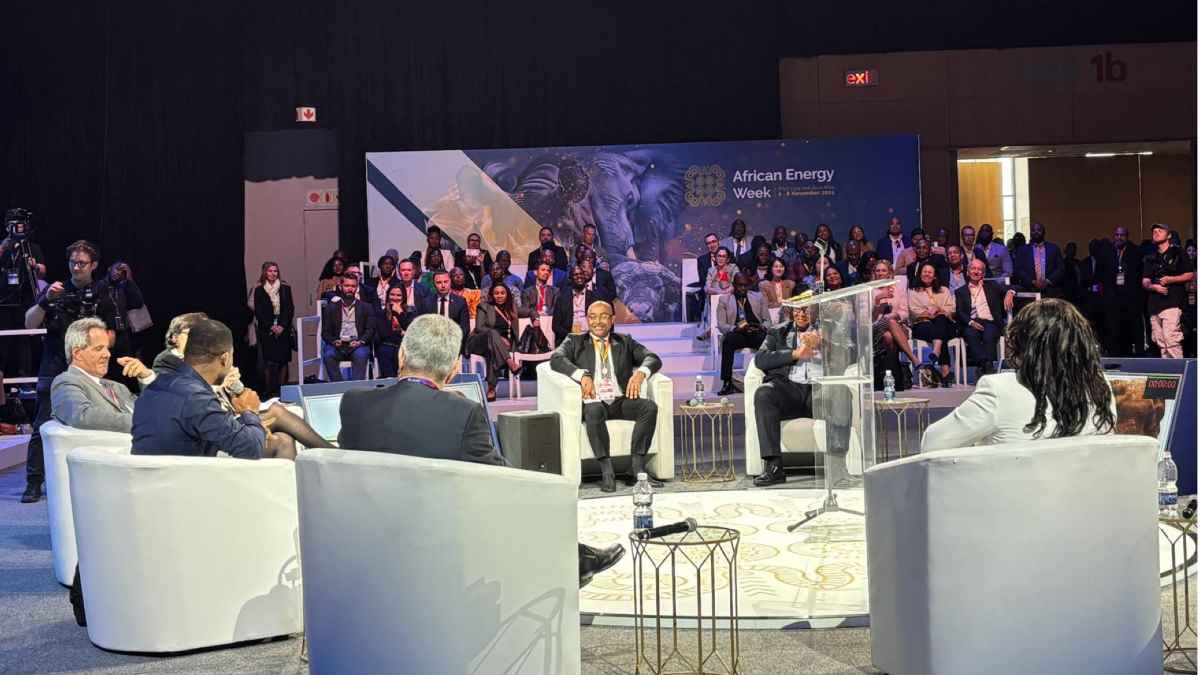
Brazil’s Petrobras provided an update on its acquisition offer for a stake in Galp’s Mopane Block in Namibia, along with potential opportunities in South Africa and Angola, during a pre-event workshop at African Energy Week 2024: Invest in African Energies

CAPE TOWN, South Africa, November 5, 2024/APO Group/ — 

Brazil’s national oil company (NOC), Petrobras, has confirmed it is actively exploring opportunities in South Africa, Namibia and Angola, and it is currently awaiting Galp’s decision on its offer to acquire a significant stake in the Mopane block offshore Namibia.

The announcement was made during a pre-conference workshop sponsored by Namibia Energy Corporation (NEC), leading up to the African Energy Week (AEW) 2024: Investing in African Energies conference. Petrobras is widely recognized for its success in the exploration and production of pre-salt oil reserves in the deep waters off the coast of Brazil, which hold close geological similarities to pre-salt areas in southern Africa. 

“As we increase production, we increase the need for reserves. Brazil has a strong correlation with Africa. We feel very comfortable to come back to Africa, and are looking at opportunities in South Africa, Namibia and Angola,” said Sylvia Maria Couto dos Anjos, Executive Officer for Exploration and Production at Petrobras.

The company’s technical expertise in pre-salt geology – particularly its ability to extract hydrocarbons from ultra-deep reservoirs beneath thick layers of salt – positions it as a strong contender to unlock frontier acreage in southern Africa. Geological similarities with Angola were highlighted during the workshop, as most of its hydrocarbon discoveries are offshore, with the majority of oil and gas resources located in deepwater reservoirs.

We feel very comfortable to come back to Africa, and are looking at opportunities in South Africa, Namibia and Angola

“Both Angola and Brazil have experience in developing deepwater reservoirs,” said Ricardo Van-Deste, CEO – Exploration and Production, Sonangol. “It is very important for us to bring Petrobras back to Angola. They left, but the door is still open.”

Petrobras’ deepwater technology, developed over years of working in the Campos and Santos Basins off the shores of Brazil, could also be a game-changer in unlocking South Africa’s offshore potential. These include TotalEnergies’ Luiperd and Brulpadda discoveries. Earlier this month, the Brazilian NOC announced it had secured approval to acquire a 10% stake in the Deep Water Orange Basin located off the west coast of South Africa.

“Those are challenging operations. With Petrobras’ experience and the technologies we have developed over time, this presents a valuable opportunity for us,” said Godfrey Moagi, CEO of the South African National Petroleum Company (SANPC).

In Namibia, Petrobras is currently evaluating entry opportunities as the country has produced a series of world-class discoveries. It is estimated to hold 100 billion barrels of oil equivalent in unrisked resources, with the Deep Water Orange Basin alone accounting for 30 billion barrels of oil equivalent.

“The potential of Namibia is incredible. We have a commitment to fulfill – I guarantee deals will come through,” said Dr. Marcio Rocha Mello, Founder & CEO of Namibia Energy Corporation.

Another key area for potential cooperation is the establishment of a Namibian center of excellence, aimed at enhancing technical capabilities and data analysis to deepen understanding of Namibia’s petroleum basins and de-risk prospects for future exploration.

“A center like that in Namibia would enable us to replicate the success of the Orange Basin in the Walvis and Lüderitz basins,” said Maggy Shino, Petroleum Commissioner of Namibia’s Ministry of Mines and Energy. “We have blocks that are bigger than some African countries. With such a large volume of available opportunities, we need a diversity of players to fully harness that potential.”

Distributed by APO Group on behalf of African Energy Chamber.

Business

Nature, Carbon and Climate Are Becoming Core Investment Themes – with Africa at the Centre

Published

on

finance

Private finance for nature has increased more than tenfold in recent years, rising from USD 9.4 billion to over USD 100 billion, and could reach up to USD 1.45 trillion by 2030 if current the momentum continues

CAPE TOWN, South Africa, February 9, 2026/APO Group/ –Climate change, biodiversity loss and ecosystem degradation are no longer just environmental challenges; they are now central to how investors assess resilience and long-term returns.

Nature underpins large parts of the global economy, from water security and food systems to infrastructure and climate resilience. Yet according to the United Nations Environment Programme (UNEP) the global biodiversity finance gap is estimated to reach USD 942 billion per year by 2030. Current finance flows into nature total around USD 200 billion annually, with just USD 35 billion coming from private capital.

At the same time, capital markets are shifting. Private finance for nature has increased more than tenfold in recent years, rising from USD 9.4 billion to over USD 100 billion, and could reach up to USD 1.45 trillion by 2030 if current the momentum continues.

Alongside this, carbon markets, nature-based solutions and resilience infrastructure are increasingly being treated as linked investment themes, with new asset classes emerging across carbon, biodiversity and climate adaptation. This convergence is reshaping how investors assess risk, returns and long-term resilience, particularly in emerging markets.

Investing in Africa’s adaptation and mitigation projects is not an act of generosity; it is an investment in our common future

The economic stakes are already clear. In South Africa alone, healthy ecosystems contribute over R275 billion (around USD 14 billion) per year, equivalent to at least 7% of GDP.

Across Africa, natural capital accounts for an estimated 30%-50% of total wealth in many countries, underlining how closely economic growth, stability and development prospects are tied to climate and nature outcomes. In many African economies, natural capital makes up a far larger share of national wealth than factories or infrastructure, meaning that damage to nature can quickly translate into pressure on public finances and long- term economic stability.

Recent flooding in parts of Kruger National Park and ongoing water stress in the Western Cape have reinforced how climate and ecosystem risks translate directly into economic losses, infrastructure damage and pressure on public finances. These are no longer peripheral sustainability issues; they are core financial and investment risks.

Against this backdrop, Africa’s Green Economy Summit (AGES) 2026 will open with the Climate, Carbon & Nature Financing Academy on Monday, 24 February 2026 in Cape Town, ahead of the main Summit from 25 – 27 February 2026. The Academy will focus on how climate, carbon and nature can be translated into bankable projects and investable asset classes, including through instruments such as carbon markets, green, blue and wildlife bonds, debt-for-nature swaps and performance-linked finance.

“The escalating impact of climate change in Africa calls for the global community and private sector to recognise that a climate-resilient Africa is essential for global stability, prosperity, and shared security. Investing in Africa’s adaptation and mitigation projects is not an act of generosity; it is an investment in our common future,” said Harsen Nyambe, Director, Sustainable Environment and Blue Economy at the African Union Commission.

By foregrounding climate, carbon and nature finance at the start of 2026, AGES reflects a broader market reality: these are no longer side conversations in sustainable finance, they are becoming central pillars of Africa’s investment future.

Distributed by APO Group on behalf of VUKA Group.

Continue Reading

Events

As global power structures shift, Invest Africa convenes The Africa Debate 2026 to redefine partnership in a changing world

Published

on

Debate

The Africa Debate 2026 will provide a platform for this essential, era-defining discussion, convening leaders to explore how Africa and its partners can build more balanced, resilient and sustainable models of cooperation

LONDON, United Kingdom, February 5, 2026/APO Group/ –As African economies assert greater agency in a rapidly evolving global order, Invest Africa (www.InvestAfrica.com) is delighted to announce The Africa Debate 2026, its flagship investment forum, taking place at the historic Guildhall in London on 3 June 2026.

Now in its 12th year, The Africa Debate has established itself as London’s premier platform for African investment dialogue since launching in 2014, convening over 800 global decision-makers annually to shape the future of trade, finance, investment, and development across the continent.

Under the theme “Redefining Partnership: Navigating a World in Transition”, this year’s forum will focus on Africa’s response to global economic realignment with greater agency, ambition and economic sovereignty.

The Africa Debate puts Africa’s priorities at the centre of the conversation, moving beyond traditional narratives to focus on ownership, resilience and long-term value creation.

“Volatility is not new to Africa. What is changing is the opportunity to respond with greater agency and ambition,” says Invest Africa CEO Chantelé Carrington.

“This year’s edition of The Africa Debate asks how we strengthen economic sovereignty — from access to capital and investment to financial and industrial policy — so African economies can take greater ownership of their growth. Success will be defined by how effectively we turn disruption into leverage and partnership into shared value.”

The Africa Debate 2026 will provide a platform for this essential, era-defining discussion, convening leaders to explore how Africa and its partners can build more balanced, resilient and sustainable models of cooperation.

Key challenges driving the debate

Core focus areas for this year’s edition of The Africa Debate include:

This year’s edition of The Africa Debate asks how we strengthen economic sovereignty — from access to capital and investment to financial and industrial policy

Global Realignment & New Partnerships

How shifting geopolitical and economic power structures are reshaping Africa’s global partnerships, trade dynamics and investment landscape.

Financing Africa’s Future

The growing need to reform the global financial architecture, new approaches to development finance, as well as the strengthening of market access and financial resilience of African economies in a changing global system.

Strategic Value Chains

Moving beyond primary exports to build local value chains in critical minerals for the green economy. Also addressing Africa’s energy access gap and mobilising investment in renewable and transitional energy systems.

Digital Transformation & Technology

Unlocking growth in fintech, AI and digital infrastructure to drive productivity, inclusion, and the next phase of Africa’s economic transformation.

The Africa Debate 2026 offers a unique platform for high-level dialogue, deal-making, and strategic engagement. Attendees will gain actionable insights from leading policymakers, investors and business leaders shaping Africa’s economic future, while building strategic partnerships that define the continent’s next growth phase.

Registration is now open (http://apo-opa.co/46b19gj).

Distributed by APO Group on behalf of Invest Africa.

Continue Reading

Business

Zion Adeoye terminated as Chief Executive Officer (CEO) of CLG due to serious personal and professional conduct violations

Published

on

CLG

After a thorough internal and external investigation, along with a disciplinary hearing chaired by Sbongiseni Dube, CLG (https://CLGglobal.com) has made the decision to terminate Zion Adeoye due to serious personal and professional conduct violations. This process adhered to the Code of Good Practice of the Labour Relations Act, ensuring fairness, transparency, and compliance with South African law.

Mr. Adeoye has been held accountable for several serious offenses, including:

  • Making malicious and defamatory statements against colleagues
  • Extortion
  • Intimidation
  • Fraud
  • Misuse of company funds
  • Theft and misappropriation of funds
  • Breach of fiduciary duty
  • Mismanagement

His actions are in direct contradiction to our firm’s core values. We do not approve of attorneys spending time in a Gentleman’s Club. CLG deeply regrets the impact this situation has had on our colleagues and continues to provide full support to those affected.

We want to express our gratitude to those who spoke up and to reassure everyone at the firm of our unwavering commitment to maintaining a respectful workplace. Misconduct of any kind is unacceptable and will be addressed decisively.

We recognize the seriousness of this matter and have referred it to the appropriate law enforcement, regulatory, and legal authorities in Nigeria, Mauritius, and South Africa. We kindly ask that the privacy of the third party involved be respected.

Distributed by APO Group on behalf of CLG.


Continue Reading

Trending