Connect with us
Anglostratits

Business

Organization of the Petroleum Exporting Countries’ (OPEC) pride in its African roots (By Haitham Al-Ghais)

Published

on

OPEC

Looking throughout our 63-year history, many significant meetings took place in African cities

PARIS, France, May 15, 2024/APO Group/ — 

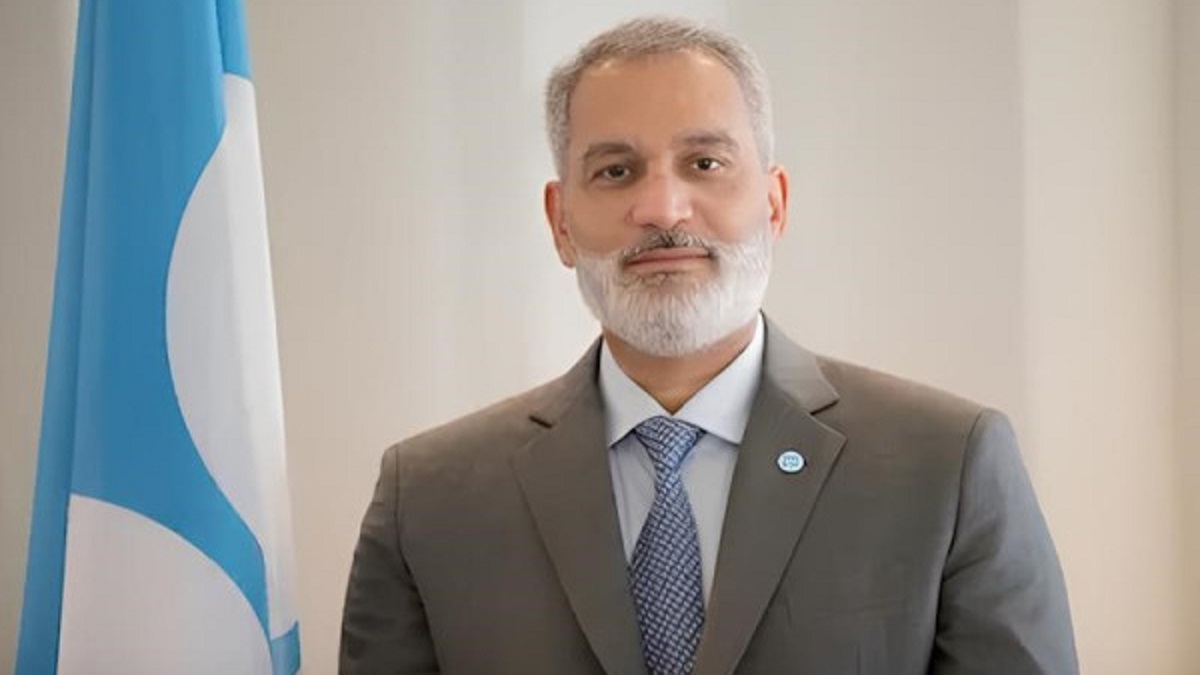
By OPEC Secretary General Haitham Al-Ghais.

Since assuming the office of OPEC Secretary General almost two years ago, I have had the privilege of visiting every African OPEC Member Country, as well as several other African countries. Every visit has reaffirmed my firm conviction that the future is bright for Africa and that the oil industry can play a constructive role in that future. Our Organization stands ready to offer any support it can to help this great continent realize its awesome potential.

OPEC takes great pride in its strong and enduring African connections, heritage and identity. Half of our Member Countries are African and this includes the continent’s most populous country, Nigeria, and the geographically largest by area, Algeria. We are also privileged to count Congo, Equatorial Guinea, Gabon and Libya as Member Countries. Additionally, two African countries are part of the historic ‘Declaration of Cooperation,’ between OPEC and non-OPEC producing countries, namely Sudan and South Sudan.

Our Organization’s past is imbued with African character. Looking throughout our 63-year history, many significant meetings took place in African cities. From the Ninth Meeting of the OPEC Conference in Tripoli in 1965, critical meetings and conferences have been held in Algiers (including our first ever Summit), Oran, Lagos, Abuja, Luanda, and Libreville.

Indeed, the idea for our Organization was conceived in Africa, specifically Egypt. It was at the Cairo Yacht Club in 1959, that the Gentleman’s Agreement was forged that paved the way for the establishment of OPEC in Baghdad in September 1960.

Having played a pivotal role in shaping our past, we have no doubt Africa will be instrumental in the Organization’s future and the future of the oil industry. This is a dominant theme in OPEC’s World Oil Outlook 2045 (WOO).

Africa has a young and vibrant population. By 2045, the Middle East and Africa are forecast to be the leading regions by overall population, adding 723 million people in the period 2022-2045.

We anticipate a bright future for Africa’s oil industry with substantial opportunities for growth. The continent is home to five of the top 30 oil-producing countries and its proven oil reserves amounted to around 120 billion barrels at the end of 2022. This will be crucial to meet the growing global demand for oil, which is expected to rise to 116 million barrels per day (mb/d) by 2045.

Having played a pivotal role in shaping our past, we have no doubt Africa will be instrumental in the Organization’s future and the future of the oil industry

These resources will be crucial in enabling African countries deliver for their peoples. For many oil-producing developing nations, oil production is a way to generate revenue streams that help address pressing and legitimate needs, such as development, employment, education, reducing poverty and investing in public services.

One of the great challenges facing governments here and, indeed, in many other parts of the world is energy poverty. There are 675 million people worldwide who lack access to electricity, four out of five of whom live in sub-Saharan Africa. Furthermore, 2.3 billion people without clean fuels and technologies for cooking, which can lead to a host of related health and environmental problems.

Of course, OPEC supports efforts that lead to a reduction in greenhouse gas emissions, but we look for this to be achieved in a manner that strikes a fine balance between energy security and sustainable development; ensuring that nobody is left behind. We are also strong advocates for the principle of common but differentiated responsibilities and respective capabilities.

The continent of Africa is home to 17% of the world’s population, but is responsible for under 4% of global CO2 emissions, with many African countries contributing virtually nothing to global emissions.

When we consider historic cumulative CO2 emissions, the G7 has contributed over 43% of the total alone since 1850, while OPEC Member Countries account for only 4%.

These statistics reflect the fact that there is no ‘one size fits all’ solution to addressing climate change and national circumstances need to be taken into account. We need an all-peoples, all technologies and all-energies approach. Technological innovation is a key focus for our Organization.

It is why our Member Countries are investing heavily in hydrogen projects, Carbon Capture and Utilization and Direct Air Capture facilities, and the circular carbon economy.

Looking at recent developments across the energy scene in Africa, we see opportunities for the oil industry in places like Namibia, Senegal, Mozambique and Mauritania, to name but a few. OPEC is attentive to these developments and stands ready to support all countries on the African continent in the next chapter in developing their industries. In this regard, we look forward to enhanced cooperation with the African Energy Chamber in the years and decades to come.

The African Energy Chamber, as the voice of the African energy sector, commends OPEC’s commitment to the growth of the African oil and gas industry.

Distributed by APO Group on behalf of African Energy Chamber.

Events

As global power structures shift, Invest Africa convenes The Africa Debate 2026 to redefine partnership in a changing world

Published

on

Debate

The Africa Debate 2026 will provide a platform for this essential, era-defining discussion, convening leaders to explore how Africa and its partners can build more balanced, resilient and sustainable models of cooperation

LONDON, United Kingdom, February 5, 2026/APO Group/ –As African economies assert greater agency in a rapidly evolving global order, Invest Africa (www.InvestAfrica.com) is delighted to announce The Africa Debate 2026, its flagship investment forum, taking place at the historic Guildhall in London on 3 June 2026.

Now in its 12th year, The Africa Debate has established itself as London’s premier platform for African investment dialogue since launching in 2014, convening over 800 global decision-makers annually to shape the future of trade, finance, investment, and development across the continent.

Under the theme “Redefining Partnership: Navigating a World in Transition”, this year’s forum will focus on Africa’s response to global economic realignment with greater agency, ambition and economic sovereignty.

The Africa Debate puts Africa’s priorities at the centre of the conversation, moving beyond traditional narratives to focus on ownership, resilience and long-term value creation.

“Volatility is not new to Africa. What is changing is the opportunity to respond with greater agency and ambition,” says Invest Africa CEO Chantelé Carrington.

“This year’s edition of The Africa Debate asks how we strengthen economic sovereignty — from access to capital and investment to financial and industrial policy — so African economies can take greater ownership of their growth. Success will be defined by how effectively we turn disruption into leverage and partnership into shared value.”

The Africa Debate 2026 will provide a platform for this essential, era-defining discussion, convening leaders to explore how Africa and its partners can build more balanced, resilient and sustainable models of cooperation.

Key challenges driving the debate

Core focus areas for this year’s edition of The Africa Debate include:

This year’s edition of The Africa Debate asks how we strengthen economic sovereignty — from access to capital and investment to financial and industrial policy

Global Realignment & New Partnerships

How shifting geopolitical and economic power structures are reshaping Africa’s global partnerships, trade dynamics and investment landscape.

Financing Africa’s Future

The growing need to reform the global financial architecture, new approaches to development finance, as well as the strengthening of market access and financial resilience of African economies in a changing global system.

Strategic Value Chains

Moving beyond primary exports to build local value chains in critical minerals for the green economy. Also addressing Africa’s energy access gap and mobilising investment in renewable and transitional energy systems.

Digital Transformation & Technology

Unlocking growth in fintech, AI and digital infrastructure to drive productivity, inclusion, and the next phase of Africa’s economic transformation.

The Africa Debate 2026 offers a unique platform for high-level dialogue, deal-making, and strategic engagement. Attendees will gain actionable insights from leading policymakers, investors and business leaders shaping Africa’s economic future, while building strategic partnerships that define the continent’s next growth phase.

Registration is now open (http://apo-opa.co/46b19gj).

Distributed by APO Group on behalf of Invest Africa.

Continue Reading

Business

Zion Adeoye terminated as Chief Executive Officer (CEO) of CLG due to serious personal and professional conduct violations

Published

on

CLG

After a thorough internal and external investigation, along with a disciplinary hearing chaired by Sbongiseni Dube, CLG (https://CLGglobal.com) has made the decision to terminate Zion Adeoye due to serious personal and professional conduct violations. This process adhered to the Code of Good Practice of the Labour Relations Act, ensuring fairness, transparency, and compliance with South African law.

Mr. Adeoye has been held accountable for several serious offenses, including:

  • Making malicious and defamatory statements against colleagues
  • Extortion
  • Intimidation
  • Fraud
  • Misuse of company funds
  • Theft and misappropriation of funds
  • Breach of fiduciary duty
  • Mismanagement

His actions are in direct contradiction to our firm’s core values. We do not approve of attorneys spending time in a Gentleman’s Club. CLG deeply regrets the impact this situation has had on our colleagues and continues to provide full support to those affected.

We want to express our gratitude to those who spoke up and to reassure everyone at the firm of our unwavering commitment to maintaining a respectful workplace. Misconduct of any kind is unacceptable and will be addressed decisively.

We recognize the seriousness of this matter and have referred it to the appropriate law enforcement, regulatory, and legal authorities in Nigeria, Mauritius, and South Africa. We kindly ask that the privacy of the third party involved be respected.

Distributed by APO Group on behalf of CLG.


Continue Reading

Business

The International Islamic Trade Finance Corporation (ITFC) Strengthens Partnership with the Republic of Djibouti through US$35 Million Financing Facility

Published

on

ITFC

This facility forms part of the US$600 million, three-year Framework Agreement signed in May 2023 between ITFC and the Republic of Djibouti, reflecting the strong and growing partnership between both parties

JEDDAH, Saudi Arabia, February 5, 2026/APO Group/ –The International Islamic Trade Finance Corporation (ITFC) (https://www.ITFC-IDB.org), a member of the Islamic Development Bank (IsDB) Group, has signed a US$35 million sovereign financing facility with the Republic of Djibouti to support the development of the country’s bunkering services sector and strengthen its position as a strategic regional maritime and trade hub.

The facility was signed at the ITFC Headquarters in Jeddah by Eng. Adeeb Yousuf Al-Aama, Chief Executive Officer of ITFC, and H.E. Ilyas Moussa Dawaleh, Minister of Economy and Finance in charge of Industry of the Republic of Djibouti.

The financing facility is expected to contribute to Djibouti’s economic growth and revenue diversification by reinforcing the competitiveness and attractiveness of the Djibouti Port as a “one-stop port” offering comprehensive vessel-related services. With Red Sea Bunkering (RSB) as the Executing Agency, the facility will support the procurement of refined petroleum products, thus boosting RSB’s bunkering operations, enhancing revenue diversification, and consolidating Djibouti’s role as a key logistics and trading hub in the Horn of Africa and the wider region.

We look forward to deepening this partnership, creating new opportunities, and leveraging collaborative programs to advance key sectors and drive sustainable economic growth

Commenting on the signing, Eng. Adeeb Yousuf Al-Aama, CEO of ITFC, stated:

“This financing reflects ITFC’s continued commitment to supporting Djibouti’s strategic development priorities, particularly in strengthening energy security, port competitiveness, and trade facilitation. We are proud to deepen our partnership with the Republic of Djibouti and contribute to sustainable economic growth and regional integration.”

H.E. Ilyas Moussa Dawaleh, Minister of Economy and Finance in charge of Industry of the Republic of Djibouti, commented: “Today’s signing marks an important milestone in the development of Djibouti’s bunkering services and reflects our strong and valued partnership with ITFC, particularly in the oil and gas sector. This collaboration supports our ambition to position Djibouti as a regional hub for integrated maritime and logistics services. We look forward to deepening this partnership, creating new opportunities, and leveraging collaborative programs to advance key sectors and drive sustainable economic growth.”

This facility forms part of the US$600 million, three-year Framework Agreement signed in May 2023 between ITFC and the Republic of Djibouti, reflecting the strong and growing partnership between both parties.

Since its inception in 2008, ITFC and the Republic of Djibouti have maintained a strong partnership, with a total of US$1.8 billion approved primarily supporting the country’s energy sector and trade development objectives.

Distributed by APO Group on behalf of International Islamic Trade Finance Corporation (ITFC).

Continue Reading

Trending