Connect with us
Anglostratits

Energy

From Stalled Talks to Breakthroughs: Yoyo-Yolanda Signals New Chapter for the Gulf of Guinea

Published

on

African Energy Chamber

The Yoyo-Yolanda Gas Fields hold 2.5 trillion cubic feet of natural gas reserves – crucial to unlocking energy security and GDP growth for the broader central African region

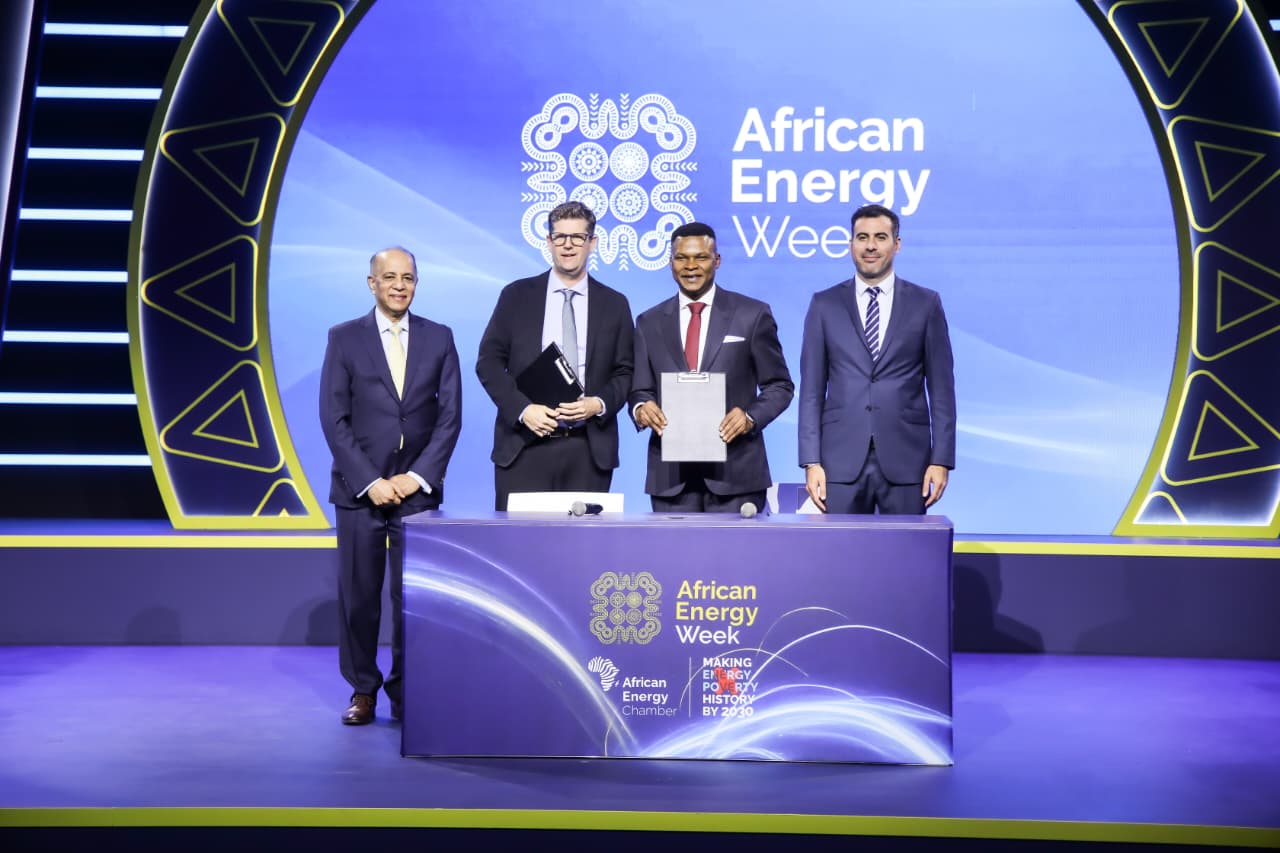
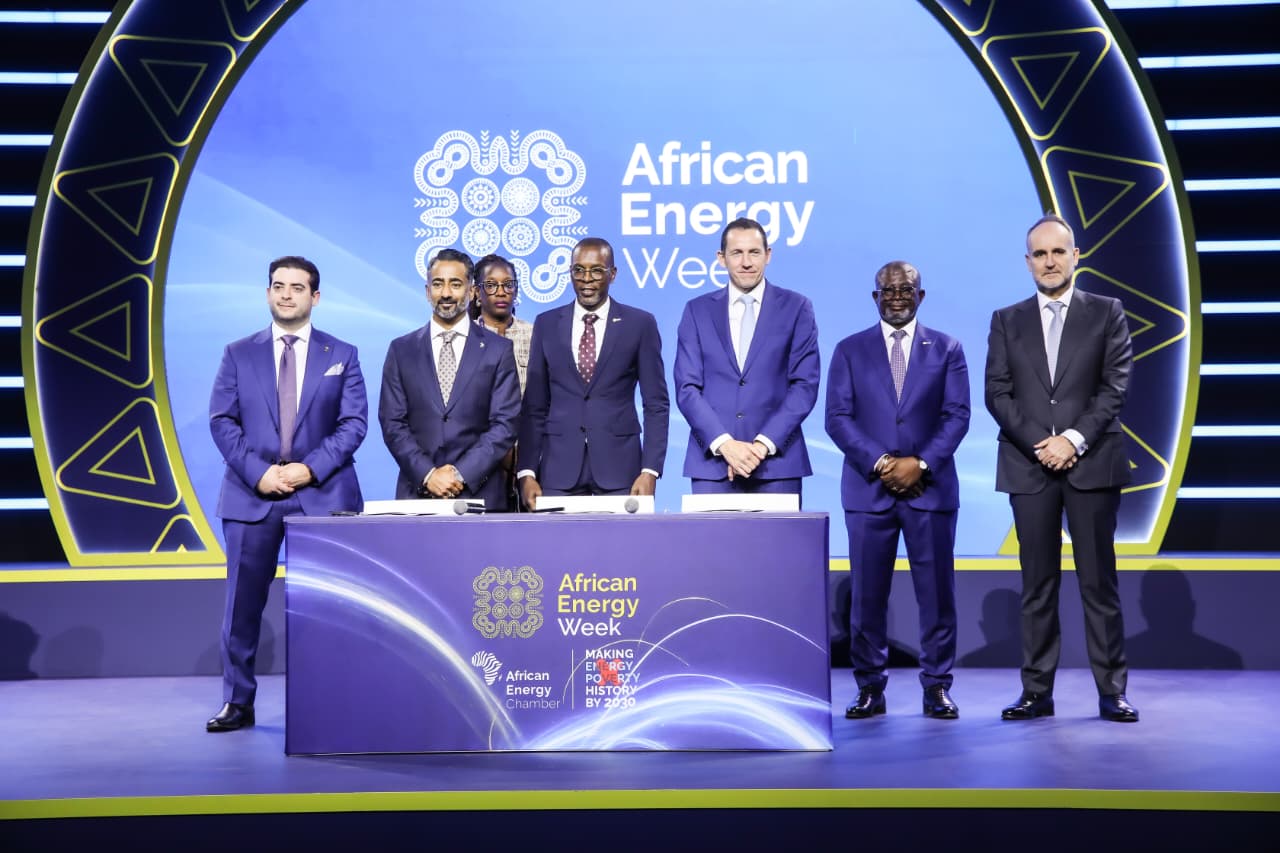
JOHANNESBURG, South Africa, February 5, 2026/APO Group/ –Cameroon and Equatorial Guinea have signed a unitization agreement to jointly develop the cross-border Yoyo-Yolanda gas fields, marking a decisive step toward accelerating long-delayed gas monetization in the Gulf of Guinea. Forming part of the broader Gas Mega Hub (GMH) – an initiative led by Equatorial Guinea to monetize stranded gas reserves – the agreement strengthens cross-border cooperation at a time when the GMH is showing signs of resurgence.


As the voice of the African energy sector, the African Energy Chamber (AEC) strongly supports the milestone, recognizing it as a clear signal that both countries are moving swiftly from negotiation to execution. As the project advances, the Chamber has called for sustained urgency, streamlined approvals and coordinated infrastructure development to maintain investor confidence and unlock the full economic potential of the Yoyo-Yolanda project.

Clear Signal to Investors: Execution, Urgency and Infrastructure First

Containing 2.5 trillion cubic feet (tcf) of natural gas reserves, the Yoyo-Yolanda project is an integral part of the GMH, monetizing gas resources across two strategic fields. Operators Noble Energy Cameroon and Noble Energy Equatorial Guinea – both Chevron companies – have reaffirmed their full commitment to the project. Jim Swartz, Chairman and Managing Director of Chevron Nigeria and the Mid-Africa Region, highlighted that the project is central to Chevron’s strategy of supporting long-term LNG supply and leveraging existing infrastructure at Alen and Punta Europa.

For the AEC, the agreement sends a strong signal to global investors that Cameroon and Equatorial Guinea are aligned, bankable and serious about accelerating gas development. The Chamber has called on both governments to fast-track final investment decisions, engineering and infrastructure rollout, while implementing targeted policies and incentives to maintain momentum.

The AEC has also urged Cameroon and Equatorial Guinea to draw on proven best practices from successful cross-border gas developments, including the Greater Tortue Ahmeyim project between Senegal and Mauritania, as well as earlier Gas Mega Hub agreements involving Nigeria and Cameroon, to reduce execution risk and shorten time-to-market.

There is a tight window to monetize Africa’s gas resources before global market dynamics shift – delaying is not an option

“The Chamber celebrates the agreement to unify Yoyo-Yolanda. There is a tight window to monetize Africa’s gas resources before global market dynamics shift – delaying is not an option. Governments must eliminate red tape, accelerate execution, and leverage existing infrastructure to maintain investor confidence,” said NJ Ayuk, Executive Chairman of the AEC.

Gas Mega Hub Strategy Gains Momentum

For Equatorial Guinea, Yoyo-Yolanda is a cornerstone of the country’s GMH strategy, aimed at positioning the nation as a regional gas processing and monetization hub. The project reinforces Equatorial Guinea’s drive to commercialize its 1.5 tcf of domestic gas reserves to support energy security, industrialization and export growth.

Momentum behind the GMH has continued into 2026. Most recently, national oil company GEPetrol increased its participating interest in the Aseng gas project from 5% to 32.55%, following the signing of a Heads of Agreement with Chevron to finance the stake increase. The transaction strengthens national participation in upstream gas assets while accelerating feedstock availability for the Punta Europa LNG complex, reinforcing the GMH’s infrastructure-led approach to fast-tracking gas monetization.

This followed a letter of intent signed in 2023 by Noble Energy to supply gas from the onshore Aseng field. More recently, production sharing contracts signed with Panoro Energy and Africa Oil Corporation further underscore Equatorial Guinea’s commitment to scaling gas production and ensuring long-term throughput for the GMH.

For Cameroon, the Yoyo-Yolanda project supports the country’s 2035 universal energy access goals, including expanding access to LPG, biogas and electricity, while boosting export revenues. Beyond energy revenues, Yoyo-Yolanda is expected to catalyze broader socio-economic benefits. Accelerated development will expand local content participation, strengthen workforce development and act as a door opener for new exploration campaigns across the Gulf of Guinea, reinforcing the region’s position as an emerging gas investment frontier.

Turning Stalled Projects into Executable Developments

With Yoyo-Yolanda now unified, the focus shifts to execution. There is a narrow window to monetize gas resources before global market dynamics evolve, making speed and coordination essential. Fast-tracked approvals, streamlined cross-border processes and decisive project management will be critical to maintaining momentum and investor confidence.

Leveraging existing regional infrastructure will be equally important. By utilizing established processing and export facilities such as Punta Europa, Equatorial Guinea and Cameroon can lower operating costs, shorten development timelines and accelerate gas to market. For investors, rapid progress on Yoyo-Yolanda will send a clear signal that both countries are aligned, commercially focused and open for business.

Distributed by APO Group on behalf of African Energy Chamber.

Business

Afreximbank’s Angola Oil & Gas (AOG) 2026 Local Content Forum to Unlock Capital for Local Companies

Published

on

Etu Energias

Replicating success stories in Nigeria, the forum aims to mobilize investment for Angolan companies operating across the oil and gas value chain

LUANDA, Angola, September 3, 2026/APO Group/ –Pan-African financial institution the African Export-Import Bank (Afreximbank) is bringing strategic financing solutions to the Angola Oil & Gas (AOG) Conference & Exhibition through a dedicated Local Content Forum designed to mobilize capital for Angolan companies. The platform will provide local entrepreneurs and businesses with an opportunity to engage directly with African business leaders who have successfully scaled their companies through Afreximbank-backed financing.


Taking place as part of the main conference agenda, the forum reflects the bank’s broader strategy to strengthen indigenous participation across Angola’s oil and gas value chain by expanding access to finance and supporting business growth. Through practical case studies from Nigeria and direct engagement between entrepreneurs and financiers, the forum will demonstrate how tailored financing solutions can enable Angolan businesses to acquire assets, expand operations and compete for larger projects.

Afreximbank has played a central role in supporting the growth of Nigeria’s indigenous energy companies. In December 2025, the bank established a landmark $750 million financing partnership with Heirs Energies to optimize the company’s capital structure and unlock liquidity for working capital as it pursues new exploration and production opportunities.

The bank also expanded its reserve-based lending facility for Oando to $375 million, supporting the company’s ambition to increase production to 100,000 barrels of oil per day (bpd) and 1.5 billion cubic feet of gas per day. By highlighting these and other success stories, the forum will provide Angolan entrepreneurs with practical insights into how tailored financing solutions can accelerate the growth of local companies.

Afreximbank has already established a strong financing presence in Angola, supporting national oil company Sonangol’s growth through a range of strategic financing solutions. Most recently, the bank closed a $1.75 billion syndicated receivables purchase facility in January 2026 to support Sonangol’s operating and capital expenditure requirements. Structured alongside multiple mandated lead arrangers, the facility monetizes future export contracts while helping mitigate exposure to oil price volatility.

Beyond the upstream sector, Afreximbank continues to finance strategic industrial infrastructure across Angola. In 2024, the bank signed on as Mandated Lead Arranger for the development of the AMUFERT-led fertilizer and ammonia plant. In this capacity, the bank committed $1.4 billion in debt funding alongside other financial partners. The $2 billion project will produce 4,000 metric tons per day, with operations expected to start in 2027.

The bank also mobilized $335 million through a project financing facility alongside Africa Finance Corporation and a consortium of international lenders for the development of the Cabinda Refinery – now operational with a first phase capacity of 30,000 bpd. Developed by Gemcorp, the project is Angola’s second refining facility, with a planned second phase set to increase capacity to 60,000 bpd.

Stepping into this picture, the AOG 2026 Local Content Forum builds on Afreximbank’s long-standing commitment to Angola and aims to position local companies at the center of the country’s next wave of oil and gas investment. By connecting Angolan entrepreneurs with financiers and successful African operators, the forum will help unlock new sources of capital while supporting the growth of the next generation of indigenous operators and service providers. The bank is also an Elite Sponsor of the upcoming conference.

Visit www.AngolaOilandGas.com for more information.

Distributed by APO Group on behalf of Energy Capital & Power.


Continue Reading

Business

MSGBC Gas Boom Puts Regional Infrastructure and Investment in Focus at African Energy Week (AEW) 2026

Published

on

African Energy Chamber

Sponsored by Technip Energies, the “Invest in the MSGBC Basin” session will examine how the region can translate its major gas resources into reliable domestic power, industrial development and integrated energy infrastructure

CAPE TOWN, South Africa, September 3, 2026/APO Group/ –The MSGBC Basin is moving from a story of world-class discoveries to one of project execution, with Senegal and Mauritania increasingly emerging as gas and LNG hubs for West Africa. At African Energy Week (AEW) 2026, taking place October 12–16 in Cape Town, the session Invest in the MSGBC Basin: Scaling Gas, LNG and Regional Infrastructure Across West Africa, sponsored by Technip Energies, will bring investors, governments and industry leaders together to examine what is needed to turn this resource base into a broader regional energy and industrial opportunity.


The region has already crossed a major threshold. The Greater Tortue Ahmeyim (GTA) project, spanning the maritime border between Mauritania and Senegal, achieved first gas in December 2024 and first LNG in February 2025, with its first LNG cargo exported in April 2025. The project is now providing a foundation for the two countries to develop both export revenues and domestic gas markets.

The MSGBC Basin has moved beyond the discovery phase; the priority now is execution

In Senegal, the Yakaar-Teranga gas project is advancing as a major domestic gas opportunity, with development costs estimated at around $7.5 billion. The project is expected to play a central role in reducing reliance on imported fuels and supporting power generation and industrial consumers. Mauritania, meanwhile, is advancing plans for the BirAllah gas development, adding another potentially significant source of gas supply to the basin’s growing project pipeline.

The infrastructure required to monetize these resources is becoming equally important. Senegal is prioritizing public-private partnerships to accelerate development of a planned 400-km domestic gas pipeline network connecting offshore resources with power plants and industrial users. The infrastructure is intended to help translate offshore gas production into more reliable domestic energy supply and wider economic activity.

The session comes as broader investment interest in African gas continues to grow. Africa is projected to attract substantial midstream gas investment over the coming decade, while LNG developments are increasingly being linked to domestic market obligations and gas-to-power strategies. In the MSGBC region, that dual-track model could allow gas exports to generate revenues while supporting affordable electricity and industrialization at home.

“The MSGBC Basin has moved beyond the discovery phase; the priority now is execution,” said NJ Ayuk, Executive Chairman of the African Energy Chamber. “The region has the resources to become a major gas and LNG hub, but that opportunity will only translate into lasting economic value if investment keeps pace with the infrastructure needed to deliver gas to markets, power industry and support regional integration.”

With major projects advancing across Senegal and Mauritania and exploration continuing elsewhere in the basin, the AEW 2026 session will provide a platform to examine the commercial, infrastructure and policy frameworks needed to unlock the next stage of MSGBC growth. For investors and technology providers, the discussion comes at a pivotal moment as the region moves from resource potential toward large-scale gas monetization and infrastructure development.

Distributed by APO Group on behalf of African Energy Chamber.


Continue Reading

Business

TotalEnergies, ExxonMobil to Open Procurement Doors for Angolan Companies at Angola Oil & Gas (AOG) 2026

Published

on

Etu Energias

Two of Angola’s largest operators will host dedicated procurement workshops on September 8, giving Angolan companies direct insight into supplier requirements and contracting opportunities across major upstream projects

LUANDA, Angola, September 2, 2026/APO Group/ –Energy majors TotalEnergies and ExxonMobil will host dedicated procurement workshops during the pre-conference program of Angola Oil & Gas (AOG) 2026 on September 8, connecting Angolan companies directly with two of the country’s biggest international operators.


Led by Patricia Campos, Head of Procurement and Contracts Division at TotalEnergies, and Adão Costa, Procurement Manager at ExxonMobil, the respective sessions will offer practical insight into how local companies can position themselves to secure contracts across Angola’s expanding upstream industry. Taking place ahead of the main conference – scheduled for September 9-10 -, the workshops strengthen AOG 2026’s role as a platform for translating investment into tangible opportunities for Angolan businesses.

TotalEnergies’ workshop comes as the operator advances a multi-billion-dollar offshore portfolio. The company is developing the Kaminho project in Block 20/11 alongside Sonangol and Petronas – the first large-scale deepwater development in the Kwanza Basin. Sanctioned in 2024, Kaminho will feature a zero-flaring FPSO with capacity of 70,000 barrels per day, with first oil targeted for 2028.

The company has also extended licenses for strategic producing assets, including Block 32, creating a framework for further development across six discoveries surrounding the Kaombo Norte and Kaombo Sul FPSOs. Through its role in the New Gas Consortium (NGC), TotalEnergies is at the forefront of Angola’s non-associated gas development. The NGC achieved first gas production from the Quiluma field in 2026, paving the way for a diversified energy mix in Angola. Campos’ workshop will provide a direct interface between those suppliers and the procurement processes governing TotalEnergies’ activities.

Meanwhile, ExxonMobil is pursuing a dual-track strategy combining redevelopment of mature producing assets with frontier exploration. In April 2026, the company awarded an EPCI contract to Subsea7 for its Likembe Redevelopment 2.0 Project, which will connect additional reservoirs to existing Block 15 facilities through subsea tiebacks. ExxonMobil and its partners have also moved to extend production from the Mondo and Saxi-Batuque fields following the extension of Block 15’s production license through 2037.

Beyond Block 15, ExxonMobil is expanding its exploration footprint. The company partnered with TotalEnergies and Angola’s National Agency for Petroleum, Gas and Biofuels to secure exploration rights across multiple blocks in the frontier Benguela and Namibe Basins, while subsurface evaluation continues across additional offshore acreage. Costa’s workshop will share insight into how Angolan companies can position themselves at the forefront of these developments.

By placing procurement managers directly in front of Angolan businesses, AOG 2026 will give domestic suppliers greater clarity on what major operators need, how procurement decisions are made and where opportunities are emerging. As billions of dollars move into Angola’s upstream sector, the September 8 sessions will help ensure more Angolan companies are equipped to move with them.

Distributed by APO Group on behalf of Energy Capital & Power.


Continue Reading

Trending