

Business
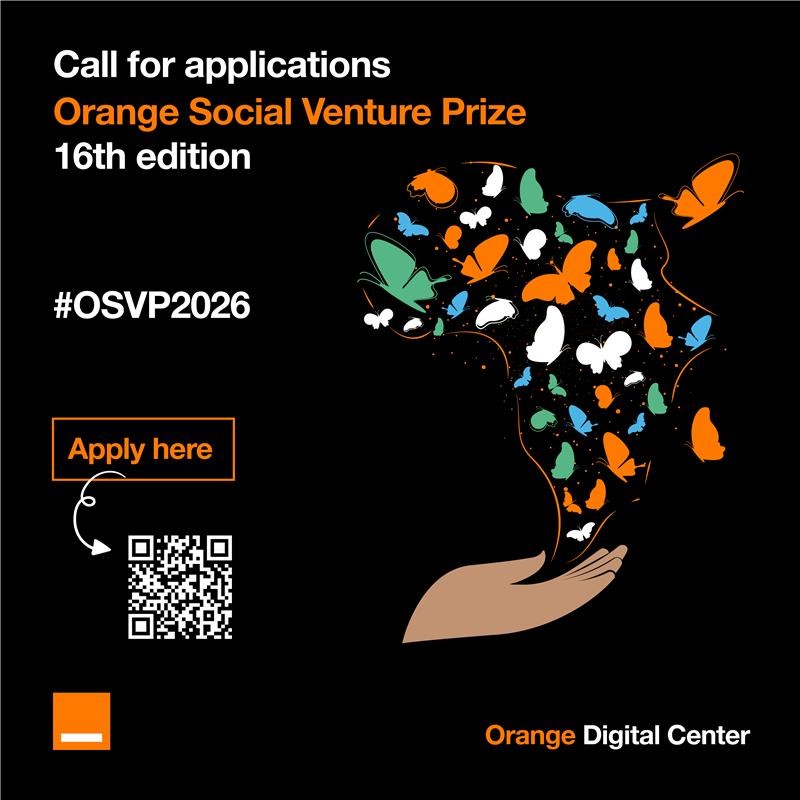
Orange launches the 16th edition of the Orange Social Ventures Prize in Middle East and Africa (OSVP) to reveal and support innovative entrepreneurship and impact projects

With more than 17,600 applications received since its creation, OSVP is today an essential catalyst for innovative entrepreneurship in Africa and the Middle East
Thursday 26 March 2026 marks the official launch of the highly anticipated 16th edition of the Orange Ventures Prize in Middle East and Africa (OSVP) (www.Orange.com), a flagship initiative dedicated to promoting high-impact entrepreneurial innovation. From 26 March 2026 until 10 May 2026, entrepreneurs from all 17 countries where Orange operates in Africa and the Middle East are invited to submit their applications on the dedicated platform: https://POESAM.Orange.com/.
An award at the heart of technological and societal challenges
For this new edition, Orange is showcasing startups that harness new technologies: artificial intelligence, big data, cybersecurity, in the service of a lasting positive impact for both populations and the planet.
Projects operating in key sectors such as agriculture, education, environment or health are particularly encouraged because of their transformative potential in the region.
A structuring device to support the growth of startups
Beyond the financial rewards, OSVP is a real growth accelerator. The winners will benefit from support within the Orange Digital Centers, as well as strategic partnerships aimed at fostering their growth, opening new market opportunities for them, facilitate access to funding and key expertise and contribute sustainably to their success.
With more than 17,600 applications received since its creation, OSVP is today an essential catalyst for innovative entrepreneurship in Africa and the Middle East.
Two phases to reveal the talents of tomorrow
The competition will take place in two stages:
- National phase (March 26 to May 10, 2026)
Organised in 17 countries, this phase allows the selection of national winners after an evaluation phase followed by a jury composed of ecosystem players and Orange representatives.
- International phase
The 3 winners from each country reach the international final and compete for:
- The International Grand Prix which will elect the 1st, 2nd and 3rd international winners
- The International Women’s Prize (up to 3 candidates per country),
The projects are first evaluated by a committee composed of employees from the Orange group. At the end of these evaluations, 10 finalists will be designated to compete for the International Grand Prix and 5 for the International Women’s Prize.
A final jury composed of experts, emblematic personalities from the tech and entrepreneurship will designate, starting in October 2026, the 3 winners of the International Grand Prix, as well as the winner of the International Women’s Prize of OSVP.
Rewards to accelerate the impact
The winners will receive significant financial support to develop their solution
- 25,000€ for the 1st prize;
- 15,000€ for the 2nd prize;
- 10,000€ for the 3rd prize;
- 20,000 € for the International Women’s Prize;
Building a future with confidence
Through the OSVP, Orange reaffirms its commitment to supporting youth, stimulating innovation and promoting inclusive economic development. By supporting impact entrepreneurs, Orange continues to reveal and bring out the key players in tomorrow’s economy.
Distributed by APO Group on behalf of Orange Middle East and Africa.












Business
Enlit Africa seeks contributions that move the conversation from strategy to execution: ensuring a Future Fit Africa
Business
CEM Africa Awards 2026 set to recognise Africa’s leading Customer Experience (CX) talent and innovation
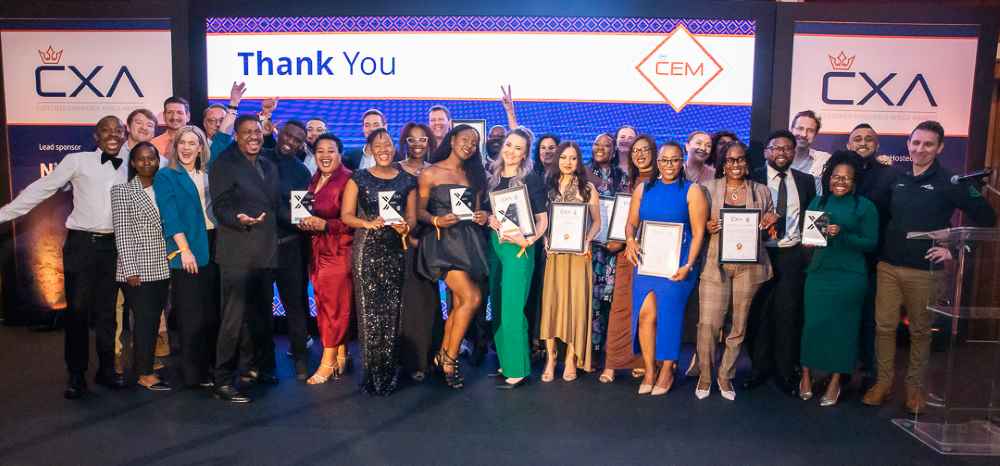
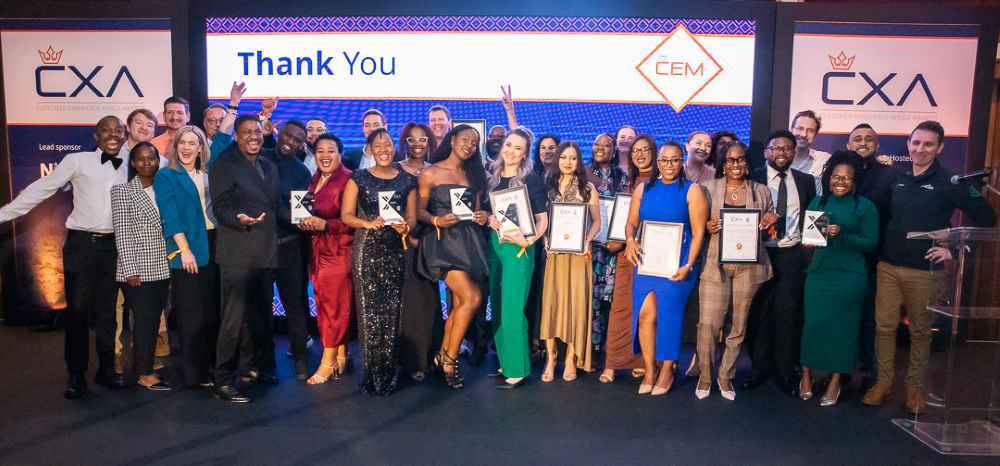
The 2025 awards attracted more than 80 entries and 31 finalists, culminating in eight award winners
The calibre of organisations and individuals recognised through the CEM Africa Awards demonstrates just how much extraordinary CX work is being done across the continent
JOHANNESBURG, South Africa, September 25, 2026/APO Group/ –Customer experience professionals, teams and organisations across Africa have just days remaining to enter the 2026 CEM Africa Awards, with free applications closing on 30 September 2026.
Taking place on 10 November 2026 at the NH Hotel in Sandton, Johannesburg, the Customer Experience Africa Awards form part of the CEM Africa platform and recognise the individuals, teams, technologies and initiatives raising the standard of customer experience across the continent.
For organisations considering whether to enter, the company they could be keeping provides a compelling indication of the calibre of the awards.
A growing roll call of African CX leaders
The 2025 awards attracted more than 80 entries and 31 finalists, culminating in eight award winners. Finalists represented organisations spanning financial services, technology, telecommunications, retail, insurance, public services and social impact.
Among them were Absa, Capitec Bank, Santam, Telesure Investment Holdings, Equity Bank, Takealot.com, NTT DATA, Frogfoot, Telviva, Harambee Youth Employment Accelerator, the University of Pretoria and South Africa’s Department of Social Development.
The 2025 winners included Serisha Iyer of Absa Corporate and Investment Banking, named Rising Star in CX; Alma Angela Olela of Jubilee Health Insurance, named CX Leader of the Year; and Franco Cotumaccio of Shadow Global, winner of Breaking Barriers in CX.
Corporate winners included Telesure Investment Holdings for Best Overall CX Solution, Krisp for Best Use of AI, Telviva for Best Enterprise Contact Centre Platform, Harambee Youth Employment Accelerator for Best Customer Experience Team of the Year and the University of Pretoria for Best Citizen Experience Initiative.
That follows a 2024 edition in which winners included NCBA Bank, MultiChoice, Digital Solutions Group, Absa Bank and Telviva, alongside individual CX leaders from across the continent.
More than a trophy
For entrants, recognition through the CEM Africa Awards puts their work in front of a wider African CX community and an independent judging panel drawn from across the industry.
The 2026 judging panel includes global CX specialist Ian Golding; Andrew (Dré) Enebeli, Head of CX & Engagement at Access Bank; Dr Oliver Museka, President and Founder of IRDM College Eswatini; Jonathan Daniels, Managing Director of CX Centric; Joven Pillay, Partner and Head of Customer Consulting at KPMG; and Qaalfa Dibeehi, Managing Partner at Human2Outcome.
This year’s awards recognise excellence across four broad pillars – People, Innovation, Transformation and Government – covering categories including CX Leader of the Year, Rising Star in CX, Breaking Barriers in CX, Best Overall CX Solution, Best Use of AI, Best Enterprise Contact Centre Platform, Best Customer Experience Team of the Year, Best Digital Transformation in Public Services and Best Citizen Experience Initiative.
“The calibre of organisations and individuals recognised through the CEM Africa Awards demonstrates just how much extraordinary CX work is being done across the continent. These awards give that work a platform. Whether it is a major transformation programme, an innovative use of technology or an individual changing how their organisation thinks about the customer, we want to make sure Africa’s best work is being seen and recognised.”
- Briteny Price, Event Manager and CEM Africa Awards Director
Final opportunity to enter
Applications for the 2026 CEM Africa Awards are free and remain open until 30 September 2026. Finalists will be announced in October, ahead of the awards ceremony on 10 November at the NH Hotel, Sandton.
Organisations, teams and individuals working to improve customer and citizen experience across Africa are encouraged to submit their entries before the deadline.
Apply for the CEM Africa Awards 2026 by 30 September 2026
Submit your application (https://apo-opa.co/4hdcimx)
Explore the CEM Africa Awards
Visit the CEM Africa Awards website (https://apo-opa.co/4iNXzzM)
Distributed by APO Group on behalf of VUKA Group.
Business
Emirates to bring the A350 to Nairobi, introducing next-generation cabin experiences

-

 Business4 days ago
Afreximbank, Ghana Infrastructure Investment Fund (GIIF) and Ghana’s 24-Hour Economy Authority launch project preparation partnership to accelerate 24H+ projects
-

 Events4 days ago
Huawei Cloud Rolls Out Enterprise AI Products Across the Board, Building an Open Agentic Cloud
-

 Energy4 days ago
Deals, Drilling and New Entrants Define Angola Oil & Gas 2026
-

 Business4 days ago
Hong Kong sets out strategies to enhance the appeal and add value to the city’s tourism industry
-

 Business4 days ago
Former DAMAC Senior Vice President Paulo J. Cruz Appointed Founding CEO of African Collaboration Group (ACG) to Spearhead Sports and Entertainment District Development Across Africa
-

 Business3 days ago
Frasers Hospitality unveils Fraser Suites Reserve, a new luxury serviced living brand
-

 Energy3 days ago
Building a Knowledge Hub for China-ASEAN Energy Cooperation
-

 Business4 days ago
Hong Kong sets out initiatives to secure long-term development of pillar industries