Connect with us
Anglostratits

Business

Orange Basin, Hard Choices: Ports, Local Content, and Permitting in a Pre-Final Investment Decision (FID) Year (By Tom Alweendo)

Published

on

African Energy Chamber

Our ambition should be disciplined: build only what is needed for appraisal and early development now; leave option value for scale-up post-FID

JOHANNESBURG, South Africa, October 24, 2025/APO Group/ —By Tom Alweendo, Founder of Alvenco Advisory. 

Namibia is in a narrow window between discovery and decision. TotalEnergies has asked to extend its exploration licence and has already signalled a smaller Venus development, with final investment decision now discussed for 2026. That moves us from big headlines to unglamorous execution: ports, people, permits. If we get those right over the next year, the investment case strengthens. If not, capital that is already mobile will drift somewhere else – Guyana, Brazil or Nigeria.

Start with logistics. Namibia needs a serviceable, phased plan for Lüderitz and a sensible overflow role for Walvis Bay. Instead, the market saw Namport pause southern-harbour upgrades to “clarify scope” and cancel a Lüderitz supply-base tender days after launch. That injects uncertainty into drilling schedules where rig days and marine spreads cost real money. The fix is not a megaproject. It is modular delivery tied to actual rig activity, such as quay length, lay-down, bunkering, and waste handling, that is commissioned in tranches with clear go/no-go gates. Publish a simple 12-month build schedule co-signed by Namport and all the relevant Ministries (Works, Finance and Industries, Mines & Energy), and ring-fence port user charges from Orange Basin activity to repay works. These moves are reversible and protect downside if activity slows.

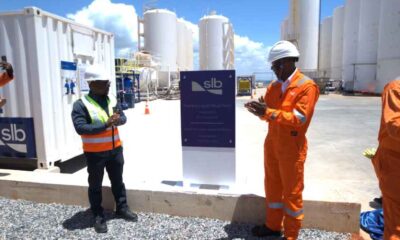
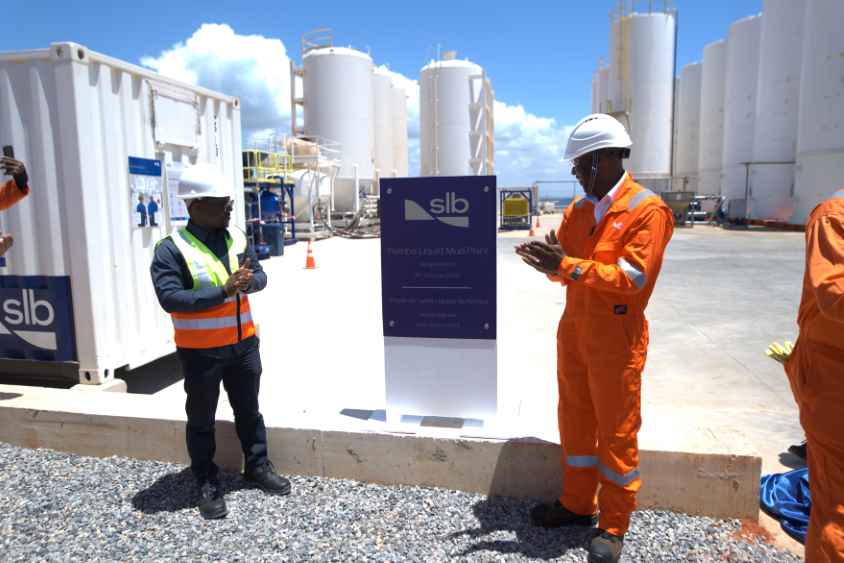
Investors should meet government halfway. Minimum-throughput and take-or-pay commitments can underwrite the first phase. Operators can synchronise rig sequences to smooth peaks and co-fund common-user assets that reduce everybody’s costs. Baker Hughes’ move to establish a Walvis Bay drilling-fluids base shows how targeted, shared infrastructure can de-risk timelines. It also reminds us that practical bottlenecks—mud, storage, maintenance—matter more than glossy port drawings. Publish quarterly schedule-certainty metrics to make performance visible.

Second, local content. The draft National Upstream Petroleum Local Content Policy sets the right direction, but intent needs teeth. Three design choices will determine whether we get real capability transfer or box-ticking. First, set transparent, phased targets by service category such as logistics, catering, HSE, fabrication. These targets are to be reviewed annually against supplier capacity. Second, require a modest training levy (for example, 1% of contract value) channelled to accredited centres, audited independently. Third, enforce prompt-payment standards for SMEs—say, 15 days—with penalties for late settlement. Pair this with a live supplier register and public spend dashboards by category. For operators, the ask is simple: pre-announce procurement six to twelve months ahead, split packages to fit SME balance sheets, and second engineers into Namibian firms with dual KPIs, namely safety and skills transfer. These steps cost little now and prevent friction later when the basin scales.

Build the minimum we truly need; codify local content that actually transfers capability; and run permitting at speed with legitimacy

Third, permitting. South Africa’s courts have shown how fragile projects become when environmental processes are thin. In August 2025, the Western Cape High Court set aside an environmental authorisation for offshore Block 5/6/7; this month Shell and the government sought leave to appeal. Whatever the outcome, the lesson for Namibia is to build legitimacy into the timetable: cumulative impact assessments along the southern coast, rigorous oil-spill modelling including transboundary scenarios, and funded independent review capacity so regulators can keep pace with submissions. Establish a single-window desk for Orange Basin approvals with statutory service-level agreements, and publish monthly dashboards of decisions taken. Speed and scrutiny are not opposites; done right, they reinforce each other and lower litigation risk.

Capital is watching our signal. Galp is marketing a 40% stake in Mopane and aims to finalise a partnership by year-end. That is both validation and a reminder that portfolios rotate fast. Clear, credible delivery on ports, local content and permitting reduces the country risk premium investors price into Orange Basin projects. Drift raises it.

Mind the base rates. The International Energy Agency estimates that, in recent years, new conventional upstream projects have taken close to 20 years on average from licence award to first production, with five years to discovery, around eight for appraisal and approval, and six for construction. There are quicker tie-back exceptions, but new hubs rarely sprint. Our ambition should be disciplined: build only what is needed for appraisal and early development now; leave option value for scale-up post-FID. That respects our constraints—people, cash, clock, and complexity—and avoids the “risk of ruin” that comes with over-build.

Macroeconomics reinforce the case for restraint with focus. Government has just trimmed the 2025 growth forecast to 3.3%, down from 4.5% in March. In that context, the Orange Basin is not a silver bullet; it is a credibility test. Deliver a few visible, bankable steps in the next six to nine months and we convert promise into jobs and tax. Miss them and scepticism about execution grows, raising costs for everyone

What does success look like by mid-2026? Lüderitz Phase 1 operating with extended berth, lay-down and night operations; a one-stop permitting desk hitting published timelines; supplier-development cohorts running against a live procurement schedule; and operators reporting local-spend and payment discipline alongside safety performance. None of this is flashy. All of it is doable within existing budgets and institutions if we prioritise and coordinate.

The choice is between narrative and navigation. We can celebrate “frontier basin” status while confusing the market with paused tenders and fuzzy scopes. Or we can move in tight, reversible steps that keep late-2026 FID credible: build the minimum we truly need; codify local content that actually transfers capability; and run permitting at speed with legitimacy. Investors will respond to proof, not promises. Policymakers can set the cadence. If both do their part, the Orange Basin will move from exciting news to investable reality; on our terms, and on time.

Distributed by APO Group on behalf of African Energy Chamber.

Home  Facebook

Business

Canada–Africa Financing Forum to Convene Investors and Decision-Makers in Cape Town – May 14, 2026

Published

on

Ateau Zola

This timely Forum comes on the heels of commitments announced by Canadian Prime Minister Mark Carney, deepening Canada–Africa commercial ties and expanding investment partnerships

TORONTO, Canada, April 29, 2026/APO Group/ –The Canada–Africa Chamber of Business (https://CanadaAfrica.ca) will convene investors, financiers, policymakers, and industry leaders in Cape Town on May 14, 2026 for the Canada–Africa Financing Forum—a high-level platform focused on unlocking capital and accelerating deal flow across African markets.

Registration is open (http://apo-opa.co/4vZN6oV)

This timely Forum comes on the heels of commitments announced by Canadian Prime Minister Mark Carney, deepening Canada–Africa commercial ties and expanding investment partnerships. The program connects leaders from venture capital, private equity, and institutional investors to examine where capital is moving—and where the next opportunities lie—supported by Canadian project partners with proven capacity to deliver on-the-ground.

Delegates will engage directly with finance and investment decision-makers, following the program opening, featuring messages from President Cyril Ramaphosa and Prime Minister Mark Carney, in addition to high-level Ministerial representation.

This Forum is about capital deployment, not just conversation

“This Forum is about capital deployment, not just conversation,” said Garreth Bloor, President of the Canada–Africa Chamber of Business. “We are convening investors, institutions, and project leaders who are actively shaping transactions across Africa—and connecting them directly with Canadian partners who are ready to work together.”

The Canada–Africa Financing Forum reflects the Chamber’s role as a privately financed, market-led platform advancing Canada-Africa trade and investment through world-class networking and information-sharing events.

Why Attend

  • Direct access to active dealmakers and capital allocators
  • Insights into where capital is being deployed and key players delivering major projects
  • Opportunities to build partnerships across Canada and African markets
  • Participation in a curated, high-level environment focused on execution

Secure Your Place

Space is limited and demand is strong.

Apply to secure your place (http://apo-opa.co/4vXb9oz)

Read More and View the Program (http://apo-opa.co/4vZN6oV)

Distributed by APO Group on behalf of The Canada-Africa Chamber of Business.

Continue Reading

Business

ORUN and 1xBET Partner to Support a Dynamic Creative Africa

Published

on

MIR Holding

During the MASA 2026 edition, held from April 11 to 18, 2026, ORUN and 1xBET implemented the We Champion Talent program, an initiative aimed at promoting African talent and advancing the development of Cultural and Creative Industries (CCIs)

ABIDJAN, Ivory Coast, April 28, 2026/APO Group/ –As part of the Innovation Village co-organized with MASA at the Palais de la Culture in Abidjan from April 14 to 18, ORUN (https://ORUN.Africa) announces the rollout of its partnership with 1xBET to support a creative Africa that is structuring itself, professionalizing, and scaling across the continent.

We aim to demonstrate that it is possible to support African talent, narratives, and creative ecosystems over the long term, with ambition and consistency

Designed as a space of convergence between heritage, innovation, and knowledge transmission, the Innovation Village features scenography crafted by Ivorian artisans, a program of panels and masterclasses on creative industries, an immersive experience produced by Orun Studios, and a major institutional highlight on April 17. Its narrative platform is built around three pillars: memory, structure, and transmission. The initiative aims to position cultural and creative industries as an economic driver for the continent.

“The Innovation Village was conceived as an act of construction. By partnering with organizations such as 1xBET, we aim to demonstrate that it is possible to support African talent, narratives, and creative ecosystems over the long term, with ambition and consistency,” said Habyba Thiero, CEO of Africa Currency Network and President of ORUN.

This vision aligns with ORUN’s broader ambition to produce, structure, and internationalize African creative industries through events, content, and strategic partnerships.

Distributed by APO Group on behalf of ORUN, part of African Currency Network (ACN).


Continue Reading

Business

MIR Holding Reaffirms Its Commitment to African Creative Industries Alongside ORUN at Marché des Arts du Spectacle Africain d’Abidjan (MASA) 2026

Published

on

MIR Holding

More than event support, this partnership reflects a commitment to backing platforms capable of structuring value chains, increasing the visibility of talent, and fostering the emergence of strong African creative infrastructures

ABIDJAN, Ivory Coast, April 28, 2026/APO Group/ –On the occasion of MASA 2026, held from April 11 to 18 in Abidjan, MIR Holding (https://MIRHolding.odoo.com) reaffirmed its commitment to supporting the growth of African creative industries by partnering with ORUN as part of the Innovation Village, hosted at the Palais de la Culture in Abidjan. This presence reflects a clear intention to support the scaling of cultural and creative industries so they can fully contribute to job creation and value generation across the continent.


Co-organized by ORUN and MASA, the Innovation Village brought together over several days scenography designed by Ivorian artisans, a program of panels and masterclasses dedicated to creative industries, an immersive experience produced by Orun Studios, and a key institutional highlight on April 17.

At MIR Holding, we believe that Africa’s future will also be shaped by its ability to structure its narratives, its talent, and its creative value chains

Built around three pillars — memory, structure, and transmission — the initiative carried a renewed ambition for culture: positioning it as a concrete lever for economic structuring and African projection.

By supporting this initiative, MIR Holding aligns with a broader dynamic aimed at strengthening connections between creation, entrepreneurship, content, youth, and growth ecosystems. More than event support, this partnership reflects a commitment to backing platforms capable of structuring value chains, increasing the visibility of talent, and fostering the emergence of strong African creative infrastructures. MIR Holding stands among the main partners of the Village, alongside Africa Currency Network and other stakeholders engaged in this vision.

“With ORUN, we are not only seeking to make culture visible. We aim to help provide it with a framework, a reach, and a trajectory. What is at stake here is the continent’s ability to better transform its creative energy into sustainable value, real opportunities, and influence,” said Habyba Thiero, CEO of Africa Currency Network and President of ORUN.

Mouhamed Dieng, President of MIR Holding, added: “Supporting Africa’s creative industries is not about backing a secondary sector. It is about investing in one of the continent’s most powerful spaces for storytelling, youth, innovation, and competitiveness. At MIR Holding, we believe that Africa’s future will also be shaped by its ability to structure its narratives, its talent, and its creative value chains.”

Distributed by APO Group on behalf of MIR Holding.


Continue Reading

Trending