Connect with us

Business

Orange Basin, Hard Choices: Ports, Local Content, and Permitting in a Pre-Final Investment Decision (FID) Year (By Tom Alweendo)

Published

on

African Energy Chamber

Our ambition should be disciplined: build only what is needed for appraisal and early development now; leave option value for scale-up post-FID

JOHANNESBURG, South Africa, October 24, 2025/APO Group/ —By Tom Alweendo, Founder of Alvenco Advisory. 

Namibia is in a narrow window between discovery and decision. TotalEnergies has asked to extend its exploration licence and has already signalled a smaller Venus development, with final investment decision now discussed for 2026. That moves us from big headlines to unglamorous execution: ports, people, permits. If we get those right over the next year, the investment case strengthens. If not, capital that is already mobile will drift somewhere else – Guyana, Brazil or Nigeria.

Start with logistics. Namibia needs a serviceable, phased plan for Lüderitz and a sensible overflow role for Walvis Bay. Instead, the market saw Namport pause southern-harbour upgrades to “clarify scope” and cancel a Lüderitz supply-base tender days after launch. That injects uncertainty into drilling schedules where rig days and marine spreads cost real money. The fix is not a megaproject. It is modular delivery tied to actual rig activity, such as quay length, lay-down, bunkering, and waste handling, that is commissioned in tranches with clear go/no-go gates. Publish a simple 12-month build schedule co-signed by Namport and all the relevant Ministries (Works, Finance and Industries, Mines & Energy), and ring-fence port user charges from Orange Basin activity to repay works. These moves are reversible and protect downside if activity slows.

Investors should meet government halfway. Minimum-throughput and take-or-pay commitments can underwrite the first phase. Operators can synchronise rig sequences to smooth peaks and co-fund common-user assets that reduce everybody’s costs. Baker Hughes’ move to establish a Walvis Bay drilling-fluids base shows how targeted, shared infrastructure can de-risk timelines. It also reminds us that practical bottlenecks—mud, storage, maintenance—matter more than glossy port drawings. Publish quarterly schedule-certainty metrics to make performance visible.

Second, local content. The draft National Upstream Petroleum Local Content Policy sets the right direction, but intent needs teeth. Three design choices will determine whether we get real capability transfer or box-ticking. First, set transparent, phased targets by service category such as logistics, catering, HSE, fabrication. These targets are to be reviewed annually against supplier capacity. Second, require a modest training levy (for example, 1% of contract value) channelled to accredited centres, audited independently. Third, enforce prompt-payment standards for SMEs—say, 15 days—with penalties for late settlement. Pair this with a live supplier register and public spend dashboards by category. For operators, the ask is simple: pre-announce procurement six to twelve months ahead, split packages to fit SME balance sheets, and second engineers into Namibian firms with dual KPIs, namely safety and skills transfer. These steps cost little now and prevent friction later when the basin scales.

Build the minimum we truly need; codify local content that actually transfers capability; and run permitting at speed with legitimacy

Third, permitting. South Africa’s courts have shown how fragile projects become when environmental processes are thin. In August 2025, the Western Cape High Court set aside an environmental authorisation for offshore Block 5/6/7; this month Shell and the government sought leave to appeal. Whatever the outcome, the lesson for Namibia is to build legitimacy into the timetable: cumulative impact assessments along the southern coast, rigorous oil-spill modelling including transboundary scenarios, and funded independent review capacity so regulators can keep pace with submissions. Establish a single-window desk for Orange Basin approvals with statutory service-level agreements, and publish monthly dashboards of decisions taken. Speed and scrutiny are not opposites; done right, they reinforce each other and lower litigation risk.

Capital is watching our signal. Galp is marketing a 40% stake in Mopane and aims to finalise a partnership by year-end. That is both validation and a reminder that portfolios rotate fast. Clear, credible delivery on ports, local content and permitting reduces the country risk premium investors price into Orange Basin projects. Drift raises it.

Mind the base rates. The International Energy Agency estimates that, in recent years, new conventional upstream projects have taken close to 20 years on average from licence award to first production, with five years to discovery, around eight for appraisal and approval, and six for construction. There are quicker tie-back exceptions, but new hubs rarely sprint. Our ambition should be disciplined: build only what is needed for appraisal and early development now; leave option value for scale-up post-FID. That respects our constraints—people, cash, clock, and complexity—and avoids the “risk of ruin” that comes with over-build.

Macroeconomics reinforce the case for restraint with focus. Government has just trimmed the 2025 growth forecast to 3.3%, down from 4.5% in March. In that context, the Orange Basin is not a silver bullet; it is a credibility test. Deliver a few visible, bankable steps in the next six to nine months and we convert promise into jobs and tax. Miss them and scepticism about execution grows, raising costs for everyone

What does success look like by mid-2026? Lüderitz Phase 1 operating with extended berth, lay-down and night operations; a one-stop permitting desk hitting published timelines; supplier-development cohorts running against a live procurement schedule; and operators reporting local-spend and payment discipline alongside safety performance. None of this is flashy. All of it is doable within existing budgets and institutions if we prioritise and coordinate.

The choice is between narrative and navigation. We can celebrate “frontier basin” status while confusing the market with paused tenders and fuzzy scopes. Or we can move in tight, reversible steps that keep late-2026 FID credible: build the minimum we truly need; codify local content that actually transfers capability; and run permitting at speed with legitimacy. Investors will respond to proof, not promises. Policymakers can set the cadence. If both do their part, the Orange Basin will move from exciting news to investable reality; on our terms, and on time.

Distributed by APO Group on behalf of African Energy Chamber.

Home  Facebook

Events

As global power structures shift, Invest Africa convenes The Africa Debate 2026 to redefine partnership in a changing world

Published

on

The Africa Debate 2026 will provide a platform for this essential, era-defining discussion, convening leaders to explore how Africa and its partners can build more balanced, resilient and sustainable models of cooperation

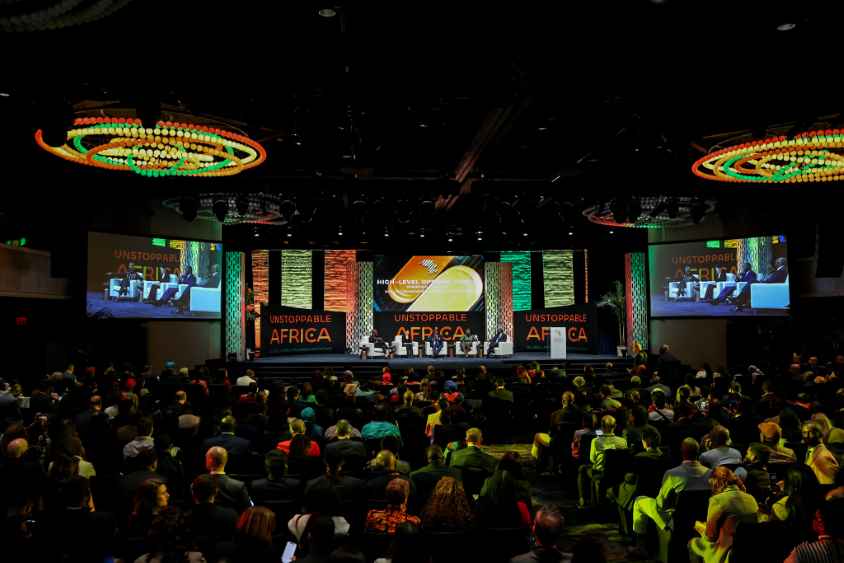
LONDON, United Kingdom, February 5, 2026/APO Group/ –As African economies assert greater agency in a rapidly evolving global order, Invest Africa (www.InvestAfrica.com) is delighted to announce The Africa Debate 2026, its flagship investment forum, taking place at the historic Guildhall in London on 3 June 2026.

Now in its 12th year, The Africa Debate has established itself as London’s premier platform for African investment dialogue since launching in 2014, convening over 800 global decision-makers annually to shape the future of trade, finance, investment, and development across the continent.

Under the theme “Redefining Partnership: Navigating a World in Transition”, this year’s forum will focus on Africa’s response to global economic realignment with greater agency, ambition and economic sovereignty.

The Africa Debate puts Africa’s priorities at the centre of the conversation, moving beyond traditional narratives to focus on ownership, resilience and long-term value creation.

“Volatility is not new to Africa. What is changing is the opportunity to respond with greater agency and ambition,” says Invest Africa CEO Chantelé Carrington.

“This year’s edition of The Africa Debate asks how we strengthen economic sovereignty — from access to capital and investment to financial and industrial policy — so African economies can take greater ownership of their growth. Success will be defined by how effectively we turn disruption into leverage and partnership into shared value.”

The Africa Debate 2026 will provide a platform for this essential, era-defining discussion, convening leaders to explore how Africa and its partners can build more balanced, resilient and sustainable models of cooperation.

Key challenges driving the debate

Core focus areas for this year’s edition of The Africa Debate include:

This year’s edition of The Africa Debate asks how we strengthen economic sovereignty — from access to capital and investment to financial and industrial policy

Global Realignment & New Partnerships

How shifting geopolitical and economic power structures are reshaping Africa’s global partnerships, trade dynamics and investment landscape.

Financing Africa’s Future

The growing need to reform the global financial architecture, new approaches to development finance, as well as the strengthening of market access and financial resilience of African economies in a changing global system.

Strategic Value Chains

Moving beyond primary exports to build local value chains in critical minerals for the green economy. Also addressing Africa’s energy access gap and mobilising investment in renewable and transitional energy systems.

Digital Transformation & Technology

Unlocking growth in fintech, AI and digital infrastructure to drive productivity, inclusion, and the next phase of Africa’s economic transformation.

The Africa Debate 2026 offers a unique platform for high-level dialogue, deal-making, and strategic engagement. Attendees will gain actionable insights from leading policymakers, investors and business leaders shaping Africa’s economic future, while building strategic partnerships that define the continent’s next growth phase.

Registration is now open (http://apo-opa.co/46b19gj).

Distributed by APO Group on behalf of Invest Africa.

Continue Reading

Business

Zion Adeoye terminated as Chief Executive Officer (CEO) of CLG due to serious personal and professional conduct violations

Published

on

After a thorough internal and external investigation, along with a disciplinary hearing chaired by Sbongiseni Dube, CLG (https://CLGglobal.com) has made the decision to terminate Zion Adeoye due to serious personal and professional conduct violations. This process adhered to the Code of Good Practice of the Labour Relations Act, ensuring fairness, transparency, and compliance with South African law.

Mr. Adeoye has been held accountable for several serious offenses, including:

  • Making malicious and defamatory statements against colleagues
  • Extortion
  • Intimidation
  • Fraud
  • Misuse of company funds
  • Theft and misappropriation of funds
  • Breach of fiduciary duty
  • Mismanagement

His actions are in direct contradiction to our firm’s core values. We do not approve of attorneys spending time in a Gentleman’s Club. CLG deeply regrets the impact this situation has had on our colleagues and continues to provide full support to those affected.

We want to express our gratitude to those who spoke up and to reassure everyone at the firm of our unwavering commitment to maintaining a respectful workplace. Misconduct of any kind is unacceptable and will be addressed decisively.

We recognize the seriousness of this matter and have referred it to the appropriate law enforcement, regulatory, and legal authorities in Nigeria, Mauritius, and South Africa. We kindly ask that the privacy of the third party involved be respected.

Distributed by APO Group on behalf of CLG.


Continue Reading

Business

The International Islamic Trade Finance Corporation (ITFC) Strengthens Partnership with the Republic of Djibouti through US$35 Million Financing Facility

Published

on

This facility forms part of the US$600 million, three-year Framework Agreement signed in May 2023 between ITFC and the Republic of Djibouti, reflecting the strong and growing partnership between both parties

JEDDAH, Saudi Arabia, February 5, 2026/APO Group/ –The International Islamic Trade Finance Corporation (ITFC) (https://www.ITFC-IDB.org), a member of the Islamic Development Bank (IsDB) Group, has signed a US$35 million sovereign financing facility with the Republic of Djibouti to support the development of the country’s bunkering services sector and strengthen its position as a strategic regional maritime and trade hub.

The facility was signed at the ITFC Headquarters in Jeddah by Eng. Adeeb Yousuf Al-Aama, Chief Executive Officer of ITFC, and H.E. Ilyas Moussa Dawaleh, Minister of Economy and Finance in charge of Industry of the Republic of Djibouti.

The financing facility is expected to contribute to Djibouti’s economic growth and revenue diversification by reinforcing the competitiveness and attractiveness of the Djibouti Port as a “one-stop port” offering comprehensive vessel-related services. With Red Sea Bunkering (RSB) as the Executing Agency, the facility will support the procurement of refined petroleum products, thus boosting RSB’s bunkering operations, enhancing revenue diversification, and consolidating Djibouti’s role as a key logistics and trading hub in the Horn of Africa and the wider region.

We look forward to deepening this partnership, creating new opportunities, and leveraging collaborative programs to advance key sectors and drive sustainable economic growth

Commenting on the signing, Eng. Adeeb Yousuf Al-Aama, CEO of ITFC, stated:

“This financing reflects ITFC’s continued commitment to supporting Djibouti’s strategic development priorities, particularly in strengthening energy security, port competitiveness, and trade facilitation. We are proud to deepen our partnership with the Republic of Djibouti and contribute to sustainable economic growth and regional integration.”

H.E. Ilyas Moussa Dawaleh, Minister of Economy and Finance in charge of Industry of the Republic of Djibouti, commented: “Today’s signing marks an important milestone in the development of Djibouti’s bunkering services and reflects our strong and valued partnership with ITFC, particularly in the oil and gas sector. This collaboration supports our ambition to position Djibouti as a regional hub for integrated maritime and logistics services. We look forward to deepening this partnership, creating new opportunities, and leveraging collaborative programs to advance key sectors and drive sustainable economic growth.”

This facility forms part of the US$600 million, three-year Framework Agreement signed in May 2023 between ITFC and the Republic of Djibouti, reflecting the strong and growing partnership between both parties.

Since its inception in 2008, ITFC and the Republic of Djibouti have maintained a strong partnership, with a total of US$1.8 billion approved primarily supporting the country’s energy sector and trade development objectives.

Distributed by APO Group on behalf of International Islamic Trade Finance Corporation (ITFC).

Continue Reading

Trending

Exit mobile version