Connect with us
Anglostratits

Tech

OPPO and MediaTek Showcase On-Device AI Innovations at MWC 2026

Published

on

OPPO

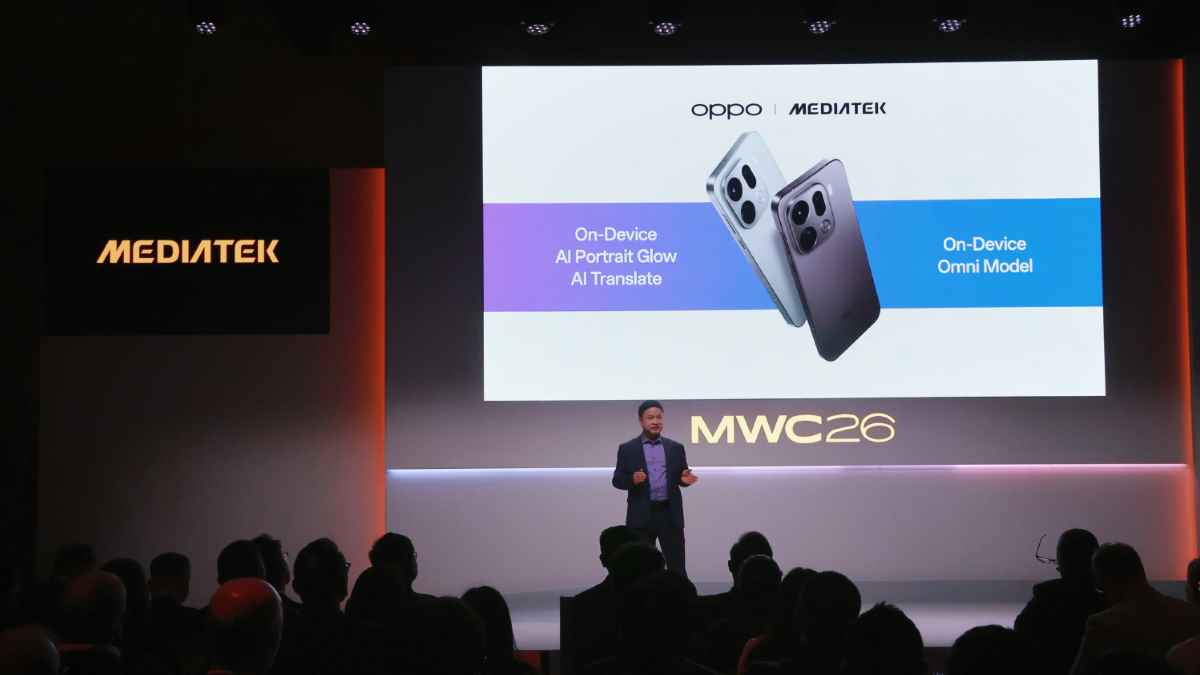
BARCELONA, SPAIN – Media OutReach Newswire – 4 March 2026 – OPPO and MediaTek showcased new on-device AI advancements at MediaTek’s “AI for Life” keynote during Mobile World Congress (MWC) 2026. Jason Liao, President of the OPPO Research Institute, highlighted how deep collaboration between the two companies is accelerating AI deployment on smartphones.

The event marked the rollout of new on-device AI capabilities, progress on the jointly developed Omni Model, and advances in cross-ecosystem connectivity — outlining a shared vision for the next generation of AI Phones.

From Chip to Experience: Advancing On-Device AI

As mobile experiences become increasingly AI-driven, OPPO is advancing its AI strategy centered on “New Computing, New Perception, and New Ecosystem.” At the core of this strategy is “On-device Compute”, enabling low-latency, privacy-preserving, and personalized AI experiences. As Jason Liao emphasized, “On-device Compute is a cornerstone of OPPO’s AI strategy, making AI a perceptible, real-time experience integrated into everyday usage.” This shared vision underpins the deep collaboration between OPPO and MediaTek on flagship chip platforms, accelerating the transition of on-device AI from technical concept to scalable deployment.

Powered by the MediaTek Dimensity 9500 platform, OPPO’s self-developed on-device AI Translate and AI Portrait Glow now deliver performance comparable to cloud-based solutions. These features will soon roll out to OPPO Find X9 Series through the upcoming ColorOS 16 software update.

The on-device AI Translate can run directly on the device, achieving an average 15% improvement in accuracy over conventional approaches while supporting seamless multilingual translation. It maintains stable output even without internet connectivity or under weak signal conditions, enabling reliable translation across diverse scenarios.

Meanwhile, on-device AI Portrait Glow enhances portraits captured in challenging lighting environments. By intelligently analyzing and reconstructing scene illumination, it improves results in dim or backlit conditions while maintaining natural rendering — all without network reliance. Demonstrations have showcased exceptional performance in both visual realism and adaptability to various scenes.

OPPO and MediaTek also unveiled a technology preview of Omni, the industry’s first on-device full-modal AI model designed for multi-modal understanding and interaction. Supporting voice, video, and text inputs, Omni enables live scene understanding and interactive Q&A directly on a smartphone. This advancement strengthens on-device AI’s ability to perceive and interpret the physical world, laying the foundation for more proactive and natural human–computer interaction.

Demonstrating Ecosystem Integration and Innovation

The collaboration was further showcased in the interactive experience zone at the MediaTek booth, where attendees explored Find X9 Pro’s on-device AI capabilities alongside its telephoto imaging with the OPPO Hasselblad Teleconverter. Reno15 Pro was also featured, presenting creative AI imaging tools including AI Motion Photo Eraser, AI Motion Photo Popout, and the AI Flash Photography.

Coming soon, OPPO’s Find X9 Series will bring Android™ Quick Share, enabled in close collaboration with MediaTek and Google. Without installing third-party applications, users can conveniently and securely transfer files between OPPO smartphones and iOS, iPadOS and macOS devices, improving cross-platform interoperability. The feature is expected to begin rolling out via software update starting in March.

At MWC 2026, OPPO Find X9 Pro was shortlisted for the “Best Smartphone” award at the GLOMO Awards, gaining recognition for its innovation across performance, imaging, and AI integration.

Looking ahead, OPPO and MediaTek will continue strengthening collaboration in frontier areas such as on-device AI to advance user experience. Together, the two companies remain committed to delivering more powerful and reliable AI experiences to users worldwide.

* Google, Android and Quick Share are trademarks of Google LLC.

Tech

Huawei Announces Wi-Fi 7 Patent Licensing Rates, Reaffirms Commitment to Transparent and Reasonable Licensing

Published

on

Huawei

SHENZHEN, CHINA – Media OutReach Newswire – 3 July 2026 – Huawei today announced that its patent licensing royalty rate for Wi‑Fi 7 technologies would be set at US$0.5 per unit for Wi Fi 7 compliant devices.

This announcement underscores Huawei’s dedication to fostering a healthy innovation ecosystem through fair, transparent, and predictable licensing practices.

As the latest generation of Wi-Fi technologies, Wi-Fi 7 delivers dramatically higher throughput, lower latency, and greater reliability. Serving as much more than just a connectivity upgrade, it lays the groundwork for the next wave of digital transformation and opens up new possibilities for interactions between people and intelligent systems.

As a leading contributor to the IEEE 802.11 standards family, Huawei has played a pivotal role in shaping Wi‑Fi 7 (802.11be) technologies and holds one of the largest portfolios of declared essential patents for Wi‑Fi 7. The company has invested a decade of research and substantial resources into developing the core technologies that make Wi-Fi 7 truly next generation.

Huawei has thus emerged as a leader in the global Wi-Fi licensing landscape, and its patent license agreements had covered over 1.2 billion consumer electronic devices worldwide by the end of 2024.

With today’s announcement, Huawei provides clear advance notice of its Wi‑Fi 7 royalty rate, which is US$0.5 per unit for consumer‑grade Wi‑Fi 7 devices. Implementers may obtain licenses either through bilateral agreements or via patent pools, on FRAND (Fair, Reasonable, and Non-Discriminatory) terms.

In July 2022, Huawei joined the Sisvel Wi‑Fi 6 patent pool as a founding member, concurrently becoming both a licensor and a licensee of the pool. The patent pool is a valuable option for the industry which in large provides a “one-stop” licensing solution under a transparent and fair framework with lower transactions costs.

Huawei also maintains a strong and proven Wi-Fi 6 patent portfolio, which has been widely recognized and licensed across the industry. This legacy of innovation across successive generations further demonstrates Huawei’s long-term commitment to advancing wireless connectivity.

Building on this success, Huawei has extended its participation to the Sisvel Wi‑Fi Multimode pool as a founding member, offering licensees a single, streamlined platform for accessing essential patents across both Wi‑Fi 6 and Wi‑Fi 7 generations.

Alan Fan, Huawei’s Chief Intellectual Property Officer, said: “Through these initiatives, Huawei continues to facilitate collaborative licensing models that balance the interests of innovators and implementers, further reinforcing its leadership in shaping a transparent and efficient global Wi-Fi licensing environment.”

For more information on Huawei’s Wi‑Fi 7 licensing program, please visit [Huawei IP licensing webpage].

Continue Reading

Business

Binance Surpasses $1 Billion in Assets Under Management for Stocks Trading in 30 Days

Published

on

Binance

Over $3 billion in trading volume and 73% of users from emerging markets signal structural demand for global equity access

JOHANNESBURG, South Africa, July 2, 2026/APO Group/ –Binance (www.Binance.com), the world’s leading blockchain ecosystem and digital asset infrastructure provider, today announced that stock trading on its platform has surpassed $1 billion in assets under management (AUM) in 30 days since launch. The milestone is accompanied by more than $3 billion in total trading volume since the product went live on June 1, 2026.


Stock trading on Binance gives users access to over 7,000 U.S. stocks and ETFs (https://apo-opa.co/4v7gJTs), settled in stablecoins, directly within the Binance app alongside their existing crypto holdings.

Key figures since launch include:

  • More than $1 billion in AUM reached within 30 days of launch
  • Over $3 billion in total trading volume since June 1, 2026
  • Average daily inflows of $42 million
  • Approximately 73% of users come from emerging markets
  • 1 in 7 visitors to Binance’s stock trading page registered an account; of those new sign-ups, nearly 90% went on to place a trade
  • Fractional orders averaged 35% of equity trading volume, with users able to participate from as little as $5
  • Approximately 71% of equity holdings allocated to the Technology sector, with almost half (48%) of that directed toward Semiconductors

“A billion dollars in 30 days is a sign of the demand that has been waiting decades for a door to walk through. The walls that kept most of the world out of U.S. stocks were never as solid as they looked. We built this for the hundreds of millions of people who never had a way in,” said Shunyet Jan, Head of Exchange and Trading at Binance.

A billion dollars in 30 days is a sign of the demand that has been waiting decades for a door to walk through

Closing a Longstanding Access Gap

According to Binance Research (https://apo-opa.co/3SIAL9s), only around 11% of adults worldwide currently hold a brokerage account. U.S. equities represent roughly half of global stock market capitalisation, yet foreign investors hold only around 18% of that market, and equity participation outside the United States broadly sits below 20%.

Stock trading on Binance addresses this by allowing users to access U.S. stocks and ETFs through stablecoins and BNB, without a traditional brokerage account. Approximately 73% of users come from emerging markets, the regions which traditional brokerages have historically underserved. Meanwhile, fractional orders averaged 35% of equity trading volume, peaking at 72% on June 10 before stabilising near 20% as smaller-size traders demonstrated preference for accessible, fractional exposure of stocks. This reflects one of the core advantages of acquiring stocks through Binance: removing the capital barrier of full-share ownership and allowing users to participate with amounts as small as $5.

User behaviour points to deliberate investing rather than speculation. Nearly 740 of the 7,000 available stocks and ETFs have already been traded. Approximately 71% of equity holdings are allocated to the Technology sector, with 48% of that directed toward Semiconductors, reflecting a clear tilt toward AI-related themes. The Technology sector generates approximately 23 times the trading volume of other sectors, underscoring the conviction that Binance users have behind these positions. The allocation patterns are consistent with a financially literate user base actively managing sector exposure rather than trading indiscriminately.

Industry Outlook

Stock trading on Binance crossing $1 billion in AUM within 30 days is an early data point in a structural shift that extends beyond a single product. Today, only around 700 million brokerage accounts exist globally, while crypto exchanges have already built distribution infrastructure reaching hundreds of millions of users in markets where traditional brokerages have limited presence. Binance Research projects that by 2031, crypto exchanges as a category could channel $2 trillion in incremental capital into global equity markets and bring 300 million new investors into the asset class.

The near-term trajectory supports the thesis. Based on current growth, Binance Research projects that AUM from stock trading on Binance could exceed $10 billion by the end of 2026, less than seven months after launch. The next wave of equity market participation is unlikely to come from traditional brokerages expanding their reach. It is more likely to come from crypto-native platforms that have already solved the distribution problem, and are now solving the access problem to bring the next few billion users onboard.

This milestone follows the recent achievement by bStocks, Binance’s tokenized 1:1 U.S. securities, which hit $100 million in AUM within two weeks of launch (https://apo-opa.co/4ePxXi9). Together, stock trading and bStocks are part of Binance’s broader effort to expand user access to assets beyond digital assets.

Distributed by APO Group on behalf of Binance.

Continue Reading

Events

China’s digital hub Hangzhou hosts conference on AI, OPC

Published

on

OPC

HANGZHOU, CHINA – Media OutReach Newswire – 30 June 2026 – The inaugural AI+OPC Innovation and Development Conference was held from June 29 to 30 in Shangcheng District, Hangzhou, capital city of east China’s Zhejiang Province. Centered on one-person company (OPC), a new form of smart economy in the AI era, the conference program comprised one opening ceremony and two parallel breakout sessions.

It gathered around 400 delegates from government departments, industry associations, financial institutions, AI enterprises and OPC startup operators across the country. Participants exchanged insights on AI innovation pathways and cross-industry integration strategies, injecting strong impetus into Hangzhou’s ambition to develop a national benchmark hub for AI+OPC entrepreneurship.

A series of key launches and milestone ceremonies took place during the opening segment. Official releases included the 2026 national OPC development observation report, Hangzhou’s 2026–2028 action plan and supporting policies to build a national AI+OPC entrepreneurship hub, and a catalog of actionable AI+OPC application scenarios. Attendees also received an in-depth interpretation of the specifications for AI-enabled OPC community services and evaluation.

The ceremony featured multiple landmark initiatives: plaque awarding for Hangzhou’s priority AI+OPC incubation communities and dedicated observation sites, the official launch of the AI+OPC Community Alliance initiative, and a kickoff marking the official construction of the national AI+OPC entrepreneurship hub.

The open forum session featured keynote speeches from distinguished industry and academic leaders. Speakers included Pan Yunhe, former executive vice president of the Chinese Academy of Engineering and professor at Zhejiang University; Liang Gui, former executive vice governor of Jiangxi Province and ex-director of the Torch High Technology Industry Development Center under the Ministry of Industry and Information Technology; and Zou Ling, head of Hong Hub, Shangcheng District’s single-member unicorn startup acceleration community, who shared cutting-edge insights from varied perspectives.

A panel dialogue followed, bringing together representatives from Moshu OPC Community (Beijing E-Town), the School of Future Science and Engineering at Soochow University, Qingju Hub · Future Digital Intelligence Port (Shangcheng District), and Puhua Capital for in-depth industry exchanges.

Complementary concurrent events held throughout the conference included an OPC capital-industry matchmaking salon, a symposium on industry-education integration for AI-powered OPC sectors, and a national exchange forum for AI+OPC community practitioners.

OPC has emerged as a vibrant new engine driving economic vitality and underpinning high-quality development. Against the backdrop of a new development era, the inaugural Hangzhou AI+OPC Innovation and Development Conference unites OPC innovators nationwide.

Drawing on the creative energy of millions of independent super-individual operators, the event delivers sustained digital momentum to fuel Hangzhou’s super-individual economy, while rolling out replicable local practices and actionable Hangzhou solutions to advance high-quality growth of smart economies nationwide.


Continue Reading

Trending