Connect with us
Anglostratits

Energy

Nigeria’s Olu Verheijen Joins G20 Africa Energy Investment Forum Amid Strategic Reforms

Published

on

African Energy Chamber

Hosted by the African Energy Chamber, the G20 Africa Energy Investment Forum takes place November 21 at the Southern Sun Sandton in Johannesburg

JOHANNESBURG, South Africa, November 7, 2025/APO Group/ –As the G20 Africa Energy Investment Forum fast-approaches, major African oil and gas producers such as Nigeria are gearing up to bring their strategic energy agendas to a global audience. Nigeria’s Special Advisor to President Bola Tinubu on Energy Olu Verheijen has joined the forum – taking place November 21 in Johannesburg – where she is expected to share insight into how the country’s recent slate of reforms is not only attracting foreign investment into the energy value chain but are positioning Nigeria as a benchmark for African nations as they pursue a hydrocarbon-driven energy transition.


As one of the continent’s biggest oil and gas producers, Nigeria has been realigning policy with the aim of accelerating exploration, reversing production decline and unlocking greater value from both onshore and offshore hydrocarbon basins. Recent reforms include the introduction of the “Upstream Petroleum Operations” (Cost Efficiency Incentives) Order this year, offering performance-based tax credits to oil and gas companies that achieve cost-reduction targets. The policy aims to lower operational costs, enhance the sector’s attractiveness while attracting investment into upstream projects. It also follows the implementation of the Petroleum Industry Act (PIA) in 2021, which overhauled sector governance, unbundled the Nigerian National Petroleum Company into a commercially-oriented entity and established a modernized regulatory framework to attract capital and foster sustainable growth.

The impact of these reforms has already been evident. Since the enactment of the PIA, Nigeria has catalyzed over $17 billion in foreign direct investment into its oil and gas industry, reflecting renewed global confidence in the market. The country has also witnessed a surge in spending from active operators, including a $1.5 billion investment by ExxonMobil to revitalize its Usan deepwater oilfield; $5 billion FID reached for Shell’s Bonga North Deepwater Development; and a $550 million investment by TotalEnergies to develop a gas processing facility. These investments follow a series of merger and acquisitions in 2024, with the country attracting $6.7 billion in investments throughout the year, driven by acquisitions by Seplat, Chappal Energies and Oando. These developments are aligned with Nigeria’s broader goal to increase production upwards of two million barrels per day.

By fostering transparency, incentivizing investment and prioritizing both hydrocarbons and renewables, Nigeria is showing that energy security and transition are not competing goal

Nigeria’s energy strategy transcends the oil industry, showcasing a diverse and multi-faceted development approach that considers all forms of energy. Part of its National Energy Transition Plan – which aims to advance low-carbon and sustainable energy projects – the country has set a goal to increase gas production to 12 billion cubic feet per day by 2030 and is seeking $60 billion over the next five to seven years to strengthen the gas value chain. With over 200 trillion cubic feet of proven gas reserves, Nigeria’s gas sector has become a key priority for the nation’s development agenda.

In the renewable energy sector, the country has established a ’30-30-30’ plan, targeting 30 GW of grid-connected power capacity by 2030, 30% of which will be derived from renewable energy sources. The plan comes as the country pursues net-zero by 2060 and is expected to contribute towards its goal of achieving universal access to electricity. Various projects have been launched to realize this goal. Oando Clean Energy is developing a 1.2 GW solar farm in Jigawa; the World Bank is backing the $750 million Distributed Access through Renewable Energy Scale-up project, set to provide power to over 17.5 million Nigerians; while the Rural Electrification Agency of Nigeria has signed agreements with 10 companies for the generation of 948 MW of electricity. These developments are not only set to strengthen the country’s power capacity but create thousands of jobs and support local business development.

“Nigeria’s energy reforms are setting a powerful precedent for what African-led policy can achieve. By fostering transparency, incentivizing investment and prioritizing both hydrocarbons and renewables, Nigeria is showing that energy security and transition are not competing goals; they are complementary drivers of growth,” states NJ Ayuk, Executive Chairman, African Energy Chamber.

Nigeria’s multi-faceted energy strategy aligns closely with the upcoming forum, which aims to promote an Africa-centric approach to the energy transition. Recognizing the continent’s vital need to power and industrialize its economies, the G20 Africa Energy Investment Forum will offer a bridge between global capital and African projects, tackling key topics such as the role of natural gas, the value of integrated energy systems and how African oil producers can drive the continent’s energy transition.

To register for the Forum, click here (https://apo-opa.co/43Tsxht).

Distributed by APO Group on behalf of African Energy Chamber.

Home  Facebook

Business

African Energy Week (AEW) 2026 Technical Sessions Put Technology Behind Africa’s Next Energy Projects in Focus

Published

on

African Energy Chamber

Day 2 technical sessions at African Energy Week 2026 will examine frontier exploration, major gas developments, project economics and the technologies supporting Africa’s expanding oil, gas and LNG sectors

CAPE TOWN, South Africa, September 22, 2026/APO Group/ –African Energy Week (AEW) 2026’s Day 2 Technical Stages will put the technology and technical expertise behind Africa’s next wave of energy projects in focus, with sessions covering subsurface interpretation, deepwater exploration, gas development, project economics, digitalization, offshore operations and infrastructure.


The program will unfold across two exhibition-hall stages, with the Drill Room focusing on practical applications across exploration, gas development, offshore operations and LNG, while the Innovation Hub will examine frontier exploration, energy markets, digital technologies and infrastructure. Together, the sessions connect project-level technologies with the wider investment and development challenges facing Africa’s energy industry.

The day opens with GeoEnergy Petroleum Director Maged Fahim, who will examine how legacy and newly acquired subsurface datasets can be integrated with modern technologies to identify additional upstream opportunities. TGS Principal Exploration Advisor Felicia Winter will then focus on Angola’s deepwater basins, examining how modern seismic acquisition and imaging can be used to reinterpret existing data and evaluate frontier plays.

The discussions come as Angola seeks to build on renewed offshore activity. TotalEnergies announced in September that it plans to invest $10 billion in Angola over the next five years, including in exploration, while advancing its $6 billion Kaminho deepwater development.

Gas development will take center stage through two presentations by TotalEnergies. Alexandre Depiesse, GPI Venus, will address appraisal strategies and commercial viability for Orange Basin discoveries, while Mozambique LNG Operations and Project Director Nicolas Cambefort will examine development and optimisation of the Rovuma Basin gas resources. Mozambique LNG, a 13.1-million-ton-per-year project in Area 1 led by TotalEnergies, resumed activities in January 2026 following the lifting of force majeure, putting development of Mozambique’s major offshore gas resources back into focus.

AEW 2026 reflects the practical challenges facing Africa’s energy industry as projects move from resource potential toward development and production

The Republic of Congo National Showcase will provide another perspective on Africa’s expanding LNG industry. The country’s Congo LNG project reached a new stage in February 2026 with the start of commercial production from its second phase. The addition of the Nguya FLNG unit brought total liquefaction capacity to 3 million tons per year, expanding Congo’s ability to monetize its offshore gas resources.

The program will then broaden from individual projects to the continent-wide investment outlook with the launch of The State of African Energy 2027. AEC Senior Vice President Verner Ayukegba and S&P Global Energy Executive Director Max Pietzsch will present the outlook, covering upstream oil and gas, LNG, downstream markets, power, renewables and critical minerals against changing demand, trade flows and energy security requirements.

Project decision-making will remain under examination as S&P Global Energy Technical Research Analyst Tasnika Goorhoo presents “From Limited Data to Better Decisions: How Benchmarking Strengthens Upstream Project Outcomes.” The session will examine how comparative project data can help operators assess performance, costs and development outcomes.

NOV Vice President Mats Anderson will address offshore optimization through high-speed downhole connectivity and real-time distributed measurements, examining how faster access to downhole information can improve operational visibility and decision-making.

Infrastructure will also feature prominently, with Kenyon International West Africa CEO Victor Ekpenyong examining asset integrity and pipeline infrastructure through the company’s CACTUS and FlexSteel technologies. Honeywell Technologies Africa will close the technology-focused sessions with its end-to-end LNG offering, while SLB, InSwitch, the Petroleum Directorate of Sierra Leone and PETROSEN will bring additional perspectives on technology, digitalization and energy services.

“AEW 2026 reflects the practical challenges facing Africa’s energy industry as projects move from resource potential toward development and production,” said NJ Ayuk, Executive Chairman of the AEC. “From subsurface interpretation and deepwater exploration to LNG development, project benchmarking, digitalization and infrastructure, these technical sessions highlight the expertise and technologies needed to develop Africa’s resources efficiently and create lasting value across the energy value chain.”

AEW 2026 takes place from October 12–16 in Cape Town, bringing together governments, investors, operators and technology providers to discuss investment, project development and the future of Africa’s energy sector.

Distributed by APO Group on behalf of African Energy Chamber.


Continue Reading

Business

Rising power costs put energy strategy at the centre of industrial competitiveness

Published

on

South Africa

C&I Energy + Storage Summit Johannesburg to focus on the procurement, cost and investment decisions facing South Africa’s large energy users

JOHANNESBURG, South Africa, September 22, 2026/APO Group/ –The cost of electricity is no longer only an energy issue for South African businesses. It is increasingly a question of competitiveness, investment and long-term operational resilience.

Recent figures show the pressure on large power users. Business Day reported on 7 September that South Africa’s mining and industrial majors paid Eskom R115 billion for electricity in the 2025/26 financial year. According to Eskom’s annual report, industrial electricity demand fell by more than 22% over the same period as high power costs weighed on energy-intensive operations.


At the same time, major businesses are moving to alternative supply. Reuters reported on 26 August that South African mining companies are accelerating investment in renewable energy to cut costs, diversify supply and meet decarbonisation targets.

For commercial and industrial energy users, the question is no longer simply how to secure power. It is how to buy it, what to invest in, and which energy strategy makes the strongest commercial sense.

Energy procurement is becoming more complex

Businesses are now weighing several procurement options at once. Should they sign a long-term PPA? Buy through an electricity trader? Wheel renewable power across the grid? Invest in behind-the-meter generation? Add battery storage? Each option carries different implications for cost, risk, contracting and long-term flexibility.

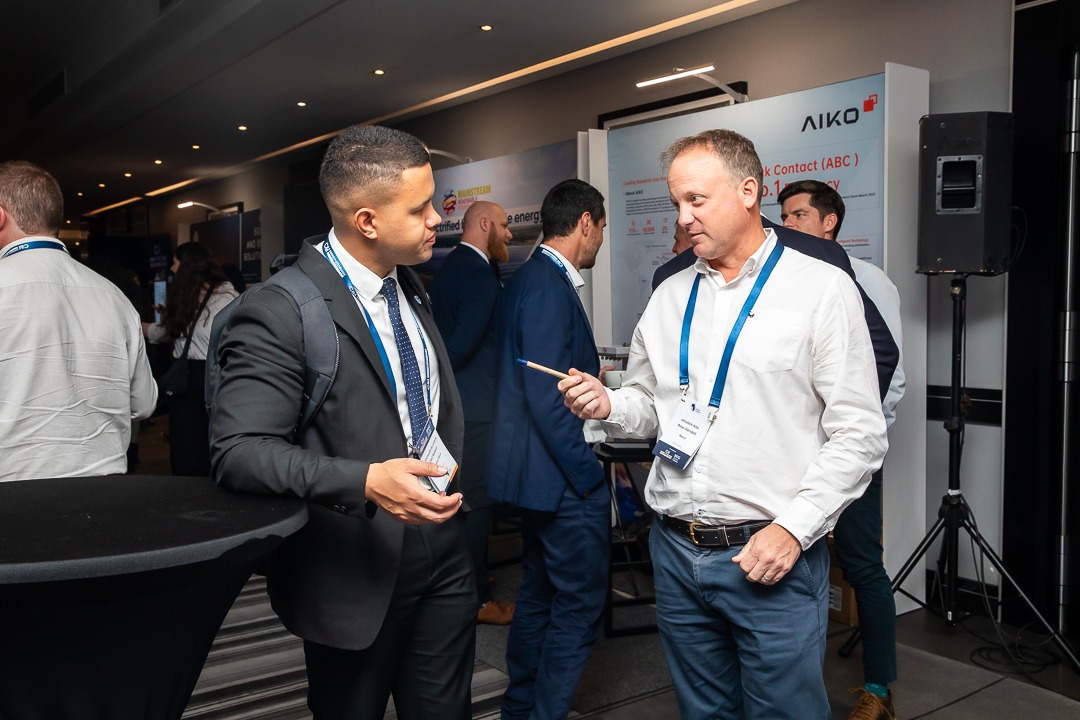
These decisions will take centre stage at the C&I Energy + Storage Summit Johannesburg, taking place on 28–29 October 2026 at The Maslow Hotel, Sandton. The programme is built around the practical challenges facing energy buyers today, with a focus on real projects, commercial models and implementation rather than technology in isolation.

A programme built around the buyer’s decisions

The summit closes with the C&I Decision Clinic: Ask the Experts, a masterclass where attendees submit real project challenges in advance and receive practical, anonymised responses from experts. Questions on the table include whether to build onsite PV or sign a wheeled PPA, how much battery storage makes commercial sense, what a bankable project preparation pack should contain, and what financiers require before term sheet stage.

It follows The C&I Energy Playbook: Five decisions business leaders need to make now, a closing panel in which the moderators of key summit sessions distil the programme into the priorities C&I businesses should act on.

Other sessions address the questions buyers are asking now:

  • Energy storage beyond backup power: unlocking commercial value examines peak shaving, demand charge management, energy arbitrage and hybrid PV-plus-storage business models, along with the operational realities of dispatch, degradation and warranties.
  • Making public-private engagement work for you unpacks how wheeling agreements are structured in practice, where interface risks arise, and how businesses can engage utilities and municipalities early.
  • Reducing energy costs without building new generation is a case-study-led workshop on energy efficiency, operational optimisation, demand response and digital energy management.
  • Projects Spotlight gives energy users the floor to share the strategies they have implemented, the lessons learned and the outcomes achieved.

The programme opens with the keynote panel Threats and opportunities in South Africa’s industrial future, bringing together policymakers, industrial leaders, financiers, and energy and water experts.

Bringing energy buyers into the conversation

The summit’s Hosted Buyer Programme is designed for qualified end-user energy buyers across sectors including mining, manufacturing, property, agriculture and other energy-intensive industries. Hosted buyers take part in the full programme and receive curated engagement with solution providers across energy procurement, storage deployment and project development.

Four events, one venue

The summit is co-located with the EIUG Conference, Water Security Africa and the Data Centre Summit, bringing the energy, water and digital infrastructure communities together in Sandton. It is brought to you by Enlit Africa, with ESI Africa as host media, and is accredited by the SAIEE.

Qualified commercial and industrial energy users can apply for the Hosted Buyer Programme at https://apo-opa.co/4yPnXOg, and bring their project questions to the Decision Clinic.

Full programme: https://apo-opa.co/4xK2ANv


Distributed by APO Group on behalf of VUKA Group.


Continue Reading

Energy

Building a Knowledge Hub for China-ASEAN Energy Cooperation

Published

on

ASEAN

NANNING, CHINA – Media OutReach Newswire – 21 September 2026 – During the 23rd China-ASEAN Expo and the China-ASEAN Business and Investment Summit, China Southern Power Grid showcased a range of innovations designed to support energy cooperation between China and ASEAN. These included the DaWatt – Lao Language Large Language Model (LLM) for the Energy and Power Sector V2.0 and the Flexible Grayscale Intelligent Monitoring & Analysis Platform for power system cybersecurity, highlighting expanding opportunities for cooperation in digitalization, intelligent technologies and green energy.

The Lao-language LLM has been deployed at Electricité du Laos Transmission Company Limited (EDL-T), where it can automatically analyze thousands of inspection images within a short period of time. After its algorithms were optimized for Laos’ mountainous and rainforest terrain, the model completed intelligent inspection analysis for four transmission lines, processing 26,000 drone inspection images and identifying more than 3,600 equipment defects.


Liu Ying, general manager of the Digitalization Department at Guangxi Power Grid Co., Ltd., said the company has been building multilingual professional corpora for the power sector, covering ASEAN countries including Laos, Vietnam and Malaysia. Drawing on the capabilities of the DaWatt foundation model, the company is developing energy and power models tailored to ASEAN languages and real-world power industry applications.

Talent development is another focus of the cooperation. The China-ASEAN Institute of Energy, jointly established by Guangxi Power Grid Co., Ltd. and Guangxi University, is exploring an industry-university training model with a strong emphasis on practical experience. So far, two cohorts totaling 53 students from ASEAN countries have enrolled.

Cooperation is also evolving from one-way training toward joint innovation. Guangxi Power Grid Co., Ltd. and the Royal Academy of Cambodia have jointly established a laboratory for artificial intelligence and safety equipment, while the company has also launched peer-to-peer exchanges with Electricité du Laos on improving power supply reliability.

To address language barriers in cross-border technical exchanges, Guangxi Power Grid Co., Ltd. has developed an AI-powered translation platform backed by a specialized database containing terminology for more than 1,800 types of power equipment. The platform supports accurate translation between Chinese and English, Chinese and Lao, and Chinese and Vietnamese.

At a recent training program for Chinese and overseas engineers, the system supported one-click generation of bilingual course materials and real-time speech translation, helping participants navigate highly specialized power-sector terminology.

To support regular international exchanges, Guangxi Power Grid Co., Ltd. has also established an international talent pool covering management, technical and skilled personnel. It has developed 24 hours of courses on international affairs as well as 20 short-form video courses.

“This year, we will also explore joint postgraduate programs with universities in ASEAN countries,” said Sun Xiaohua, deputy director of the Human Resources Department at Guangxi Power Grid Co., Ltd.

Looking ahead, Guangxi Power Grid Co., Ltd. plans to further advance a development model featuring “R&D in Beijing, Shanghai and Guangdong, integration in Guangxi, and application in ASEAN.” The company will continue expanding its multilingual power-sector corpora and explore a “Token Goes Global” model for power-sector AI, with computing resources and models based in Guangxi while knowledge services are delivered overseas. The effort is aimed at creating new forms of China-ASEAN energy cooperation and supporting the green development of the China-ASEAN Free Trade Area 3.0.


Continue Reading

Trending