Connect with us

Energy

Nigeria’s Olu Verheijen Joins G20 Africa Energy Investment Forum Amid Strategic Reforms

Published

on

African Energy Chamber

Hosted by the African Energy Chamber, the G20 Africa Energy Investment Forum takes place November 21 at the Southern Sun Sandton in Johannesburg

JOHANNESBURG, South Africa, November 7, 2025/APO Group/ –As the G20 Africa Energy Investment Forum fast-approaches, major African oil and gas producers such as Nigeria are gearing up to bring their strategic energy agendas to a global audience. Nigeria’s Special Advisor to President Bola Tinubu on Energy Olu Verheijen has joined the forum – taking place November 21 in Johannesburg – where she is expected to share insight into how the country’s recent slate of reforms is not only attracting foreign investment into the energy value chain but are positioning Nigeria as a benchmark for African nations as they pursue a hydrocarbon-driven energy transition.


As one of the continent’s biggest oil and gas producers, Nigeria has been realigning policy with the aim of accelerating exploration, reversing production decline and unlocking greater value from both onshore and offshore hydrocarbon basins. Recent reforms include the introduction of the “Upstream Petroleum Operations” (Cost Efficiency Incentives) Order this year, offering performance-based tax credits to oil and gas companies that achieve cost-reduction targets. The policy aims to lower operational costs, enhance the sector’s attractiveness while attracting investment into upstream projects. It also follows the implementation of the Petroleum Industry Act (PIA) in 2021, which overhauled sector governance, unbundled the Nigerian National Petroleum Company into a commercially-oriented entity and established a modernized regulatory framework to attract capital and foster sustainable growth.

The impact of these reforms has already been evident. Since the enactment of the PIA, Nigeria has catalyzed over $17 billion in foreign direct investment into its oil and gas industry, reflecting renewed global confidence in the market. The country has also witnessed a surge in spending from active operators, including a $1.5 billion investment by ExxonMobil to revitalize its Usan deepwater oilfield; $5 billion FID reached for Shell’s Bonga North Deepwater Development; and a $550 million investment by TotalEnergies to develop a gas processing facility. These investments follow a series of merger and acquisitions in 2024, with the country attracting $6.7 billion in investments throughout the year, driven by acquisitions by Seplat, Chappal Energies and Oando. These developments are aligned with Nigeria’s broader goal to increase production upwards of two million barrels per day.

By fostering transparency, incentivizing investment and prioritizing both hydrocarbons and renewables, Nigeria is showing that energy security and transition are not competing goal

Nigeria’s energy strategy transcends the oil industry, showcasing a diverse and multi-faceted development approach that considers all forms of energy. Part of its National Energy Transition Plan – which aims to advance low-carbon and sustainable energy projects – the country has set a goal to increase gas production to 12 billion cubic feet per day by 2030 and is seeking $60 billion over the next five to seven years to strengthen the gas value chain. With over 200 trillion cubic feet of proven gas reserves, Nigeria’s gas sector has become a key priority for the nation’s development agenda.
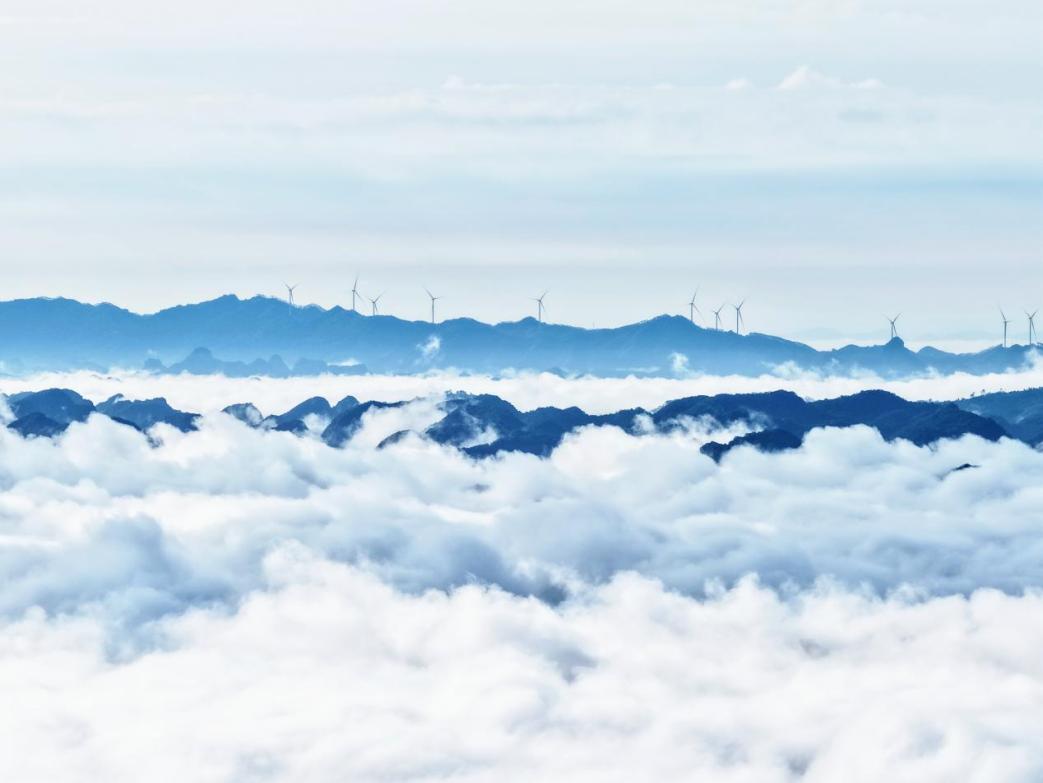
In the renewable energy sector, the country has established a ’30-30-30’ plan, targeting 30 GW of grid-connected power capacity by 2030, 30% of which will be derived from renewable energy sources. The plan comes as the country pursues net-zero by 2060 and is expected to contribute towards its goal of achieving universal access to electricity. Various projects have been launched to realize this goal. Oando Clean Energy is developing a 1.2 GW solar farm in Jigawa; the World Bank is backing the $750 million Distributed Access through Renewable Energy Scale-up project, set to provide power to over 17.5 million Nigerians; while the Rural Electrification Agency of Nigeria has signed agreements with 10 companies for the generation of 948 MW of electricity. These developments are not only set to strengthen the country’s power capacity but create thousands of jobs and support local business development.

“Nigeria’s energy reforms are setting a powerful precedent for what African-led policy can achieve. By fostering transparency, incentivizing investment and prioritizing both hydrocarbons and renewables, Nigeria is showing that energy security and transition are not competing goals; they are complementary drivers of growth,” states NJ Ayuk, Executive Chairman, African Energy Chamber.

Nigeria’s multi-faceted energy strategy aligns closely with the upcoming forum, which aims to promote an Africa-centric approach to the energy transition. Recognizing the continent’s vital need to power and industrialize its economies, the G20 Africa Energy Investment Forum will offer a bridge between global capital and African projects, tackling key topics such as the role of natural gas, the value of integrated energy systems and how African oil producers can drive the continent’s energy transition.

To register for the Forum, click here (https://apo-opa.co/43Tsxht).

Distributed by APO Group on behalf of African Energy Chamber.

Home  Facebook

Energy

Venezuela Energy Week 2026 Opens Upstream Asset Pipeline with New Farm-In/Farm-Out Forum

Published

on

The forum will showcase a curated pipeline of oil and gas assets seeking partners, providing direct access to acreage, producing fields and development opportunities across Venezuela

CARACAS, Venezuela, June 23, 2026/APO Group/ –Venezuela Energy Week 2026 will introduce a dedicated Farm-In/Farm-Out Forum, establishing a focused platform for upstream asset transactions and partnership formation as Venezuela continues to reposition itself within the global oil and gas investment landscape.

The forum will be structured around a curated portfolio of assets, with operators, license holders and state entities presenting defined upstream opportunities – ranging from producing fields and brownfield redevelopment projects to undeveloped blocks and offshore gas prospects – to a targeted audience of companies seeking entry, expansion or strategic participation in Venezuela’s energy sector.

The initiative reflects Venezuela’s ongoing recalibration of its upstream strategy, as the country prioritizes production growth and the attraction of technical and financial partners capable of supporting recovery across its oil and gas base. With partnership-led development now central to sector expansion, farm-in and farm-out structures are increasingly being used to unlock value across both mature assets and new developments.

“Venezuela’s upstream sector is increasingly defined by partnership structures rather than standalone development,” said James Chester, CEO of Energy Capital & Power. “This forum reflects that shift by bringing defined assets to market and aligning them with the technical and financial partners needed to advance them.”

This forum reflects that shift by bringing defined assets to market and aligning them with the technical and financial partners needed to advance them

The forum is expected to highlight a broad spectrum of asset categories across the country’s key producing regions. In the Orinoco Belt, opportunities will focus on improving recovery from heavy oil fields through enhanced production techniques and technology deployment. In western Venezuela, mature assets present redevelopment potential aimed at near-term output gains. Meanwhile, offshore and eastern gas developments continue to attract interest as Venezuela strengthens its role in regional gas monetization and supply.

Participants will engage directly with asset owners through structured presentations and closed-door discussions centered on deal terms, equity participation, operatorship models and phased development strategies. The format is designed to move beyond general discussion toward transaction-oriented engagement tied to specific assets.

Importantly, the forum reflects broader changes in global upstream investment behavior, where companies are increasingly favoring phased entry strategies and farm-in structures to manage risk while establishing operational presence in new or re-emerging markets. Venezuela’s evolving investment environment – characterized by high resource potential and expanding partnership frameworks – aligns closely with this approach.

Venezuela Energy Week 2026 will take place in Caracas from October 26–29, bringing together government leaders, operators, investors and service companies to advance dialogue and investment across the country’s energy sector.

The VEW 2026 Farm-In/Farm-Out Forum is now open for asset submissions and participation requests from operators, license holders and investors.

  • Submit upstream assets for farm-in or farm-out consideration
  • Register as an investor or upstream partner
  • Engage directly with the VEW upstream team

Submit Submissions Here (https://apo-opa.co/4xJwh2t)

Distributed by APO Group on behalf of Energy Capital & Power.


Continue Reading

Energy

Daystar Power Reaches Nearly 7 Megawatts of Installed Solar Capacity Across Four Nestlé Facilities in West Africa

Published

on

The four sites, two in Abidjan, one in Tema, and one in Dakar, are all fully operational, with each system designed around the specific grid and operational profile of its location

SURULERE, Lagos, June 23, 2026/APO Group/ –Daystar Power Group (www.Daystar-Power.com) has expanded its energy partnership with Nestlé across West Africa, with solar installations now operational at four manufacturing facilities spanning Côte d’Ivoire, Ghana, and Senegal. The deployments bring the total installed capacity across Nestlé’s sites to 6,884 kWp, nearly 7 megawatts, making it one of the largest commercial and industrial solar partnerships in the region.


The four sites, two in Abidjan, one in Tema, and one in Dakar, are all fully operational, with each system designed around the specific grid and operational profile of its location.

Nearly 7 megawatts across four Nestlé facilities is a number we are proud of, but what it represents matters more than the figure itself. It means that one of the world’s most demanding manufacturers has tested our model, trusted it, and come back. Our job now is to keep earning that, across every market where industry needs energy it can count on.

Yischai Beinisch, CEO, Daystar Power Group

Nearly 7 megawatts across four Nestlé facilities is a number we are proud of, but what it represents matters more than the figure itself

From One Site to Four Sites

The partnership began with a single commissioning and expanded to span three countries and four facilities. In Côte d’Ivoire, Daystar Power has delivered 3,447 kWp across two Abidjan sites. In Ghana, a 2,547 kWp system powers Nestlé’s Tema factory. In Senegal, an 890 kWp installation operates at the Dakar facility.

Each system is sized and configured to deliver measurable environmental and social impact, including reduced greenhouse gas emissions and improved energy resilience. The design is tailored to the operational and grid conditions at each location, ensuring reliable clean energy access while supporting local development and aligning with Nestlé’s publicly stated net zero commitments.

This investment reflects our commitment to building a business that not only grows but does so responsibly. By advancing solar energy projects in Ghana, Côte d’Ivoire, and Senegal, we are embedding sustainability into our growth, reinforcing our role as a force for good, creating long-term value for communities, and ensuring that our footprint actively contributes to a cleaner, more resilient future.”

Samer Chedid, CEO, Nestlé Central and West Africa Region.

A Footprint That Keeps Growing

Nestlé’s manufacturing presence extends across West Africa, including markets where Daystar Power has its deepest operational roots. With a delivery record now spanning three countries and nearly 7 megawatts of installed capacity, the infrastructure and the relationship are in place to support what comes next.

Distributed by APO Group on behalf of Daystar Power.


Continue Reading

Energy

Venezuela Energy Week 2026 Launches High-Impact Deal Room to Accelerate Energy Investment and Transactions

Published

on

The Deal Room will bring together investors, operators and project developers in a structured platform designed to unlock capital, facilitate transactions and drive commercial partnerships across Venezuela’s energy sector

CAPE TOWN, South Africa, June 23, 2026/APO Group/ –Venezuela Energy Week 2026 has announced the launch of its Deal Room, a dedicated transaction-focused platform designed to facilitate investment, strategic partnerships and project financing across Venezuela’s evolving energy sector.


Taking place alongside the event in Caracas from October 26–29, the Deal Room will convene government representatives, national and international oil companies, investors, private equity firms, financial institutions, service providers and project developers within a structured environment focused on accelerating deal-making.


The platform moves beyond traditional networking formats, operating instead as a curated commercial interface where stakeholders engage directly on defined investment opportunities across upstream oil and gas, natural gas monetization, refining, downstream infrastructure, energy services and emerging technologies.


The launch comes amid renewed momentum in Venezuela’s energy sector, as the country continues efforts to rebuild production capacity and attract international capital into one of the world’s most resource-rich hydrocarbon basins. With the largest proven oil reserves globally and significant natural gas potential, Venezuela remains a focal point for international energy investors assessing re-entry and expansion opportunities.


Recent developments highlight growing engagement across the sector. PDVSA has strengthened cooperation with international partners including Repsol, following agreements to increase production and optimize operations at key assets such as Petroquiriquire. In parallel, Shell, Eni, Chevron and SLB have advanced collaboration frameworks spanning offshore gas developments, heavy oil production and operational modernization initiatives aimed at improving efficiency and output.

The Deal Room has been designed to turn interest into structured investment outcomes


These developments reflect a broader shift toward partnership-led development models in Venezuela’s upstream sector, with joint ventures, production-sharing structures and technical collaborations increasingly central to unlocking value across mature and undeveloped assets.


“The Deal Room has been designed to turn interest into structured investment outcomes,” said James Chester, CEO of Energy Capital & Power. “It creates a focused environment where capital providers, operators and project sponsors can engage directly on opportunities and move conversations toward execution.”


Participants will gain access to a structured meeting program enabling direct engagement with asset owners, operators, government officials and financing partners. The platform will support a range of commercial outcomes, including equity participation, asset acquisitions, joint ventures, service agreements and offtake arrangements.


With interest in Venezuela’s energy sector continuing to grow, the Deal Room is positioned as a dedicated mechanism for aligning capital with opportunity and accelerating the path from engagement to transaction.


Participate in the VEW 2026 Deal Room
Companies interested in participating in the Deal Room – including project submissions, investment opportunities or partnership inquiries – can apply or get in touch via the official Venezuela Energy Week platform.

Distributed by APO Group on behalf of Energy Capital & Power.

Continue Reading

Trending

Exit mobile version