Connect with us
Anglostratits

Business

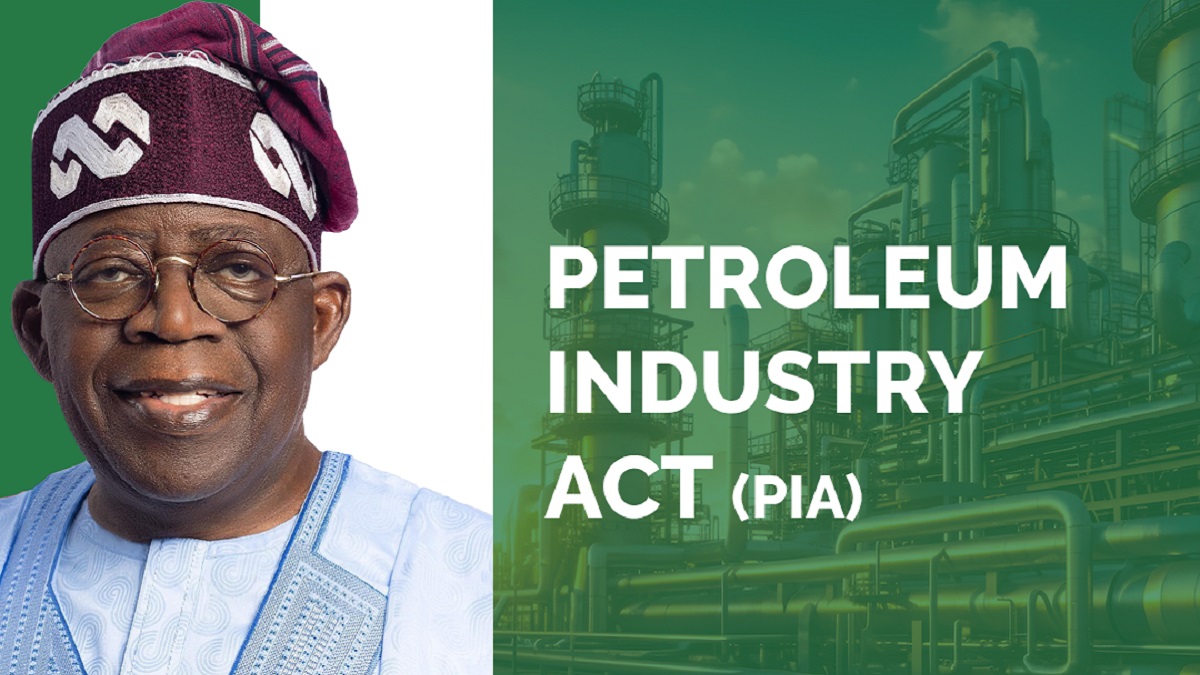
Nigeria Must Fully Implement the Petroleum Industry Act (By NJ Ayuk)
Published

on

Petroleum Industry

The signing of the PIA represented the culmination of more than 20 years of efforts to reform an oil and gas sector plagued by long-standing problems on multiple fronts

JOHANNESBURG, South Africa, July 26, 2023/APO Group/ — 

By NJ Ayuk, Executive Chairman, African Energy Chamber (www.EnergyChamber.org).

For years, on behalf of the African Energy Chamber (AEC), I publicly encouraged Nigeria’s leadership to sign the Petroleum Industry Bill (PIB) into law.

Across its five chapters and 300 sections, the PIB promised to repeal all regulations pertaining to Nigeria’s oil and gas industry, effectively resetting decades of policy gridlock regarding fiscal imbalances and the detrimental effects of crime and corruption. In place of these regulations, the PIA offered a new framework for the industry to abide by, one that would place Nigeria back on track toward progress and prosperity.

On August 16, 2021, we were thrilled to see former President Muhammadu Buhari enact the law — now known as the Petroleum Industry Act (PIA) — making all its promising provisions official at long last.

Nearly two years from its passage into law, implementation of the PIA and its initiatives has been slow for numerous reasons, but not without progress, and signals from Nigeria’s new administration indicate that these conditions will not remain the status quo.

After ascending to office in May, Nigeria’s newly elected president, Bola Ahmed Tinubu, hit the ground running in terms of reshaping his country’s approach to petroleum industry relations and preparing to execute the mandates of the PIA.

In July of this year, President Tinubu received the Shell Petroleum Development Company (SPDC) at the State House in Abuja, assuring its delegates that Nigeria welcomes their business and that his administration is working to remove any policy or procedural bottlenecks detracting from the investment appeal of Nigeria’s gas and deep-water assets.

Considering these recent statements from President Tinubu and a recently released report from his administration’s Policy Advisory Council entitled Enabling Growth in Nigeria’s Energy & Natural Resources Sectors: Sector Challenges and Proposed Interventions, Nigeria’s leadership seems intent on revitalizing the entire energy landscape across the country.

A Need for Intervention

The signing of the PIA represented the culmination of more than 20 years of efforts to reform an oil and gas sector plagued by long-standing problems on multiple fronts.

Despite its long-held status as Africa’s largest oil producer, and sixth largest in the entire world at times, 2022 saw Nigeria drop to fourth place in the African rankings behind Angola, Algeria, and Libya. With its 37.1 billion barrels of proven crude oil reserves and 206.5 trillion cubic feet of natural gas, traditionally, petroleum products comprise nearly 6% of Nigeria’s gross domestic product, 95% of earnings from foreign trade, and 80% of government revenues.

In defiance of these significant averages, Nigeria’s oil production rate has declined in recent years, down to an average of 1 million barrels per day (mmbpd), nearly halving its OPEC quota of 1.8 mmbpd. Large-scale theft, sabotage, and pipeline vandalism account for much of this drop.

While the combined security efforts of Nigerian military forces and other government agencies under the previous administration did lead to the recovery of millions of liters of petroleum products in their various forms, they did not have a meaningful effect on the downward trend in production. Nigeria’s failure to adequately secure its infrastructure and rein in these production losses has also led international oil companies toward divestment from the region. Nigerian oil and gas sector will be one of the main attractions of the Africa Energy Week (AEW) 2023, which will be held in Cape Town from October 16th to 20th.

With President Tinubu’s endorsement and proactive stance on its directives, we hope to see the PIA’s terms fulfilled and Nigeria finally reoriented toward a more prosperous era

Hope on the Horizon

The PIA aims to reverse Nigeria’s course regarding its energy future. With President Tinubu’s endorsement and proactive stance on its directives, we hope to see the PIA’s terms fulfilled and Nigeria finally reoriented toward a more prosperous era.

Efforts to overhaul the Nigerian oil and gas industry date at least as far back as the year 2000 when the Obasanjo administration inaugurated the Oil and Gas Reform Implementation Committee, whose investigations into the Nigerian energy sector eventually led to the PIA’s initial drafts.

First introduced in 2008, the PIB was subject to years of setbacks as legislators debated its content and submitted revisions. The version finally signed into law in 2021 addresses four main areas of concern for Nigeria’s petroleum industry: governance and institutions, administration, host community development, and the fiscal framework. In short, the PIA seeks to convert the governance of Nigeria’s petroleum sector into a more commercial model.

Last summer, the AEC celebrated when the Nigerian National Petroleum Company (NNPC) transitioned to NNPC Limited, a move denoting initial progress toward implementing the provisions outlined in the PIA. This transition represented a shift in how the NNPC would conduct business going forward. Free from Federal Executive Council oversight, the NNPC Limited could now pursue new ventures, become more public-facing with a stock market listing, and compete with other state-owned petroleum companies. As NNPC Limited, the company has already engaged in re-negotiations of the production-sharing contracts tied to five deepwater blocks, successfully untangling them from decades of disputes.

The transition hasn’t been as smooth for other Nigerian entities affected by the new standards put forth by the PIA. Delays in collaboration between groups like the Nigerian Midstream and Downstream Petroleum Regulatory Authority (NMDPRA) and the Nigerian Upstream Petroleum Regulatory Commission (NUPRC), attributed to incomplete agenda items like the Environmental Management Plan (EMP) and the Upstream Environmental Management Regulation (UEMR), have stalled the PIA’s full implementation. However, leaders at these authorities have affirmed their commitment to the change and have encouraged all stakeholders to expedite the process.

As detailed in the Policy Advisory Council’s report, President Tinubu and his administration are well aware of Nigeria’s low ratio of revenue to GDP, low investor confidence, and monetary losses in the petroleum sector. However, the report also outlines a path toward a full reversal of these circumstances.

On a timetable covering the first 100 days and stretching outward to 2030, the Policy Advisory Council’s report explains how Nigeria’s petroleum industry can eventually achieve sustainable production rates of 4 mmbpd for oil and 12 billion cubic feet per day (bcf/d) for natural gas.

The Tinubu administration’s short-term goals include recruiting and placing competent leaders in the various ministries, departments, and agencies accountable to the PIA, reforming military task force operations for security, and defining fiscal policies. Moving into 2024—in addition to other security, finance, and regulatory measures—the report calls for promoting a diversified oil and gas industry and developing a gas export strategy.

Attaining Nigeria’s Ideal Future

The Policy Advisory Council’s structured and detailed report sets key performance indicators and milestones for Nigeria in the years ahead, plotting a course to a stabilized and flourishing future for the national economy and its population. The report also serves as a testament to the current administration’s intent to make this future a reality.

As one of the PIB’s most vocal supporters — having recognized its potential as a mechanism for correcting worsening conditions in Nigeria’s energy sector and reinvigorating foreign investment — I urged the previous administration to pass the bill. Considering its slow start despite having been passed into law, these recent and positive developments have given me more confidence that we will see the law fully implemented.

Nigeria still sits atop a wealth of fossil resources that offers up an end to energy poverty and financial instability as long as they are extracted and monetized responsibly and in a manner that benefits all stakeholders. The steps laid out in the Policy Advisory Council’s report lead to this exact outcome, but getting there depends entirely on the full implementation of the PIA.

I implore all of Nigeria’s leaders to continue working with one another to achieve this most critical goal.

Distributed by APO Group on behalf of African Energy Chamber

Events

As global power structures shift, Invest Africa convenes The Africa Debate 2026 to redefine partnership in a changing world

Published

on

Debate

The Africa Debate 2026 will provide a platform for this essential, era-defining discussion, convening leaders to explore how Africa and its partners can build more balanced, resilient and sustainable models of cooperation

LONDON, United Kingdom, February 5, 2026/APO Group/ –As African economies assert greater agency in a rapidly evolving global order, Invest Africa (www.InvestAfrica.com) is delighted to announce The Africa Debate 2026, its flagship investment forum, taking place at the historic Guildhall in London on 3 June 2026.

Now in its 12th year, The Africa Debate has established itself as London’s premier platform for African investment dialogue since launching in 2014, convening over 800 global decision-makers annually to shape the future of trade, finance, investment, and development across the continent.

Under the theme “Redefining Partnership: Navigating a World in Transition”, this year’s forum will focus on Africa’s response to global economic realignment with greater agency, ambition and economic sovereignty.

The Africa Debate puts Africa’s priorities at the centre of the conversation, moving beyond traditional narratives to focus on ownership, resilience and long-term value creation.

“Volatility is not new to Africa. What is changing is the opportunity to respond with greater agency and ambition,” says Invest Africa CEO Chantelé Carrington.

“This year’s edition of The Africa Debate asks how we strengthen economic sovereignty — from access to capital and investment to financial and industrial policy — so African economies can take greater ownership of their growth. Success will be defined by how effectively we turn disruption into leverage and partnership into shared value.”

The Africa Debate 2026 will provide a platform for this essential, era-defining discussion, convening leaders to explore how Africa and its partners can build more balanced, resilient and sustainable models of cooperation.

Key challenges driving the debate

Core focus areas for this year’s edition of The Africa Debate include:

This year’s edition of The Africa Debate asks how we strengthen economic sovereignty — from access to capital and investment to financial and industrial policy

Global Realignment & New Partnerships

How shifting geopolitical and economic power structures are reshaping Africa’s global partnerships, trade dynamics and investment landscape.

Financing Africa’s Future

The growing need to reform the global financial architecture, new approaches to development finance, as well as the strengthening of market access and financial resilience of African economies in a changing global system.

Strategic Value Chains

Moving beyond primary exports to build local value chains in critical minerals for the green economy. Also addressing Africa’s energy access gap and mobilising investment in renewable and transitional energy systems.

Digital Transformation & Technology

Unlocking growth in fintech, AI and digital infrastructure to drive productivity, inclusion, and the next phase of Africa’s economic transformation.

The Africa Debate 2026 offers a unique platform for high-level dialogue, deal-making, and strategic engagement. Attendees will gain actionable insights from leading policymakers, investors and business leaders shaping Africa’s economic future, while building strategic partnerships that define the continent’s next growth phase.

Registration is now open (http://apo-opa.co/46b19gj).

Distributed by APO Group on behalf of Invest Africa.

Continue Reading

Business

Zion Adeoye terminated as Chief Executive Officer (CEO) of CLG due to serious personal and professional conduct violations

Published

on

CLG

After a thorough internal and external investigation, along with a disciplinary hearing chaired by Sbongiseni Dube, CLG (https://CLGglobal.com) has made the decision to terminate Zion Adeoye due to serious personal and professional conduct violations. This process adhered to the Code of Good Practice of the Labour Relations Act, ensuring fairness, transparency, and compliance with South African law.

Mr. Adeoye has been held accountable for several serious offenses, including:

  • Making malicious and defamatory statements against colleagues
  • Extortion
  • Intimidation
  • Fraud
  • Misuse of company funds
  • Theft and misappropriation of funds
  • Breach of fiduciary duty
  • Mismanagement

His actions are in direct contradiction to our firm’s core values. We do not approve of attorneys spending time in a Gentleman’s Club. CLG deeply regrets the impact this situation has had on our colleagues and continues to provide full support to those affected.

We want to express our gratitude to those who spoke up and to reassure everyone at the firm of our unwavering commitment to maintaining a respectful workplace. Misconduct of any kind is unacceptable and will be addressed decisively.

We recognize the seriousness of this matter and have referred it to the appropriate law enforcement, regulatory, and legal authorities in Nigeria, Mauritius, and South Africa. We kindly ask that the privacy of the third party involved be respected.

Distributed by APO Group on behalf of CLG.


Continue Reading

Business

The International Islamic Trade Finance Corporation (ITFC) Strengthens Partnership with the Republic of Djibouti through US$35 Million Financing Facility

Published

on

ITFC

This facility forms part of the US$600 million, three-year Framework Agreement signed in May 2023 between ITFC and the Republic of Djibouti, reflecting the strong and growing partnership between both parties

JEDDAH, Saudi Arabia, February 5, 2026/APO Group/ –The International Islamic Trade Finance Corporation (ITFC) (https://www.ITFC-IDB.org), a member of the Islamic Development Bank (IsDB) Group, has signed a US$35 million sovereign financing facility with the Republic of Djibouti to support the development of the country’s bunkering services sector and strengthen its position as a strategic regional maritime and trade hub.

The facility was signed at the ITFC Headquarters in Jeddah by Eng. Adeeb Yousuf Al-Aama, Chief Executive Officer of ITFC, and H.E. Ilyas Moussa Dawaleh, Minister of Economy and Finance in charge of Industry of the Republic of Djibouti.

The financing facility is expected to contribute to Djibouti’s economic growth and revenue diversification by reinforcing the competitiveness and attractiveness of the Djibouti Port as a “one-stop port” offering comprehensive vessel-related services. With Red Sea Bunkering (RSB) as the Executing Agency, the facility will support the procurement of refined petroleum products, thus boosting RSB’s bunkering operations, enhancing revenue diversification, and consolidating Djibouti’s role as a key logistics and trading hub in the Horn of Africa and the wider region.

We look forward to deepening this partnership, creating new opportunities, and leveraging collaborative programs to advance key sectors and drive sustainable economic growth

Commenting on the signing, Eng. Adeeb Yousuf Al-Aama, CEO of ITFC, stated:

“This financing reflects ITFC’s continued commitment to supporting Djibouti’s strategic development priorities, particularly in strengthening energy security, port competitiveness, and trade facilitation. We are proud to deepen our partnership with the Republic of Djibouti and contribute to sustainable economic growth and regional integration.”

H.E. Ilyas Moussa Dawaleh, Minister of Economy and Finance in charge of Industry of the Republic of Djibouti, commented: “Today’s signing marks an important milestone in the development of Djibouti’s bunkering services and reflects our strong and valued partnership with ITFC, particularly in the oil and gas sector. This collaboration supports our ambition to position Djibouti as a regional hub for integrated maritime and logistics services. We look forward to deepening this partnership, creating new opportunities, and leveraging collaborative programs to advance key sectors and drive sustainable economic growth.”

This facility forms part of the US$600 million, three-year Framework Agreement signed in May 2023 between ITFC and the Republic of Djibouti, reflecting the strong and growing partnership between both parties.

Since its inception in 2008, ITFC and the Republic of Djibouti have maintained a strong partnership, with a total of US$1.8 billion approved primarily supporting the country’s energy sector and trade development objectives.

Distributed by APO Group on behalf of International Islamic Trade Finance Corporation (ITFC).

Continue Reading

Trending