Connect with us
Anglostratits

Business

Mozambican, South African, Nigerian Gas Takes Center Stage at African Energy Chamber (AEC)-Gazprom Roundtable

Published

on

Gazprom Roundtable

Developments across Mozambique’s, South Africa’s and Nigeria’s burgeoning gas economies took center stage during the Gazprom-African Energy Chamber-hosted International Roundtable on Gas this week, with high-level speakers providing insight into how Russian expertise can accelerate the growth of these industries

JOHANNESBURG, South Africa, June 22, 2023/APO Group/ — 

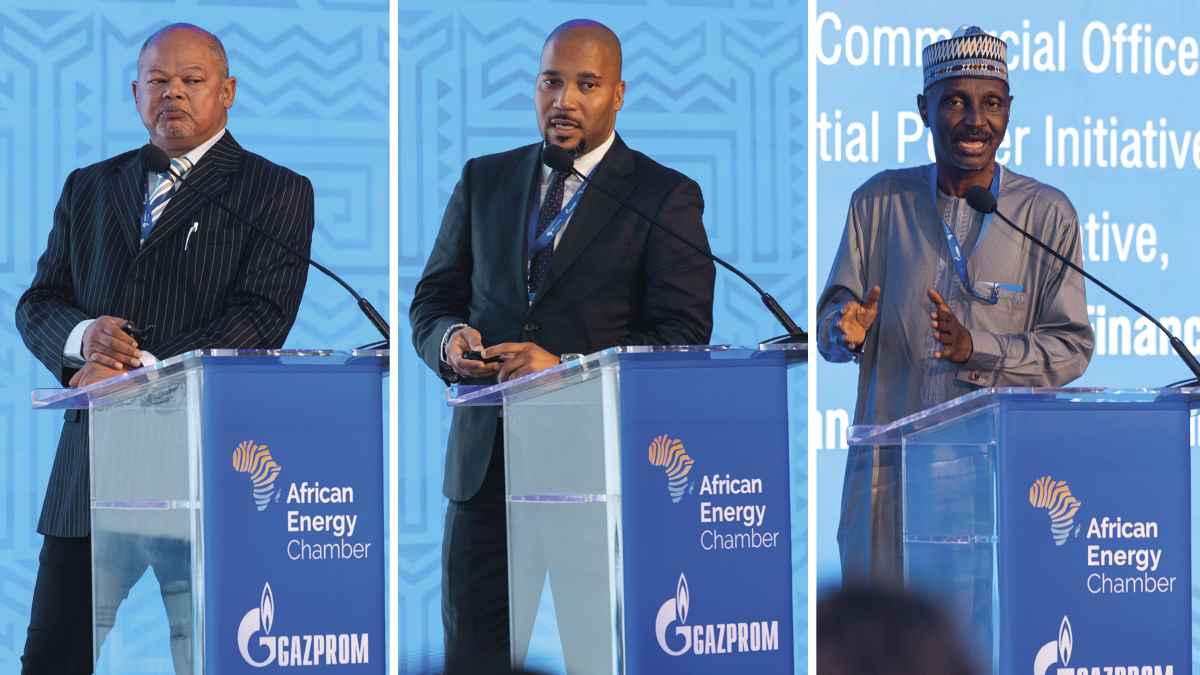
Various speakers at the international roundtable on natural gas – hosted by the African Energy Chamber (AEC) (http://www.EnergyChamber.org) and Russian-based global energy giant Gazprom in Johannesburg – emphasized that natural does not represent a transitionary resource but rather the fuel of the future for Africa. During the important discussion, presentations were delivered by high-level representatives from Mozambique, South Africa and Nigeria, all of whom made a strong case for gas-directed investment and strengthened Africa-Russia cooperation.

Despite representing a relatively new gas market, two major discoveries in South Africa’s offshore basins in 2019 made clear the lucrative potential of the country’s gas industry. In order to accelerate the development of resources and the realization of national growth objectives, the government is working towards putting in place a Gas Masterplan.

“Our focus is on policy and planning,” stated Craig Morkel, Chairman, South Africa Oil and Gas Association, adding that, “The Masterplan exercise has started and the Department of Mineral Resources and Energy sees this integrated into the broader Integrated Resource Plan. It has also identified where demand will be located and how this can be serviced by Liquefied Natural Gas (LNG) as well as the gas-to-power demand. The Masterplan looks at both a bottom-up and top-down approach.”

Morkel added that, “We look forward to Gazprom participating in the country. We would like you to tell us, what would make South Africa more attractive to you, so that we can go to our government and advise. We look forward to working with Gazprom.”

Mozambique has already exported its first LNG cargo, representing a huge milestone for our country

Meanwhile, a number of countries across the continent have kicked off ambitious natural gas projects of their own aimed at monetizing resources, bolstering energy security and industrialization, while driving long-term socioeconomic growth. Mozambique, for instance, is leading several large-scale LNG developments. According to Michel Ussene, Executive Chairman, Mitra Energy, “Mozambique has already exported its first LNG cargo, representing a huge milestone for our country.”

However, with the quantities of gas located in the far north of the country, over 2,200km from the capital city Maputo, Ussene stated that “We need to look at what to do with this gas, and we need to think out of the box. There is no better example than Gazprom, as they are bringing gas into their economy. The most interesting thing we have heard today is that most of the gas is used in the country and not exported. This is a gamechanger to know that Gazprom is selling more in-country than outside. This way, we can increase access and create jobs.”

In West Africa, Nigeria has embarked on an ambitious gas agenda of its own, with projects being driven under the country’s ‘Decade of Gas’ initiative – a framework for amplifying investment and development across the entire gas value chain on the back of policy clarity. Despite offering significant resources, lack of investment has limited development in Nigeria. According to Dahiru Moyi, Advisor to the Minister of Federal Ministry of Finance, Budget and National Planning, “Africa does not have much funding, but we have resources. This is why it is important to come up with new approaches.”

Moyi stated that traditionally, Gazprom has not been able to operate in Nigeria due to lack of policy, a trend which has now been eliminated with the implementation of the Petroleum Industry Act (PIA) in 2021.

“Gazprom has the best intentions for Africa, and together, there can be some form of creative financing. We will welcome and be glad to see Gazprom come back to the negotiation table with Nigeria. Before, there was no gas policy in Nigeria or law. We have the PIA which is a clear path for how to operate in Nigeria,” Moyi added.

Stepping into this picture, Gazprom offers African countries the expertise, financing and technology needed to see large-scale projects into completion. While the continent has served as a strategic partner across various other sectors of the economy including agriculture, trade and commerce, new focus placed on bilateral energy relations is set to open up new opportunities for investment and development across Africa’s gas space.

Distributed by APO Group on behalf of African Energy Chamber.

Business

Port Community Systems (PCS) as the crisis backbone: how trade disruption makes digital port infrastructure non-negotiable (By Alioune Ciss)

Published

on

Port Community Systems

With PCS, ports can dynamically allocate resources, adjust workflows, and reprioritize cargo flows using real-time data and coordinated processes

DUBAI, United Arab Emirates, May 19, 2026/APO Group/ —By Alioune Ciss, Chief Executive Officer, Webb Fontaine (https://WebbFontaine.com).

When global trade flows normally, Port Community Systems (PCS) are often viewed as efficiency tools. They digitize paperwork, connect stakeholders, reduce delays, and improve visibility across port ecosystems. However, the true impact and strategic importance of PCS become most apparent when a crisis hits.

Whether caused by geopolitical conflict, canal restrictions, rerouted shipping lanes, cyber risk, labor disruption, or sudden regulatory shifts, modern supply chain shocks remind us that ports without strong digital coordination struggle to adapt, whereas ports with robust PCS infrastructure are better positioned to keep cargo moving. In today’s environment, PCS has become a critical infrastructure.

Disruption is not an exception anymore

Global maritime trade has entered a more volatile era where disruption is structural. Let’s review the recent events to understand the scale of impact:

  • Around 2,000 ships were reportedly stranded during the recent Strait of Hormuz (https://apo-opa.co/4dii0lb) crisis.
  • The Red Sea crisis (https://apo-opa.co/4dz5gFA) led to more than 190 attacks on vessels by late 2024, forcing widespread rerouting and increasing transit times by up to two weeks.
  • The Suez-linked corridor (https://apo-opa.co/4dz5gFA), which carries roughly 10–12% of global maritime trade, experienced sharp volume declines during the disruption.
  • Supply chains across the Middle East, Africa, and Europe faced cascading effects, including congestion, cost increases, and schedule instability.

At the same time, the global port industry itself is undergoing rapid transformation. According to the International Association of Ports and Harbors (IAPH), ports are accelerating digitalization and strengthening resilience capabilities in response to geopolitical and operational uncertainty. This is the new reality: routes shift, volumes spike, and conditions change faster than traditional systems can handle.

Why PCS matters most during a crisis

When vessel schedules collapse, or cargo volumes suddenly spike, physical infrastructure alone is not enough. Cranes, berths, gates and yards also need coordination. That is where PCS becomes the backbone of resilience.

A PCS is not just a digital tool; rather, it’s a shared operational layer. It connects shipping lines, terminals, customs, freight forwarders, transport operators, and authorities through a single data environment, enabling synchronized decision-making across the ecosystem.

Instead of exchanges through emails, phone calls, Excel files, or siloed systems that generate delays and errors, the PCS enables seamless and real-time coordination.

1. Real-time visibility across the ecosystem

When vessels are delayed or rerouted, fragmented communication becomes a liability.

PCS enables real-time visibility across:

  • vessel arrivals and berth planning
  • cargo status and documentation
  • customs readiness and inspections
  • gate operations and inland logistics

Instead of fragmented updates, stakeholders operate from a shared, trusted data environment.

When shipping lanes shift overnight, policies change, and when uncertainty increases, the strongest ports are the ones that are the most ‘connected’

In a crisis, the speed of information becomes the speed of recovery.

2. Faster decision-making under pressure

Sudden disruptions create immediate operational stress:

  • surges in transshipment volumes
  • yard congestion risks
  • inspection bottlenecks
  • inland transport delays

Without digital coordination, responses are reactive and slow.

With PCS, ports can dynamically allocate resources, adjust workflows, and reprioritize cargo flows using real-time data and coordinated processes.

3. Customs and border continuity

Cargo cannot move if border agencies cannot move.

According to joint guidance from the World Customs Organization (WCO) and International Association of Ports and Harbors (IAPH), interoperability between Customs systems and PCS is essential for coordinated border management, risk control, and secure data exchange (https://apo-opa.co/3PLcs9P).

In crisis conditions, this becomes critical. Governments must introduce new controls, risk filters, or emergency procedures quickly, without disrupting trade flows. PCS enables this  balance.

4. Trust and transparency for the market

Importers, exporters, and carriers can tolerate disruption more than uncertainty. What they need is visibility.

PCS provides transparency across the supply chain, allowing stakeholders to track cargo status, anticipate delays, and plan accordingly. This transparency builds trust and reduces the systemic risk of panic-driven inefficiencies.

Operational resilience is the key

As we all know, the classic PCS discussions focus on key KPIs such as:

  • reduced turnaround time
  • fewer documents
  • lower administrative cost
  • faster truck processing

But today, the most important KPI is “readiness”: If a major trade corridor shifts tomorrow, can your port ecosystem adapt in real time?

To answer “Yes” to this question, a future-ready PCS should include:

  • real-time event management
  • integrated stakeholder communication
  • predictive congestion alerts
  • interoperability with customs and regulatory systems
  • scalable architecture for demand spikes

“For years, ‘efficiency’ was key when it comes to PCS. However, today, the key is ‘resilience’… When shipping lanes shift overnight, policies change, and when uncertainty increases, the strongest ports are the ones that are the most ‘connected’… Therefore, we should treat PCS as a crisis backbone of trade, not an IT efficiency initiative.
[Alioune Ciss, CEO, Webb Fontaine]

The Next Evolution: Intelligent PCS

PCS is now entering a new phase. Next-generation systems are evolving into data-driven platforms that support predictive analytics, AI-enabled decision-making, and proactive risk management (https://apo-opa.co/4eQ93Rg).

In other words, today, ports need systems that help orchestrate responses. Solutions such as Webb Ports (https://apo-opa.co/42F3gqq) from Webb Fontaine reflect this shift. By connecting all port stakeholders through a unified platform, anticipating congestion before it happens, simulating operational scenarios, and optimizing resource allocation dynamically, we enable faster coordination, better visibility and more agile responses when disruptions occur.

Distributed by APO Group on behalf of Webb Fontaine.


Continue Reading

Energy

Rand Refinery Joins African Mining Week (AMW) as Silver Sponsor Amid Regional Market Expansion Strategy

Published

on

Energy Capital

African Mining Week 2026 will showcase lucrative investment, partnership, and knowledge-exchange opportunities across Africa’s gold downstream sector, as Rand Refinery intensifies its investment and expansion strategy across the continent

CAPE TOWN, South Africa, May 19, 2026/APO Group/ –Amid a strategy to expand from a South Africa-focused refiner into a pan-African downstream leader, Rand Refinery has joined African Mining Week (AMW), an Influential African Mining Conference, scheduled for October 14-16, 2026 in Cape Town, as a silver sponsor.

Rand Refinery’s participation reflects a broader strategic alignment between the company’s expansion agenda and AMW’s focus on supporting and enabling local beneficiation and promoting artisanal and small-scale mining (ASM) responsible sourcing frameworks.


In terms of volumes, the latest market information indicates that Africa produces 1000tpa of mined gold (more than any other continent), with large-scale mining (LSM) and ASM being almost evenly balanced (500tpa production each). On its current trajectory, African ASM volumes are expected to eclipse those of LSM.


The focus on ASM as a transformational imperative is valid, and Rand Refinery is an active participant in the precious metals supply chain, working alongside other upstream and downstream actors to ensure that the communities and countries with gold resources benefit in a sustainable manner.


Under the theme Mining the Future: Unearthing Africa’s Full Mineral Value Chain, AMW 2026 offers a critical interface between refiners, miners, regulators, and financial institutions, as African countries intensify efforts to capture more value from responsible mineral production.


A key pillar of Rand Refinery’s 2026 strategy is its expansion into high-growth gold markets beyond South Africa. In January 2026, the company partnered with Ghana’s Gold Coast Refinery (GCR) to support the Ghana Gold Board to locally refine artisanal and small-scale (ASM) gold and elevate responsible sourcing standards in West Africa. The partnership also positions Rand Refinery in a rapidly growing and historically fragmented supply segment: ASM operations, enabling the company to enhance traceability and strengthen compliance with global standards for ethical sourcing and anti-money laundering.


The partnership potentially allows the monetization of ASM supply streams in the formal gold ecosystem, complementing Rand Refinery’s established role in refining output from responsible large-scale producers. AMW 2026 represents a timely platform for the company to provide an update on its projects and contribution to Africa’s gold sector.


As demand for regional refining capacity expands, along with central bank buying programs, companies such as Rand Refinery will be crucial.


Central bank gold purchases are projected to average around 585 tons per quarter in 2026, underscoring sustained global demand. In Africa, gold now accounts for approximately 17% of total reserves – up from less than 10% in 2022–2023 – while physical holdings increased from 663 tons in 2022 to an estimated 738 tons in 2025.


This upward trajectory is driving demand for trusted refining and value addition services, positioning Rand Refinery as a key partner in the region. Against this backdrop, AMW provides a strategic platform for central banks and gold buyers to engage directly with one of the world’s largest integrated single-site precious metals refining and smelting complexes and strengthen regional beneficiation and national reserve strategies.


At AMW, Rand Refinery executives will participate in panel discussions and networking sessions, engaging stakeholders on partnership opportunities that support a more integrated, transparent and value-driven African gold ecosystem.

Distributed by APO Group on behalf of Energy Capital & Power.

Continue Reading

Business

Applications open for the 2027 Meltwater Entrepreneurial School of Technology (MEST) Africa AI Startup Program

Published

on

Meltwater

Join a global community of AI entrepreneurs

ACCRA, Ghana, May 19, 2026/APO Group/ –The Meltwater Entrepreneurial School of Technology (MEST) (https://Meltwater.org), has opened applications for the second edition of the MEST AI Startup Program, a fully-funded, immersive experience designed to equip Africa’s most promising AI entrepreneurs with the technical, business, product, and leadership skills to build and scale globally competitive AI startups.

Over a seven-month training phase, the MEST AI Startup program will provide founders with hands-on instruction, technical mentorship, and business coaching from global experts to develop AI-powered solutions. The top startups will then advance to a four-month incubation period to refine products, sharpen go-to-market strategies, and secure market traction. At the end of incubation, startups have the opportunity to pitch for pre-seed investment of up to $100,000 and join the MEST Portfolio.

We are excited to support the next generation of African AI founders through training delivered by some of the most knowledgeable experts in the industry

The inaugural cohort brought together founders from seven African countries who are already building transformative AI solutions across industries. Building on the momentum of the first edition, the 2027 intake reflects MEST Africa’s continued commitment to ensuring African entrepreneurs play a defining role in the future of artificial intelligence.

According to Emily Fiagbedzi, AI Startup Program Director, the urgency of investing in African AI talent has never been greater.

“AI technology is advancing at an extraordinary pace, and meaningful participation in the global AI economy requires more than access to tools, it requires the ability to build,” she said. “This program is designed to help talented African founders develop solutions to real challenges while positioning them to compete globally. We are excited to support the next generation of African AI founders through training delivered by some of the most knowledgeable experts in the industry from organizations including OpenAI, Perplexity, Google, and Meltwater”

For the 2027 intake, the program is open to African founders based in Ghana, Nigeria, Senegal, and Kenya aged 21–35 with software development experience who want to start their own AI startup.

Apply now at https://apo-opa.co/3ReIQSI

Distributed by APO Group on behalf of The Meltwater Entrepreneurial School of Technology (MEST Africa).


Continue Reading

Trending