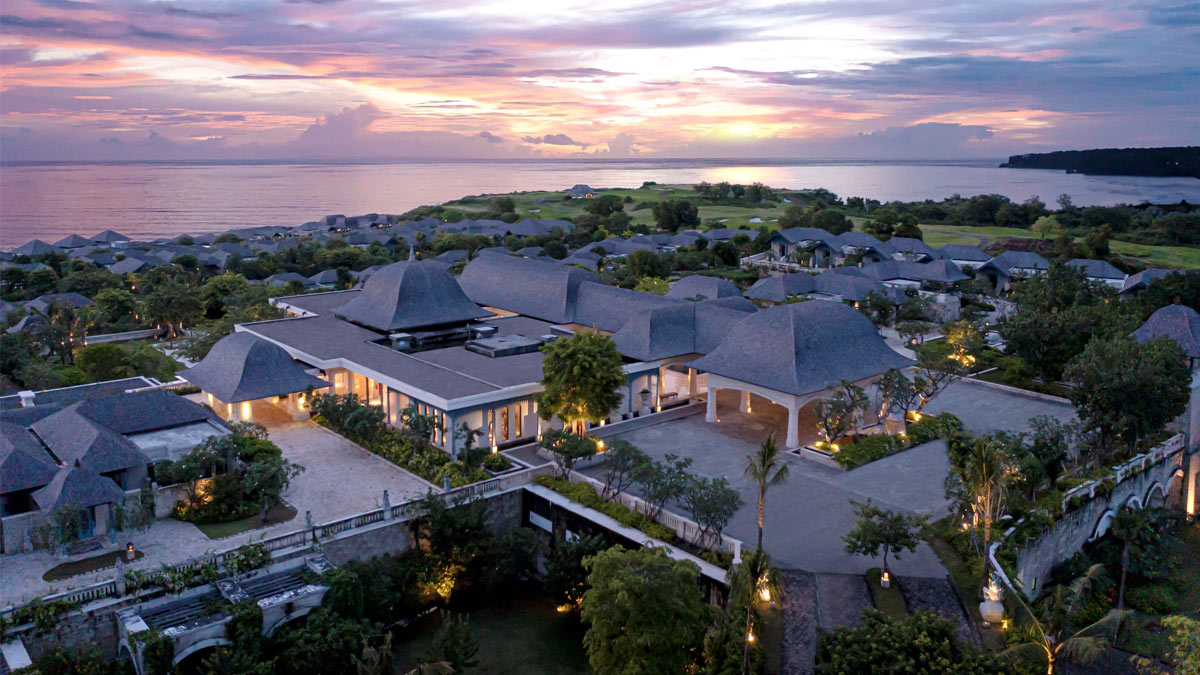
A sanctuary of tranquillity and relaxation, Jumeirah Bali welcomes guests to experience tropical modernism amid lush greenery and exquisite Indian Ocean vistas
DUBAI, United Arab Emirates, May 13, 2022/ — Jumeirah Group (www.Jumeirah.com), the global luxury hospitality company and a member of Dubai Holding, has further expanded its international portfolio with the debut of its first stunning, contemporary resort in Indonesia – Jumeirah Bali.
World famous for its captivating beauty, Bali is often referred to as the last paradise on earth due to its breath-taking natural surroundings. Located in the stunning Pecatu region at the south-west of Bali, the all-villa luxury resort sits gracefully on the beach area of Uluwatu – one of the most coveted locations on the island. Inspired by Hindu-Javanese culture, the spectacular resort provides an unsurpassed destination for couples, groups and solo travellers seeking to reconnect and find inner balance, while soaking in the resort’s stunning natural surroundings.
Mr. José Silva, Chief Executive Officer of Jumeirah Group, said:
“Bali is well-known for its captivating beauty and rich cultural heritage that sets it apart from the rest of the archipelagos around the world. Jumeirah Bali is a first-of-its-kind concept that embodies the spirit of the province with our unmatched hospitality, providing guests a truly unique and memorable experience to reconnect with nature.The resort adds another feather to Jumeirah Group’s growing international portfolio providing a multicultural hospitality destination, integrating sustainability, culture and wellness.”
Boasting spacious villas perched atop the limestone cliffs, the luxurious resort offers 123 villas in one- and two-bedroom configurations, as well as a four-bedroom Royal Water Palace, all featuring sublime tropical views of the Indian Ocean and mesmerising lush green natural beauty of Bali. Each villa features a private pool and outdoor living area with an open pavilion overlooking the sunset horizon or a landscaped tropical garden for guests to indulge in a spiritual, secluded, and soulful experience. The resort also provides guests with exclusive access to a private beach framed by the natural landscape offering a secluded enclave to relax.
Reminiscent of Geoffrey Bawa’s ‘tropical modernism’ style, Jumeirah Bali’s indoor-outdoor architecture is designed to create a seamless flow between the architecture, interior, and landscape, blending indigenous building materials with contemporary and luxurious comfort, to transport guests to an authentic Balinese haven of understated elegance with an opulent touch.
Building on Jumeirah Group’s reputation for providing exceptional dining experiences, guests can indulge in three signature restaurants and bars overseen by Master Chef Vincent Leroux, each offering awe-inspiring views across the island’s crystal blue waters and stunning sunset panoramas.
Hugging the dramatic terrain with stunning picturesque views, AKASA Gastro Grill – scheduled to open in June – invites guests to enjoy a unique culinary experience through ancient cooking methods and techniques. A resident DJ and specialist Mixologist complete the scene, providing the perfect spot to relax and enjoy spectacular sunsets over delicious creations. Located on the ocean front, all-day dining spot SEGARAN offers exquisite Balinese and South-East Asian cuisine, focused on exceptional ingredients with a ‘farm to table’ philosophy. Finally, MAJA Sunset Pool Lounge will serve as an ideal evening spot to enjoy mesmerising sunsets with cocktails and finger food by one of the infinity pools overlooking the vast ocean.
With an array of wellness activities to help guests on their quest to find inner-balance, Jumeirah Bali will also welcome Jumeirah’s award-winning Talise Spa. Currently the resort has two private treatment rooms in operation and will be launching the full spa experience, complete with the only traditional Turkish hammam on the island, in July.
Talise Spa offers world-class treatments by expert spa therapists, including holistic facials, healing and energising massages, cleansing scrub treatments, and stress-release therapies based on ancient Balinese techniques and traditional herbal preparations. Guests will be able to tailor their experience using luxury and traditional organic products and make the most of the spa’s additional wellness facilities, which include the sauna, steam bath and Vichy shower treatments.
Guests can also choose to participate in guided meditation and Yoga classes for an all-encompassing holistic retreat hosted by Jumeirah Bali’s resident Master Yogi, utilise the modern fitness centre or enjoy invigorating hiking experiences to immerse themselves in the splendid natural surroundings. There are also the resort’s stunning infinity pools and kids’ club for hours of family fun.
Jumeirah Bali is committed to sustainable practices, featuring the most advanced desalination system in the world. The resort also supports the local community through the Jumeirah Uluwatu Foundation, dedicated to the wellbeing of the Balinese people.
Overseeing the new resort as General Manager is Ram Hiralal, who brings with her a wealth of expertise working for luxury lifestyle brands operating exclusive hotel and resort portfolios across Malaysia, Thailand, Maldives and Bali.
In celebration of its launch, the hotel is inviting guests to discover Bali with a special opening offer for stays from 26th April to 31st March 2023, booked before 30th June 2022. This includes 25% off the best available rate, a 10% discount on food and beverage, a complimentary upgrade (subject to availability) plus breakfast and resort credit (for stays of two nights or more). In parallel, members of Jumeirah Hotels & Resorts’ leading rewards programme, Jumeirah One, will receive 30% off plus additional benefits.
For more information, please visit www.JumeirahBali.com or contact jbareservations@jumeirah.com for bookings. In the meantime, stay connected via our social media channels and don’t forget to tag us in your posts with #TimeExceptionallyWellSpent.
Distributed by APO Group on behalf of Jumeirah Group.
The report highlights Africa’s continued growth resilience despite significant headwinds occasioned by escalating geopolitical tensions and ensuing economic shifts
CAIRO, Egypt, June 24, 2026/APO Group/ –African Export-Import Bank (Afreximbank) (www.Afreximbank.com) has launched the 2026 edition of its flagship African Trade Report themed “Leveraging Geopolitics for Trade and Industrialisation in Global Africa.” The report presents a comprehensive review of trade and economic developments across Africa and globally in the context of the 2025 operating environment, while outlining available strategic options for Africa to transform ongoing geopolitical tensions and associated supply chain disruptions into long-term resilience for growth and shared prosperity across the continent.
The report highlights Africa’s continued growth resilience despite significant headwinds occasioned by escalating geopolitical tensions and ensuing economic shifts. Reflecting the continent’s growth resilience, the report shows that while global economic growth slowed to 3.4 percent in 2025 and is projected to further ease to 3.1 percent in 2026, Africa’s real GDP growth strengthened from 3.4 percent in 2024 to 4.5 percent in 2025. This performance not only surpasses the global average but also highlights the continent’s improving economic fundamentals in a fractured world economic order.
Africa’s merchandise trade also delivered strong performance, expanding by 6.1 percent to reach approximately US$1.5 trillion, while aggregate inflation declined sharply from 21.6 percent in 2024 to 13.1 percent 2025. These outcomes reflect the stabilising effects of prudent macroeconomic management, ongoing policy and institutional reforms, and the countercyclical interventions of development finance institutions across the continent.
Commenting on the Africa Trade Report’s findings, Dr Yemi Kale, Group Chief Economist and Managing Director of Research and Trade Intelligence at Afreximbank, said:
By strategically leveraging these shifts, Africa can build a more resilient, competitive and inclusive economic future
“Africa stands at a critical juncture. Geopolitical tensions and economic fragmentation are reshaping global trade patterns, but they also present a historic opportunity for the continent. By strategically leveraging these shifts, Africa can build a more resilient, competitive and inclusive economic future.
“It is imperative for the continent to act decisively to strengthen regional value chains, deepen industrial capacity, expand access to trade finance, and accelerate continental integration. Through coordinated policy action, strategic infrastructure investment, and stronger development finance institutions, Africa can build a more resilient, inclusive, and value-added trade ecosystem. Africa cannot afford to delay.”
The report further highlights that Africa’s export performance remains constrained by a persistent trade finance gap, estimated at approximately US$74 billion in 2025. The challenge is exacerbated by limited foreign exchange liquidity and the continued decline in correspondent banking relationships, factors that restrict the continent’s capacity to fully realise its trade and industrial potential.
At the same time, evolving shipping routes and prolonged disruptions to global logistics networks continue to extend delivery timelines and increase freight and trading costs. These pressures are particularly acute for African economies that remain heavily reliant on imported inputs and external markets, even as global supply chains increasingly reconfigure toward resilience, diversification, and emergence of alternative production hubs.
The report also outlines several strategic priorities, including the accelerated implementation of the African Continental Free Trade Area (AfCFTA), the expansion of digital payments infrastructure through the Pan-African Payment and Settlement System (PAPSS), and coordinated reforms to the global financial architecture. It further underscores the growing role of African financial institutions in strengthening economic resilience. Afreximbank, a founding member of the Alliance of African Multilateral Financial Institutions (AAMFI), disbursed US$17.5 billion in 2024 and is working to double intra-African trade finance by 2026. Meanwhile, Pan African Payment and Settlement System (PAPSS) is already helping to reduce transaction costs and lessen reliance on foreign currencies across the continent.
As geopolitical tensions continue to reshape global supply chains and trade patterns, the continent’s ability to leverage these shifts will depend on strengthening industrial ecosystems, expanding intra-African trade, and sustaining coordinated financial support. Ultimately, a combination of adaptive policy frameworks, strategic trade positioning, and robust direct foreign investment interventions will be central to driving a resilient, inclusive, and sustainable industrialisation pathway for Global Africa. The imperative now is to act with ambition and urgency. This would require accelerating the implementation of the African Continental Free Trade Area (AfCFTA), expanding intra-African trade finance, strengthening transport and logistics infrastructure, and deepening digital payment systems through the Pan-African Payment and Settlement System (PAPSS).
The meetings reaffirmed IsDBI’s commitment to advancing Islamic economics and finance as a catalyst for sustainable development, innovation, financial inclusion, and economic transformation across Member Countries and beyond
BAKU, Azerbaijan, June 24, 2026/APO Group/ –The Islamic Development Bank Institute (IsDBI) (https://IsDBInstitute.org/) successfully conducted a series of bilateral meetings with government institutions, multilateral organizations, financial regulators, academic institutions, development agencies, and industry leaders on the sidelines of the 2026 IsDB Group Annual Meetings in Baku, Azerbaijan.
The meetings reaffirmed IsDBI’s commitment to advancing Islamic economics and finance as a catalyst for sustainable development, innovation, financial inclusion, and economic transformation across Member Countries and beyond.
The engagements covered a wide spectrum of strategic themes, including Islamic finance ecosystem development, regulatory and legislative reform, capacity building, sukuk market development, Islamic social finance, digital transformation, fintech, sustainable finance, waqf innovation, and knowledge partnerships.
Among the key engagements were discussions with representatives from the Governments of Tajikistan, Libya, Maldives, Türkiye, Ethiopia, and Sierra Leone on strengthening Islamic finance ecosystems through technical assistance, regulatory enhancement, and institutional capacity development.
The Institute also met with leading international organizations and standard-setting bodies, including the Islamic Financial Services Board (IFSB), AAOIFI, the Eurasian Development Bank, and the Islamic Microfinance Development Fund (FDMI). The meetings explored avenues for collaboration in research, standards development, capacity building, and strategic initiatives aimed at broadening the global reach and impact of Islamic finance.
Several meetings focused on innovation and emerging opportunities, including discussions with Rosatom State Corporation on sustainable financing solutions and sukuk structures, Islamic Money Australia on digital Islamic banking models, and INCEIF University on Islamic social finance data, waqf tokenization, and applied research collaboration.
The Institute also explored partnerships with organizations from Brazil, Palestine, Somalia, Senegal, Djibouti, and the private sector to advance knowledge dissemination, capacity-building programs, blended Islamic finance solutions, cash waqf digitalization initiatives, and investment-related research.
Commenting on the outcomes of the engagements, the Institute’s team, led by Acting Director General, Dr. Sami Al-Suwailem, noted that the meetings reflected the growing global interest in leveraging Islamic economics and finance to address contemporary development challenges and unlock new opportunities for inclusive and sustainable growth.
The discussions generated a pipeline of follow-up initiatives, including technical assistance programs, joint research projects, capacity-building activities, policy advisory support, and collaborative knowledge-sharing platforms.
The 2026 IsDB Group Annual Meetings provided a valuable platform for strengthening existing partnerships, establishing new strategic relationships, and advancing the Institute’s mission of promoting innovative, impactful, and development-oriented Islamic economics and finance solutions worldwide.
Distributed by APO Group on behalf of Islamic Development Bank Institute (IsDBI).
African Mining Week will showcase opportunities within Nigeria’s mining value chain as the country seeks capital to unlock its $750 billion worth of untapped mineral deposits
CAPE TOWN, South Africa, June 24, 2026/APO Group/ –Nigeria’s mining sector is entering a new phase of growth as regulatory reforms, downstream investments and international partnerships strengthen investor confidence in one of Africa’s largest untapped mineral markets. The country’s solid minerals sector has secured approximately $3 billion in investments over the past three years, reflecting growing investor confidence as the West African nation seeks to bridge the financing gap hindering large-scale mining development.
The investment milestone comes as Nigeria deepens engagement with investors to unlock its estimated $750 billion in untapped mineral resources. The country is targeting an increase in mining’s contribution to GDP to 10%, creating lucrative investment opportunities for global mining industry players.
These developments come as African Mining Week (AMW) 2026 – Africa’s Most Influential Mining Conference, taking place in Cape Town from October 14-16 – prepares to showcase Nigeria’s expanding project pipeline and investment opportunities. Through dedicated country sessions, project showcases and executive networking, the event will connect international investors with Nigerian policymakers, mining companies and service providers driving the country’s mining transformation.
Nigeria’s expanding investment pipeline is a testament to its drive to strengthen partnerships. In June 2026, indigenous company Romulus Mining announced plans to increase investments across its gold and lithium portfolio from approximately $50 million to $150 million over the next three years, underscoring growing private sector confidence in the country’s mining outlook.
A partnership deal signed with Turkey in May 2026 is expected to support cooperation in geological exploration, mining technologies, digitalization and capacity building, while creating new opportunities for Turkish investment and technical expertise across Nigeria’s mining value chain.
Meanwhile, the advancement of several downstream projects – including a $600 million lithium processing facility in Nasarawa State and a $200 million lithium processing plant in Abuja – underscores Nigeria’s commitment to boosting mineral production and supporting industrialization.
Amid these developments, AMW 2026 provides a timely platform for investors seeking to capitalize on one of Africa’s most promising mining markets. The event will facilitate strategic partnerships that support exploration, mineral processing and long-term industry growth, reinforcing Nigeria’s ambition to develop a $1 billion economy by 2030 on the back of its mining industry.
Distributed by APO Group on behalf of Energy Capital & Power.
We use cookies on our website to give you the most relevant experience by remembering your preferences and repeat visits. By clicking “Accept”, you consent to the use of ALL the cookies.
This website uses cookies to improve your experience while you navigate through the website. Out of these, the cookies that are categorized as necessary are stored on your browser as they are essential for the working of basic functionalities of the website. We also use third-party cookies that help us analyze and understand how you use this website. These cookies will be stored in your browser only with your consent. You also have the option to opt-out of these cookies. But opting out of some of these cookies may affect your browsing experience.
Necessary cookies are absolutely essential for the website to function properly. These cookies ensure basic functionalities and security features of the website, anonymously.
Cookie
Duration
Description
cookielawinfo-checkbox-analytics
11 months
This cookie is set by GDPR Cookie Consent plugin. The cookie is used to store the user consent for the cookies in the category "Analytics".
cookielawinfo-checkbox-functional
11 months
The cookie is set by GDPR cookie consent to record the user consent for the cookies in the category "Functional".
cookielawinfo-checkbox-necessary
11 months
This cookie is set by GDPR Cookie Consent plugin. The cookies is used to store the user consent for the cookies in the category "Necessary".
cookielawinfo-checkbox-others
11 months
This cookie is set by GDPR Cookie Consent plugin. The cookie is used to store the user consent for the cookies in the category "Other.
cookielawinfo-checkbox-performance
11 months
This cookie is set by GDPR Cookie Consent plugin. The cookie is used to store the user consent for the cookies in the category "Performance".
viewed_cookie_policy
11 months
The cookie is set by the GDPR Cookie Consent plugin and is used to store whether or not user has consented to the use of cookies. It does not store any personal data.
Functional cookies help to perform certain functionalities like sharing the content of the website on social media platforms, collect feedbacks, and other third-party features.
Performance cookies are used to understand and analyze the key performance indexes of the website which helps in delivering a better user experience for the visitors.
Analytical cookies are used to understand how visitors interact with the website. These cookies help provide information on metrics the number of visitors, bounce rate, traffic source, etc.
Advertisement cookies are used to provide visitors with relevant ads and marketing campaigns. These cookies track visitors across websites and collect information to provide customized ads.