Connect with us
Anglostratits

Events

Hyperscalers Convergence Africa 2026 sets action agenda for Africa’s Digital Infrastructure Buildout

Published

on

International Telecoms Week

Africa Hyperscalers extends the HCA conversation to International Telecoms Week Africa, advancing regional discussions on enabling regulation, connectivity and data-centre investment

Africa’s digital future depends on the infrastructure choices we make today

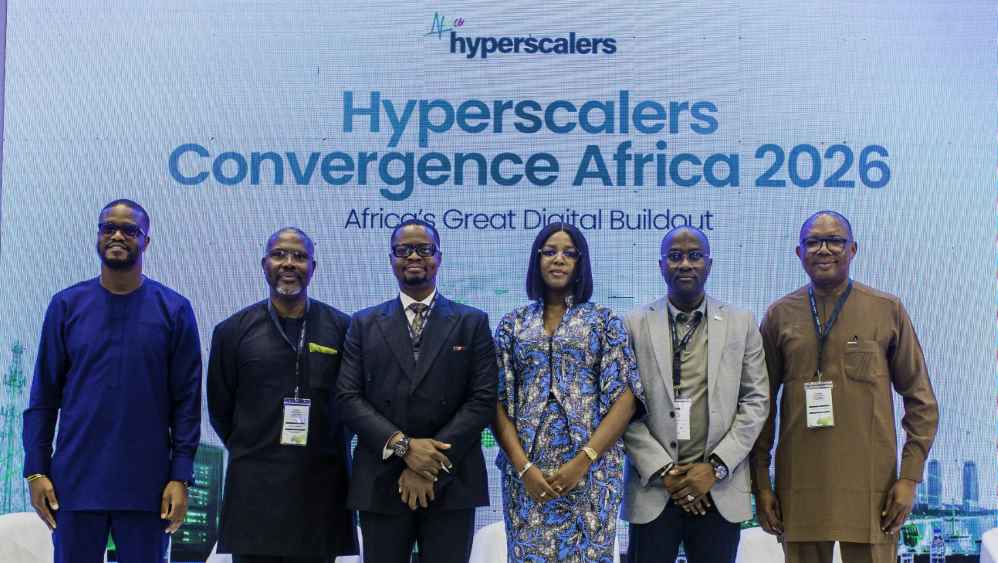
LAGOS, Nigeria, September 14, 2026/APO Group/ –African digital infrastructure convener, Hyperscalers Convergence Africa (HCA) (https://ConvergenceAfrica.Hyperscalers) 2026 concluded with a clear action agenda for accelerating Africa’s digital infrastructure development. The conference also honoured twelve pioneers whose work helped shape the continent’s digital economy and recognised 100 women leading innovation across telecommunications, cloud, data centres, policy, finance and technology.


Held under the theme “Africa’s Great Digital Buildout (https://apo-opa.co/4hqmkAL),” the third edition brought together policymakers, regulators, investors, development finance institutions, technology companies, infrastructure operators and enterprise leaders from across the continent.

Participants included Dr Talkmore Chidede of the African Continental Free Trade Area Secretariat, representing Secretary-General Wamkele Mene; Sulaiman Cisse of Africa Finance Corporation; Opuiyo Oforiokuma of the Africa50 Infrastructure Acceleration Fund; Amine Idriss Adoum of AUDA-NEPAD; Wole Abu of Equinix; Kanwulia Okafor of GSMA; Lars Johannisson of Rack Centre; Alma Nurshaikhova of the World Bank; Bill Kleyman of Data Center World and Apolo.us; Snehar Shah of IXAfrica Data Centres; Atinuke Runsewe of Bayobab/MTN; Dr Ayotunde Coker of Open Access Data Centres; and Nonye Ujam of Microsoft.

Across five panel sessions and two keynotes, speakers examined how data centres, cloud, fibre, power and artificial intelligence can support Africa’s digital transformation and economic growth.

From isolated projects to connected systems

A central conclusion was that Africa must move beyond isolated infrastructure projects towards coordinated, cross-border digital systems. While new data centres, subsea cables, cloud platforms and fibre networks are expanding capacity, their economic impact will remain limited without reliable power, harmonised regulation, affordable connectivity and stronger links to enterprise demand.

The conference identified seven priorities:

  • Create incentives for internet service providers to peer across borders, reducing the cost and complexity of routing African traffic.
  • Align regulatory processes, fiscal models, technical standards and tariffs across markets. Alignment does not require identical national laws, but it should make cross-border investment and operations more predictable.
  • Fund early-stage project preparation and coordination to help viable infrastructure projects become investment-ready.
  • Connect pension funds, insurers, sovereign wealth funds, development finance institutions and infrastructure developers to mobilise more African institutional capital.
  • Extend subsea capacity inland through terrestrial and metropolitan fibre, open interconnection and resilient cross-border routes.
  • Support local cloud and artificial intelligence workloads by investing in computing capacity, power, data centres, skills and responsible data governance.
  • Ensure infrastructure reaches micro, small and medium-sized enterprises through affordable broadband, cloud services, reliable power and accessible digital devices.

Participants also highlighted major projects that could support wider regional transformation, including Nigeria’s proposed 90,000-kilometre fibre backbone under the BRIDGE initiative, cross-border peering incentives and the development of an Oracle cloud region in Nigeria.

HCA will consolidate the conference findings into an Africa Digital Infrastructure Delivery Agenda 2026, covering regulation, capital, power, connectivity, data centres, cloud, artificial intelligence, cybersecurity and regional integration.

Recognising Africa’s digital pioneers

The inaugural HCA Digital Infrastructure Pioneers Awards (https://apo-opa.co/4xm7Neg) honoured twelve individuals whose work helped establish the foundations of Africa’s digital economy: Andile Ngcaba, Funke Opeke, Strive Masiyiwa, Alan Knott-Craig Sr, Chris Wood, Sam Darwish, Ernest Ndukwe, Michuki Mwangi, President Olusegun Obasanjo, the late Khaled Bichara Brian Herlihy and Mohamed Nasr.

The recognition celebrated contributions ranging from telecommunications reform and private-sector investment to fibre deployment, internet exchange development, undersea cable systems and the expansion of affordable connectivity.

Celebrating 100 women shaping Africa’s digital future

HCA 2026 also released an inclusion report and recognised 100 women making significant contributions across the continent’s digital ecosystem (https://apo-opa.co/4xrS39I). The initiative was created to address the persistent visibility gap surrounding women leading telecommunications companies, infrastructure projects, technology businesses, regulatory institutions and investment platforms.

Honourees from East Africa included Judy Nguru of Google, Rayana Choudhary of Wingu Africa, Frehiwot Tamiru of Ethio Telecom, Fawzia Ali-Kimanthi of Safaricom, Catherine Muraga of Microsoft Africa Development Centre, Rwanda’s Minister of ICT and Innovation Paula Ingabire, and Angela Wamola of GSMA.

North African honourees included Lobna Helal of Telecom Egypt, Doha Ammour of N+ONE Datacenters and Adeela Mahmood of Raxio Group. Pan-African and global leaders recognised included Vibhuti Jain of the U.S. International Development Finance Corporation, Nene Maiga of Orange Botswana, Beauty Apleni of Openserve, Yolanda Cuba of MTN South Africa and Nonkqubela Jordan-Dyani of South Africa’s Department of Communications and Digital Technologies.

West Africa accounted for 44 per cent of the list. Honourees included Nikki Popoola of WIOCC Group, Patricia Obo-Nai of Telecel Ghana, Dr Judith Yah Sunday of CAMTEL, Josephine Awatefe Sarouk of Bayobab Nigeria, Funke Opeke of MainOne, Adaora Ikenze of Meta, Thelma Quaye of Smart Africa, Jana Kunicová of the World Bank, Ayaan Adam of Africa Finance Corporation, Mavis A. Ampah of Ghana’s National Communications Authority, Togo’s Minister Cina Lawson, Rimini Haraya Makama of the Nigerian Communications Commission and Aisha Mumuni of MTN Nigeria.

In his opening keynote, Temitope Osunrinde, Executive Director of Africa Hyperscalers, said “Africa’s digital future depends on the infrastructure choices we make today. Delivering reliable power, resilient connectivity, secure data centres and affordable computing will require governments, investors and industry to work together. Bilateral agreements are valuable, but multilateral alignment on policy, regulation and investment is essential to build interconnected infrastructure at the scale Africa requires.”

Hyperscalers Convergence Africa 2026 was delivered with the support of IHS Towers, Open Access Data Centres, the National Information Technology Development Agency, Rehiko, Vertiv, Rack Centre, Equinix, Nokia, smartcomply, The Littlesteps Group, Internet Exchange Point of Nigeria, Xalam Analytics and Nina Jojer as knowledge partner.


Evening Cocktail reception for Development Partners

Africa Hyperscalers also hosted leaders from Africa’s business and enterprise community at an evening cocktail reception welcoming Brandon Hudspeth, the new U.S. Consul General in Lagos; Amine Idriss Adoum, Director of Infrastructure, Energy, Industrialisation, Trade and Regional Integration at the African Union Development Agency–New Partnership for Africa’s Development (AUDA-NEPAD); and Dr Talkmore Chidede, Senior Digital Trade Expert at the African Continental Free Trade Area (AfCFTA) Secretariat.

Extending the Hyperscalers Convergence Africa Conversation at International Telecoms Week Africa

Africa Hyperscalers extended the digital infrastructure conversation to International Telecoms Week Africa in Nairobi, where Temitope Osunrinde, Director, Africa Hyperscalers, chaired two sessions. The first, “Regulation That Builds: Aligning Policy and Digital Infrastructure Investment Priorities,” examined how regulatory frameworks can enable digital infrastructure investment across Africa. Speakers included Dr Vincent Olatunji, National Commissioner and Chief Executive Officer, Nigeria Data Protection Commission; Kashifu Inuwa Abdullahi, Director-General and Chief Executive Officer, National Information Technology Development Agency; Tony Emoekpere, President, Association of Telecommunications Companies of Nigeria; Mercy Ndegwa, Public Policy Director, East and the Horn of Africa, Meta; and Engr. Dennis Chepkwony, Director, Universal Service Fund, Communications Authority of Kenya.

The second session, “Nigeria’s Digital Infrastructure Opportunity,” showcased the connectivity and data-centre opportunities in one of Africa’s fastest-growing digital markets. Discussions covered Project BRIDGE and new regulatory guidelines designed to stimulate local demand for data centre, cloud and computing capacity. Speakers included chief host and lead presenter Kashifu Inuwa Abdullahi, Director-General and Chief Executive Officer, National Information Technology Development Agency; Jay Katatumba, Senior Investment Director, Africa50 Infrastructure Acceleration Fund; Lanre Kolade, Chief Executive Officer, Koltronics Nigeria, and Adviser, Project BRIDGE; Gbenga Adegbiji, Chief Executive Officer, Geniserve, and Technical Adviser, Project BRIDGE; Niraj Shah, General Manager, Data Centre Programme, Bayobab Africa; Ike Nnamani, Chief Executive Officer, Digital Realty Nigeria; Wole Abu, Managing Director, West Africa, Equinix; and Cherotich Kiereini, Senior Infrastructure Strategy Adviser, Oracle.

Distributed by APO Group on behalf of Africa Hyperscalers.


Business

Industrial competitiveness takes centre stage at C&I Energy + Storage Summit Johannesburg

Published

on

C&I Energy

The summit opens with a shared question: how can businesses protect production and investment while navigating changes to the systems that supply their energy and water

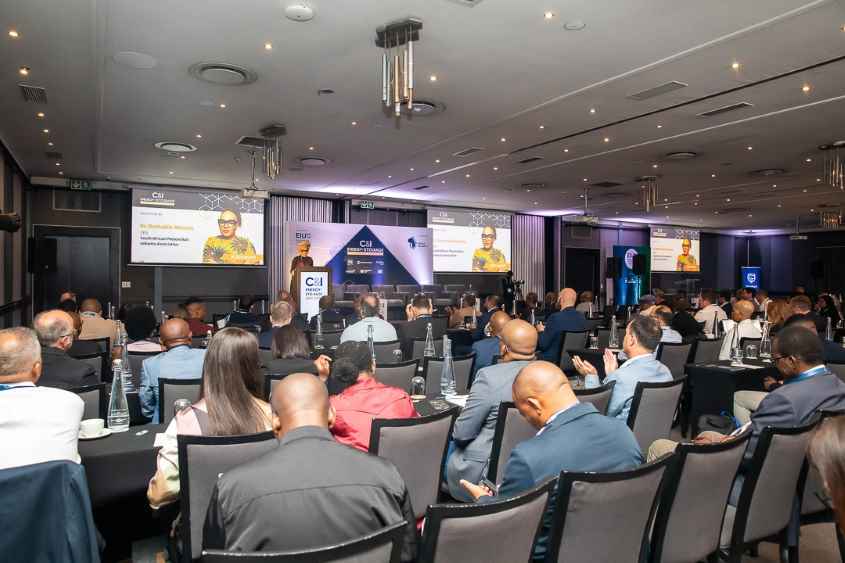
JOHANNESBURG, South Africa, October 27, 2026/APO Group/ –Rising electricity and water costs, changing energy procurement options and pressure to decarbonise are putting South Africa’s industrial competitiveness under scrutiny. These challenges will lead the opening agenda of the C&I Energy + Storage Summit Johannesburg, which begins tomorrow, bringing the relationship between infrastructure resilience and business performance into focus.

Held alongside the Energy Intensive Users Group (EIUG) Conference, Data Centre Summit and Water Security Africa on 28–29 October, the summit opens with a shared question: how can businesses protect production and investment while navigating changes to the systems that supply their energy and water?


Following welcomes from Chanelle Hingston, VUKA Group Director: Power, Energy & Water, and EIUG Chairman Murendeni Matshinyatsimbi, NTCSA CEO Monde Bala will deliver the keynote address. He is expected to explore how grid expansion, fair access and system reliability can support a competitive electricity market and unlock industrial investment.

These opening contributions will set the context for the keynote panel, “Threats and opportunities in South Africa’s industrial future”. Moderated by Kay Walsh, Managing Director of Nova Economics, the discussion brings together Gaylor Montmasson-Clair, Founding Director of Southern Transitions; Charles Dos Santos, Managing Director of Air Products South Africa; and Lubabalo Luyaba, Senior Water Specialist at the World Bank.

The panel will examine how escalating tariffs, electricity market reform and pressure on water resources are influencing industrial competitiveness. Wheeling frameworks, market liquidity and regulatory clarity will feature alongside the growing need for resilient water supply and better water management.

For commercial and industrial businesses, these issues have direct implications for operating costs, procurement decisions and long-term investment. The discussion will explore how companies can manage regulatory uncertainty, strengthen resilience and assess opportunities in energy procurement and carbon markets.

Water security will receive further attention through a keynote address and MOU signing featuring Ramateu Monyokolo, Chairperson of AWSISA. Earlier morning discussions will ask what a loss of Johannesburg’s water supply would mean for business and explore water’s role as a strategic asset.

The opening agenda will lead into practical Day 1 sessions on reducing energy costs, electricity market reform and financing the transition. Industrial case studies from Isuzu Motors South Africa, Sibanye-Stillwater and Harmony Gold Mining Company will examine approaches to cost certainty and energy security.

Across the day, the emphasis will be on decisions businesses can act on: improving efficiency, diversifying supply and investing in infrastructure that supports reliable operations and sustained competitiveness.

Sponsors across the events include WEG, Gold Sponsor; Standard Bank, Gold and Registration Sponsor; Huawei, EIUG Gold and Registration Sponsor; NOA and South32, EIUG Gold Sponsors; Envusa Energy, Scatec (Lyra) and Seriti Green, EIUG Silver Sponsors; LONGi and MATTLA Engineering Solutions, Bronze Sponsors; Africa International Advisors, EIUG Bronze Sponsor; Webber Wentzel, Water Bronze Sponsor; and Air Liquide and Air Products, Session Sponsors.

Download the full programme to explore the keynote speakers, industry case studies and practical sessions taking place on 28–29 October: https://apo-opa.co/4sqc9QL

Distributed by APO Group on behalf of VUKA Group.


Continue Reading

Energy

Libya Energy & Economic Summit (LEES) 2027 Places Infrastructure at the Center of Libya’s Energy Expansion with Dedicated Forum

Published

on

From gas processing and ports to downstream infrastructure and regional pipelines, LEES 2027 will examine the infrastructure required to support Libya’s next phase of energy growth

TRIPOLI, Libya, October 26, 2026/APO Group/ –Libya’s push to expand oil and gas production is creating a parallel requirement for investment in the infrastructure needed to process, transport and commercialize additional energy supplies. With more than $20 billion committed to the Waha concessions alone and major gas, industrial and logistics projects advancing, infrastructure integration is emerging as a key component of the country’s investment agenda.


Against this backdrop, the Libya Energy & Economic Summit (LEES) 2027, taking place January 23–25 in Tripoli, will feature a dedicated Infrastructure and Integration Forum. The forum will examine how Libya can convert its growing resource base into productive domestic infrastructure and stronger regional ties.

As Libya seeks to process more hydrocarbons domestically and capture greater value from refined products, the country’s National Oil Corporation (NOC) is pursuing refinery modernization and expanded petrochemical manufacturing. That strategy is being reinforced by upstream expansion, including a more than $20 billion, 25-year Waha development deal with TotalEnergies and ConocoPhillips targeting up to 850,000 barrels per day (bpd) of additional capacity.

Meanwhile, the National Development Agency has signed 13 agreements with Chinese companies for projects at the 1,000-hectare Magroun Industrial Zone, covering industrial chemicals, advancing manufacturing and construction materials. The Ministry of Industry’s 100-Day Plan is supporting the country’s wider development push through infrastructure and digital reforms aimed at improving industrial investment.

Gas provides another major infrastructure opportunity set to be showcased at LEES 2027. Eni’s $8 billion Structures A&E project is designed to move offshore gas to the Mellitah treatment plant, with infrastructure targeting 750 million cubic feet per day (mmscf/d) in 2027. The project follows the successful start-up of the Sabratha Compression Project in June 2026. Led by Eni in partnership with the NOC – through the Mellitah Oil & Gas joint venture – the project has an overall compression capacity of 440 mmscf/d.

On the maritime side, the $2.7 billion Misurata Port expansion is set to transform the facility into a major Mediterranean logistics hub, with planned capacity of 4 million containers annually and 8,400 direct jobs. The project also incorporates local supplier development, linking maritime expansion with efforts to build domestic supply chains.

Beyond domestic infrastructure Libya is strengthening its connections to regional neighbors. The country is advancing negotiations with Egypt for an 800-km Tobruk-Alexandria crude pipeline, estimated at $1.5 billion–$2 billion and targeting initial capacity of 150,000–250,000 bpd. The NOC is also working to maximize the 11-billion-cubic-meter annual capacity of the GreenStream pipeline, connecting coastal facilities in Libya to European markets via Sicily.

Taken together, these projects show an increasingly integrated Libyan investment agenda – connecting upstream production with downstream industry, gas infrastructure, logistics and cross-border energy markets. LEES 2027’s Infrastructure and Integration Forum will bring those investment opportunities together in one platform, highlighting the NOC and Ministry-led push to build the infrastructure required for Libya’s next phase of economic growth.

For more information about LEES 2027, please visit https://LibyaSummit.com/​.

Distributed by APO Group on behalf of Energy Capital & Power.


Continue Reading

Energy

Ghana Energy Minister John Jinapor to Speak at MSGBC Oil, Gas & Power 2026

Published

on

Etu Energias

Ghana’s Energy Minister joins MSGBC Oil, Gas & Power 2026 as the country advances upstream investment, gas monetization and infrastructure development

DAKAR, Senegal, October 26, 2026/APO Group/ –Ghana’s Minister for Energy and Green Transition Dr. John Abdulai Jinapor will participate as a speaker at MSGBC Oil, Gas & Power 2026 in Dakar, Senegal, from December 1–3. His participation comes as Ghana pursues upstream investment, domestic gas monetization and power-sector reforms to strengthen energy security and attract capital.


Minister Jinapor’s participation brings Ghana’s experience in balancing hydrocarbon development, electricity reliability and renewable energy investment to a regional forum focused on cross-border infrastructure and resource development. The fifth edition, held at the CICAD under the high patronage of President Bassirou Diomaye Faye, will connect policymakers, operators and investors across the MSGBC basin.

Ghana’s latest initiatives combine upstream recovery with major downstream infrastructure plans. On October 20, Jinapor pledged to lead inter-ministerial talks addressing land acquisition, compensation and financing hurdles facing the proposed $28-billion Petroleum Hub in Jomoro, following an agreement between the Petroleum Hub Development Corporation and a United Arab Emirates consortium led by Global Sphere.

https://apo-opa.co/4ijaUOu

The proposed development includes a 300,000-barrel-per-day refinery, petrochemical facilities and deepwater ports, with construction targeted for early 2027. If delivered, the project could expand domestic processing capacity, support industrial activity and position Ghana as a regional petroleum-products trading hub.

At African Energy Week 2026 in Cape Town, Jinapor also reported $3.5 billion in upstream investment commitments for Ghana’s Jubilee, Tweneboa, Enyenra and Ntomme, and Offshore Cape Three Points fields. The commitments support expansion and drilling campaigns as the country seeks to reverse declining production and sustain output from mature offshore assets.

His contribution will enrich regional discussions at MSGBC Oil, Gas & Power 2026, fostering opportunities for cross-border cooperation

https://apo-opa.co/4BoGjrs

Gas supply and power-sector efficiency remain central to that strategy. Ghana is implementing its Second Gas Processing Plant, while plans for additional offshore infrastructure aim to increase gas availability; the government has also reported savings of $500 million from reducing liquid-fuel imports for electricity generation.

https://apo-opa.co/4jGStFP

Regional integration offers another route to improving supply security. Jinapor recently outlined discussions with Nigeria on exchanging Ghanaian electricity for Nigerian natural gas delivered through the West African Gas Pipeline, while Ghana is procuring a 200 MW battery energy storage system alongside a 200 MWp solar facility.

https://apo-opa.co/4Bxfr94

These measures complement efforts to address energy-sector liabilities, which exceeded $3 billion at the start of 2025, and improve payments to independent power producers. Ghana’s longer-term plans include expanding renewable capacity, increasing electricity access to 99% by 2030 and developing nuclear power as part of its future generation mix.

“Minister Jinapor’s participation brings valuable perspective on how Ghana is mobilizing investment across upstream production, gas monetization and power infrastructure to strengthen energy security and support industrial growth. His contribution will enrich regional discussions at MSGBC Oil, Gas & Power 2026, fostering opportunities for cross-border cooperation, infrastructure development and investment partnerships across West Africa,” says Sandra Jeque, Vice President, Energy Capital & Power.

MSGBC Oil, Gas & Power 2026 will also feature Senegal’s Minister of Energy and Petroleum Dr. El Hadji Abdourahmane Diouf; Guinea-Conakry’s Minister of Energy Laye Sékou Camara; Algeria’s Minister of State for Hydrocarbons Mohamed Arkab and Minister of Energy and Renewable Energies Mourad Adjal; Guinea-Bissau’s Minister of Natural Resources Baldé; and Mali’s Minister of Energy and Water Tiémoko Traoré.

Organized by Energy Capital & Power and held under the High Patronage of Senegalese President Bassirou Diomaye Faye, MSGBC Oil, Gas & Power 2026 takes place December 1–3 in Dakar and will convene heads of state, ministers, investors, operators and development partners from Mauritania, Senegal, The Gambia, Guinea-Bissau and Guinea-Conakry. Explore opportunities and secure your participation at www.MSGBCOilGasandPower.com.

Distributed by APO Group on behalf of Energy Capital & Power.


Continue Reading

Trending