Connect with us
Anglostratits

Tech

Huawei Debuts Cutting-Edge Innovations in Madrid with Focus on Running Watches

Published

on

Huawei

MADRID, SPAIN – Media OutReach Newswire – 27 February 2026 – Huawei unveiled its latest innovations at the “Now is Your Run” global product launch event in Madrid, Spain on February 26. The tech giant marked its return to professional running watches after a five-year hiatus with the debut of the all-new HUAWEI WATCH GT Runner 2. The event also showcased the HUAWEI WATCH Ultimate 2, HUAWEI Mate 80 Pro, HUAWEI MatePad Mini, HUAWEI FreeBuds Pro 5, and HUAWEI Band 11 Series. Two-time Olympic marathon champion Eliud Kipchoge was introduced as the global ambassador for HUAWEI WATCH GT Runner. “Running means much more than running fast,” said Kipchoge. “I believe that running is the most beautiful activity on every level. Together with Huawei, we can reach millions of runners around the world and hopefully impact their lives in a beautiful and positive way.”

HUAWEI WATCH GT Runner 2: Five Years of Accumulation, Redefining Professional Running Watches

HUAWEI WATCH GT Runner 2 is equipped with a new 3D floating antenna architecture, engineered to deliver unparalleled positioning precision. Equipped for the first time with an intelligent positioning algorithm, it continues to calculate the runner’s trajectory and distance even during signal interruptions, ensuring uninterrupted positioning. The new intelligent marathon mode offers one-stop race management, acting as a personal coach on your wrist throughout the journey. Not only does the HUAWEI WATCH GT Runner 2 help professional athletes boost their performance, but it also brings a smart and professional running experience to amateur runners. Eliud Kipchoge shared his experience of co-creating products with Huawei at the event, stating, “I am passionate to share my opinions and perspectives to improve the smartwatch experience not just for elite athletes but for runners all around the world.”

HUAWEI WATCH Ultimate 2 and HUAWEI Band 11 Series: Next-Level Fitness

At this event, Huawei unveiled a range of new wearable devices designed to deliver more professional and personalized fitness experiences for users. The HUAWEI WATCH Ultimate 2 debuted in a striking “Green” color, maintaining its top-tier capabilities for diving and outdoor adventures while introducing enhanced features specifically tailored for golf driving range and on-course play. This offers a more precise and intelligent high-end sports experience. Meanwhile, the HUAWEI Band 11 Series combines sleek design with practical functionality, featuring a larger and clearer display that ensures excellent visibility even under bright sunlight. Integrating health monitoring, activity tracking, and convenient features into one compact device, it serves as a reliable companion for users’ daily fitness needs.

HUAWEI Mate 80 Pro: Cutting-edge Flagship Setting New Benchmark in Mobile Experience

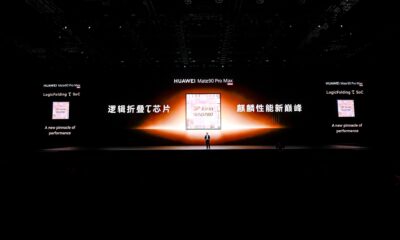
Huawei makes a grand return to the global market with its Mate Series, showcasing the company’s technological prowess. The HUAWEI Mate 80 Pro, representing Huawei’s cutting-edge innovation, features an upgraded True-to-Color Camera that ensures consistent color accuracy across various lighting conditions and mixed color temperatures. Its new Dual Space Ring Design, which blends classic elegance with modern aesthetics, earned widespread acclaim from attendees. With enhanced performance, 2nd Gen Kunlun Glass, and advanced AI capabilities, Huawei continues to deliver state-of-the-art technology and experiences, pushing smartphone experience to new heights.

Trendsetting Technology Unveiled for Ultimate Intelligence

Huawei unveils its first-ever Mini tablet, the HUAWEI MatePad Mini. Featuring a compact 8.8-inch body that’s slimmer and lighter than traditional tablets, it easily fits into pockets or handbags. Whether for reading documents, watching your favorite shows, or on-the-go creative work during business trips, this device is ready whenever you need it. It serves as an ideal digital companion for business professionals, avid readers, office workers, and academic researchers alike. The company also introduced the HUAWEI FreeBuds Pro 5 earbuds, the industry’s first wireless earbuds with dual-engine AI noise cancellation. Paired with a dual-drive acoustic system, they deliver exceptional noise reduction while preserving vocal and instrumental details, offering users an immersive live-listening experience.

Last year, Huawei introduced its brand proposition “Now is Yours”, aiming to establish genuine and close connections with global consumers through a more inclusive and youthful communication approach. At this “Now is Your Run” launch event, Huawei partnered with Eliud Kipchoge to promote running as a sport and advocate for a healthy lifestyle. Moving forward, Huawei will continue to promote fitness and health through technological innovation, using warm products and sincere communication to enable more people to enjoy a healthier and more vibrant life through technology.

Tech

Kora Joins International Air Transport Association’s (IATA) Payment Network to Power Airline Payments Across Africa

Published

on

Africa

Through this integration, airlines and travel agencies using IFG can now accept payments across Africa via Kora, including cards, bank transfers, mobile money, and local alternative payment methods

LAGOS, Nigeria, June 12, 2026/APO Group/ –Kora (www.KoraHQ.com), the payment infrastructure platform, has joined the International Air Transport Association’s IATA Financial Gateway (IFG) (https://apo-opa.co/4ovs4va), connecting global airlines to Africa’s payment ecosystem through a single, reliable infrastructure layer.


IATA Financial Gateway is the airline industry’s dedicated payment orchestration and management platform. IFG brings together global, regional and local payment partners to provide airlines with the right mix of payment options to maximize acceptance, reduce cost, and better serve customers in every market. Through this integration, airlines and travel agencies using IFG can now accept payments across Africa via Kora, including cards, bank transfers, mobile money, and local alternative payment methods, without building or managing multiple complex integrations independently.

Global airlines no longer have to choose between expanding into Africa and managing payment complexity

Africa is one of the fastest-growing aviation markets in the world. The continent is expected to add more than 300 million new passengers by 2050. Yet global airlines have long faced a fundamental operational challenge when entering African markets: fragmented local payment rails, FX complexity, disconnected settlement systems, and the burden of managing multiple payment service provider relationships across Nigeria, Kenya, Ghana, Egypt and South Africa. This partnership removes that friction. One connection through IFG gives airlines access to Kora’s full African payment infrastructure, with the settlement reliability and local compliance that enterprise operations require.

Dickson Nsofor, CEO of Kora, said: “Africa is not a market to figure out later. It is a growth opportunity that demands serious infrastructure today. Our partnership with IATA signals that the rails are ready. Global airlines no longer have to choose between expanding into Africa and managing payment complexity. With Kora inside IFG, they get both.”

IATA currently represents over 370 international airlines globally. With Kora now part of IFG, those airlines gain direct access to Africa’s payment stack across every market Kora operates in.

IATA Financial Gateway (IFG) enables increased travel payment processing flexibility for the world’s airlines and travel suppliers to build a cost-effective travel payment strategy. Kora’s participation strengthens our ability to serve airlines operating in or expanding across African markets,” said Kamil Al-Awadhi, Regional Vice President, Africa and Middle East.

Distributed by APO Group on behalf of Kora.


Continue Reading

Energy

Dietsmann Brings its Energy Maintenance and Robotics Expertise to African Energy Week (AEW) 2026

Published

on

African Energy Chamber

After decades keeping Africa’s oil, gas and power plants running, Dietsmann is bringing robotics and AI to the center of its work

CAPE TOWN, South Africa, June 12, 2026/APO Group/ –Dietsmann, the independent specialist in operation and maintenance (O&M) services for energy production facilities, will participate as a Bronze Sponsor at African Energy Week (AEW) 2026 – taking place from October 12-16 in Cape Town. The sponsorship deepens a presence in African energy that stretches back decades and reflects the company’s growing role in the policy conversation after it joined the African Energy Chamber (https://EnergyChamber.org) earlier this year.


Dietsmann’s participation at AEW 2026 reflects the growing role of specialist maintenance contractors in Africa’s energy industry. With much of the continent’s production now coming from mature fields, the contractors that keep those facilities running reliably and at lower cost have become more important than ever. Dietsmann has built its position over more than four decades, maintaining oil, gas and power plants across Angola, Nigeria, Gabon, Libya, Uganda and South Sudan, often in demanding offshore and remote environments.

The company’s expertise is also on display in the Republic of Congo, where industrial maintenance is its core business. There it maintains TotalEnergies’ offshore production facilities and services the 484 MW gas-fired Centrale Électrique du Congo, one of the country’s main power plants. In Angola, it has operated since 2000 through Sonadiets, a joint venture with Sonangol that was among the first of its kind between an African national oil company and a maintenance specialist.

Dietsmann knows that reliable operations are the foundation of energy security

Dietsmann also prioritizes workforce development in parallel to its technical work. The firm has organized local training programs in all its African host countries since the early 2000s, building maintenance skills among national employees through dedicated training centers and on-the-job campaigns. Its approach aligns closely with the local-content priorities that are defining this moment in African energy policy.

Maintenance itself is being reshaped by technology, and Dietsmann is among the contractors leading the shift across Africa. In partnership with the robotics firm Taurob, the company has deployed autonomous inspection robots, including ATEX-certified units built for hazardous environments, and is integrating drones and AI-based analytics to move maintenance from reactive repairs toward predictive monitoring.

The company’s CEO Cesare Canevese has carried a consistent message into African energy circles: reliable maintenance, digitalization and local skills are non-negotiables for continental energy security. He also notes that Dietsmann’s expertise travels across the energy transition, as the fundamentals of maintaining a facility change little whether it produces oil, gas or power – readying the company for work on Africa’s growing gas-to-power and LNG projects.

“Dietsmann knows that reliable operations are the foundation of energy security,” said NJ Ayuk, Executive Chairman of the African Energy Chamber. “Pairing decades of field experience with new technology and local skills development is how Africa keeps its existing assets producing for longer.”

As a Bronze Sponsor at AEW 2026, Dietsmann is expected to feature in discussions on operational reliability, local content and the digital technologies reshaping how Africa maintains its energy infrastructure.

Distributed by APO Group on behalf of African Energy Chamber.

Continue Reading

Business

African Organisations Move from Awareness to Action as IT Asset Visibility Becomes a Board-Level Priority

Published

on

IT

Following widespread recognition of the IT asset visibility gap across the continent, V-Track reports a significant shift in organisational behaviour as finance and IT leaders move beyond acknowledgement toward structured, technology-driven control

Across African markets, a shift is underway in how organisations approach IT asset management. Having acknowledged the scale of the visibility gap – the growing disconnect between what appears on balance sheets and what can be verified in the real world – finance and IT teams are now moving to close it. The conversation, once dominated by problem definition, is rapidly becoming one of implementation.


This shift follows a period of heightened scrutiny in which organisations have begun to quantify the financial impact of poor asset visibility: avoidable procurement spend on devices that already exist in their estates, capital tied up in assets that are no longer in productive use, audit exposure from inaccurate registers, and security risk created by devices that have drifted off the network without formal decommissioning.

“We are seeing a clear change in the nature of the conversations organisations are having with us,” said Valene Nagiah, Head of Asset Tracking and Management at V-Track. “Twelve months ago, the primary question was: do we have a problem? Now, the question is: how do we fix it  and how quickly can we demonstrate a return? That is a meaningful shift, and it reflects a broader maturation in how African businesses think about IT governance.”

From static registers to continuous control

For many organisations, the first step in closing the visibility gap has been confronting the inadequacy of existing systems. Periodic manual audits and static spreadsheet-based asset registers are the default approach across much of the continent and are increasingly being recognised for what they are: point-in-time snapshots that begin losing accuracy the moment they are completed.

In environments where assets move constantly between offices, remote locations, field teams, and employees who may work across multiple sites,  a register that is accurate today may be significantly out of date within weeks. The challenge is not simply one of data quality; it is structural. Manual processes cannot keep pace with the operational reality of a distributed, mobile workforce.

“The organisations making the most progress are those that have stopped treating asset management as an audit exercise and started treating it as a continuous function,” said Nagiah. “Visibility is not something you achieve once a year. It is something you maintain every day and that requires infrastructure, not just process.”

The hybrid workforce as a forcing function

The permanent entrenchment of hybrid and distributed working across African markets has proven to be a significant forcing function for ITAM investment. As organisations formalised remote and flexible work arrangements, the practical consequences of asset invisibility became harder to ignore. Devices issued to home-based employees, contractors, and field staff could no longer be assumed to be present, functional, or secure, and without tracking infrastructure, verifying their status required manual intervention that was neither scalable nor reliable.

The organisations making the most progress are those that have stopped treating asset management as an audit exercise and started treating it as a continuous function

In markets characterised by infrastructure variability, including intermittent power supply, inconsistent connectivity, and high rates of staff movement between employers, these challenges are amplified. A device that was verified last quarter may have changed location, changed hands, or gone offline entirely in the intervening period. Without continuous monitoring, the organisation simply does not know.

For leased IT environments, this dynamic carries additional financial weight. Devices that cannot be accounted for at the end of a lease agreement represent a direct liability, replacement costs that fall to the organisation, compounded by the administrative burden of attempting to recover assets after the fact. Proactive tracking eliminates this exposure before it materialises.

What effective implementation looks like

Organisations that have made meaningful progress on IT asset visibility share a common set of characteristics. They have moved away from treating ITAM as a back-office IT function and repositioned it as a financial control mechanism with direct implications for procurement strategy, capital allocation, and audit readiness. They have invested in platforms that provide continuous, real-time data rather than periodic snapshots. And they have created clear ownership of asset data at both the IT and finance level, recognising that the two functions need to operate from the same source of truth.

The practical benefits of this approach are demonstrable across four areas:

  • Financial accuracy: asset registers that reflect operational reality, enabling more precise depreciation, budgeting, and capital planning.
  • Procurement efficiency: elimination of duplicate or unnecessary purchases driven by inaccurate inventory data.
  • Security and compliance: continuous visibility into device status reduces the attack surface created by unmonitored endpoints and strengthens regulatory compliance.
  • Lease and lifecycle management: accurate, real-time asset data enables organisations to optimise lease terms, plan timely returns, and maximise residual value.


“The organisations that are getting this right are not necessarily those with the largest IT budgets,” Nagiah noted. “They are the ones that have made a deliberate decision to treat their asset estate as a managed financial resource and have put the systems in place to support that decision. The technology to do this exists, and it is accessible. The gap is no longer a technology gap. It is a decision gap.”

A platform built for African operating conditions

V-Track’s asset intelligence platform is designed to function effectively within the operational constraints that characterise many African business environments. The platform requires no on-premises infrastructure, operates across distributed and multi-jurisdiction environments, and provides finance and IT teams with a unified view of their asset estate regardless of where those assets are physically located.

Organisations yet to begin their asset visibility journey are encouraged to start with V-Track’s 15-day free trial (https://apo-opa.co/4ehmGXN) – a structured visibility audit that typically surfaces actionable findings within the first week. No procurement process, no long-form commitment, and no prior ITAM infrastructure required.

“The most common thing we hear after the trial is: we had no idea,” said Nagiah. “That is exactly the point. The trial does not sell a product – it reveals a reality. What organisations choose to do with that clarity is their decision. But they can no longer say they did not know.”

Distributed by APO Group on behalf of V-Track.


Continue Reading

Trending