Connect with us
Anglostratits

Business

How Africa can accelerate intra-African trade momentum (By Mrs. Kanayo Awani)

Published

on

IATF has firmly established itself as one of Africa’s most influential engines for trade, investment and economic integration

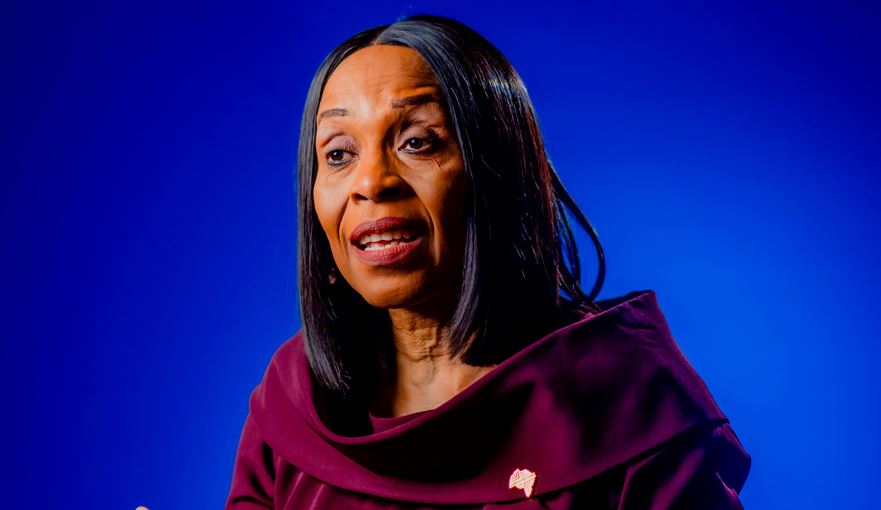
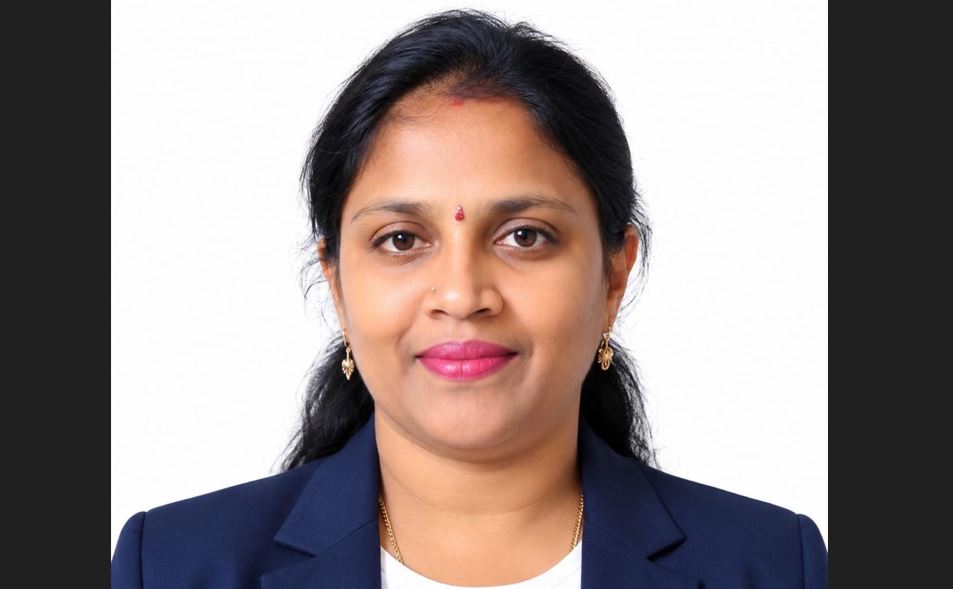
CAIRO, Egypt, September 3, 2026/APO Group/ —By Mrs. Kanayo Awani, Executive Vice-President, Intra-African Trade & Export Development Bank at African Export-Import Bank (www.Afreximbank.com)


Boosting trade flows amongst African countries remains a key economic priority. There is significant opportunity to accelerate the growing intra-African trade in order to unlock investment, catalyse industrialisation, especially processing and adding value to our natural resources.

According to the Africa in Figures 2025 (https://apo-opa.co/4ygFkXY) report released by African Export-Import Bank (Afreximbank), intra-African trade grew by 5.4 percent in 2024 to stand at US$206.6 billion, with continued implementation of the African Continental Free Trade Area (AfCFTA) expected to further enhance it. It is imperative to persist in closing long-standing gaps in trade, investment, and market intelligence that continue to constrain business growth. Across the continent, enterprises are held back by limited knowledge of market opportunities, as well as unclear regulatory information and restricted access to trade finance, all of which hamper their ambitions to expand across borders.

Enter the Intra-African Trade Fair (IATF), Africa’s premier trade and investment marketplace and a driving force behind the continent’s economic integration agenda. Building on the success of the record-breaking fourth edition, IATF2025 in Algiers, which generated US$50 billion in trade and investment deals, the Fair continues to cement its position as a catalyst for intra-African commerce. IATF’s true impact lies in its ability to connect businesses, unlock opportunities, and translate ambition into tangible commercial outcomes.

IATF2025 highlighted the growing momentum of trade within Africa, with significant increases in participation, deal volume and transaction value. More than a showcase, the Fair proved its effectiveness as a platform for expanding market access, promoting African products and services, attracting investment, and connecting businesses to new opportunities. It continues to deliver tangible results by facilitating partnerships, fostering and strengthening regional and continental value chains.

It is essential for Nigerian and African businesses to fully seize opportunities presented by the continental free trade area

IATF has firmly established itself as one of Africa’s most influential engines for trade, investment and economic integration. The spotlight now shifts to Nigeria. Lagos will host IATF2027 from 5–11 November 2027, bringing together businesses, investors, policymakers, researchers, creatives and innovators from across the continent. The ambition for the 2027 edition in Lagos reflects the sheer scale of Africa’s opportunity. With targets of over US$50 billion in trade and investment deals, more than 100,000 visitors, and 2,500+ exhibitors, IATF2027 is set to be the largest edition yet. Anchored by the theme “Global Africa, Smart Trade: From Market Access to Market Power,” it signals a bold shift, positioning Africa not just as a participant, but as a decisive force shaping its own economic future

Beyond the headline figure, more than 180,000 participants, 6,600 exhibitors from 132 countries, and over US$167 billion in cumulative trade and investment deals across its first four editions the message is clear: African businesses are ready to scale, compete, and lead, and the continent is rich with opportunity. The real constraint is not demand, but access specifically, the need for structured and efficient pathways that enable businesses to identify opportunities, connect with the right partners, and execute transactions at scale. IATF is at the forefront of breaking down these barriers and unlocking Africa’s full trade potential.

According to, ‘The Impact of the Intra-African Trade Fair (IATF) on Development and Trade, 2018–2024’ report, an impressive 62.4 percent of concluded deals directly supported intra-African trade, amounting to more than US$8.5 billion for each edition of the trade fair since 2018. Nearly 360,000 small businesses and SMEs are benefitting, including thousands of women and youth-led enterprises. The positive impact on employment is also significant. For every US$1 million invested into IATF, roughly 42 jobs are created – meaning each fair supports more than half a million direct employment opportunities across the continent. What this tells us is that Africa’s challenge is not capacity but connecting with each other. The priority for the continent in sustaining the trade and investment momentum is ensuring businesses continue to access the intelligence, partnerships, and support systems they need.

This is why platforms like IATF Virtual, designed to keep engagements amongst businesses alive, maintain visibility for exhibitors, enable governments and corporates to follow up on leads, and support year-round dialogue across sectors matter. The platform has potential to serve as the continent’s permanent marketplace. For SMEs that often face cost, travel, and logistics barriers, such platforms bridge these issues.

As Nigeria prepares to host IATF2027, it could not be timelier. The country is central to the AfCFTA’s success, not just because of its market size, but due to its vast resource base and industrial potential. As a leading producer of oil and gas, solid minerals, including lithium, iron ore, and gold so critical to future value chains, and key agricultural commodities, Nigeria is uniquely positioned to drive the industrialisation the continent needs.

It is essential for Nigerian and African businesses to fully seize opportunities presented by the continental free trade area. The good news is that the continent is already moving in the direction of addressing this. In Nigeria, for example, capacity-building programmes, export readiness clinics, certification support and partnerships with institutions like the Nigerian Export Promotion Council and the Small and Medium Enterprises Development Agency of Nigeria are helping equip SMEs with the knowledge and tools needed to trade across African borders. Lagos State, for instance, is strengthening foundations for success from investments in the Lekki Deep Sea Port and logistics corridors, to the development of industrial clusters and support through business development hubs.

Looking ahead, the message is clear. Africa is primed and ready to increase intra-African trade, but momentum must not be lost. The continent has showcased the concept, proven there’s appetite, and seen the results. With one of Africa’s largest economies and most populous nation now hosting the continent’s biggest marketplace, the challenge is to transform the current success into exponential progress.

Distributed by APO Group on behalf of Afreximbank.


Business

Caribbean Energy Week 2027 Launches as Guyana’s Oil Boom Enters New Phase

Published

on

Natural Resources

Natural Resources Minister Vickram Bharrat joined Guyana’s government and industry leaders in Georgetown to highlight the widening pipeline of opportunities for local and international investors at the Caribbean Energy Week 2027 in-country launch

GEORGETOWN, Guyana, September 3, 2026/APO Group/ –Guyana is rapidly approaching one million barrels per day of oil production, but the country’s next wave of growth could be defined as much by what happens beyond the oil fields as by the continued expansion of offshore output. That was the message from senior government and industry leaders in Georgetown on Tuesday as Caribbean Energy Week (CEW) 2027 officially launched in-country, bringing investors and energy stakeholders together around Guyana’s expanding pipeline of opportunities.


Natural Resources Minister Vickram Bharrat said Guyana’s production has surged from around 80,000 barrels per day in 2020 to more than 900,000 bpd, with the country on track to approach 1.7 million bpd by the end of the decade.

Bharrat highlighted exploration and the wider oil and gas value chain as major areas of opportunity, with Guyana’s local-content framework creating new avenues for international investors to partner with domestic companies. “You are in the right place, at the right time,” he told investors.

The government’s local-content drive is already reshaping that ecosystem. Nearly 1,300 companies are registered with the Local Content Secretariat and almost 7,000 Guyanese have been trained and certified to work directly in the oil and gas sector, Bharrat said.

“When we dropped that [Local Content Act], it was in no way meant to shut the door on foreign investment,” he said. “We have proven that the model can work, where we can have foreign investors partnering with our local private sector.”

We have proven that the model can work, where we can have foreign investors partnering with our local private sector

For Guyana’s Chief Investment Officer Peter R. Ramsaroop, the opportunity now extends beyond hydrocarbons. The country is entering a period of transformation in which energy availability and cost could unlock new investment across manufacturing and other industries.

“Energy is economics. It’s not a commodity, it’s a variable,” Ramsaroop said, pointing to the expected impact of lower electricity costs as Guyana’s Gas-to-Energy (GtE) project comes online.

The approximately 300-MW project is designed to process natural gas from the offshore Stabroek Block for power generation while recovering natural gas liquids. Lindsayca Guyana Country Manager and Board Member Luis Pirela said the project is targeting power generation before the end of 2026.

“With GtE, our goal is to bring energy to Guyana in the shortest time possible,” Pirela said, adding that Lindsayca is now sourcing close to 70% of its materials locally.

The project illustrates the wider shift underway in Guyana, where the rapid expansion of oil production is generating demand for infrastructure, services, manufacturing and local businesses while creating new opportunities for international investors. That transformation is also increasingly regional in scope – a central focus of Caribbean Energy Week 2027.

“Looking around this room, the strength of our collective leadership is clear,” said Sandra Jeque, Vice President at Energy Capital & Power, organizers of CEW. “We are here today to lay the groundwork for what will be a landmark event for the region – Caribbean Energy Week 2027 – at a critical moment for the Caribbean’s energy future.”

With Guyana emerging as one of the world’s fastest-growing oil producers, CEW 2027 will bring that momentum into a regional forum focused on investment, partnerships and the next chapter of the Caribbean’s energy economy.

Distributed by APO Group on behalf of Energy Capital & Power.


Continue Reading

Business

Korea and Africa Chart New Course on Artificial Intelligence (AI) and Digital Infrastructure at 20th anniversary of Korea-Africa Economic Cooperation (KOAFEC)

Published

on

KOAFEC

A new Action Plan to accelerate Africa’s digital and AI transformation to be unveiled at 8th Ministerial Conference in Seoul

ABIDJAN, Ivory Coast, September 3, 2026/APO Group/ –Two decades after its founding, the Korea-Africa Economic Cooperation (KOAFEC) partnership opens a new chapter in Seoul next week, with artificial intelligence and digital infrastructure at the heart of discussions on Africa’s economic transformation.


The 8th KOAFEC Ministerial Conference (https://apo-opa.co/4x2fplN) will run from 8 to 11 September under the theme “Harnessing AI and Digital Infrastructure for Africa’s Transformation.” It will bring together African ministers, senior Korean officials, development partners, private sector leaders, investors, innovators and start-up founders. They will explore how technology, investment and value creation can accelerate Africa’s development. The conference will be officially opened by Prime Minister Han Seong-sook.

The conference marks the 20th anniversary of KOAFEC, the flagship platform for Korea- Africa economic cooperation, established in 2006. For the African Development Bank Group, a founding pillar of the partnership alongside Korea’s Ministry of Finance and Economy, and the Korea Export-Import Bank (KEXIM), the occasion offers an opportunity to take stock of two decades of cooperation and to define a more ambitious agenda for the future.

African Development Bank Group President, Dr Sidi Ould Tah, is leading the Bank’s delegation to Seoul, marking his first official visit to the Republic of Korea since taking office in September 2025.

The 2026 conference will examine how Korean expertise in artificial intelligence, digital infrastructure, ICT, energy, manufacturing and innovation can contribute to Africa’s development priorities.

For the African Development Bank Group, this ambition aligns directly with President Ould Tah’s Four Cardinal Points (https://apo-opa.co/4gJnabL) strategic framework: unlocking Africa’s capital power, rebuilding its financial sovereignty; turning demographic trends into a dividend, and building resilient infrastructure and competitive value chains.

Anchored on these Four Cardinal Points is the New African Financial Architecture for Development (NAFAD), which aims to mobilise substantial African and global capital for the continent’s development needs and bridge its estimated annual financing gap of more than $400 billion.

The Tangible Results of a Unique Partnership

KOAFEC offers a formidable platform for advancing this agenda.  The renewed partnership comes at a pivotal moment. Africa’s youthful and growing population, abundant critical minerals and expanding continental market offer significant opportunities, but converting these assets into productive industries, jobs and inclusive growth will require greater access to capital, technology, infrastructure and skills.

Since its creation in 2007, the KOAFEC Trust Fund has become the Bank Group’s largest active bilateral trust fund. Approximately $50 million in project preparation support has catalysed an investment pipeline exceeding $6 billion and mobilised around $4 billion in financing, supporting operations across sectors including energy, agriculture, digital transformation, infrastructure, natural resources and private sector development.

The partnership has also supported more than 1,300 start-ups and entrepreneurs, benefited more than 1,200 businesses, and helped create more than 5,000 jobs.

The 20th anniversary is more than a moment to mark past achievements. It is an opportunity to define what the partnership should deliver over the next two decades, as Africa navigates rapid technological change and seeks a stronger position within emerging global value chains.

The conference is expected to culminate in a Joint Declaration setting out a shared vision and practical pathways to deepen Korea-Africa economic cooperation, along with the introduction of the 2027–2028 Action Plan, covering digital transformation and artificial intelligence, energy, infrastructure, trade, private sector development, and human capital.

For the Bank Group, the ambition is clear: to utilise KOAFEC as a platform to elevate Korea-Africa cooperation to a new level – one in which technology and foreign investment converge with Africa’s own capital, talent and markets to support investment, value creation, jobs and shared prosperity.

Distributed by APO Group on behalf of African Development Bank Group (AfDB).


Continue Reading

Energy

Invictus Energy Takes Zimbabwe’s Cabora Bassa Opportunity to African Energy Week (AEW) 2026 as Bronze Partner

Published

on

African Energy Chamber

Invictus Energy joins AEW 2026 as Bronze Partner as Zimbabwe’s Cabora Bassa project advances toward commercialization, drilling and gas-to-power development

CAPE TOWN, South Africa, September 3, 2026/APO Group/ –Invictus Energy will participate in African Energy Week (AEW) 2026 as a Bronze Partner, bringing Zimbabwe’s Cabora Bassa Basin development into the continent’s premier energy investment forum. The partnership comes as Invictus shifts from frontier exploration toward commercial development following major discoveries, regulatory progress and a landmark production sharing agreement.


Invictus holds an 80% interest across 360,000 hectares in the Cabora Bassa Basin, where its Mukuyu discovery has established a significant gas-condensate resource. The company estimates the project contains 4.2 trillion cubic feet (tcf) of gas and 264 million barrels of condensate, positioning Cabora Bassa as a potential new source of domestic gas and power for Zimbabwe.

The company signed a petroleum production sharing agreement with the government of Zimbabwe in May this year, establishing the fiscal and commercial framework for future development. The agreement gives the state a 20% interest and incorporates the Mutapa Investment Fund, while providing a framework under which Zimbabwe can take its share through profits or physical gas volumes.

Its participation brings Zimbabwe’s emerging gas opportunity into direct conversation with investors, developers and energy companies from across the continent and beyond

Invictus is now preparing for its next major exploration catalyst, with the Musuma-1 well scheduled to spud in November. The well will target an independent prospect on the eastern basin margin containing an unrisked gross mean prospective resource of 1.2 tcf of gas and 73 million barrels of condensate, potentially expanding the basin’s commercial footprint.

The company has also secured Exalo Drilling Rig 202 through a deed of variation with Exalo Drilling, while wellpad construction, civil works and rig preparations advance ahead of mobilization. Invictus also completed an approximately $7-million capital raising in July, strengthening its funding position for the upcoming drilling program and wider appraisal activity.

Alongside exploration, Invictus is developing an early gas-to-power commercialization pathway centered on Mukuyu. A pilot project with Dallaglio and Himoinsa is designed to generate an initial 12 MW for the Eureka Gold Mine, with potential expansion to 50 MW as gas production develops and additional industrial demand emerges.

The company is also pursuing broader gas monetization through an MoU with Mbuyu Energy, potentially supplying gas-to-power generation facilities connected to the Southern African Power Pool. Longer-term plans include regional pipeline infrastructure and modular LNG production, creating multiple routes for Cabora Bassa gas to reach Zimbabwean and regional energy markets.

“Invictus Energy represents the type of African-led resource development that AEW is designed to showcase, where exploration success is being matched by commercial planning, government alignment and investment,” says NJ Ayuk, Executive Chairman, African Energy Chamber. “Its participation brings Zimbabwe’s emerging gas opportunity into direct conversation with investors, developers and energy companies from across the continent and beyond.”

Invictus’ Bronze Partnership gives AEW 2026 delegates direct engagement with an emerging African upstream developer advancing one of the continent’s most significant recent onshore gas discoveries. Its participation comes as Zimbabwe seeks to convert new hydrocarbon resources into domestic power generation, industrial growth and energy security, while attracting investment into an underexplored frontier basin.

Distributed by APO Group on behalf of African Energy Chamber.


Continue Reading

Trending