Connect with us

Business

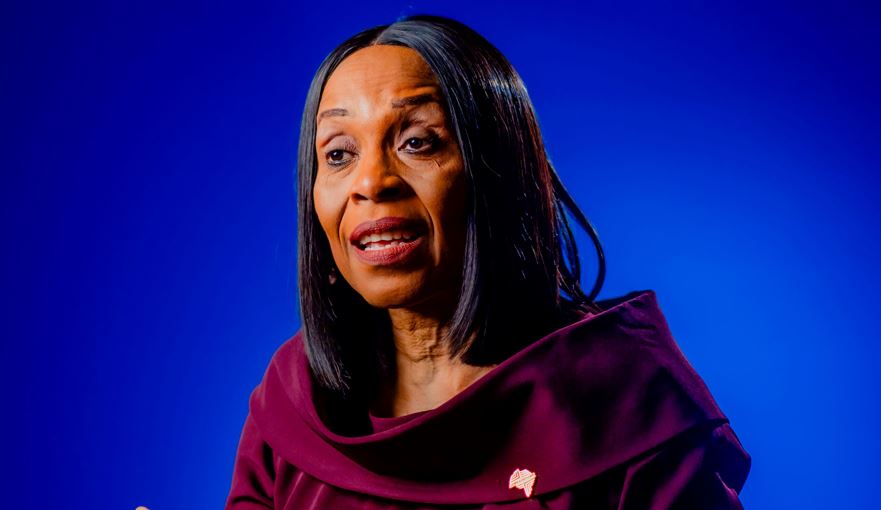
How Africa can accelerate intra-African trade momentum (By Mrs. Kanayo Awani)

Published

on

IATF has firmly established itself as one of Africa’s most influential engines for trade, investment and economic integration

CAIRO, Egypt, September 3, 2026/APO Group/ —By Mrs. Kanayo Awani, Executive Vice-President, Intra-African Trade & Export Development Bank at African Export-Import Bank (www.Afreximbank.com)


Boosting trade flows amongst African countries remains a key economic priority. There is significant opportunity to accelerate the growing intra-African trade in order to unlock investment, catalyse industrialisation, especially processing and adding value to our natural resources.

According to the Africa in Figures 2025 (https://apo-opa.co/4ygFkXY) report released by African Export-Import Bank (Afreximbank), intra-African trade grew by 5.4 percent in 2024 to stand at US$206.6 billion, with continued implementation of the African Continental Free Trade Area (AfCFTA) expected to further enhance it. It is imperative to persist in closing long-standing gaps in trade, investment, and market intelligence that continue to constrain business growth. Across the continent, enterprises are held back by limited knowledge of market opportunities, as well as unclear regulatory information and restricted access to trade finance, all of which hamper their ambitions to expand across borders.

Enter the Intra-African Trade Fair (IATF), Africa’s premier trade and investment marketplace and a driving force behind the continent’s economic integration agenda. Building on the success of the record-breaking fourth edition, IATF2025 in Algiers, which generated US$50 billion in trade and investment deals, the Fair continues to cement its position as a catalyst for intra-African commerce. IATF’s true impact lies in its ability to connect businesses, unlock opportunities, and translate ambition into tangible commercial outcomes.

IATF2025 highlighted the growing momentum of trade within Africa, with significant increases in participation, deal volume and transaction value. More than a showcase, the Fair proved its effectiveness as a platform for expanding market access, promoting African products and services, attracting investment, and connecting businesses to new opportunities. It continues to deliver tangible results by facilitating partnerships, fostering and strengthening regional and continental value chains.

It is essential for Nigerian and African businesses to fully seize opportunities presented by the continental free trade area

IATF has firmly established itself as one of Africa’s most influential engines for trade, investment and economic integration. The spotlight now shifts to Nigeria. Lagos will host IATF2027 from 5–11 November 2027, bringing together businesses, investors, policymakers, researchers, creatives and innovators from across the continent. The ambition for the 2027 edition in Lagos reflects the sheer scale of Africa’s opportunity. With targets of over US$50 billion in trade and investment deals, more than 100,000 visitors, and 2,500+ exhibitors, IATF2027 is set to be the largest edition yet. Anchored by the theme “Global Africa, Smart Trade: From Market Access to Market Power,” it signals a bold shift, positioning Africa not just as a participant, but as a decisive force shaping its own economic future

Beyond the headline figure, more than 180,000 participants, 6,600 exhibitors from 132 countries, and over US$167 billion in cumulative trade and investment deals across its first four editions the message is clear: African businesses are ready to scale, compete, and lead, and the continent is rich with opportunity. The real constraint is not demand, but access specifically, the need for structured and efficient pathways that enable businesses to identify opportunities, connect with the right partners, and execute transactions at scale. IATF is at the forefront of breaking down these barriers and unlocking Africa’s full trade potential.

According to, ‘The Impact of the Intra-African Trade Fair (IATF) on Development and Trade, 2018–2024’ report, an impressive 62.4 percent of concluded deals directly supported intra-African trade, amounting to more than US$8.5 billion for each edition of the trade fair since 2018. Nearly 360,000 small businesses and SMEs are benefitting, including thousands of women and youth-led enterprises. The positive impact on employment is also significant. For every US$1 million invested into IATF, roughly 42 jobs are created – meaning each fair supports more than half a million direct employment opportunities across the continent. What this tells us is that Africa’s challenge is not capacity but connecting with each other. The priority for the continent in sustaining the trade and investment momentum is ensuring businesses continue to access the intelligence, partnerships, and support systems they need.

This is why platforms like IATF Virtual, designed to keep engagements amongst businesses alive, maintain visibility for exhibitors, enable governments and corporates to follow up on leads, and support year-round dialogue across sectors matter. The platform has potential to serve as the continent’s permanent marketplace. For SMEs that often face cost, travel, and logistics barriers, such platforms bridge these issues.

As Nigeria prepares to host IATF2027, it could not be timelier. The country is central to the AfCFTA’s success, not just because of its market size, but due to its vast resource base and industrial potential. As a leading producer of oil and gas, solid minerals, including lithium, iron ore, and gold so critical to future value chains, and key agricultural commodities, Nigeria is uniquely positioned to drive the industrialisation the continent needs.

It is essential for Nigerian and African businesses to fully seize opportunities presented by the continental free trade area. The good news is that the continent is already moving in the direction of addressing this. In Nigeria, for example, capacity-building programmes, export readiness clinics, certification support and partnerships with institutions like the Nigerian Export Promotion Council and the Small and Medium Enterprises Development Agency of Nigeria are helping equip SMEs with the knowledge and tools needed to trade across African borders. Lagos State, for instance, is strengthening foundations for success from investments in the Lekki Deep Sea Port and logistics corridors, to the development of industrial clusters and support through business development hubs.

Looking ahead, the message is clear. Africa is primed and ready to increase intra-African trade, but momentum must not be lost. The continent has showcased the concept, proven there’s appetite, and seen the results. With one of Africa’s largest economies and most populous nation now hosting the continent’s biggest marketplace, the challenge is to transform the current success into exponential progress.

Distributed by APO Group on behalf of Afreximbank.


Business

26-year China-US friendship highlights grassroots efforts to combat desertification

Published

on

BEIJING, CHINA – Media OutReach Newswire – 19 October 2026 – People’s Daily has released a video documentary titled A 26-year promise: how a $5,000 gift turned a desert into a forest, documenting the reunion of Yin Yuzhen, a Chinese worker fighting desertification, and Ronald Sakolsky, an American visitor, 26 years after Sakolsky donated $5,000 to support her afforestation efforts in North China’s Inner Mongolia Autonomous Region.


When Sakolsky first met Yin 26 years ago, she and her husband were working to plant trees under the punishing conditions of the Maowusu Desert. Moved by her resolve, Sakolsky donated $5,000 to support their greening mission. Over the following decades, the couple persevered, gradually transforming a barren expanse of sand into a flourishing forest ecosystem.

The video follows Sakolsky’s recent return to China, where he witnessed the results of that long-term commitment firsthand. Combining archival footage with on-the-ground scenes from his visit, the documentary captures an emotional reunion between two individuals from different backgrounds, united by a shared dedication to the environment.

Beyond the personal reunion, their story offers a window into China’s long-term desertification control initiatives. Ecological restoration requires more than an initial investment: it depends on decades of sustained local action, scientific care and patient stewardship to reshape a fragile landscape.

Their journey also highlights the enduring vitality of people-to-people exchanges between China and the United States. Separated by geography and culture, Yin and Sakolsky found common ground in restoring the land—demonstrating that grassroots friendship, much like a forest, continues to grow and yield fruit long after the first seeds are planted.


Continue Reading

Business

Afreximbank’s Zimbabwe Country Brief explores the country’s Critical Mineral advantage and reform-driven economic outlook

Published

on

Zimbabwe holds the largest lithium reserves on the continent and boasts some of the highest-grade spodumene deposits globally, positioning the country as a critical supplier of battery minerals at a time of surging global demand for electric vehicle and energy storage technologies

CAIRO, Egypt, October 16, 2026/APO Group/ –African Export-Import Bank (Afreximbank) (www.Afreximbank.com) has released its Zimbabwe Country Brief, providing a comprehensive analysis of the southern African nation’s macroeconomic outlook, trade performance, financial sector development and debt sustainability profile. The brief explores Zimbabwe’s economic growth potential support by its deep regional ties and diverse natural resource endowment that is increasingly central to the global energy transition.


Among the brief’s key highlights is Zimbabwe’s strong growth momentum. Real GDP growth is estimated to have strengthened to 8.3% in 2025, driven by a rebound in agricultural production, robust gold exports and elevated global gold prices. Growth is forecast to remain solid at 5% in 2026, supported by stronger agricultural yields, elevated government spending and a favourable outlook for gold mining. Most strikingly, inflation is forecast to ease dramatically to 3.9% in 2026, down from an estimated 55% in 2025, as the Zimbabwe Gold currency stabilises on the back of stronger domestic gold output and improved foreign-currency inflows.

Zimbabwe holds the largest lithium reserves on the continent and boasts some of the highest-grade spodumene deposits globally, positioning the country as a critical supplier of battery minerals at a time of surging global demand for electric vehicle and energy storage technologies. Gold, platinum group metals, diamonds and chrome complete a resource profile that few economies on the continent can rival.

Zimbabwe’s rich endowment of critical minerals offers a powerful opportunity to move beyond the export of raw commodities

Furthermore, this edition reveals how Zimbabwe’s trajectory is particularly compelling, given the government’s deliberate shift from raw commodity exporter to industrial processor. The brief highlights February 2026 restrictions on exports of raw minerals and lithium concentrate as a decisive step in the value-addition agenda, with the potential to reposition Zimbabwe within global battery supply chains. The National Development Strategy 2 framework for 2026-2030 reinforces this direction, prioritising macroeconomic stability, infrastructure, industrialisation and job creation. The brief also points to further longer-term upside from the May 2026 petroleum production-sharing agreement covering the Cabora Bassa Basin oil and gas project.

The brief further highlights a growing and evolving financial sector, with InnBucks MicroBank’s May 2025 partnership with Mambu marking a significant step in the development of digital banking and broader financial inclusion.

With a solid GDP growth outlook for 2026, a dramatically improved inflationary environment and one of Africa’s most strategically valuable mineral endowments being actively developed for higher-value production, Zimbabwe presents a timely and powerful story of economic transformation.

Commenting on the release of the brief, Yemi Kale, Group Chief Economist and Managing Director, Research and Trade Intelligence at Afreximbank, said:

“Zimbabwe’s rich endowment of critical minerals offers a powerful opportunity to move beyond the export of raw commodities and build competitive regional value chains anchored in local production, beneficiation and value addition. By converting its lithium, gold, platinum-group metals and other resources into higher-value products, Zimbabwe can deepen its industrial base, create quality jobs and expand trade with markets across Africa. This is fully aligned with Afreximbank’s mandate to transform the structure of African trade and accelerate the continent’s industrialisation under the AfCFTA.”

Read more in the Afreximbank Country Brief on Zimbabwe here (https://apo-opa.co/47kgH1p)

Distributed by APO Group on behalf of Afreximbank.


Continue Reading

Business

The Digital Webinar Series builds momentum towards the full Democratic Republic of the Congo (DRC) Critical Minerals & Industrialisation Forum 2027

Published

on

“In Four live sessions, one goal: turning mineral wealth into industrial growth

CAPE TOWN, South Africa, October 16, 2026/APO Group/ –The organisers of the DRC Critical Minerals & Industrialisation Forum, co-located with the DRC-Africa Battery Metals Forum, have announced a four-part digital webinar series running from September to November 2026. Bringing together government, industry and investment leaders, the series will examine the opportunities, challenges and partnerships shaping the DRC’s next phase of economic development.


Across four live sessions, the discussions will explore the policies, infrastructure, technologies and investment models needed to unlock greater value from the country’s critical mineral resources. Speakers will share market intelligence, practical case studies and perspectives on how the DRC can strengthen local value creation, attract investment and build a more competitive and sustainable minerals economy.

The webinar series also provides a platform for continued engagement ahead of the full in-person Forum in Kinshasa in 2027. VUKA Group RDC rescheduled the Forum to align with the DRC Government’s evolving national policy frameworks and allow the revised roadmaps for the $58 billion Master Plan for Industrialisation (Plan Directeur d’Industrialisation, PDI) to further develop.

The first four editions of the digital webinar series will focus on the following:

Webinar 1: 23 September 2026, 10h30–12h00 (https://apo-opa.co/4zwms7Z)

UNLOCKING THE DRC’S INDUSTRIAL POTENTIAL:  The A-to-Z masterclass strategy

The DRC masterclass examines how the nation can harness its mineral wealth for sustainable growth and industrialization. Experts will discuss policies to move beyond raw exports, enforce security and strengthen ESG standards. Priorities include local beneficiation, human capital development and tailored financing to balance global markets. By defining collaborative actions and investment pathways, the session seeks to accelerate value addition, enhance competitiveness and position the DRC as a responsible global leader in the minerals value chain. VIEW ON DEMAND (https://apo-opa.co/4zHqbjn)
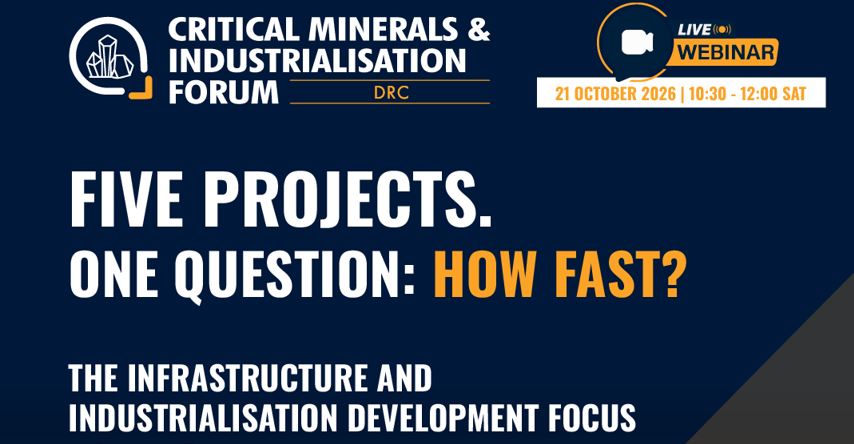
Webinar 2: 21 October 2026, 10h30–12h00   (https://apo-opa.co/4zwms7Z)

FOCUS ON INFRASTRUCTURE & INDUSTRIALISATION DEVELOPMENT

The panel on infrastructure and industrialisation highlights the DRC’s need to move beyond raw material extraction by focusing on local transformation. Building resilient industries will drive job creation and strengthen the economy. Experts will examine how transport, energy and logistics projects accelerate industrialisation, with case studies such as ports, railways and cross‑border initiatives. By prioritising strategic development and leveraging mineral revenues, the DRC can unlock sustainable growth and position itself as a competitive hub within the African Continental Free Trade Area.

Key discussion points

–  Understanding the DRC’s industrial strategy to capitalise on the African Continental Free Trade Area (AfCFTA)

–  The Lobito Corridor project: now or tomorrow?

–  Prioritising development projects in energy, transport linkages (road and railway rehabilitation), maritime infrastructure and port networks by utilising mineral revenues

Case studies

–  The Banana Port (developers: DP World and Mota-Engil contractors)

–  The Matadi Multipurpose Terminal, the DRC’s maritime gateway (AD Ports Group and the DRC Ministry of Transport)

–  Port of Boma maritime project

–  Banana–Matadi–Kinshasa railway

–  DRC–RSA Industrialisation Project, linking South Africa and the DRC and establishing 12 Economic Zones

Speakers

–  Chairperson: Bob Bononge, President, Caplaine Consulting, DRC

–  Popaul Madiana, Managing Partner, Prime Mineral Consulting, DRC

–  Serge Nawej, Partner, ADNA ALN, DRC*

REGISTER TO ATTEND (https://apo-opa.co/4dKfbsZ)

Webinar 3: 11 November 2026, 10h30–12h00   (https://apo-opa.co/4zwms7Z)

NEW TECHNOLOGIES DRIVING THE GLOBAL ENERGY TRANSITION

This session explores how technology and ESG‑aligned investment can transform the DRC’s critical minerals sector. With global demand for lithium, cobalt, nickel and copper rising, responsible sourcing and compliance are essential to build investor confidence. Discussions will focus on local processing, advanced metallurgical methods, renewable energy and automation to accelerate industrialisation. By shifting from raw exports to in‑country beneficiation, the DRC can strengthen sustainability, unlock long‑term value and position itself as a competitive player in the global energy transition.

Webinar 4: 25 November 2026, 10h30–12h00   (https://apo-opa.co/4zwms7Z)

STRATEGIC PARTNERSHIPS: BUILDING A STRONGER AND MORE SUSTAINABLE CRITICAL MINERALS VALUE CHAIN

This discussion explores how strategic partnerships can strengthen the DRC’s critical minerals value chain. By fostering collaboration between governments, regional integration systems and investors, the focus is on building resilience and supporting sustainable growth. Key themes include industrialisation through global partnerships, prioritising sectors for development and aligning with international partners. With effective models of cooperation, the DRC can unlock socio‑economic benefits, enhance competitiveness and establish a stronger foundation for a sustainable and inclusive minerals sector.

DRC’s transition
DRC Critical minerals & Industrialisation forum unites government, industry and investors to accelerate the country’s transition from raw‑material extraction to high‑value manufacturing, underscoring the nation’s opportunity to convert mineral wealth into infrastructure, jobs and sustainable economic growth.

The DRC’s Ministry of Mines (https://apo-opa.co/4jZPwjF) and the DRC’s Ministry of Industry (https://apo-opa.co/3UpRU98) as well the Federation of Enterprises of Congo (FEC) (https://apo-opa.co/4dHvFC4) are official partners of the event.


Distributed by APO Group on behalf of VUKA Group.


Continue Reading

Trending

Exit mobile version