Connect with us
Anglostratits

Events

Hong Kong Tech “Proposed with a Ring” and Won Third Place at MedTech Innovation World Cup 2026
Published

on

Hong Kong

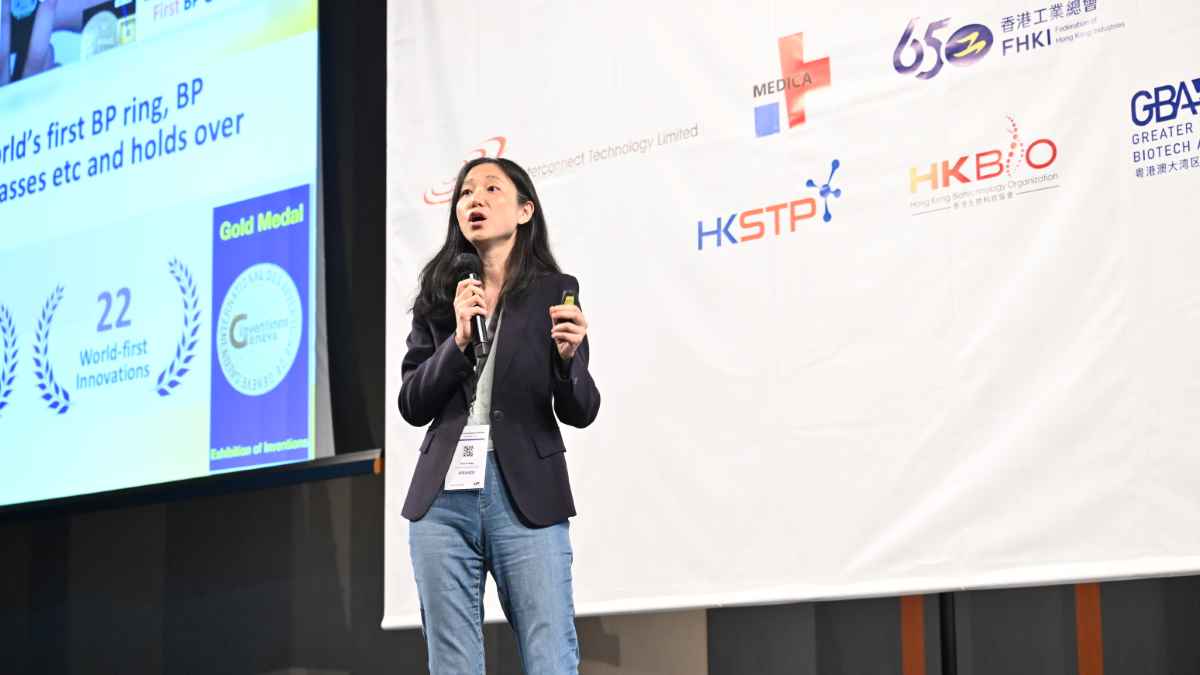
HONG KONG SAR – Media OutReach Newswire – 6 March 2026 – Hong Kong Science and Technology Parks Corporation (HKSTP) congratulates the win of United Sensing & MediTech in third place at the MedTech Innovation World Cup (IWC), with hypertension management handed by a smart ring with AI embedded for personalised and continuous analysis.

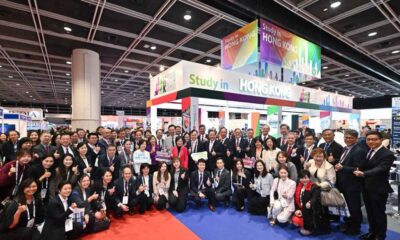
Held on 4–5 March 2026 at Science Park, the Wearable Technologies (WT) Conference 2026 was making a return appearance in Hong Kong after a decade, while the Innovation World Cup came for the first time, spotlighting 32 global innovators out of over 300 entries, in which 8 were Hong Kong-based life & health tech companies, vying for opportunities by connecting with research professionals, industry leaders, and investment representatives, including fast track to “HKSTP Soft Landing Programme” where up to HK$100,000 cash funding and access to an extensive network to accelerate market entries is up for grabs.

Emerged 1st and 2nd from the finals were FluoretiQ from the United Kingdom, introducing an on-the-spot diagnostic solution ‘Veri-5’ that identifies the bacteria and antibiotics in 30 minutes, and Light House from Switzerland, introducing assistive mobility eyewear ‘TAMI’ that look after the visually impaired regardless of hazardous environments, had also won the Audience’s Favourite. 3rd place came United Sensing & MediTech, filling the gaps in monitoring chronic, yet not necessarily lethal cardiovascular diseases, in particular, hypertension, where one-third of the adult population in Hong Kong endures, with a smart ring that presents an alternative that tracks for indicators and tells when possibilities of worsening the condition occurred with ease and efficiency.

With the city recognised as a global financial centre, and ranked in 2025 the first worldwide for biotechnology IPOs, Prof. Dong Sun, JP, Secretary for Innovation, Technology and Industry, Government of HKSAR said, “Initiatives were rolled out to support the local development of life & health tech that are seeing massive success, including the InnoHK clusters, the RAISe+ scheme, and more. Besides from technological advancements, traction for talent and capital have also been witnessed and welcomed.”

Terry Wong, CEO of HKSTP said, “The Conference demonstrated that Hong Kong’s playing a pivotal role as a platform gluing aspects of I&T together—connecting industry and academia for research and development; innovation with investment for commercialisation; and between cities and cultures and compliance practices for adoption—essential in transforming ideas into impact.”

The notion was in echo as Park company founders joined university professors and industry gurus from around the world in sharing the latest developments in the spectrum of medicine; and for AiQuanMed Engineering & Innovation Council (AEIC) from Singapore, and Organization for Medical, Engineering and Commerce Collaboration (OMECC) from Japan to join as strategic partners to the ‘Global Connect’ initiative for a tighter bond among I&T enablers.


Education

Powering Africa’s Future: THE Africa Universities Summit 2026 to Ignite Innovation, Talent and Inclusion

Published

on

Africa Universities Summit

The summit will bring together leaders from universities, business, and civil society for dynamic discussions, hands-on workshops, and visionary keynotes

Highly recommended for anyone eager to engage with cutting-edge ideas and a passionate community

NAIROBI, Kenya, March 9, 2026/APO Group/ –Africa’s youth, representing over 400 million voices, are driving the continent’s ambition for growth, innovation, and sustainable development. The THE Africa Universities Summit 2026 (www.TimesHigherEd-events.com) will convene in Nairobi on 30-31 March to explore how higher education can unlock human capital, fuel entrepreneurial success, and promote inclusive growth across the continent.


The summit will bring together leaders from universities, business, and civil society for dynamic discussions, hands-on workshops, and visionary keynotes, focusing on four critical themes:

  • Addressing world challenges: Uniting global and local collaborations to tackle pressing challenges, harnessing research and innovation for sustainable solutions.
  • Innovation, entrepreneurship and start-ups: Empowering entrepreneurial mindsets, strengthening start-up ecosystems and driving digital innovation.
  • Work readiness and skills development: Preparing future-ready graduates through employer partnerships, innovative curricula and tailored support.
  • EDI and gender equality in higher education: Championing inclusion and gender equality to create institutions that reflect Africa’s diverse societies.

The summit will feature over 60+ speakers from across Africa and beyond, including:

  • Chérifa Abdelbaki, UNESCO Chairholder, University of Tlemcen
  • Letlhokwa Mpedi, Principal and Vice-Chancellor, University of Johannesburg
  • Barnabas Nawangwe, Vice-Chancellor, Makerere University
  • Caroline Nyaga, Founder & CEO, Women in STEAM Initiative
  • Tonny Omwansa, CEO, Kenya National Innovation Agency
  • Anicia Peters, CEO, National Commission on Research, Science and Technology

Attendees can expect 30+ hours of content, 9+ hours of networking and opportunities to engage with over 350 participants from more than 150 organisations and universities.

Last year’s summit in Rwanda highlighted the power of collaboration, inspiring actionable strategies for innovation, workforce development and equity in higher education.

Leonard Musyoka, Registrar and Chief-of-Staff at the University of Nairobi, reflected on the 2025 summit: “Attending THE Africa Universities Summit was an intellectually enriching experience! The topics were timely, thought-provoking and expertly curated, sparking meaningful conversations in the African higher education sector. Highly recommended for anyone eager to engage with cutting-edge ideas and a passionate community!”

With less than a month to go, tickets are selling fast. Join us in Nairobi to shape Africa’s higher education future, connect with thought leaders and explore new opportunities to advance talent, innovation and inclusion.

For more information and to register, visit https://apo-opa.co/4biKl8F.

Distributed by APO Group on behalf of Times Higher Education.


Continue Reading

Events

Africa’s Green Economy Summit (AGES) 2026 delivers definitive roadmap to turn Africa’s climate ambition into bankable, scalable reality

Published

on

AGES

The summit opened with a focus on innovative finance for nature, exploring green, blue, and wildlife bonds, including the “Rhino Bond” and emerging biodiversity credits

CAPE TOWN, South Africa, March 5, 2026/APO Group/ –Africa’s Green Economy Summit (AGES) 2026 concluded in Cape Town with a resounding call to action, urging the continent to leverage its digital revolution, transform water financing and redesign agriculture to unlock a sustainable, net-zero future. The four-day platform united over 600 delegates from 42 countries, including global investors, project developers and policymakers. The consensus was clear that with sound policies and financial innovation, Africa can convert its climate vulnerabilities into economic opportunity.


Pioneering new models for climate finance

The summit opened with a focus on innovative finance for nature, exploring green, blue, and wildlife bonds, including the “Rhino Bond” and emerging biodiversity credits. A key lesson was the importance of engaging communities as core stakeholders, not merely beneficiaries.

Carl Roothman, CEO of Sanlam Investment Group, stressed the urgency of scale: “Africa needs billions of dollars. It’s great to dream, but we must act and at scale.” Iain Banner, co-founder of Go Green Africa and AGES, framed the shift as fundamental: “The green and blue economies are the new operating systems of the modern world.”

Government calls for practical collaboration

Deputy Minister of Forestry, Fisheries and Environment, Narend Singh, set a pragmatic tone: “This is where the rubber hits the road.” He emphasised moving from policy to tangible results, citing South Africa’s Just Energy Transition Partnership (JETP) and renewable energy procurement programme as examples. Singh urged African nations to move beyond exporting raw materials: “A low-hanging fruit is developing local value chains and beneficiating minerals here, creating jobs and advancing technology.”


A digital imperative for climate action

Integrating climate goals with digital transformation emerged as a central theme. Siddhartha Raja, Senior Digital Specialist at the World Bank, noted that data centres could act as “anchor loads” to stimulate new renewable energy but warned that climate resilience must be designed in from the start. From flood-proofing to managing e-waste, which could spawn new recycling industries.

The green and blue economies are the new operating systems of the modern world

Chrissy Meier of the Digital Impact Alliance highlighted a critical gap, noting that most African cities have climate plans but lack local data for implementation. She cautioned against AI models trained on non-African data, which risk missing the realities of African communities. Raja’s advice: “Carpe Digital, seize the digital to make economies more efficient, inclusive, and greener.”


Making water infrastructure bankable

A high-level panel tackled the perception that water projects are uninvestable. Obadiah Mungai of the World Resources Institute Africa argued the real issue is translation: “How do you convert water outcomes into bankable outputs?” Fixing governance and data is the first step to attracting capital.

Louise Stafford of The Nature Conservancy cited Cape Town’s post-“Day Zero” investment in catchment restoration, which proved far more cost-effective than desalination. “There is a bigger risk in business as usual than in investing in water,” she said. The panel concluded that with robust preparation and blended finance, water resilience can become an attractive asset class.


Strengthening food security through renewable energy

Energy instability directly threatens food systems, without reliable power, irrigation fails and cold chains break. Henry Roman of the International Water Management Institute called for a holistic approach to the water-energy-food nexus, showcasing data tools helping farmers optimise water use.

Ian de Jager of I&F Engineering noted a new trend: farmers becoming energy producers, using small-scale hydropower to power operations and sell excess renewable energy certificates. Andrea Campher of Standard Bank added that with the Carbon Border Adjustment Mechanism (CBAM) now in effect, a farmer’s emissions profile is as critical as product quality. “Renewable energy strengthens ESG credibility,” she said.

AGES 2026 has laid the cornerstone for a resilient green economy, proving that when climate goals are woven into the continent’s core systems, ambition transforms into tangible progress. The next summit takes place 17-19 March 2027 in Cape Town.

Distributed by APO Group on behalf of VUKA Group.

Continue Reading

Events

Huawei Highlights Digital Inclusion and Conservation Tech as AI Use Accelerates

Published

on

Huawei

BARCELONA, SPAIN – Media OutReach Newswire – 5 March 2026 – Huawei gathered partners, policymakers and international media in Barcelona on March 1 and 2, ahead of Mobile World Congress, to discuss narrowing connectivity and digital skills gaps as artificial intelligence spreads through sectors including healthcare, finance and public services.

About 80 guests attended the first day’s forum at the Leonardo Royal Hotel Barcelona Fira. In remarks published by Huawei, Yang Chaobin, CEO of Huawei ICT BG, said the digital divide “seems to be widening further” even as AI accelerates. “High-speed networks and robust computing facilities are essential foundations for an inclusive and sustainable AI era,” he said.

The International Telecommunication Union estimates about 2.2 billion people were still offline in 2025. Dr. Cosmas Zavazava, director of the ITU’s Telecommunication Development Bureau, said inclusion must be treated as a prerequisite for the AI era.

“AI must strengthen meaningful connectivity and support inclusive digital transformation. This requires responsible AI governance, investment in local talent and content, and capacity building, particularly for young girls, women, indigenous communities and marginalized groups.”

Huawei said it has fulfilled a commitment under the ITU Partner2Connect Digital Coalition to help expand connectivity in remote regions. By the end of 2025, the company said its initiatives had supported digital access for 170 million people in rural and underserved areas across more than 80 countries. In a Huawei news release, Jeff Wang, president of Huawei Public Affairs and Communications, said: “To bridge the digital skills gap, Huawei works closely with governments and partners to enhance digital access, deliver skills training, and advance STEM education for underserved communities.”

On March 2, the focus shifted to conservation with a visit to Spain’s Natural Park of Sant Llorenç del Munt i l’Obac. Here, digital monitoring tools are being used to support biodiversity protection, including efforts to safeguard the endangered Bonelli’s eagle alongside better managing potential impacts from outdoor activities like climbing on rock-dwelling birds and caving on protected bat species. The project forms part of the Tech4Nature initiative, developed with the International Union for Conservation of Nature (IUCN) to support digital tools in protected areas across 11 countries.

Sònia Llobet, the park’s director, said the project is helping managers balance visitor access with nature protection.

“As park managers, our challenge is how to make visitor access compatible with the conservation of this natural space,” she said. “This project is helping us answer some of the questions we face in balancing tourism and environmental protection.”

Continue Reading

Trending