HIMOINSA’s HGY Series engines are engineered to deliver robust and sustainable solutions, particularly in areas with unstable national grids
MADRID, Spain, October 17, 2024/APO Group/ —
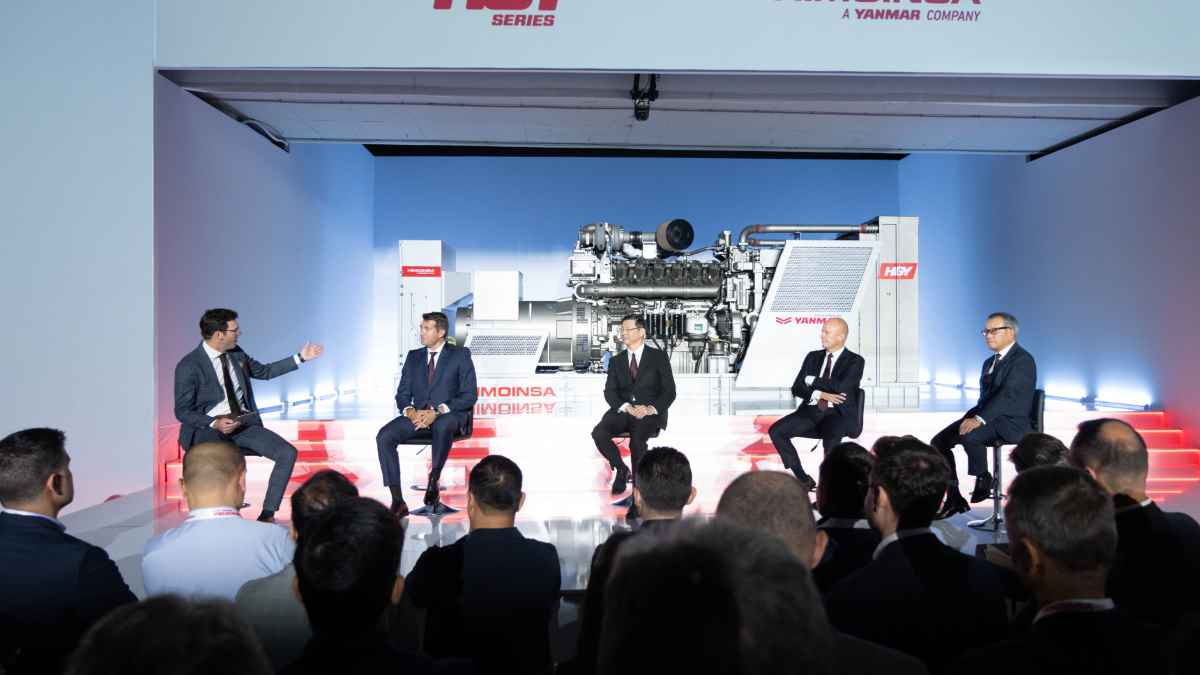
HIMOINSA (www.HIMOINSA.com), a leader in power technology solutions and part of the Yanmar Group, is proud to announce the launch of its latest innovation: the HGY Series. This new engine line, with a capacity range from 1250kVA to 3500kVA (with future plans to reach 4000kVA), has the potential to significantly help address Africa’s growing energy needs, particularly in key sectors critical to the continent’s economic development, such as healthcare, mining, oil and gas, and tech hubs like data centers.
With the HGY Series, HIMOINSA enters the high-capacity engine segment, providing tailored solutions that meet the needs of Africa’s mission-critical sectors where reliable and efficient power generation is vital. The company’s focus on Africa reflects its strategic commitment to supporting the continent’s rapid industrialization and infrastructure expansion.
Delivering Reliable Power Where It Matters Most
Africa is home to some of the world’s fastest-growing economies, yet power generation remains a critical challenge in several key regions. HIMOINSA’s HGY Series engines are engineered to deliver robust and sustainable solutions, particularly in areas with unstable national grids, helping to mitigate downtime, load-shedding and other challenges. By offering flexible fuel options, currently capable of operating with a range of diesel types and HVO (hydrotreated vegetable oil), with future plans to support natural gas and hydrogen, the HGY Series ensures that businesses and communities across Africa have access to low-emission, efficient, and reliable power, regardless of local grid conditions.
Guillermo Elum, HIMOINSA’s EMEA Region Head, highlighted the company’s dedication to the African market: “Africa is a key growth region for HIMOINSA, and our approach goes beyond merely selling products; we are committed to building local capacity. Our training programs in Angola, South Africa, Morocco, Togo and soon, in Tanzania, ensure that African technicians and engineers are fully equipped to manage and maintain our technology, creating skilled jobs and developing expertise across the continent.”
Boosting Africa’s Economic Growth
Africa is a key growth region for HIMOINSA, and our approach goes beyond merely selling products; we are committed to building local capacity
The launch of the HGY Series is part of HIMOINSA’s broader investment strategy to support Africa’s economic development. The company’s Spanish production facilities, including a new factory in Murcia with a capacity of 1,000 units currently under construction, are set to help supply the African market, ensuring fast delivery and minimal logistical challenges, so businesses can rely on timely support and services. Additionally, its focus on training and local partnerships enhances the technical skills of local communities, empowering them to manage critical power infrastructure and stimulating economic growth.
Francisco Gracia, CEO of HIMOINSA, stressed the significance of the HGY Series for Africa: “We see enormous potential in Africa’s industrial and digital sectors, and the HGY Series is a powerful tool for realizing that potential. From supporting vital healthcare facilities to powering new data centers that drive digital transformation; to providing continuous power for mining projects, our solutions are designed to make a tangible impact in Africa’s growth story. This launch is more than just a product introduction; it is our commitment to being a partner in Africa’s progress.”
Dedicated to Sustainability in Africa
The HGY Series engines are not just about power—they are about powering Africa sustainably. Designed to work seamlessly with micro-grids and renewable energy sources, these engines offer a viable solution for rural and urban areas seeking to integrate intermittent solar and wind power into their energy mix. HIMOINSA’s generators support Africa’s energy transition, aligning with the continent’s growing focus on renewable energy and reduced carbon emissions.
The company’s presence in Africa through divisions in Angola, South Africa, Morocco, Togo, and Tanzania enables it to deliver localized support in the continent’s most widely spoken languages. This commitment to on-the-ground engagement ensures that African clients receive comprehensive training and support, helping businesses reduce operational costs and improve efficiency.
Driving Innovation Across Africa’s Most Critical Sectors
HIMOINSA’s new HGY Series is ideally suited for sectors that drive Africa’s economic growth. Data centers, which are rapidly expanding due to the rise of digital services and AI, can now benefit from high-capacity, low-emission solutions designed to minimize downtime and optimize performance. Healthcare facilities, often located in remote or underserved areas, will gain access to dependable power solutions essential for life-saving equipment. Mining operations and oil and gas fields can also leverage the versatility and efficiency of the HGY engines to operate in demanding environments, ensuring continuity even when the grid fails.
The facility is expected to become Côte d’Ivoire’s largest solar plant when operational in 2027
LONDON, October 23, 2026/APO Group/ –Côte d’Ivoire’s Poro Power solar project has received international recognition for a pioneering investment structure led by Africa Finance Corporation (AFC) (www.AfricaFC.org/), demonstrating how African capital can be mobilised to develop essential infrastructure and accelerate the transition to cleaner energy. The facility is expected to become Côte d’Ivoire’s largest solar plant when operational in 2027.
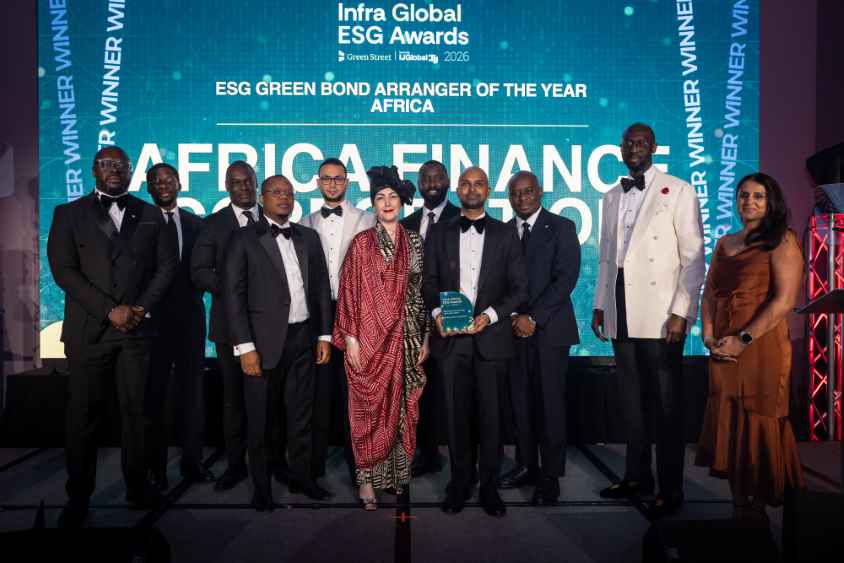
The project won ESG Green Bond Deal of the Year for Africa at the recent Infra Global ESG Awards 2026 in London, while AFC received ESG Green Bond Arranger of the Year for Africa. The double honours recognise the innovation behind the Poro Power transaction and AFC’s role in structuring and mobilising investment for sustainable infrastructure.
Developed by Ivorian entrepreneurs, the 66-megawatt solar plant is under construction in northern Côte d’Ivoire near the city of Korhogo. It is projected to generate approximately 136 gigawatt-hours (GWh) of electricity annually, meeting the needs of more than 100,000 households and benefiting an estimated half a million people.
Beyond providing homes, public services and businesses with reliable power, the project will help Côte d’Ivoire towards meeting its target of increasing renewable energy’s share of electricity generation to 45% by 2030. The Government of Côte d’Ivoire is enabling projects such as Poro Power through its initiative to encourage local private-sector participation in large-scale renewable energy projects, led by the Ministry of Mines, Petroleum and Energy under Minister Mamadou Sangafowa-Coulibaly.
“These awards are a tremendous recognition for an Ivorian project developed to meet the needs of our own communities,” said Jean-Marc Aie, Chairman and CEO of Poro Power 1 S.A. “Our ambition is not simply to generate clean electricity, but to support businesses, create opportunities and contribute to the development of Côte d’Ivoire. The Ministry’s strategy to empower local private developers to undertake large-scale renewable energy projects, together with AFC’s investment and innovative financing structure, has been instrumental in bringing Poro Power to this stage.”
Poro Power demonstrates that African financial institutions have both the capital and the expertise to finance large-scale renewable energy infrastructure through our own markets
The €65 million financing package, equivalent to approximately FCFA 42.6 billion, was raised through a green bond — an investment instrument that enables institutions to lend money to projects delivering environmental benefits. It was the first project-finance green bond in both Côte d’Ivoire and the West African Economic and Monetary Union (WAEMU), establishing a precedent for French-speaking West Africa, and was led, structured and fully funded by African institutions. The transaction allowed investors to participate in both euros and CFA francs, making it also Côte d’Ivoire’s first dual-currency green bond. Together, these features demonstrate how African financial institutions can mobilise their own capital for major infrastructure projects, using financing structures suited to African markets.
AFC invested €43 million (approximately FCFA 28.2 billion) in February 2026 and acted as anchor investor, lead underwriter and co-arranger. The equivalent of a further €22 million was raised from African investors, including local and regional banks, pension funds, insurance companies and high-net worth investors.
The bond has a 15-year term, a fixed interest rate of 8.75%, and quarterly repayments following a two-year construction grace period.The financing combines the flexibility of a bond with safeguards normally used in project finance, including first-ranking security, dedicated revenue accounts and contractual protections that separate the project’s cash flows from other activities. These measures help protect investors and align repayments with the plant’s expected revenues.
By bringing together AFC’s investment alongside capital from other African institutions through a structure that accommodates both local and international currencies, the transaction offers a potential model for financing further renewable energy and infrastructure projects across the region. Its significance extends beyond Poro Power, providing a practical example of African money financing African projects and a structure that could be replicated across the continent.
“Poro Power demonstrates that African financial institutions have both the capital and the expertise to finance large-scale renewable energy infrastructure through our own markets,” said Sameh Shenouda, Executive Board Member and Chief Investment Officer of AFC. “By combining the protections required for long-term project finance with the flexibility of capital markets, we have created a structure that can attract a broader range of African investors. This is an important model for mobilising the investment needed to expand reliable electricity supply, support industry and accelerate the energy transition across the region.”
Once operational, the plant is projected to avoid approximately 72,000 tonnes of carbon dioxide emissions annually — equivalent to taking around 15,600 petrol-powered cars off the road for a year.
The project includes a commitment to allocate €0.01 for every megawatt-hour of electricity generated towards to initiatives intended to benefit local communities.
Distributed by APO Group on behalf of Africa Finance Corporation (AFC).
Africa50 invests in projects at their earliest stage, with power and midstream gas among its priority sectors
DAKAR, Senegal, October 22, 2026/APO Group/ –Nabil Saimi, Senior Investment Director for the Project Development Fund at Africa50, will speak at MSGBC Oil, Gas & Power 2026 in December. His confirmation brings one of the continent’s leading infrastructure investors to the Dakar conference, with a focus on the earliest and most decisive phase of the project cycle: when concepts become bankable assets. Africa50’s model is built around carrying projects from development through to financing, an approach well matched to the basin’s expanding pipeline of gas, power and infrastructure projects.
Africa50 was set up by the African Development Bank (AfDB) alongside African governments and now has 33 shareholder states, with Senegal, Mauritania and The Gambia among them. The platform has mobilized close to $9 billion in investment across the continent, according to Senegal’s Presidency. Its Project Development business invests equity at the preparation stage to ready projects for financiers, generally targeting developments worth more than $100 million, with power, transport, midstream gas and information and communications technology as priority sectors.
Senegal has been central to Africa50’s power portfolio. At its 2017 shareholders meeting in Dakar, Africa50 partnered with national utility Senelec under a joint agreement to develop the 120 MW Malicounda combined cycle power plant and select its strategic sponsor. The €154 million plant entered commercial operation in August 2022, adding 8% to Senegal’s generation capacity, and was built with the ability to run on the country’s own gas once supply is available. In April 2026, an Africa50 delegation met President Bassirou Diomaye Faye in Dakar and reaffirmed its support for Senegal’s development priorities.
Project development is gathering momentum across the organization. In September 2026, Africa50 appointed former International Finance Corporation (IFC) regional director Cheick-Oumar Sylla as CEO of its Project Development Fund, a key appointment under its 2030 roadmap. Separately, the Alliance for Green Infrastructure in Africa Project Development Fund (AGIA-PD), managed by Africa50, secured $50 million from Italy’s Cassa Depositi e Prestiti and France’s Proparco in 2026, adding to the $118 million raised at its first close in August 2025 as the fund targets $400 million.
Africa50’s reach now extends deeper into gas and grid infrastructure across the continent. In 2026, the platform unveiled partnerships in Tanzania covering LNG and electricity transmission, while a $20 million commitment from British International Investment took its Infrastructure Acceleration Fund to roughly $330 million in total commitments. Both areas carry weight in the MSGBC basin, where LNG exports and gas-to-power plans are shaping the region’s next phase of development.
Plants such as Malicounda were built with domestic gas in mind, and the basin’s next generation of power and gas infrastructure will depend on capital committed early in development. Saimi’s participation strengthens MSGBC 2026’s focus on connecting the region’s project pipeline with the investors able to advance it.
Organized by Energy Capital & Power (ECP) and held under the High Patronage of Senegalese President Bassirou Diomaye Faye, MSGBC Oil, Gas & Power 2026 takes place December 1-3 in Dakar and will convene heads of state, ministers, investors, operators and development partners from Mauritania, Senegal, The Gambia, Guinea-Bissau and Guinea-Conakry. Explore opportunities and secure your participation at www.MSGBCOilGasAndPower.com.
Distributed by APO Group on behalf of Energy Capital & Power.
Minister Mourad Adjal joins Algeria’s Hydrocarbon Minister Mohamed Arkab at the Dakar conference, bringing new perspectives on power and renewable energy development
DAKAR, Senegal, October 22, 2026/APO Group/ –Algeria’s Minister of Energy and Renewable Energies Mourad Adjal will participate as a speaker at MSGBC Oil, Gas & Power 2026, bringing senior government expertise on gas, power infrastructure, renewable energy and regional energy integration to the event’s investment and policy discussions. Minister Adjal joins Algeria’s Hydrocarbons Minister Mohamed Arkab at the event, taking place December 1–3 in Dakar.
His participation comes as Algeria advances major renewable energy and hydrogen programs while strengthening its position as a regional energy partner. The country is implementing a 15,000 MW renewable energy program through 2035, with a first phase comprising 3,200 MW of solar capacity currently underway. The program offers relevant experience for MSGBC countries seeking to expand generation capacity while integrating larger shares of renewable power into their energy systems.
Hydrogen is also becoming a major component of Algeria’s energy strategy. The country is participating in the SoutH2 Corridor, which aims to establish infrastructure linking North African hydrogen production with European markets, while the Algeria-Europe Alliance for Hydrogen is progressing toward the publication of its feasibility study results in 2027.
These developments have direct relevance to the MSGBC region, where Mauritania and Senegal are positioning themselves for large-scale green hydrogen development alongside expanding oil and gas production. The combination of new generation capacity, transmission infrastructure and export-oriented energy projects is creating growing demand for integrated regional energy systems.
Minister Adjal also brings extensive experience from Algeria’s electricity and gas sector at a time when MSGBC countries are developing gas-to-power infrastructure and cross-border energy connections. Senegal is advancing domestic gas utilisation and new power capacity, while Mauritania is combining LNG development with emerging hydrogen projects and wider plans for energy-intensive industrial development.
Before becoming minister in September 2025, Adjal served as Chairman and CEO of Sonelgaz, Algeria’s state-owned electricity and gas utility, from December 2021. He previously led the Electricity and Gas Distribution Company and held senior regional roles including President of the Mediterranean Transmission System Operators Association and Chairman of the Maghreb Electricity Committee.
His participation adds senior North African perspective to an MSGBC market increasingly focused on converting resource discoveries into producing assets, reliable power and integrated infrastructure. As Senegal, Mauritania and neighbouring markets develop gas, electricity and renewable projects, Adjal’s experience across utility-scale energy systems will contribute to discussions on building the infrastructure required for the region’s next phase of growth.
MSGBC Oil, Gas & Power will convene international operators, service companies and investors in Dakar to explore opportunities across the region’s energy sector. To secure a delegate pass or learn more, visit www.MSGBCOilGasandPower.comor email sales@energycapitalpower.com.
Distributed by APO Group on behalf of Energy Capital & Power.
We use cookies on our website to give you the most relevant experience by remembering your preferences and repeat visits. By clicking “Accept”, you consent to the use of ALL the cookies.
This website uses cookies to improve your experience while you navigate through the website. Out of these, the cookies that are categorized as necessary are stored on your browser as they are essential for the working of basic functionalities of the website. We also use third-party cookies that help us analyze and understand how you use this website. These cookies will be stored in your browser only with your consent. You also have the option to opt-out of these cookies. But opting out of some of these cookies may affect your browsing experience.
Necessary cookies are absolutely essential for the website to function properly. These cookies ensure basic functionalities and security features of the website, anonymously.
Cookie
Duration
Description
cookielawinfo-checkbox-analytics
11 months
This cookie is set by GDPR Cookie Consent plugin. The cookie is used to store the user consent for the cookies in the category "Analytics".
cookielawinfo-checkbox-functional
11 months
The cookie is set by GDPR cookie consent to record the user consent for the cookies in the category "Functional".
cookielawinfo-checkbox-necessary
11 months
This cookie is set by GDPR Cookie Consent plugin. The cookies is used to store the user consent for the cookies in the category "Necessary".
cookielawinfo-checkbox-others
11 months
This cookie is set by GDPR Cookie Consent plugin. The cookie is used to store the user consent for the cookies in the category "Other.
cookielawinfo-checkbox-performance
11 months
This cookie is set by GDPR Cookie Consent plugin. The cookie is used to store the user consent for the cookies in the category "Performance".
viewed_cookie_policy
11 months
The cookie is set by the GDPR Cookie Consent plugin and is used to store whether or not user has consented to the use of cookies. It does not store any personal data.
Functional cookies help to perform certain functionalities like sharing the content of the website on social media platforms, collect feedbacks, and other third-party features.
Performance cookies are used to understand and analyze the key performance indexes of the website which helps in delivering a better user experience for the visitors.
Analytical cookies are used to understand how visitors interact with the website. These cookies help provide information on metrics the number of visitors, bounce rate, traffic source, etc.
Advertisement cookies are used to provide visitors with relevant ads and marketing campaigns. These cookies track visitors across websites and collect information to provide customized ads.




 Business4 days ago
 Energy3 days ago
 Business4 days ago
 Business3 days ago
 Business3 days ago
 Sports4 days ago
 Business3 days ago
 Business3 days ago