Connect with us

Business

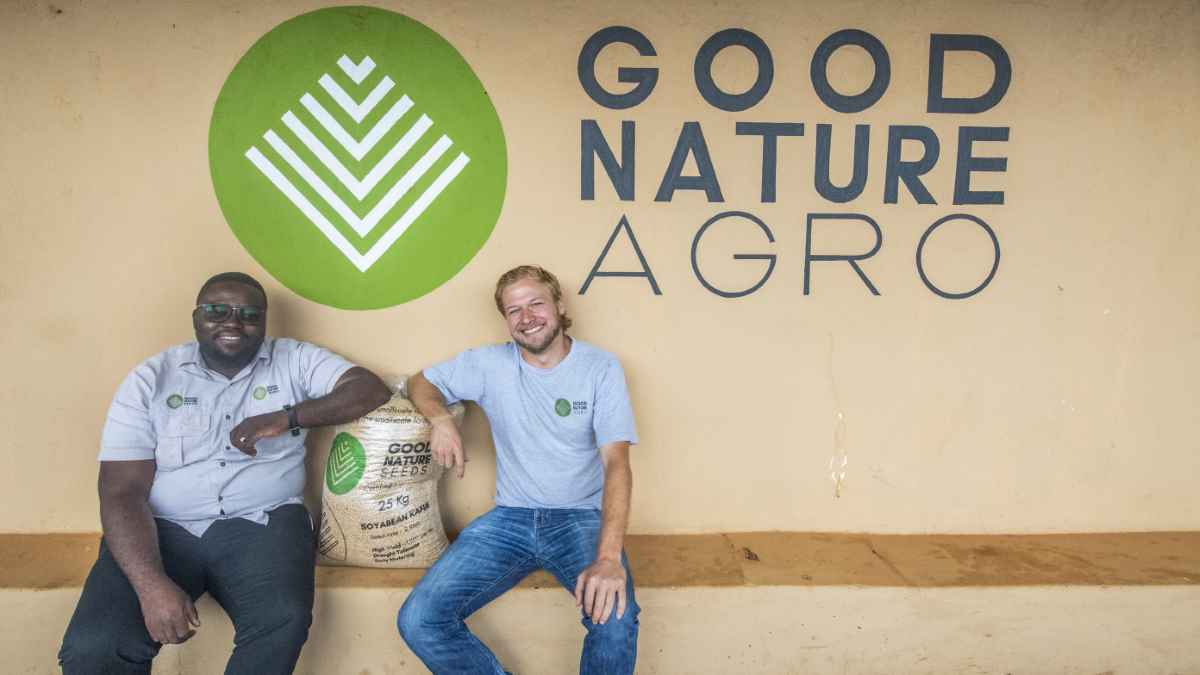
Good Nature Agro named one of Africa’s Fastest Growing Companies of 2024

Published

on

Good Nature Agro

Good Nature Agro has for the last 3 years been focusing on aggregating legume seed and commodity needs in the wider Southern and Central African region

CHIPATA, Zambia, May 17, 2024/APO Group/ — 

Good Nature Agro (https://GoodNatureAgro.com/), the Zambian company helping smallholder farmers reach the middle class, has been recognized by the Financial Times in the annual ranking of Africa’s Fastest Growing Companies of 2024, focused on identifying top performers in Africa’s private sector. This ranking places Good Nature Agro as number 44 on the list and the only Zambian company in the top 50.

The company has accomplished this feat through measured and consistent growth in their legume seed and commodity business lines, while increasing incomes for the more than 20,000 smallholder farmers with which they work.

We are exporting high-value beans, soya beans and groundnuts to food processors in South Africa, Namibia, Zimbabwe and Botswana

2024 also marks the 10th  anniversary of Good Nature Agro. Starting in 2014 with just 40 smallholder farmers in Kasenengwa District, Zambia, the company’s founders have remained committed to the company’s mission since day one. Today, Good Nature Agro farmers are present in all provinces of Zambia and the company has expanded its offerings to Malawi. The company has two active processing plants in Lusaka and Chipata, Zambia, an active seed breeding program and lab space, a proprietary digital platform for farmer and customer engagement, and more than 175 full-time employees. Good Nature Agro is also building a state-of-the-art export and processing facility in the Lusaka South Multi-Facility Zone(MFEZ).

Good Nature Agro Co-fonder and CEO, Carl Jensen, is thrilled with the news of the ranking, “We are proud to be included on the list, and we intend to use this opportunity to highlight our work with smallholders and the strength and potential of the Zambian agricultural economy. Credit for the strides we have made over the last 10 years goes to the hard work of our farmers, team, investors, and partners. Collectively, we are primed for a leap forward, and we will work tirelessly to move more smallholder farmers into the middle-class and emergent farmers towards generational wealth.”

On top of training, financing and production with Zambian farmers, Good Nature Agro has for the last 3 years been focusing on aggregating legume seed and commodity needs in the wider Southern and Central African region. “Being a Zambian-born and based company has strategically placed us to fulfill grain needs from beyond Zambian borders. We are exporting high-value beans, soya beans and groundnuts to food processors in South Africa, Namibia, Zimbabwe and Botswana, and we continue to prospect both production and supply in the Eastern African region. We are looking to onboard more customers and anyone looking for a reliable supply of legume seeds and commodities in and beyond the region. The Financial Times listing affirms our constant commitment to growth and service to our farmers and customers” said Sunday Silungwe, Founder and Director of Communications.

Representing Zambia alongside Good Nature Agro on the list are  Zamseed (#91) and Zambeef Products (#113). The list of Africa’s fastest-growing companies, compiled by Financial Times in collaboration with Statista, a research and database company, highlights advanced, modern, and thriving businesses in Africa fueling the global economy in the 21st century. The list showcases the growth of private companies across different sectors and offers a brief overview of the recent corporate landscape where technology, Fintech, and other businesses have had to adapt to a challenging environment. Good Nature Agro salutes all other companies represented as peers and examples of resilience and job creation.

Distributed by APO Group on behalf of Good Nature Agro.

Business

From Megawatt (MW) to Gigawatt (GW): Why Africa Must Think in Grid-Scale Power to Compete in the Artificial Intelligence (AI) Economy

Published

on

As AI infrastructure drives power demand into the gigawatt range, Africa must move beyond incremental energy planning – placing grid-scale generation at the center of discussions at African Energy Week 2026’s AI and Data Center Track

CAPE TOWN, South Africa, May 11, 2026/APO Group/ –The rapid expansion of artificial intelligence is fundamentally reshaping global energy demand, with implications that extend well beyond traditional power planning. Nowhere is this more apparent than in the growing energy footprint of data centers. Facilities that once required tens of megawatts are now being developed at 100–200 MW scale, with hyperscale campuses increasingly aggregating demand into the gigawatt range.


This shift presents a structural challenge for Africa. While the continent is rich in energy resources, its planning frameworks remain largely oriented around incremental, megawatt-scale additions – often tied to localized demand or short-term capacity gaps. In the context of AI-driven infrastructure, this approach is increasingly misaligned with the scale and concentration of future demand.

Africa’s data center sector, while growing, remains at an early stage. Operational capacity currently stands at approximately 300–400 MW, with projections reaching 1.5–2.2 GW by 2030. At the same time, demand is accelerating rapidly: electricity consumption from data centers is rising at 20–25% annually and is expected to reach around 8,000 GWh in the near term. This growth mirrors a broader global surge, with data center power demand projected to approach 945 TWh by 2030, driven largely by AI workloads.

This is ultimately about aligning Africa’s energy strategy with where global demand is heading

What distinguishes AI-related demand is not only its scale, but its concentration and consistency. Unlike many traditional industrial loads, data centers require uninterrupted, high-quality power, often with built-in redundancy. This places new demands on grid design, prioritizing stability, capacity and long-term scalability over incremental expansion.

Meeting these requirements will require a departure from conventional planning models. Rather than adding capacity in small increments, there is a growing case for developing gigawatt-scale generation aligned with emerging digital infrastructure hubs. This means integrating power generation, transmission and data center development into coordinated investment strategies, particularly in markets with strong resource bases and improving regulatory environments.

It also requires a shift in how excess capacity is viewed. In many African power systems, surplus generation has historically been treated as a financial inefficiency. In the context of AI and digital infrastructure, however, maintaining a margin of available capacity can enhance grid stability, reduce outages and provide the flexibility needed to support rapid load growth, while creating a foundation for broader industrial development.

A useful benchmark can be seen in Northern Virginia, the world’s largest data center market, where installed capacity has now exceeded 4 GW and more than 1 GW of new supply was added in a single year, reflecting the rapid pace at which hyperscale infrastructure is being deployed. Driven by major cloud and AI players, demand has tightened the market significantly, with vacancy rates approaching zero and most new capacity released well in advance. The scale and speed of development highlight how quickly data center demand is expanding – and underscore the level at which infrastructure must be planned.

These dynamics are increasingly shaping the policy conversation. At African Energy Week 2026, the AI and Data Center Track will focus on the infrastructure required to support this transition, with a particular emphasis on aligning energy planning with digital economy objectives. As AI infrastructure scales, reliable and abundant power is no longer a supporting factor, but a prerequisite.

“This is ultimately about aligning Africa’s energy strategy with where global demand is heading,” says NJ Ayuk, Executive Chairman of the African Energy Chamber. “If we continue to plan in megawatts, we will struggle to compete in an economy that is already moving at the gigawatt scale. Building larger, more resilient power systems is not just about meeting demand – it is about creating the conditions for investment, innovation and long-term growth.”

Distributed by APO Group on behalf of African Energy Chamber.

Continue Reading

Business

Telecoming Strengthens Its Presence in Africa with the Launch of DCB Software South Africa

Published

on

The company advances its regional strategy with a model built on AI, monetisation and direct connectivity with local operators

JOHANNESBURG, South Africa, May 11, 2026/APO Group/ –Telecoming (www.Telecoming.com), a global technology company specialising in the monetisation of digital services, announces the launch of DCB Software South Africa (www.DCBSoftwareZA.com), its new local subsidiary. The move reinforces the company’s growth strategy in Africa, one of the most promising markets in the mobile economy.

The new entity will be led by Javier de Corral, who will lead business development, establish partnerships with telecom operators and build a local team based in Johannesburg.

The South African launch builds on Telecoming’s existing footprint in the continent, where it already operates through its Algerian subsidiary, DCB Software Dzayer, further strengthening its regional position.

We are very excited about the opportunities in South Africa and committed to investing in its digital future

DCB Software South Africa will operate as a local hub focused on AI-driven digital services, supported by a team entirely based in the country. Its scope includes the development of digital products, mobile and web services, as well as solutions in digital entertainment and marketplaces, all built on scalable, multi-device platforms designed to ensure a seamless user experience.

The subsidiary combines in-depth knowledge of the South African and Sub-Saharan markets with direct access to telecom operators, digital platforms and local payment solutions. It will deploy multiple monetisation models, including Direct Carrier Billing (DCB), to optimise conversion rates and overall performance.

The launch of DCB Software South Africa marks a key milestone in our global expansion strategy”, said Cyrille Thivat, CEO of Telecoming. “We are very excited about the opportunities in South Africa and committed to investing in its digital future. With Javier de Corral at the helm, we are confident that this new subsidiary will not only drive our local growth but also contribute to the broader digital and AI ecosystem.”

Telecoming develops technology designed to enhance user acquisition, streamline payment processes and improve the performance of digital services. Its platforms integrate monetisation, advertising and user experience, leveraging artificial intelligence to deliver secure, scalable and efficient solutions.

This expansion reinforces Telecoming’s commitment to delivering innovative digital and AI services and strengthens its position as a key player in the African market. With this launch, the company takes another step in its international expansion, enhancing its ability to support the development of Africa’s digital ecosystem through advanced technology, local expertise and strategic partnerships.

Distributed by APO Group on behalf of Telecoming.

Continue Reading

Business

Enlit Africa 2026 makes 20 May the Commercial and Industrial (C&I) delivery day across power, water and clean energy hubs

Published

on

Taking place 19–21 May 2026 at the Cape Town International Convention Centre (CTICC), Enlit Africa, created by VUKA Group, convenes utilities, municipalities, large energy users, financiers, developers and technology providers to focus on what shifts outcomes in African infrastructure

CAPE TOWN, South Africa, May 11, 2026/APO Group/ –Enlit Africa 2026 will put commercial and industrial delivery front and center on Wednesday 20 May with a dedicated line-up across the Power HubWater Hub and Renewable Energy & Storage Hub. The day is built for decision-makers who must keep operations running, secure reliable supply, manage risk and move projects from concept to implementation.


Taking place 19–21 May 2026 at the Cape Town International Convention Centre (CTICC), Enlit Africa, created by VUKA Group, convenes utilities, municipalities, large energy users, financiers, developers and technology providers to focus on what shifts outcomes in African infrastructure.

On 20 May, the programme is anchored by the keynote, “How a coordinated energy/water plan could change African resilience” (09:30–11:45), positioning water and energy as interlinked operational risks that can no longer be managed in silos. From there, the day breaks into practical tracks tailored for large users and the solution partners that support them.

In the Renewable Energy & Storage Hub, sessions focus on the realities of C&I adoption and delivery at scale, including “Project implementation for multi-megawatt C&I projects” (11:45–13:00) and “Clean energy adoption in the C&I market” (14:30–15:45), before turning to fleet electrification and operations with “Mobility: Management of electric vehicle fleets for C&I” (16:00–17:30).

In the Water Hub, the agenda targets the technologies and operating models that matter most to industrial continuity and compliance. Sessions include “Next-generation water treatment technologies” (11:45–13:00), “Advanced water treatment & smart water systems” (14:30–15:45) and “Accelerating water technology deployment for C&I operations” (16:30–17:30).

Together, the three stages create a single day of high-signal, implementation-led content for C&I leaders, utilities, municipalities and suppliers focused on operational performance, investment readiness and delivery discipline.

Distributed by APO Group on behalf of VUKA Group.

Continue Reading

Trending

Exit mobile version