Connect with us

Business

Global ad market prospects further downgraded as retailers, automakers cut ad budgets and Chinese brands redirect spend due to US trade tariffs

Published

on

Global ad market

Growth forecasts for advertising spend have been downgraded further this year (-0.5pp to +6.2%) following an initial $20bn cut in March

Key sectors such as retail (-6.1%) and automotive (-4.0%) are expected to cut ad budgets in the wake of mounting tariff pressures on supply chains

Alphabet, Amazon and Meta are set to take a combined market share of 54.7% excluding China this year – equivalent to $524.4bn – rising to 56.2% in 2026

US ad market prospects cut by half a point to +5.2% as Chinese retailers such as Temu and Shein redirect spend to Canada, Australia and Europe

Global ad market growth is expected to accelerate to 6.5% next year, with a total of $1.23trn equivalent to almost $150 per capita

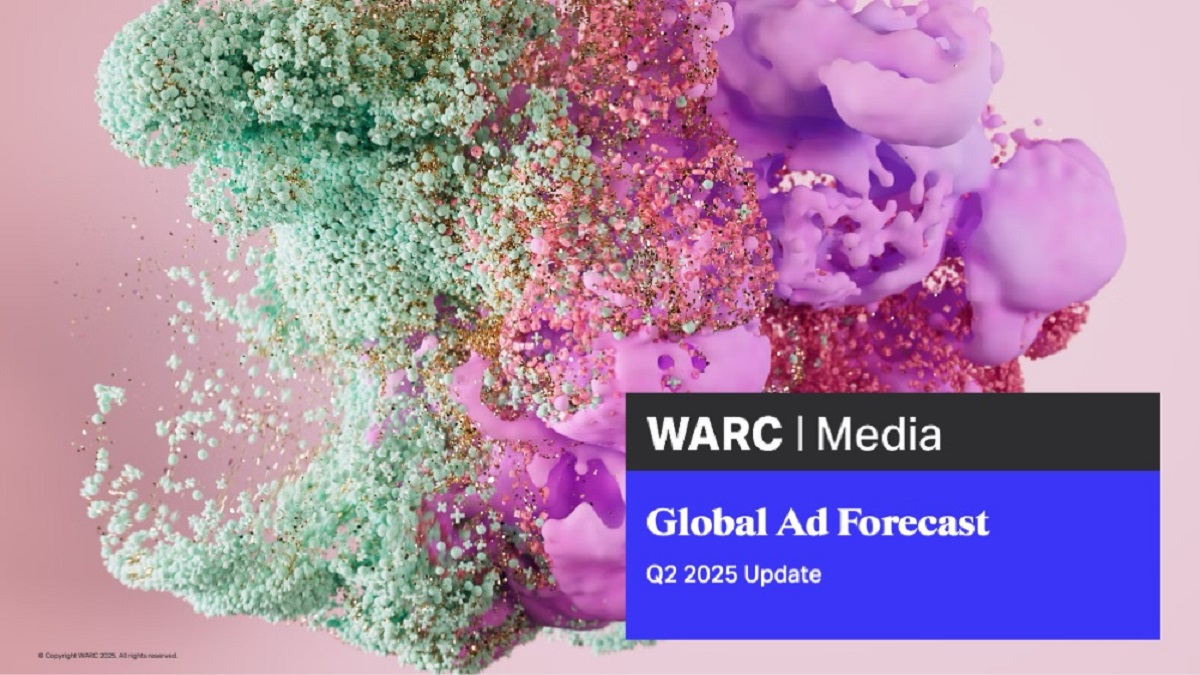
WARC Global Ad Forecast Q2 2025 update: Growth cut amid trade trepidations

12 June 2025 – A new study from WARC, the experts in marketing effectiveness, has found that global advertising spend is now on course to grow 6.2% this year to $1.16trn, a downgrade of half a percentage point (pp) from WARC’s March forecast due to growing market volatility. Key sectors such as retail (-6.1%) and automotive (-4.0%) are set to cut ad spend this year, while ad spend growth across technology and CPG brands is muted compared to previous rates.

James McDonald, Director of Data, Intelligence & Forecasting, WARC, and author of the research, says: “The latest downgrade is attributable to a reticence to commit ad budgets across key markets in the second quarter. This cooling is underpinned by tariff trepidations and ebbing business and consumer confidence, prompting advertisers to front-load budgets and reallocate spend geographically, particularly towards Canada, Australia, and Europe.

“Trade tensions are forcing major sectors to rethink their ad strategies. Automakers are cutting back amid rising costs and a pivot to performance media, while retailers tighten budgets as tariffs squeeze margins. Tech firms face growing uncertainty despite continued investment, and CPG brands are leaning into retail media as supply chains come under pressure. Across the board, agility is the new imperative.”

WARC’s latest global projections are based on data aggregated from 100 markets worldwide, and leverage a proprietary neural network which projects advertising investment patterns based on over two million data points.

Key media outlook: AI propels Alphabet, Amazon and Meta to 54.7% market share outside of China

Search to account for more than a fifth (21.5%) of the ad market this year, with spend rising 7.4% to $248.6bn despite regulatory threats
Social media – the largest single advertising medium globally – is poised to account for a quarter (25.8%) of all ad spend this year, at a total of $298.3bn
Retail media set to be fastest growing advertising medium this year (+14.4%), though trade disruption threatens ad receipts from consumer packaged goods (CPG) brands

Pure play internet – encompassing social media, retail media, online display, online classified and paid search – grew 11.5% in the first quarter of 2025 to $195.2bn, equivalent to 70.8% of all global ad spend. The growth rate is expected to ease to 9.9% during the second quarter and 8.9% over the second half of the year – to an annual total of $829.2bn (+9.8% vs. 2024).

The pure play internet sector is on course to top $1trn in ad revenue in 2028, by when it would account for almost 80% of all advertising spend. Alphabet, Meta and Amazon’s combined share of advertising spend outside of China is expected to reach 54.7% this year (+1.8pp vs. 2024) with an aggregated total of $524.4bn. This share is set to rise further – to 56.2% – next year.

Within the pure play internet total, search advertising spend is forecast to rise 7.4% this year and 6.8% next, by when the market would be worth $265.5bn – equivalent to 21.5% of all spend, up from 21.2% in 2024.

Within the paid search total, Google’s expected $213.3bn take would account for 85.8% of the market this year. The embedding of artificial intelligence into the search journey stands to disrupt ad revenue models, but Google’s dominance in search advertising will likely persist in the near term, aided by SMEs.

Social media is now set to account for over a quarter of all ad spend this year. A strong first quarter rise of 14.9% precedes an expected slowdown, with growth averaging 11.2% over the coming three quarters as tariffs begin to impact Asian brands disproportionally. The social market is still on track to grow 12.0% to $298.3bn this year.

​​Meta last month outlined plans for an end-to-end AI solution covering the generation of creative, ad placement and performance optimisation – primarily for its long tail of small advertisers rather than large brands. Meta’s ad business is forecast to grow 12.6% to $142.1bn this year, a cooling from the 18.4% rise recorded in 2024.

Retail media is expected to be the fastest-growing medium tracked by WARC this year, with an anticipated rise of 14.4% to a total value of $176.2bn. This represents a 15.2% share of global ad spend this year.

Amazon’s retail media ad business grew 21.0% to $13.3bn during the first quarter, accounting for a third (33.4%) of the global retail media market. WARC projects Amazon’s ad income will grow by 16.1% to $60.6bn this year. A further rise, of 14.9%, is forecast next year, giving Amazon a 35.4% of global retail media spend and 5.7% of all advertising spend worldwide. Like other online retailers, Amazon is exposed to tariffs imposed on its Chinese sellers, thought to be well over half of all vendors on the platform.

Global video advertising spend is forecast to decline by 2.6% in 2025 to $183.9bn, equating to 15.9% of all spend this year. The contraction is driven by a continued decline in linear TV, which still represents over three-quarters of the total video market.

Linear TV spend is expected to fall by 6.3% this year – a drop exacerbated by 2024 major sporting and political events. Notably, 2025 marks the first year that retail media will command a greater share of global ad spend than linear TV.

Video-on-demand (VOD) advertising is forecast to rise by 13.2% to $39.9bn, a downgrade from the 15.4% projected in March. Within this, Netflix is due to see ad billings double this year (from a small base) due to the relative resilience of its ad tier during economic downturns.

Key product sector trends: Tariff trepidations hit retailers and automakers

Automotive ad spend down 4.0% this year as manufacturing stalls and key players pare back on brand building
Retailers set to reduce ad spend by 6.1% as margins tighten; US retailers are vulnerable to disruption among Chinese suppliers
Ad growth set to slow markedly among tech & electronic and consumer packaged goods (CPG) brands as barriers to trade impair access to components

The automotive industry invested $56.8bn in advertising last year with almost a quarter (22.9%) going to premium video formats. However, budgets are shifting from video towards digital platforms, with automotive spend on social ads surpassing linear TV for the first time in 2025.

Despite WARC’s projected 4.0% cut in automotive advertising spend this year (an improvement on the 7.3% originally projected in March), the sector should rebound next year with a 7.5% rise pushing spend to a total of $58.6bn.

Retail, with projected ad spend of $166.1bn this year (14.3% of the global ad market), faces a fall of 6.1% from 2024 levels. This largely reflects impending US trade tariffs on key goods and raw materials, which are poised to increase costs for global retailers, particularly those heavily reliant on Chinese imports such as Amazon and Walmart.

Retailers are set to accelerate shifts in marketing strategies in response to changing cost structures and consumer behaviour. As predicted in March, large Chinese retailers targeting US consumers – including Temu and Shein – have reallocated advertising spend to other markets such as Canada, Australia and Europe.

The tech and electronics sector is expected to spend $90.3bn on advertising this year. This year-on-year rise of 5.5% represents a cut from our +6.2% forecast in March, and is a sharp slowdown from the 24.3% rise recorded last year. Tariffs are driving the sector to adjust go-to-market strategies, shifting investments toward less-affected regions or different product lines to buffer against hardware margin erosion.

Consumer Packaged Goods (CPG) companies experienced their weakest first quarter sales revenues since the pandemic. Further, with tariffs reaching as high as 145% for Chinese imports and additional tariffs on goods from Canada and Mexico, CPG companies are facing major disruption to their established supply chains.

WARC expects core CPG sectors, such as soft drinks (+7.1%), toiletries & cosmetics (+7.2%) and household & domestic (+4.2%) to record growth in advertising spend at a global level this year, though all see a significant slowdown from 2024. Taken together, the CPG sector is expected to increase advertising spend by 6.7% this year to a total of $200.5bn.

Key market outlook: US growth prospects cut as Chinese brands look elsewhere

US ad market expected to post a +5.2% rise this year, less than half that recorded in 2024 (+13.5%) and has been cut by half a point since March
Canadian ad spend growth set to ease to 3.5% this year despite some Chinese advertisers redirecting spend from the US
The Chinese ad market continues to struggle with weak domestic demand; growth is set to slow to 7.2% this year
The UK, German, French and Japanese economies are all stalling and present a severe risk of stagflation over the forecast period

WARC’s latest forecast suggests the US ad market will grow 5.2% this year to $451.6bn, half the growth rate recorded in 2024 (+13.5%) and representing a 0.5 point downgrade from our March forecast. The US ad market – the largest worldwide with a 39.0% share – faces major headwinds including tariff uncertainty, disrupted supply chains, lower consumer demand and stagflation.

Despite a strong first quarter performance – +7.6% to $105.7bn, boosted by Chinese brands accelerating spend ahead of the anticipated tariff changes – US ad market growth is expected to slow significantly through to year-end.

Chinese brands appear to be redirecting ad spend to Canada to negate US market barriers, yet Canadian ad growth is expected to slow to 3.2% this year amid deteriorating economic conditions. The IMF had downgraded Canada’s GDP growth forecast by 0.6pp to 1.4%, with the Bank of Canada projecting growth rate to approximately +0.5% in 2025.

Digital platforms dominate Canada’s media landscape, projected to capture 77.6% of the total market this year. This digital transformation stems from granular targeting capabilities drawing advertisers away from traditional media, with retail media now fuelling additional growth.

China is experiencing significant structural shifts, characterised by increasingly price-conscious consumers and a digital ecosystem dominated by major players including ByteDance (Douyin), Alibaba, and Tencent, creating challenges for smaller platforms. Short-form video has become instrumental in brand promotion in China, while marketers are prioritising performance marketing over brand building initiatives.

Projected US tariffs are expected to dull China’s economic growth by 0.2 points in 2025, creating economic uncertainty and prompting a downward revision of our 2025 advertising growth expectations to 7.2% (from 8.3% in March). The outlook for 2026 has been upgraded to 7.9% growth (from 6.9%), reflecting the online sector’s resilience.

The AA/WARC Expenditure Report forecast for the UK ad market stands at +6.5% in 2025, to a total of £44.3bn ($54.7bn). The highly digitalised UK market sees online ads accounting for over four in five (84.6%) dollars this year, with social (+13.1% this year) and search (+8.2%) fuelling growth despite weak economic prospects.

Germany’s economy is also struggling, at just +0.4% expected growth by the OECD this year following a cut of 0.3pp from its last outlook. WARC forecasts a modest 2.9% rise in German advertising spend to €26.4bn ($29.5bn). Growth in France’s ad market is also set to be muted this year, at +2.7% to €18.8bn ($20.3bn). Japan faces a challenging outlook, too, with advertising spend expected to rise by 3.3% to ¥5.8trn ($39.0bn) this year.


Home  Facebook

Energy

Investment, Fuel Security and Strategy to Take Center Stage Across Angola Oil & Gas (AOG) 2026 Multi-Track Program

Published

on

With strategic, technical and roundtable discussions, AOG 2026 strengthens its position as Angola’s premier platform for industry dialogue, investment and project development

LUANDA, Angola, March 27, 2026/APO Group/ –The Angola Oil & Gas (AOG) Conference and Exhibition returns to Luanda this September as a bridge connecting global investors and project developers with Angolan projects and partners. At a time when global supply disruptions and geopolitics are sharpening consumer focus on Africa, Angola offers the stability, resource base and investment appeal needed to support long-term security. Reflecting this focus, AOG will once again feature a multi-track program designed to showcase Angolan opportunities to a global audience.

Across three primary tracks – the Strategic, Technical and Roundtables Track – AOG 2026 will bring together policymakers, operators, financiers and technology providers to address challenges and opportunities across the full investment value chain. The expanded program structure underscores the event’s commitment to facilitating targeted discussions that support project development, strengthen partnerships and address the most pressing challenges facing Angola’s oil and gas sector today.

Strategic Track

As Angola continues to position itself as a leading African investment destination, the AOG 2026 Strategic Track will provide a platform for high-level dialogue between government, operators and investors, focusing on the policies, partnerships and capital frameworks required to sustain production and drive new exploration. Taking place across the two-day main conference, the Strategic Track will address the macro and investment-driven themes shaping Angola’s oil and gas industry.

Sessions will cover investment trends, Angola’s upstream competitiveness, advancing deepwater frontier momentum and opportunities in building an Angolan gas economy. Additional discussions will examine oil trade and the impacts of geopolitics, financing solutions for independents, fuel supply security and refining and the economics of local content success.

Technical Track

Running alongside the Strategic Track, the Technical Track will feature a series of presentations and discussions addressing critical operational and technical challenges across Angola’s oil and gas sector. This track will focus on practical solutions and emerging technologies that are shaping the future of the industry.

Topics will include M&A trends and asset transactions, accelerating AI adoption in oil and gas operations, building the next generation workforce and developing decommissioning frameworks for ageing assets. By focusing on operational efficiency, technology deployment and workforce development, the Technical Track will provide valuable insights for companies looking to optimize performance and extend the life of Angola’s producing assets while preparing for the next generation of projects.

Roundtables Track

A strategic feature at AOG, the Roundtables Track will introduce a more interactive discussion format focused on some of the industry’s most complex and strategic issues. These sessions will bring together small groups of stakeholders for targeted discussions on ensuring global compliance, Angola’s licensing landscape, partnerships and the future of upstream development.

Additional topics will include resolving the dollar/kwanza conundrum, the role of local financial institutions in the oil and gas sector and strategies to strengthen collaboration between international investors and local companies. The introduction of the Roundtables Track reflects growing demand for more focused, solution-driven discussions that move beyond traditional conference formats and toward practical problem-solving and partnership building.

Additional Features: Pre-Conference

In addition to the main conference program, AOG 2026 will include a dedicated pre-conference agenda on September 8, setting the tone ahead of the main conference discussions. Pre-conference sessions will cover subsurface imaging and structural analysis, Angola’s fiscals in a global context and strategies for strengthening Angolan institutions.

Several industry-led workshops will also take place, with companies offering insights into the technologies, solutions and tools that are transforming Angola’s oil and gas sector. These sessions are designed to provide practical knowledge sharing while highlighting the role of technology and innovation in improving efficiency and supporting new project development.

With an expanded multi-track program and the introduction of the Roundtables Track, AOG 2026 continues to evolve into a platform designed to drive investment, strengthen partnerships and support the next phase of Angola’s oil and gas growth.

Distributed by APO Group on behalf of Energy Capital & Power.

Continue Reading

Energy

Minister Ernesto Kesar Joins Caribbean Energy Week (CEW) 2026 as Trinidad and Tobago Accelerates Upstream Momentum

Published

on

The participation of Minister Ernesto Kesar at Caribbean Energy Week comes as the country advances new upstream projects, gas developments and regional energy cooperation

PARAMARIBO, Suriname, March 27, 2026/APO Group/ –Ernesto Kesar, Minister in the Ministry of Energy and Energy Industries of Trinidad and Tobago, has officially joined the upcoming Caribbean Energy Week (CEW), reinforcing the country’s commitment to upstream growth at a time of renewed momentum in the oil and gas sector.


As the twin-island country advances new gas supply projects, encourages exploration and strengthens regional energy ties, Minister Kesar’s participation at CEW 2026 is expected to serve as a launchpad for strengthened regional ties.

Minister Kesar’s participation comes amid a multi-billion-dollar investment surge in Trinidad and Tobago as operators advance projects, regional energy ties and strategic partnerships. At the helm of these efforts, the Ministry of Energy and Energy Industries continues to prioritize upstream investment, deepwater exploration and cross-border gas projects, positioning the country as a regional hub for natural gas production and LNG exports.

Recent milestones reflect this momentum, with several projects starting production and exploration kicking off across key basins. The bpTT-led Cypre gas project achieved first gas in April 2025, with peak production estimated at 45,000 barrels per day (bpd) – translating to around 250 million standard cubic feet of gas. The project comprised seven wells and will enhance the country’s overall export capacity. In partnership with EOG Resources, the company also started production at the Mento field in 2025, featuring a 12-slot, attended facility.

Looking ahead, bp’s Ginger gas development is on track for first gas production in 2027 following FID reached in 2025. With an expected capacity of 62,000 bpd, the project will feature four subsea wells tied back to the company’s existing Mahogany B platform. The company is also evaluating development options for its Frangipani exploration well which identified multiple stacked gas reservoirs in 2025. These initiatives will not only bring additional volumes online to support LNG exports and domestic capacity, but strengthen the country’s position as a regional hub for oil and gas.

Beyond projects, Trinidad and Tobago is advancing exploration efforts with a view to strengthen its reserves. The company awarded an ultra-deepwater exploration block to ExxonMobil in 2025, signaling the company’s return to the market after nearly two decades. The milestone not only paves the way for the development of Block TTUD-1, but opens the door to nearly $20 billion in potential investment. The move follows a 2025 licensing round launched by the Ministry of Energy and Energy Industries in 2025, aligning with national goals of revitalizing exploration across deepwater margins.

On a regional front, Trinidad and Tobago is streamlining cross-border collaboration. The country recently secured a license from the United States authorizing oil and gas activities with Venezuela. The approval allows Trinidad-based companies to pursue cross-border gas developments, paving the way for Venezuela to feed new gas volumes into Trinidad and Tobago’s existing LNG and processing infrastructure. The move will not only sustain gas exports but accelerate long-delayed projects such as the Dragon gas field – situated near the maritime border of the two countries.

Trinidad and Tobago is also assessing options to restart the Pointe-a-Pierre refinery, which has been closed since 2018 following the restructuring of state-owned Petrotrin. The government is currently in talks with various partners as well as Guyana to reopen the facility. If brought back online successfully, the facility would support regional energy security efforts, highlighting a strategic opportunity for global and regional investors.

As upstream momentum continues to build, the upcoming CEW 2026 offers a strategic platform to advance dialogue on regional gas monetization, energy security and investment opportunities. Minister Kesar’s participation reflects Trinidad and Tobago’s commitment to strengthening Caribbean energy ties, paving the way for new collaborations and sustained investment.

Distributed by APO Group on behalf of Energy Capital & Power.

Continue Reading

Business

China’s 15th Five-Year Plan: Charting Solutions in an Uncertain World

Published

on

CGTN’s special feature explores potential impacts of China’s 15th Five-Year Plan beyond its borders.
BEIJING, CHINA – Media OutReach Newswire – 27 March 2026 – As policymakers and business leaders convene at the Boao Forum for Asia Annual Conference, one of the most closely watched gatherings on the global calendar, attention is turning to China’s national development blueprint: the 15th Five-Year Plan. Beijing’s latest development roadmap arrives at a critical moment, as the world is grappling with geopolitical tensions, economic fragmentation and climate change. With these challenges mounting, many international observers are exploring how this blueprint will shape future development trajectories within China and beyond.
Achim Steiner, former administrator of the United Nations Development Programme, regards green transition, which takes center stage in China’s 15th Five-Year Plan, as one of the defining economic shifts of the coming decades. He emphasizes that China’s leadership on renewable energy, ranging from solar panels to electric vehicles, have not only driven down global costs, but also turned technologies like EVs that were once considered “luxury and privilege” into accessible tools for people’s daily lives. He noted such a giant leap in green technology represents a frontline opportunity for transformation on the African continent, where over 600 million people still lack electricity. Steiner believes the green mindset adopted by Beijing will help many developing nations to avoid catastrophic fallout from climate change. And as certain western nations waver on climate commitments, China’s approach to addressing global warming, in contrast, provides a compelling model of a responsible nation, which suggests that green growth can be a policy priority and allow for win-win progress.

Mohd Faiz Abdullah, executive chairman of the Institute of Strategic and International Studies in Malaysia, situates China’s development strategy within a regional context. He says that the cooperation between China and ASEAN has been contributing to regional and global growth. He described the global economic status quo as “increasingly fragmented,” adding that the key challenge is “not to help one individual economy grow,” but to achieve shared and sustained prosperity “at regional and global levels.” Such a joint task requires shared responsibility in a variety of crucial areas covered in China’s 15th Five-Year Plan, including advanced manufacturing, green transition and technological upgrading. In his view, the development vision demonstrated in China’s 15th Five-Year Plan is not solely inward-looking, but also a domestic model that can convert to outward impact to the wider world. Abdullah also highlighted that China and ASEAN have already formed one of the world’s most dynamic economic partnerships, characterized by expanding investment flows and deepening integration. He believes that the continued implementation of the Regional Comprehensive Economic Partnership will ensure ASEAN and China can work together to achieve shared economic progress for the next decade.

Justin Yifu Lin, former chief economist for the World Bank, argues that while the global economy is mired in uncertainty and turbulence, China remains a rare source of stability, certainty and development momentum. Since about 2008, he noted, China has contributed roughly 30 percent of global growth, underscoring its role as a key engine of the world economy. Acknowledging that challenges are universal rather than unique to China, Lin stressed that what matters is the ability to recognize both constraints and opportunities, and to turn the latter into tangible growth. He pointed to China’s continued potential in technological innovation and industrial upgrading, supported by its large talent pool, vast domestic market, comprehensive manufacturing base and effective coordination between market forces and government policy. While external risks such as supply chain disruptions and trade tensions persist, alongside domestic pressures, including aging and regional development imbalance, Lin suggests China still holds significant growth potential, possibly around 8 percent per year through 2035, if these challenges are well managed.

In a world increasingly defined by uncertainty, China’s 15th Five-Year Plan is deemed as an important source of direction and momentum. As the country aims for a good start to its next five-year development period, seeking to advance modernization through high-quality development, major tasks still lie ahead.

Continue Reading

Trending

Exit mobile version